

One-hit wonders keep saving Netanyahu. This time, he might be played out
A constellation of center-right parties could unite to bolster the prime minister, as their now-defunct predecessors have done. But even if they do, it may not be enough to get him a majority

 Add ToI as a Preferred Source on Google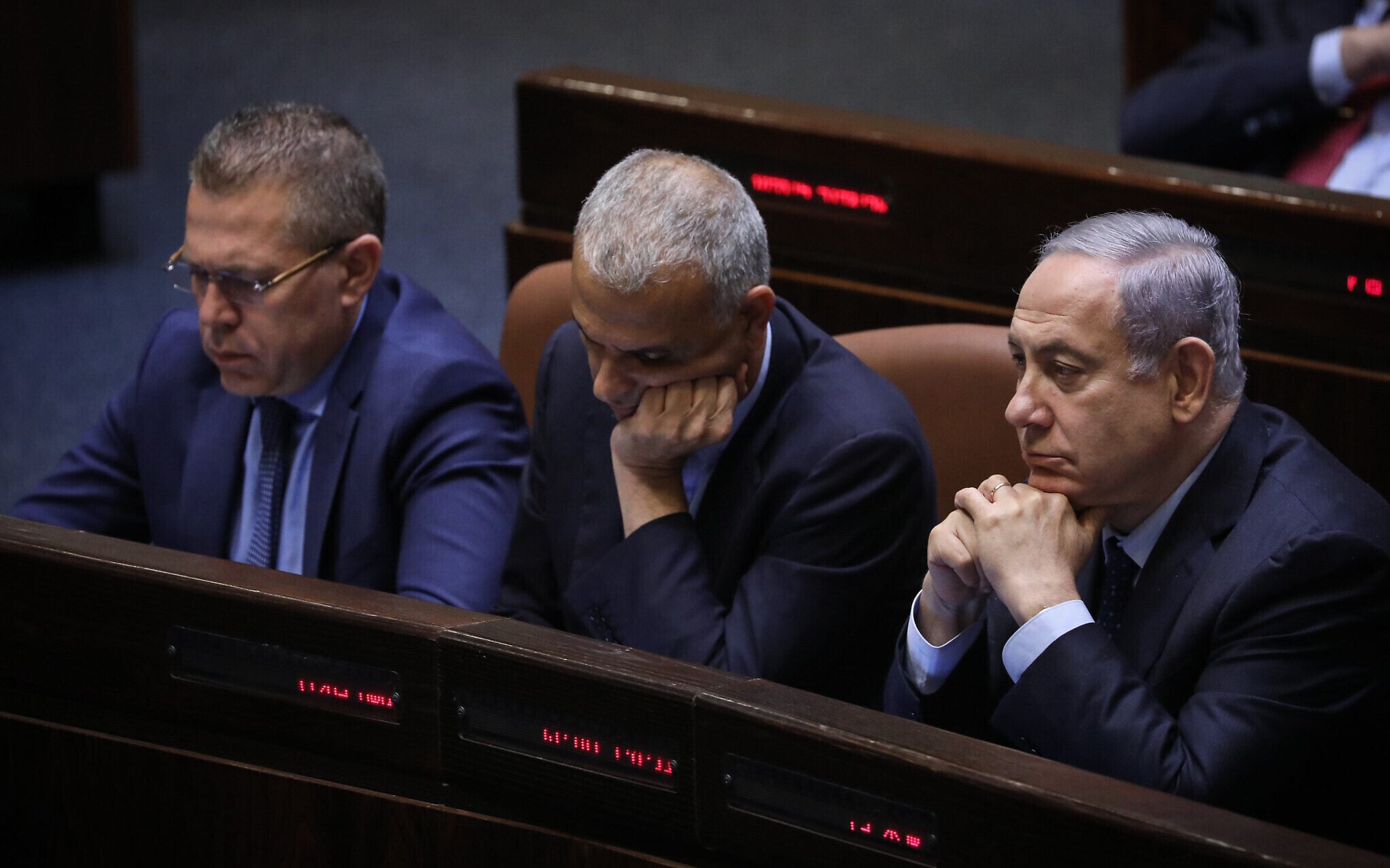
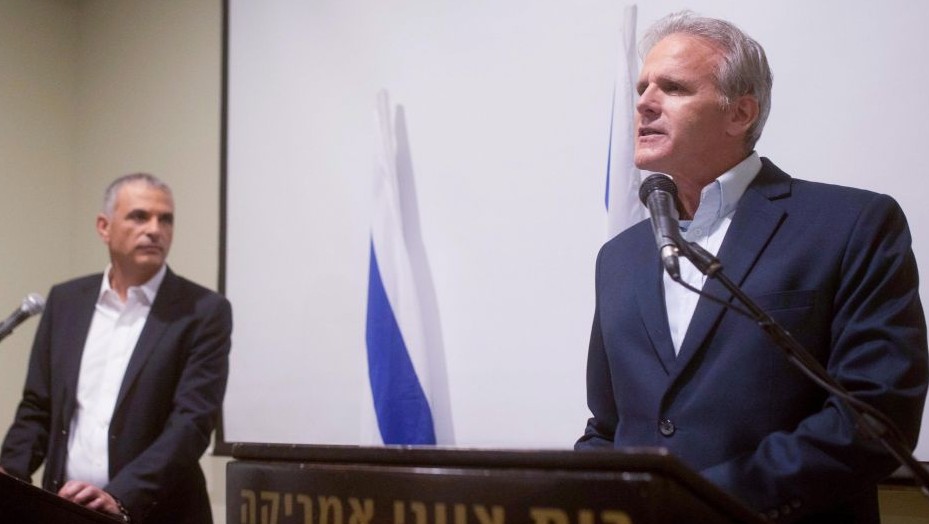
More than a decade ago, to much fanfare, the popular ex-Likud minister Moshe Kahlon announced that he was founding a new party focused on lowering the cost of living.
The center-right party, Kulanu, was treated as a potential kingmaker that could deliver the election to Benjamin Netanyahu’s opponents. In 2015, as now, the conventional wisdom among opposition voters was that the sitting prime minister had been in office too long and was a divisive, even destructive, presence in Israeli politics. Kulanu attacked Netanyahu’s Likud in its campaign ads, and reportedly had even reached a deal to join a government with the premier’s top rival, Isaac Herzog.
But when the election results came out, Likud emerged with by far the most votes. Kulanu, with its 10 seats, joined Netanyahu’s coalition, delivering him a bare 61-seat majority of the Knesset. Four years later, Kahlon’s party officially folded into Likud.
Kulanu was one of a litany of relatively centrist swing parties that have generated hype — and hope for Israel’s center-left — only to end up keeping Netanyahu in office, particularly at moments when his defeat seemed imminent. Those parties have also served Netanyahu’s ideological interests, acting as a moderate counterweight in government to his Haredi and far-right allies, with him in the middle.
Could the scenario repeat itself today? This year, while new parties have gained traction in the anti-Netanyahu camp, no fresh, buzzy candidate has captured the hearts of Israel’s swing voters. Instead, there’s a constellation of small right-wing factions that have refused to endorse either side and, by virtue of not being Likud, are viewed by some as a comparatively centrist alternative.
None of them is popular enough on its own to make it into the Knesset. But if they were to unite, surveys suggest they could capture a handful of seats — and use that power to try and decide the outcome.
Israel’s polls have consistently predicted that even with the help of a satellite right-wing party, Netanyahu won’t be able to muster a majority. But that party could still act as a life preserver for the prime minister by blocking his opponents from achieving a majority of their own. That could create a deadlock, lead to repeat elections, and keep Netanyahu in office.
There’s no reason to assume he’ll get that lifeline. The politicians behind these right-leaning alternative parties have serious policy differences with the prime minister, especially over ultra-Orthodox military service.
And more than anything, Netanyahu’s would-be saviors may be wary of following the doomed footsteps of their predecessors. Some parties that once partnered with Netanyahu have survived by sharply breaking with him. But many of the once-hyped center-right factions that broke away from the prime minister only to give him new life are now buried in the crowded graveyard of Israeli political parties. Others are taking their last gasps. Meanwhile, the man they propped up has remained in power.
‘He’s earned the disaffection and distrust of coalition partners,” former Kulanu MK Michael Oren, who served as Netanyahu’s ambassador to the US more than a decade ago, told The Times of Israel. “The stumbling block is Bibi. Nobody’s in the mood to save him.”
The (mostly) one-and-done centrists who rescued Netanyahu
In early 2011, Netanyahu faced a challenge to his still-young premiership: Labor, his coalition partner, was threatening to oust its leader, Ehud Barak, and possibly withdraw from the coalition. Instead, in a surprise move, Barak and some allies broke away from Labor to form the Independence party, a centrist faction that remained in the coalition and shored up Netanyahu’s government.
By 2013, Independence was defunct. But that year, a new centrist party led by Tzipi Livni won six seats in the Knesset. Livni, who had once been a Likud stalwart, focused her campaign on castigating Netanyahu, but following the election, her Hatnua party was the first to sign a coalition agreement with the prime minister. (Another new centrist party, Yesh Atid, also joined with Netanyahu that year. It has since survived by fighting him, and now leads the Knesset opposition.)
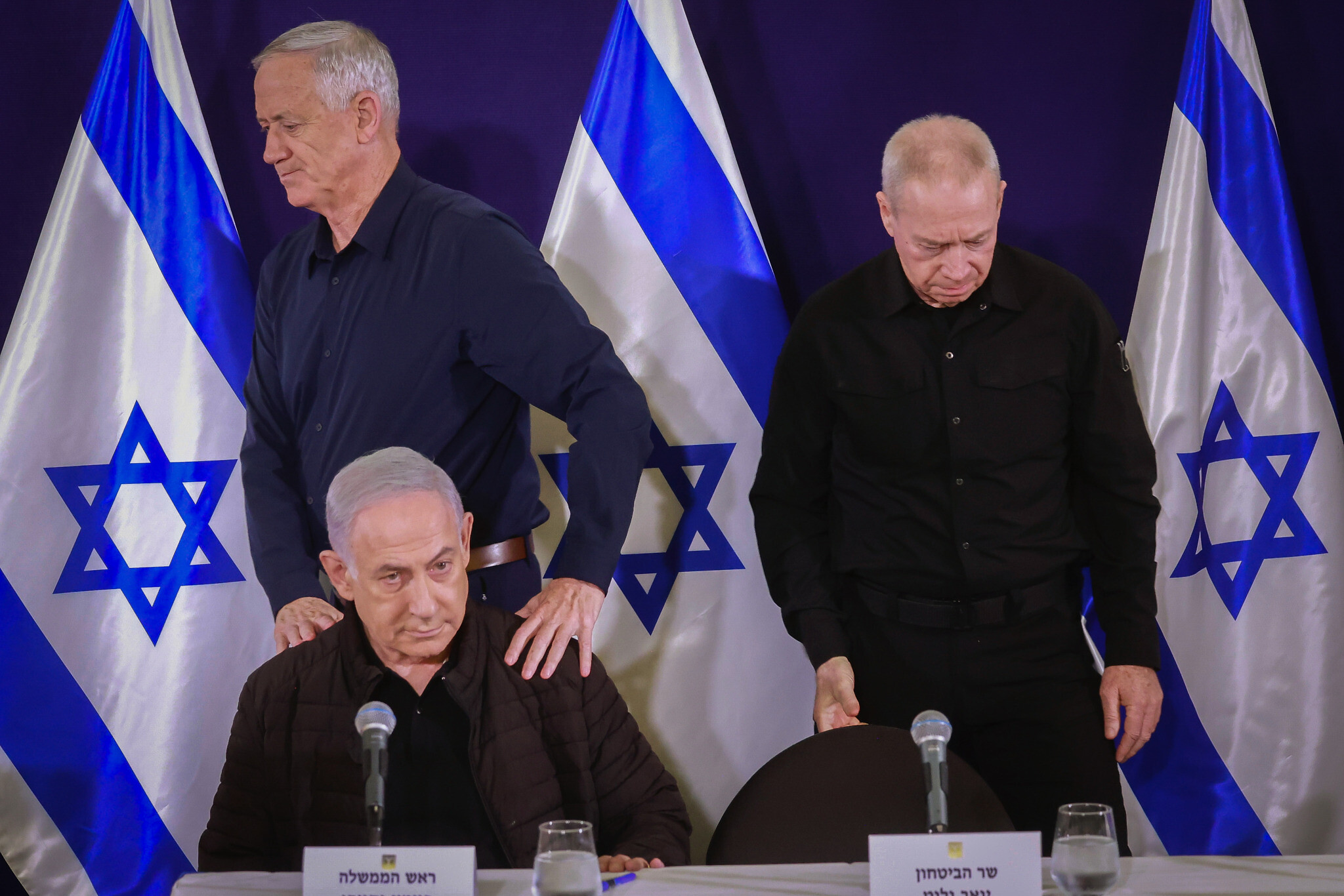
The pattern repeated itself two years later, when Livni’s party folded into an alliance with Labor, and Kulanu rose up, giving Netanyahu another term in office. By 2019, Kulanu was on its way out, and Israel embarked on a series of several deadlocked elections. The purgatory was paused only when Benny Gantz’s Blue and White, which was founded to unseat Netanyahu, instead formed a coalition with him. That kept Netanyahu in power for another year or so before he was briefly unseated.
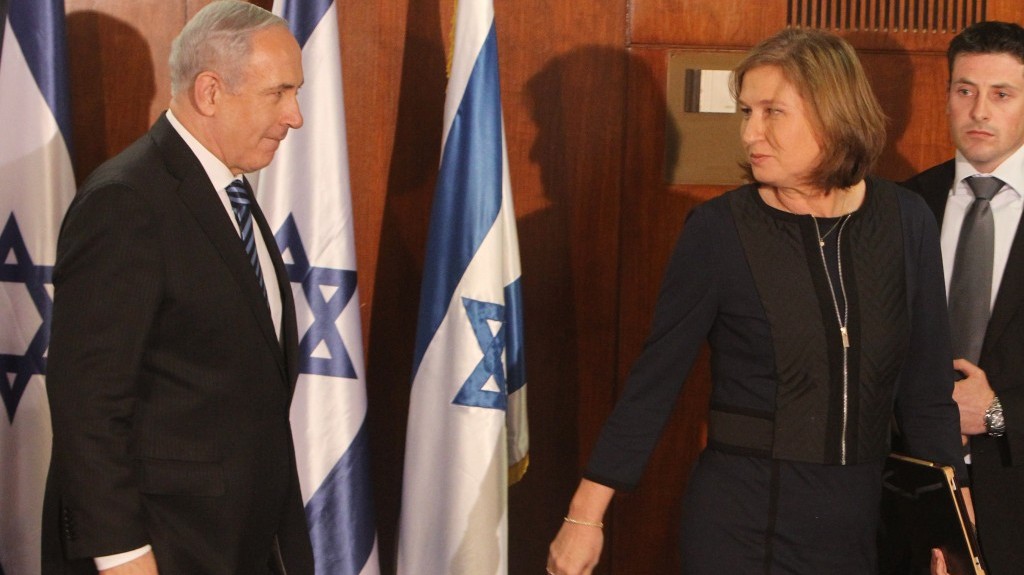
Gantz has since joined, and left, another Netanyahu government. He’s still around, floundering at the bottom of polls. Now a growing collection of past and present politicians who once kept Netanyahu in office are calling for the country to chuck the Likud leader out. Earlier this summer, Livni mocked Netanyahu for seeming not to understand why he was being treated as a political leper.
“Let’s make it even simpler: [Netanyahu’s] basic principles, which are destroying the country, are the exact reason why he must not be allowed to be prime minister,” she wrote on X.
A new savior cometh?
This year, the ingredients exist for another relatively centrist party to take up the mantle of keeping Netanyahu in the job. At least four small parties are competing for the same group of right-wing voters who are disaffected from Likud but are not necessarily sold on its main rivals.
Each of these parties’ central pitch is that none of their leaders are named Benjamin Netanyahu. Plus, unlike Likud, they share a commitment to conscripting ultra-Orthodox men into military service. Tying themselves to neither Netanyahu nor his opponents, parties in the so-called “Third Bloc” all say they are seeking to establish a broad, moderate government that pulls from both the center-right and center-left.
That inclination for consensus is reflected in the new parties’ names: Unity, Zionist Home, Israel First.
The problem for these parties is that there are four of them, all drawing from the same limited pool of voters. To enter the Knesset, a party needs at least 3.25 percent of votes, a threshold none of the parties looks likely to pass on its own. But they have several more days to iron out an alliance before the September 8 deadline to file candidate slates, and together, they could be a force in the race.
A recent analysis by pollster Dahlia Scheindlin found that, taken together, some 17 to 19 percent of Israeli voters are still undecided or vacillating between the center-right factions. If a chunk of those voters were to support a newly formed center-right alliance, it could win enough seats in the Knesset to potentially be a kingmaker, or at least stave off Netanyahu’s defeat by depriving both sides of a majority.
“A party like [Zionist Home] looks to a lot of Israelis like a moderate right-wing party, which is exactly what Kulanu was,” Scheindlin told The Times of Israel. “I think as we’re getting closer to the deadline for the lists, those parties will firm up their final configurations, and then, in the classic tradition of Israeli pop-up parties, will only then… start to really form who they are, what they stand for.”
An unworkable alliance
Netanyahu has lately been calling for a “broad national government,” a pitch that could attract the center-right candidates, who are wary of the left and view Arab parties as anathema.
But even if the parties manage to unite and make it into the Knesset, there’s no guarantee that they’ll be able to keep Netanyahu above water, in light of his poor polling numbers. At the same time, they might not be eager to join with Netanyahu’s opponents to oust him from power, given that some right-wing candidates have ruled out sitting in a coalition with the left-wing Democrats.
The center-right’s highest aspiration is to spearhead a coalition uniting Netanyahu with his centrist opponents — leaving out the left, the far right, and Arab parties. But it’s hard to imagine the anti-Netanyahu centrists agreeing to join a government under the leadership of a man they’ve painted as corrupt and dangerous. It’s even more difficult to imagine Netanyahu agreeing to a junior role in an opposition-led government.
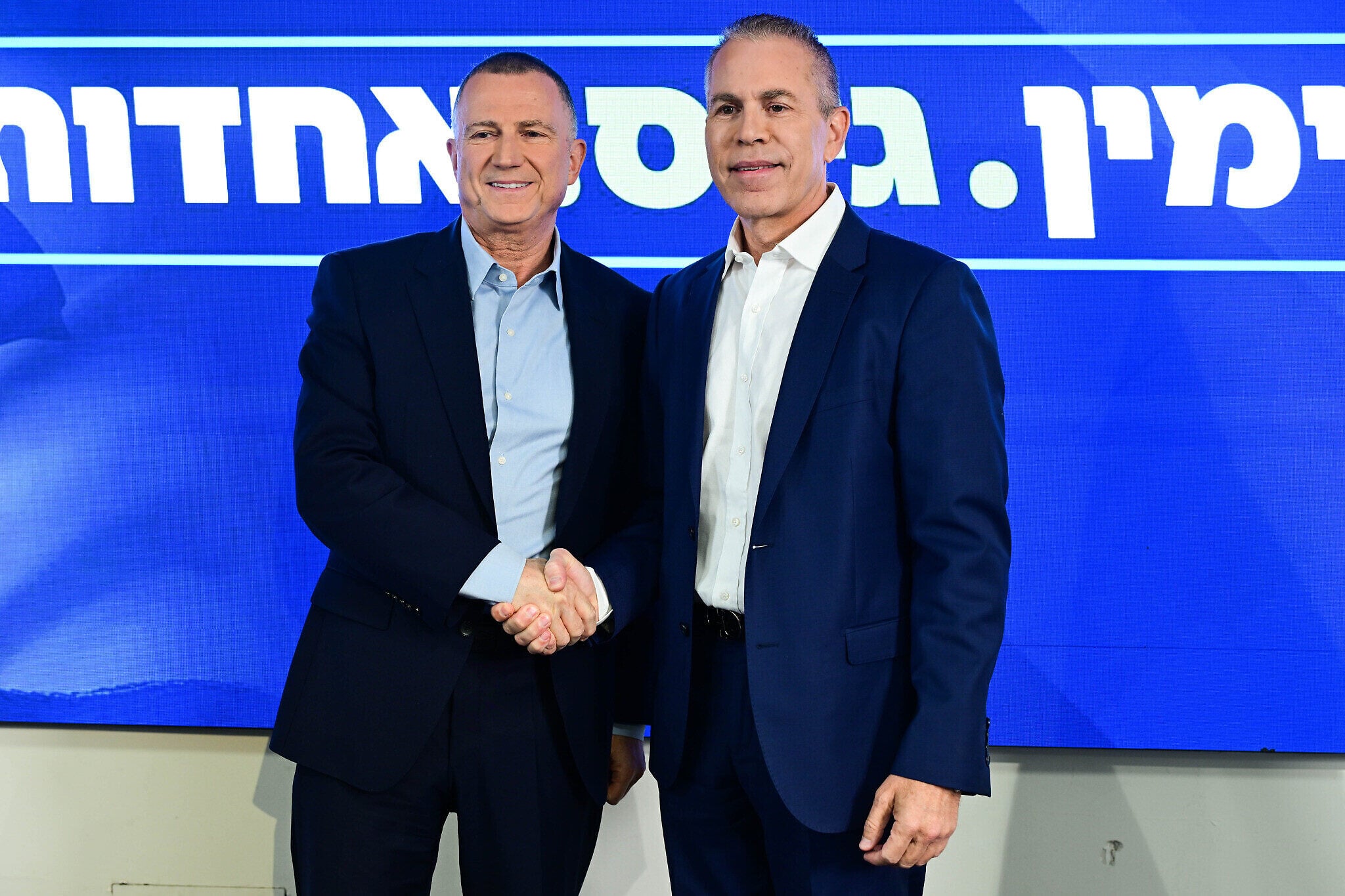
Beyond the punishing coalition math, a more fundamental problem for Netanyahu is that the policy interests of his would-be center-right partners are diametrically opposed to those of his Haredi allies.
This is a problem that Kulanu didn’t confront back in 2015. It ran on a platform of lowering the cost of living, specifically housing prices, an issue that everyone in Israel agreed was urgent, and that cut across party lines. That enabled Kulanu to entertain alliances with both Likud and its rivals.
“I don’t see a party like that in Knesset today,” Oren said. “Everybody’s focused on Haredim and security. You don’t even have an economics issue here.”
The question of military conscription would likely doom any alliance between the center-right and the Haredi parties in Netanyahu’s current coalition. Netanyahu’s ultra-Orthodox supporters staunchly oppose drafting yeshiva students. The center right demands it.
The issue has tanked previous Netanyahu coalitions, and this time, neither side seems inclined to cave. At least one of the new right-wing parties, led by hardline ex-general Ofer Winter, says he won’t join a Netanyahu government until a conscription law is passed.
Running out of moderates
The pool of centrists who see Netanyahu as palatable is also dwindling. In the 2009 and 2013 elections, parties in the broad center-left camp, such as Labor or Yesh Atid, were willing to join his coalitions, anchored by a Likud that was much more moderate than it is today.
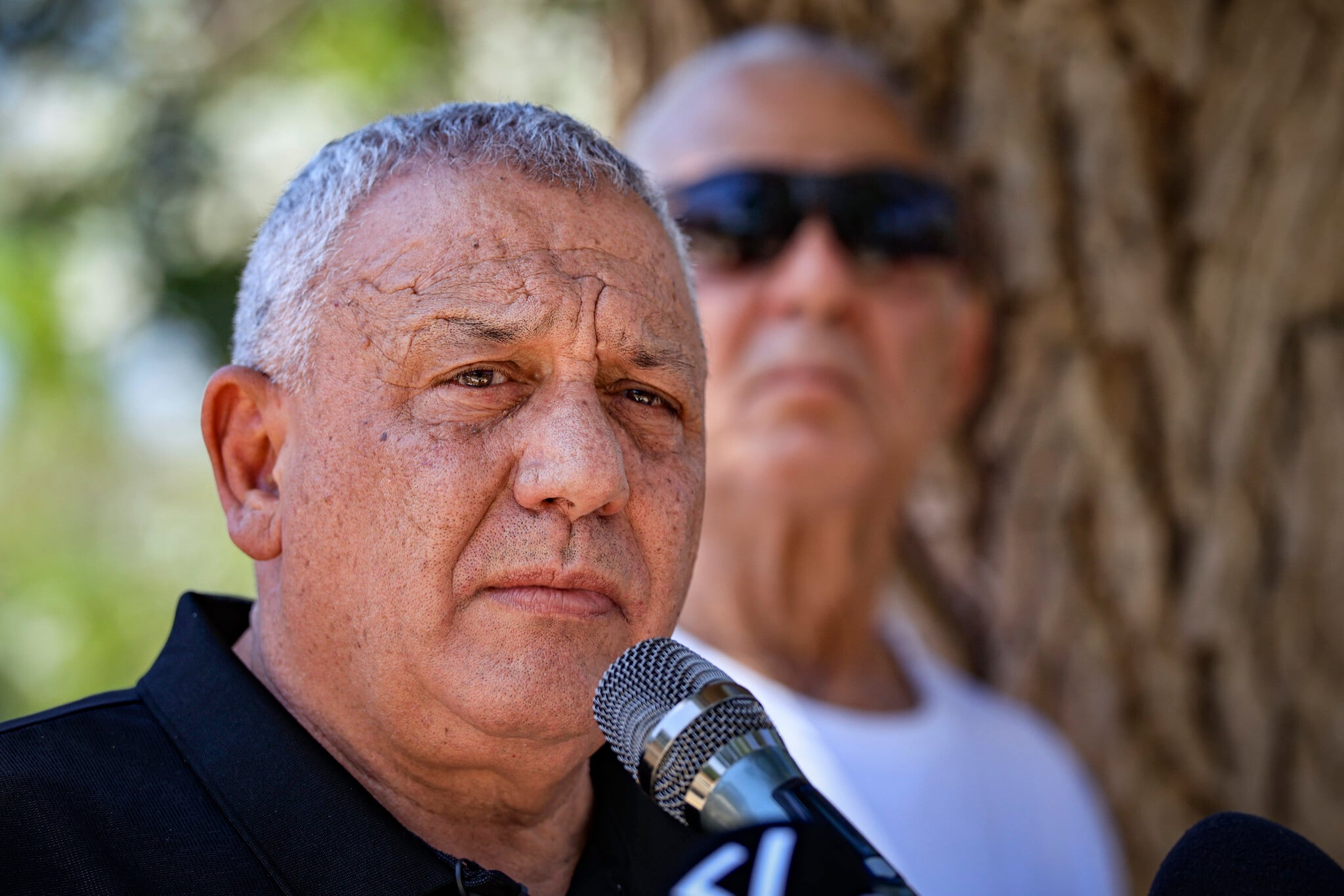
Now, more than a decade later, nearly every party in the anti-Netanyahu bloc is led by someone who once served as a minister in his governments. The frontrunner opposing him, Gadi Eisenkot, was in his war cabinet after the October 7 attack.
One of the only people who was burned by Netanyahu but still appears willing to sit with him is Gantz, whose own party is crumbling.
With prospects on the center-right uncertain, Netanyahu has instead put his energy into uniting the far right. He fears that fragmentation in that camp will lead to one or more factions falling short of entering the Knesset, and wasting its votes. That’s what happened to the left-wing Meretz in 2022, a development that helped Netanyahu sail to victory.
So far, Netanyahu is having some success coaxing unity to his right, with one merger already done. And historically, he’s outperformed polls, a track record that could give him a modicum of reassurance heading into the October 27 vote.
It’s possible that the fragmented center-right, too, will join together. It’s possible that Netanyahu’s backers will get closer to 61 than polls predict. And it’s possible that a new moderate party will, again, keep Israel’s longest-serving prime minister in office, or even just block his defeat, triggering a repeat election and leaving him as a caretaker prime minister in the meantime.
But it’s also possible that Netanyahu will wake up on October 28 without a clear pathway to a majority — and with no opponents-turned-allies coming to his rescue.









The Times of Israel Community.