

Palestinian FM: EU should ban settlers as well as their products
Palestinian Authority has not yet used its full legal arsenal against Israel at the ICC, claims Riyad al-Maliki
 Add ToI as a Preferred Source on Google
Elhanan Miller is the former Arab affairs reporter for The Times of Israel
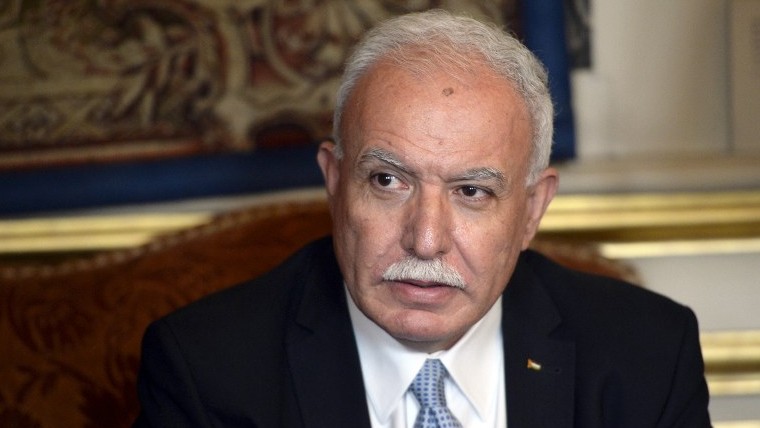
The Palestinian Authority has asked the European Union to block the entry of Israelis living beyond the Green Line into Europe’s 26 Schengen Area countries, PA Foreign Minister Riyad al-Maliki told a leading Arab daily on Sunday.
In an extensive interview with London-based newspaper Asharq al-Awsat following his meeting with French Foreign Minister Laurent Fabius, Maliki expressed annoyance at the fact that a European Union decision to label settlement products has not yet been implemented.
“If the EU argues that settlement products should be ‘discriminated against,’ settlers are among those products and should be viewed the same way,” Maliki told the daily. The PA has also called on the EU and US to place settlers that carry out so-called “price tag” attacks against Palestinian property on their terror blacklist.
The European Union was looking into the possibility of blacklisting “violent settlers” late last year, diplomats told Reuters. That sanction would affect up to 200 individuals, they estimated.
Schengen Area countries, comprising most of western Europe, have abolished passports and other forms of border control at their common borders.

Maliki’s visit to France was timed to pressure the government of Francois Hollande to move forward with its peace plan, including a 24-month cap on bilateral negotiations between Israel and the Palestinians, with the threat of a UN Security Council decision against Israel in case negotiations fail to produce an agreement.
France, the Palestinian foreign minister argued, had been subjected to intense Israeli and American pressure to abandon the threat of resorting to the Security Council. But Fabius denied that the UN option was off the table, Maliki said.
‘If the EU argues that settlement products should be ‘discriminated against,’ settlers are among those products and should be viewed the same way,’ Maliki said
It is the Palestinians, the minister asserted, who are reluctant to launch another Security Council bid only to see it fail, as happened last December. Therefore, a new bid should focus on the issue of settlements — an issue the Americans cannot diplomatically afford to veto — rather than a hopeless bid forcing Israel to negotiate within a fixed timetable.
“By doing so, we would obtain something from the Security Council leading to change. This is extremely important for us, given the lack of any kind of movement; we want movement and are interested in it,” Maliki said.
The Palestinian leadership, he made clear, has given up hope in the United States as a fair peace broker. During a recent trip to Moscow, Maliki discussed with Foreign Minister Sergey Lavrov the possibility of copying the P5+1 model — used to negotiate with Iran over its nuclear aspirations — to the Israeli-Palestinian context. “He promised to discuss the matter with [US Secretary of State John] Kerry,” Maliki said of Lavrov.
Asked whether the Palestinian Authority intends to continue confronting Israel in the International Criminal Court, Maliki said his government has so far proceeded cautiously, avoiding using doomsday weapons against the Jewish State.
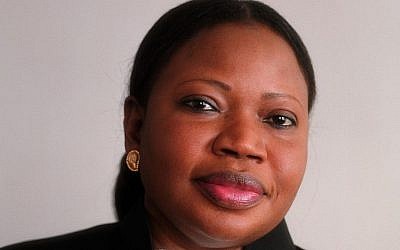
Thus far, the Palestinians have merely asked the ICC prosecutor Fatou Bensouda to look into the Palestinian issue in general, and she has begun an independent investigation based on available evidence. But, Maliki noted, there is another tool at the disposal of the Palestinians at the ICC known as “referral,” whereby the Palestinian government can demand an immediate investigation into a specific case, such as the burning of the Dawabsha family in the West Bank village of Duma, apparently by Israeli extremists.
“So far we have not used referrals, but have settled for the first method regarding Gaza, settlements and other issues,” he said. “Referrals are a weapon we haven’t yet resorted to. At the right moment we will use them, when we believe we can and should do so.”
Maliki avoided explaining when exactly that moment may be.









The Times of Israel Community.