

Police to crack down on lap dances at strip clubs
Authorities say new enforcement regime due to directives that equate it with prostitution
 Add ToI as a Preferred Source on Google
Police on Wednesday announced that they would crack down on lap dances at strip clubs, saying the practice often meets the legal definition of prostitution.
Police said the decision to step up enforcement was in accordance with a new directive from the state prosecution, which found that in some cases lap dances constitute prostitution under Israeli law.
“The continuation of this activity constitutes an offense and a cause for using all legal means,” police said in a statement. They said, without elaboration, that the directive would include administrative measures against strip club owners.
A letter was sent to strip club owners informing them of the new policy and warning them of the increased enforcement.
“The Israel Police and the state prosecutor’s office will continue to act firmly against offenses of exploiting women, including any offense or illicit phenomenon that meets the definition of prostitution,” police said.
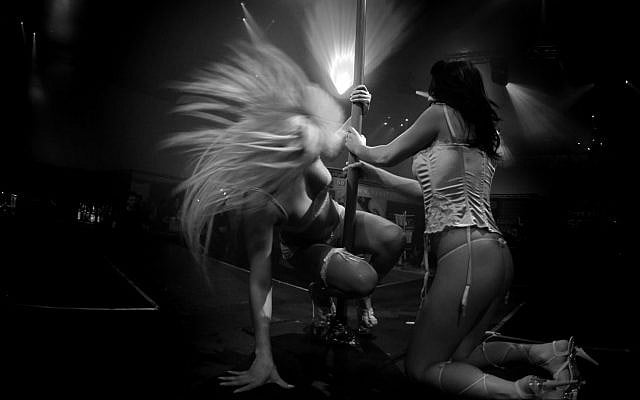
The announcement from police comes nearly a year after Public Security Minister Gilad Erdan said he would push for redefining lap dances as acts of prostitution.
He said at the time that he would give law enforcement officials all the necessary tools to “significantly reduce this abusive, exploitative industry and bring the perpetrators to justice.”
While prostitution itself remains legal in Israel, pimping, sex trafficking, and running a brothel are punishable by law.
Earlier this month, a bill that would levy heavy fines on people caught hiring prostitutes cleared its first legislative hurdle, in an effort to crack down on sex trafficking.
Under the terms of the bill presented by Justice Minister Ayelet Shaked, first-time offending johns would be fined NIS 1,500 ($405), with the penalty increasing to NIS 3,000 ($810) for those who repeat the offense within three years. Courts would be empowered to raise the fines to a maximum of NIS 75,300 ($20,400.)
Those charged under the proposed law will have the option of paying the fine, requesting that it be canceled, or being tried in court. The bill will be brought to the Knesset for readings after the summer recess ends in October.





The Times of Israel Community.