Saudi Arabia, Kuwait congratulate Iran’s new reformist president elect
King Salman expresses wish for further dialogue and coordination to strengthen international peace and security; Kuwait wishes Tehran ‘more prosperity and development’
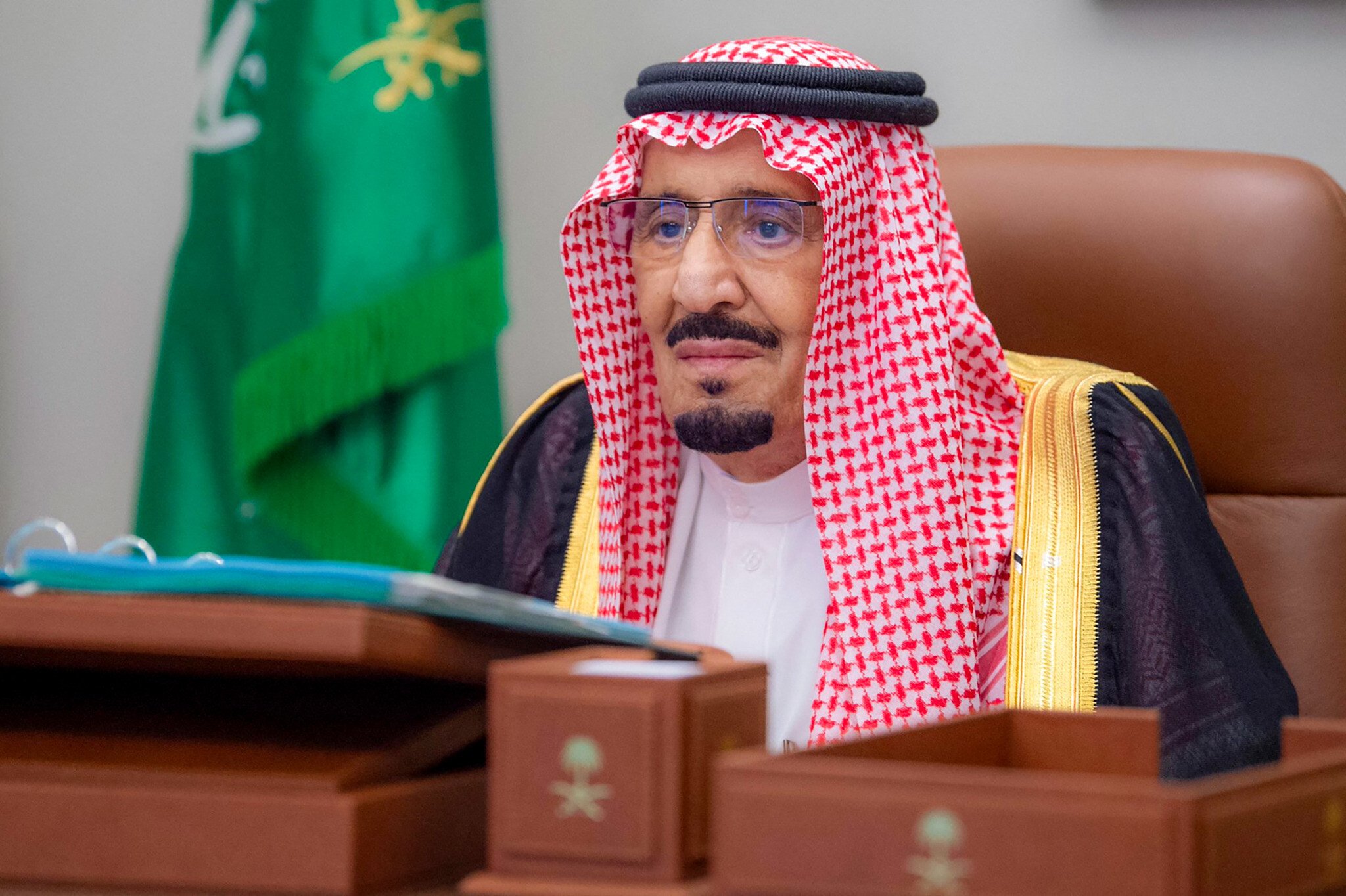
This handout picture provided by the Saudi Press Agency (SPA) shows Saudi Arabia's King Salman bin Abdulaziz al-Saud chairing a virtual Cabinet session in Jeddah on May 28, 2024. (SPA/AFP)
RIYADH, Saudi Arabia – Saudi Arabia, which restored ties with Tehran last year following a years-long rift, congratulated Iran’s new president-elect Masoud Pezeshkian on Saturday.
King Salman, in a message to Pezeshkian, expressed hope for the “continued development of relations which link our two countries and our two brotherly peoples,” according to the official Saudi Press Agency (SPA).
He also expressed his wish for further “coordination and dialogue to strengthen regional and international peace and security,” SPA said.
After a seven-year rupture, Sunni Muslim-majority Saudi Arabia and Shiite-dominated Iran resumed relations under a surprise China-brokered deal announced in March last year.
Since then the two Middle East powers, which have often supported opposing sides in regional conflicts, have intensified their contacts.
Get The Times of Israel's Daily Editionby email and never miss our top stories
Iran’s ultraconservative late president Ebrahim Raisi traveled to Riyadh in November for a summit on the Israel-Hamas war in the Gaza Strip.
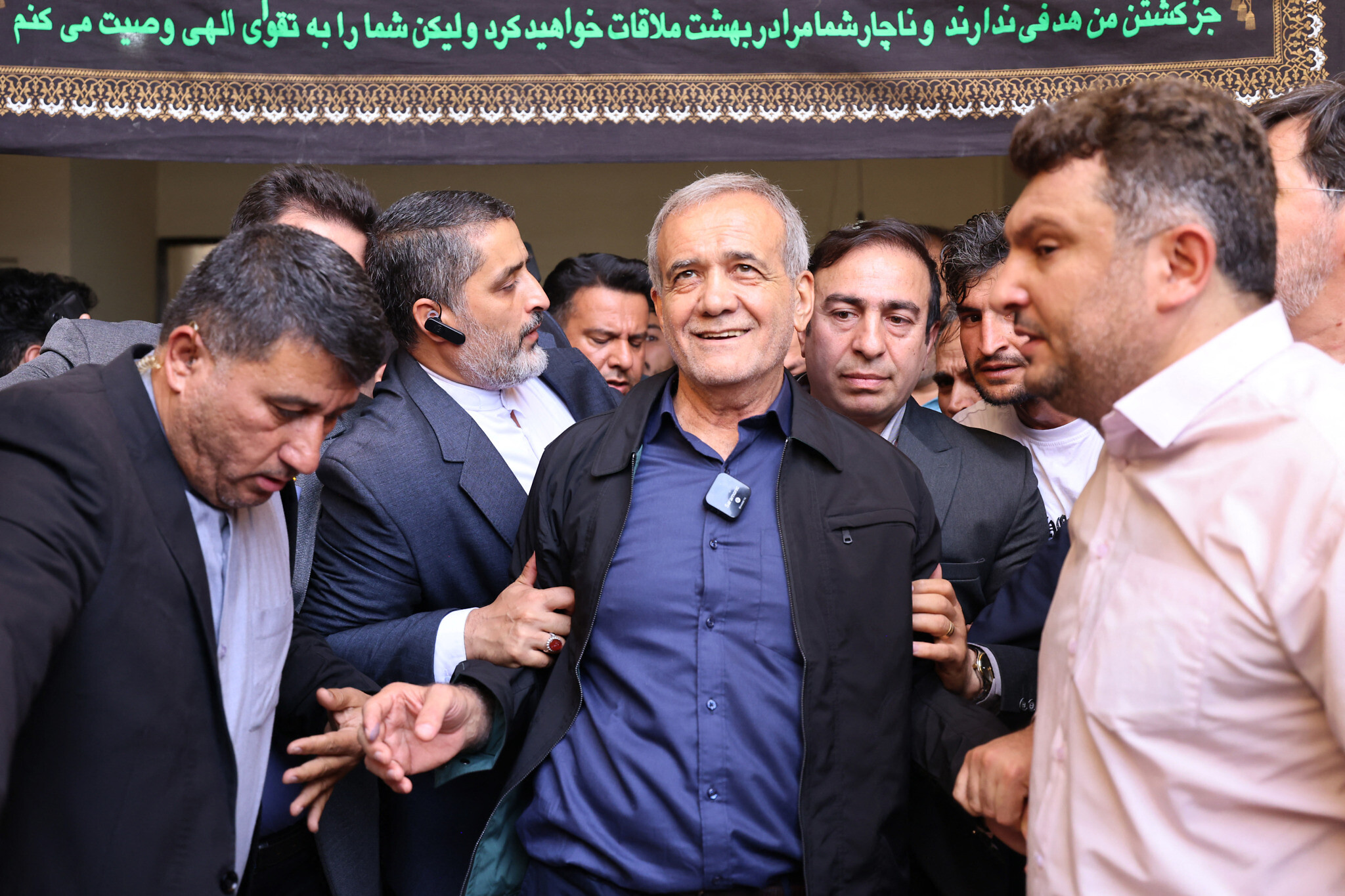
Iranian reformist presidential candidate Masoud Pezeshkian (C) leaves a polling station after voting in Tehran on July 5, 2024. (Atta Kenare/AFP)
Raisi’s death in a helicopter accident in May led to Iran’s early election, in which Pezeshkian defeated his ultraconservative challenger Saeed Jalili in a runoff.
The emir of Kuwait, another Gulf state, also sent a cable of congratulations to Pezeshkian, wishing “more prosperity and development” for the Islamic Republic, Kuwait’s official KUNA news agency said.
Advertisement
Help us report truthfully on social media
As a multimedia journalist, my job is to take the quality, fact-based journalism produced by The Times of Israel newsroom and make it accessible across every platform — from Instagram posts to podcasts to short-form videos.
This is how many, especially young people, consume news these days. But misinformation is rampant on social media. Our team at ToI produces accurate, responsible short-form reporting on Israel and the Jewish world.
If you believe in the importance of factual social media journalism, please consider joining our reader support group, The Times of Israel Community. Your financial support is essential to sustain responsible multimedia reporting.
We’re really pleased that you’ve read X Times of Israel articles in the past month.
That’s why we started the Times of Israel - to provide discerning readers like you with must-read coverage of Israel and the Jewish world.
So now we have a request. Unlike other news outlets, we haven’t put up a paywall. But as the journalism we do is costly, we invite readers for whom The Times of Israel has become important to help support our work by joining The Times of Israel Community.
For as little as $6 a month you can help support our quality journalism while enjoying The Times of Israel AD-FREE, as well as accessing exclusive content available only to Times of Israel Community members.
Thank you, David Horovitz, Founding Editor of The Times of Israel


 Add ToI as a Preferred Source on Google