

Smotrich rejoices as settlement plan that ‘erases 2-state delusion’ gets final greenlight
Minister fetes ‘historic’ approval of controversial construction scheme in West Bank’s E1 area, upending a decades-long freeze; PA says move divides West Bank into ‘prisons’
 Add ToI as a Preferred Source on Google
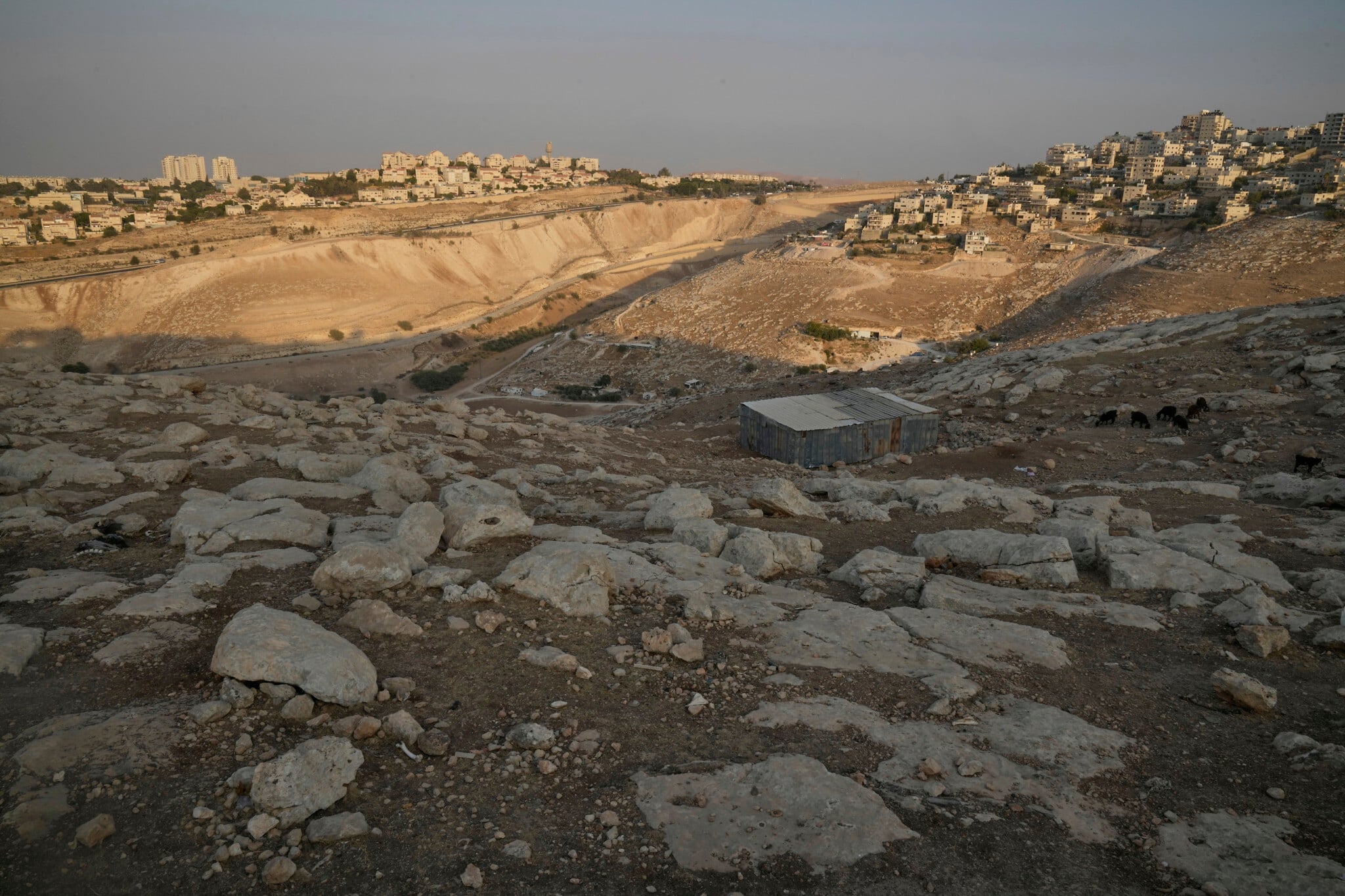
A major construction project that would see some 3,400 housing units built in the contentious E1 area in the West Bank, between Jerusalem and the settlement of Ma’ale Adumim, was given final approval Wednesday.
Announced last week by Finance Minister Bezalel Smotrich, the controversial plan was formally greenlit by the Higher Planning Committee of the Civil Administration, a Defense Ministry department.
Smotrich, who also holds a junior ministerial position in the Defense Ministry that grants him wide say in settlement construction, called the decision “historic.”
He described the construction plan as a “significant step that practically erases the two-state delusion and consolidates the Jewish people’s hold on the heart of the Land of Israel.”
“The Palestinian state is being erased from the table not by slogans but by deeds. Every settlement, every neighborhood, every housing unit is another nail in the coffin of this dangerous idea,” the far-right minister declared.
He cast the dramatic move, which will effectively bisect the West Bank, as retaliation against Western states that announced plans to recognize a Palestinian state in recent weeks.
The plan received praise from Ma’ale Adumim Mayor Guy Yifrach, who said in a statement that he was “pleased to announce that just a short while ago, the Civil Administration approved the planning for the construction of the E1 neighborhood.”
Meanwhile, the Palestinian Authority slammed the approval, saying it undermines the chances of a two-state solution.
The project “fragments… geographic and demographic unity, entrenching the division of the occupied West Bank into isolated areas and cantons that are disconnected from one another, turning them into something akin to real prisons,” the PA’s foreign ministry said in a statement.
If the process moves quickly, infrastructure work in E1 could begin in the next few months and construction of homes could start in around a year, according to AP.
The E1 settlement project had been frozen for decades amid fierce opposition from the international community, including past US administrations, which feared building a new settlement neighborhood on the mostly empty tract of land would rule out the establishment of a contiguous, viable Palestinian state.
The now-approved plan will connect the Jerusalem and Ma’ale Adumim metropolitan areas, while seemingly scuttling the prospect of a contiguous Palestinian presence between the population centers of Bethlehem, East Jerusalem, and Ramallah — long considered the basis for a Palestinian state.
The Peace Now organization, which campaigns against the settlement movement, concurred with Smotrich that the project severely threatens the viability of a future Palestinian state, adding that implementing the plans would move Israel toward becoming a “binational apartheid state.”
“Under the cover of war, Smotrich and his minority of messianic friends are establishing a delusional settlement that we will have to evacuate in any agreement,” said the organization, adding that billions of shekels may be spent — and wasted — on the development.
“The entire purpose of the settlement in E1 is to sabotage a political solution and rush towards a binational apartheid state,” the group’s statement continued.
Last week’s announcement of the move sparked widespread condemnation from European and Arab countries, alongside international organizations, with the United Nations calling on Israel to reverse its decision.
UN spokesperson Stephane Dujarric said to reporters that the plan would “put an end to prospects of a two-state solution.”
The European Union similarly urged Israel to desist from its plan, with the agency’s top diplomat Kaja Kallas saying in a statement that the step “undermines the two-state solution while being a breach of international law.”









The Times of Israel Community.