

Spain takes over Catalonia, fires defiant separatist leaders
Carles Puigdemont and 12 other Cabinet members will no longer be paid, could be charged with usurping others’ functions if they refuse to obey
 Add ToI as a Preferred Source on Google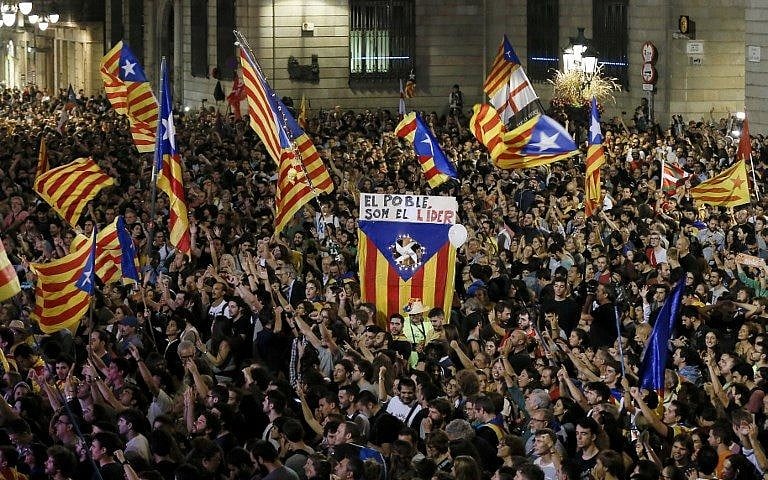
BARCELONA, Spain (AP) — Spain took formal direct control of Catalonia on Saturday, on paper firing the region’s defiant separatist government a day after lawmakers passed a declaration of independence for the prosperous northeastern region.
But there was no immediate sign if top Catalan officials were intending to obey or if they would resist the sacking and throw the region into further turmoil by prolonging a monthlong standoff with central authorities.
The move came after one of the most tumultuous days in the country’s recent history, as the national parliament in Madrid approved unprecedented constitutional measures to halt the secessionist drive by the regional parliament in Barcelona.
Spain made the takeover official by publishing special measures online early Saturday in the country’s gazette.
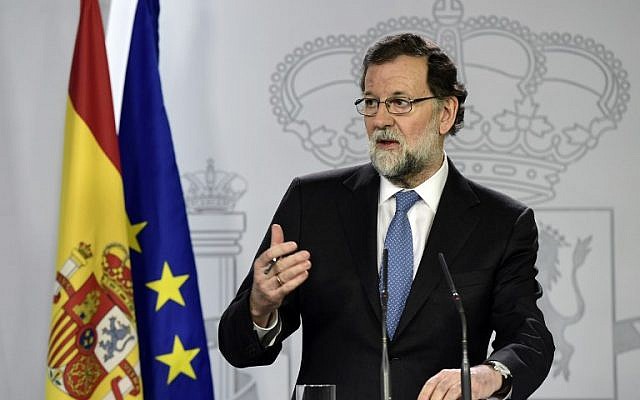
Spanish Prime Minister Mariano Rajoy, who now replaces Catalan President Carles Puigdemont as the top decision-maker in the northeastern region, has also dissolved the regional parliament and called a new regional election to be held on December 21.
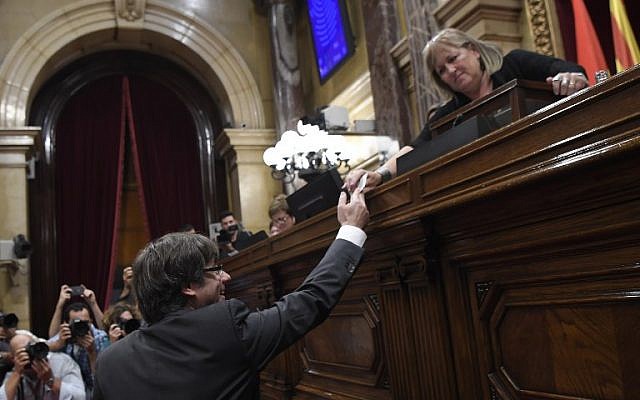
Still, it was not clear at all whether a new election would solve Spain’s problems with separatists in Catalonia. Polls suggest pro-independence parties would likely maintain their slim advantage in parliamentary seats but would not get more than 50 percent of the vote.
Rajoy said the declaration of independence “not only goes against the law but is a criminal act.”
His comments were met late Friday with jeers and whistles of disapproval in Barcelona, the main city in Catalonia, where thousands had gathered to toast the independence declaration.
Puigdemont and the 12 members of the Catalan Cabinet now will no longer be paid and could be charged with usurping others’ functions if they refuse to obey.
There was no immediate sign they intended to comply with the orders. The Catalan Cabinet met Friday but didn’t make any public appearances or offer statements following Rajoy’s announcement of the planned government takeover. Spanish prosecutors say that top Catalan officials could face rebellion charges as soon as Monday.
Beyond any possible resistance from top Catalan officials, it’s unclear how Rajoy’s government in Madrid will be able to exert its control at lower levels of Catalonia’s vast regional administration.
Catalonia had secured the ability to govern itself in many areas, including education, health and policing, since democracy returned to Spain following the death of dictator Gen. Francisco Franco in 1975.
Some among Catalonia’s roughly 200,000 civil servants have said they will refuse to obey orders from Madrid. They risk being punished or even fired under the special powers granted to central authorities by the nation’s Senate on Friday.
Vice President Soraya Saenz de Santamaria will be Rajoy’s strongwoman in running Catalonia until December 21, when Catalans are expected to choose a new regional parliament. She will coordinate other ministries that take over functions of the region’s regional departments, including finances and security, and appoint officials to implement orders from Madrid.
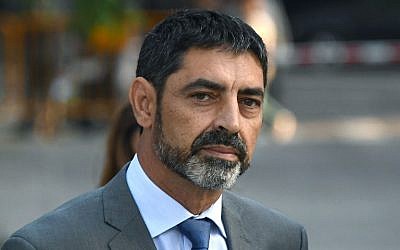
In one of the first moves, Spain’s Interior Ministry published an order to demote Josep Lluis Trapero from his position as head of the regional Mossos d’Esquadra police in Catalonia. He will be allowed to remain as commissar.
Trapero became a controversial figure as the public face of the police response in mid-August to deadly extremists’ attacks in and near Barcelona. He was praised for effectiveness but also criticized for coordination problems with other national police forces.
Spain’s National Court is also investigating him as part of a sedition probe related to the banned October 1 independence referendum, when the regional police were seen as acting passively — not aggressively — to halt the vote deemed illegal by a top Spanish court.
Trapero’s boss, regional police director Pere Soler, said in a statement that he accepted his firing by central authorities in Madrid.








The Times of Israel Community.