

States of play: 9 things to know for September 27
Trump’s two-state solution support is seen as a big move by some, while others are skeptical it’s anything more than just words
 Add ToI as a Preferred Source on Google
Joshua Davidovich is The Times of Israel's Deputy Editor
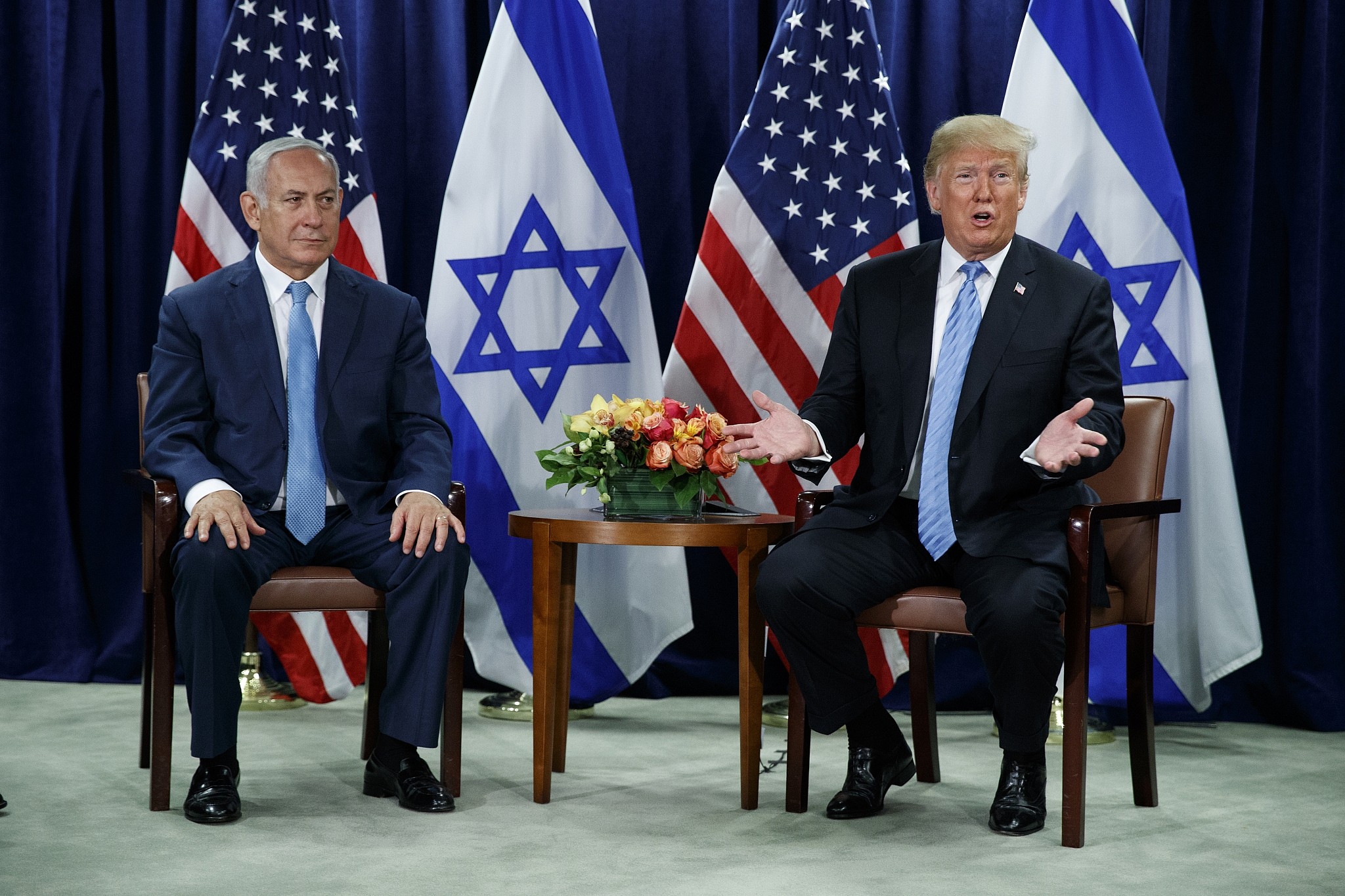
1. Two-states, new hopes: US President Donald Trump’s show of support for a two-state solution to the Israeli-Palestinian conflict, while short of a ringing endorsement, is still being viewed by some in Israel and elsewhere as a game-changer and cause for hope, even if the president isn’t known for sticking to his public pronouncements.
- “It’s quite clear that his repeated assertion that he now ‘likes’ the two-state solution wasn’t simply a random slip of the tongue or a flash of his stream of consciousness that often makes its way, unfiltered, to his Twitter account or impromptu public statements,” writes Haaretz’s Chemi Shalev, taking the president at his word.
- Former prime minister Ehud Barak praises Trump on Twitter for “signaling the right choice: two states with continued security control for Israel for as long as needed.”
- Former Israeli negotiator Gilead Sher uses the opportunity to lay out the parameters of a peace plan that have been known already for years.
(thread) 1. @realDonaldTrump @netanyahu #UNGA no question on the fundamentals of a 2-state solution: #Jewish people's right to self-determination in peace and security in its own state in Eretz Israel; #Palestinian People's right to self-determination in #WestBank, #Gaza>>
— Gilead Sher (@GileadSher) September 26, 2018
2. Whatevs: Yedioth Ahronoth calls the pronouncement “Trump’s surprise,” writing that Trump “made an unexpected change” by returning to the formula favored by the international community for decades.
- But Prime Minister Benjamin Netanyahu told reporters after the meeting with Trump he was not caught off guard and tried to obfuscate what “state” might mean for the Palestinians.
- Trump meanwhile, went back to mentioning the one-state solution at a press conference later in the day, eliciting groans from the peanut gallery.
And now we're back to two-state, one-state, whatevs.
As you were. https://t.co/6l1wmWW2Gi
— Dan Shapiro (@DanielBShapiro) September 26, 2018
3. Deal trumps graft: Still, Haaretz editor Aluf Benn seems hopeful that Netanyahu will return to endorsing two states and working toward a peace deal (as he did in the salad days of his tenure), which now puts leftists who have been pushing for his fall in a bind.
- “What is more important – the chances of resolving the conflict with the Palestinians, or at least mitigating it, or the coverage Netanyahu received on the Walla website before the 2015 elections? The realization of the two-state vision, or the champagne and cigars that the Netanyahus received from Arnon Milchan? Ending or limiting the occupation, or the chef’s meals at the Prime Minister’s Residence?” he writes.
- His answer is that an agreement will outweigh any illegal activity the premier is suspected of, raising troubling questions about being willing to support bad people for good reasons, which is not how the rule of law is supposed to work.
4. Trump card: Rather than enter crisis mode or abandon Trump, Netanyahu and other right-wingers seem to be willing to hear him out, to a point, putting little faith in him actually taking the Palestinians’ side and much faith in his continuing to be the Netanyahu’s government best bud.
- “This is the friendliest administration we’ve ever known, that stands with us against Iran, Hamas, and the UN. We must say ‘yes’ to this president as often as possible. Let the Palestinians say ‘no,’” writes former ambassador to the US Michael Oren on Twitter.
Pres. Trump prefers a two-state solution and Israel must respect his preference. This is the friendliest administration we’ve ever known, that stands with us against Iran, Hamas, and the UN. We must say “yes” to this president as often as possible. Let the Palestinians say “no.”
— Michael Oren (@DrMichaelOren) September 26, 2018
- Israel Hayom, seen as close to Netanyahu, leads its edition with headlines touting Trump’s friendliness and downplaying the two-state talk, focusing on Iran and Syria, which is what the Israeli premier preferred to talk about.
- Echoing Oren, reporter/columnist Ariel Kahana writes that whatever Trump proposes will be friendlier to Israel that anything some other president might propose, and thus Jerusalem needs to be prepared to answer in the affirmative.
- “Even under a Republican administration, it could be worse. Real policy-making doesn’t mean pushing it off forever, but taking advantage of the opportunity. That is Trump,” he writes.
5. Ramallah unimpressed: The Palestinians, meanwhile, reacted with skepticism that his words are anything but words, especially after he went back to mentioning the one-state idea.
.@realDonaldTrump: “One-state/two-state/whatever” is not policy! Pandering to extremist Zionist evangelicals, donors (Adelson, et al), lobbyists AIPAC,etc) & Netanyahu is dangerous policy! Illegal unilateral measures against #Palestinians, Jerusalem & refugees destroy peace.
— Hanan Ashrawi (@DrHananAshrawi) September 27, 2018
- Channel 10’s Barak Ravid writes that the shift toward two states appears to have been the result of conversations Trump had with the leaders of Jordan, Egypt and France, and even if it’s not clear if there is actual policy behind it, now that it is out in the open, “the ball is in the Palestinians’ court.”
6. Abbas’s last stand: Abbas’s speech to the UN General Assembly is scheduled later Thursday, but ToI’s Avi Issacharoff predicts that the Palestinian leader, pushed into a corner by the US, Hamas and Israel, may respond by baring his claws.
- “The big question is whether he will make the dramatic decision to cease the PA’s transfer of funds to the Gaza Strip,” he writes.
- “His associates have hinted at this more than once, signaling it could happen at the beginning of October. It is possible, of course, that such a decision is only a threat and could be postponed indefinitely. But if it is carried out, it could be painful for Israel, not to mention fatal for US President Donald Trump’s peace plan.”
7. Labour pains: Jeremy Corbyn’s speech to the UK Labour party in which he declared himself against anti-Semitism and an “ally” of the Jews (but also for Palestine) is met with arguably even more skepticism than Trump’s statement.
- Author Jamie Susking accuses Corbyn of “gaslighting,” and in the Guardian, Sonia Sodha notes that “Corbyn went no further than he has done in the past in acknowledging the nature of left antisemitism, leaving questions hanging about his leadership qualities.”
Sorry Mr Corbyn, but saying “We are your allies” to the Jewish community is just gaslighting. No friend of the Jews would have the friends that JC has, say what he has said, or do what he has done.
— Jamie Susskind (@jamiesusskind) September 26, 2018
- ToI’s Robert Philpot writes that rather than lay anti-Semitism allegations to rest, the party’s Liverpool conference cemented its place as a hard-left anti-Israel activist group, which is actually taking its cues from Trump and his ilk.
- “The party has quite consciously attempted this week to put the summer’s rows over anti-Semitism behind it by going on the attack. It is another example of the ‘Trumpification’ of Labour and how the British hard left is mimicking the tactics of right-wing US populists.”
- Haaretz’s Anshel Pfeffer writes that part of that attack was a debate held at the conference about Palestine, which showed the party was abandoning its role as the voice of many Britons.
- “The Palestine debate was an exercise in virtue signaling by the party’s ascendant hard left – a demonstration of their newfound grassroots power over the weakened moderate wing, dismayed by the summer’s outbreak of anti-Jewish sentiment and the seeming indifference of Corbyn to what was being said in his name,” he writes.
8. Battle-ready battle: IDF chief Gadi Eisenkot’s announcement that he would probe the concerns of a state ombudsman warning the army is unprepared for war may seem like him being receptive to criticism and reform.
- Many, though, have seen the move as a flanking maneuver meant to head off a Knesset probe of Yitzhak Brick’s allegations, with Eisenkot even getting a shot in at Brick by announcing that the internal investigation will have access to “the wide and deep evaluation tools that are in the hands of official auditor figures.”
- Noting the bad blood seeping in front of the public, Yedioth writes that the “argument over the army’s readiness has become uglier, more personal and has long strayed from a professional discussion over so important a topic.”
9. Iran ♥ the IDF: At least Iran respects the army, seemingly, though it’s not sure whose.
- A picture making the rounds of Twitter (but suspiciously seeming to be mostly spread around the Israeli echo chamber) shows a billboard in the city of Shiraz with a picture of three soldiers standing on a mountaintop, with a message “honoring the powerful military.”
- The only problem? The picture is of IDF soldiers (with a woman photoshopped out). According to the tweets, the picture was taken down after a short while (another picture shows this), and the person responsible may have been arrested.
https://twitter.com/Farberyanki/status/1045076139704823808
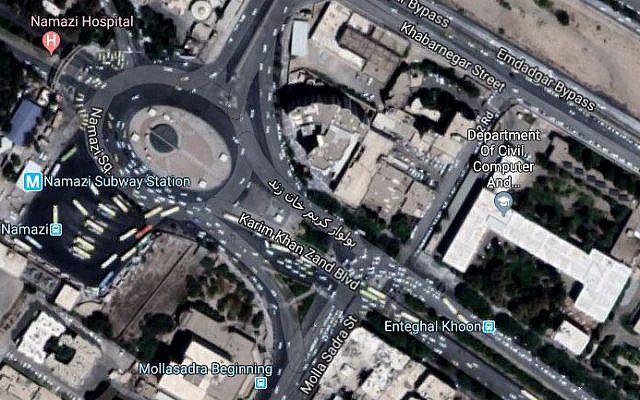
- It’s impossible right now to verify the story, but after an exhaustive search, I found that the location in the picture does match Shiraz’s Namazi square, so at least there is that.
- Don’t worry Iran, we’re not laughing at you, we’re laughing with you.







The Times of Israel Community.