

Study of prehistoric botanical art in the Levant suggests ancient man could do math
Analysis by Hebrew University researchers shows 8,000-year-old Halafian pottery sherds bearing symmetry and numerical patterning in images of trees, flowers and shrubs
 Add ToI as a Preferred Source on Google
Sue Surkes is The Times of Israel's environment reporter
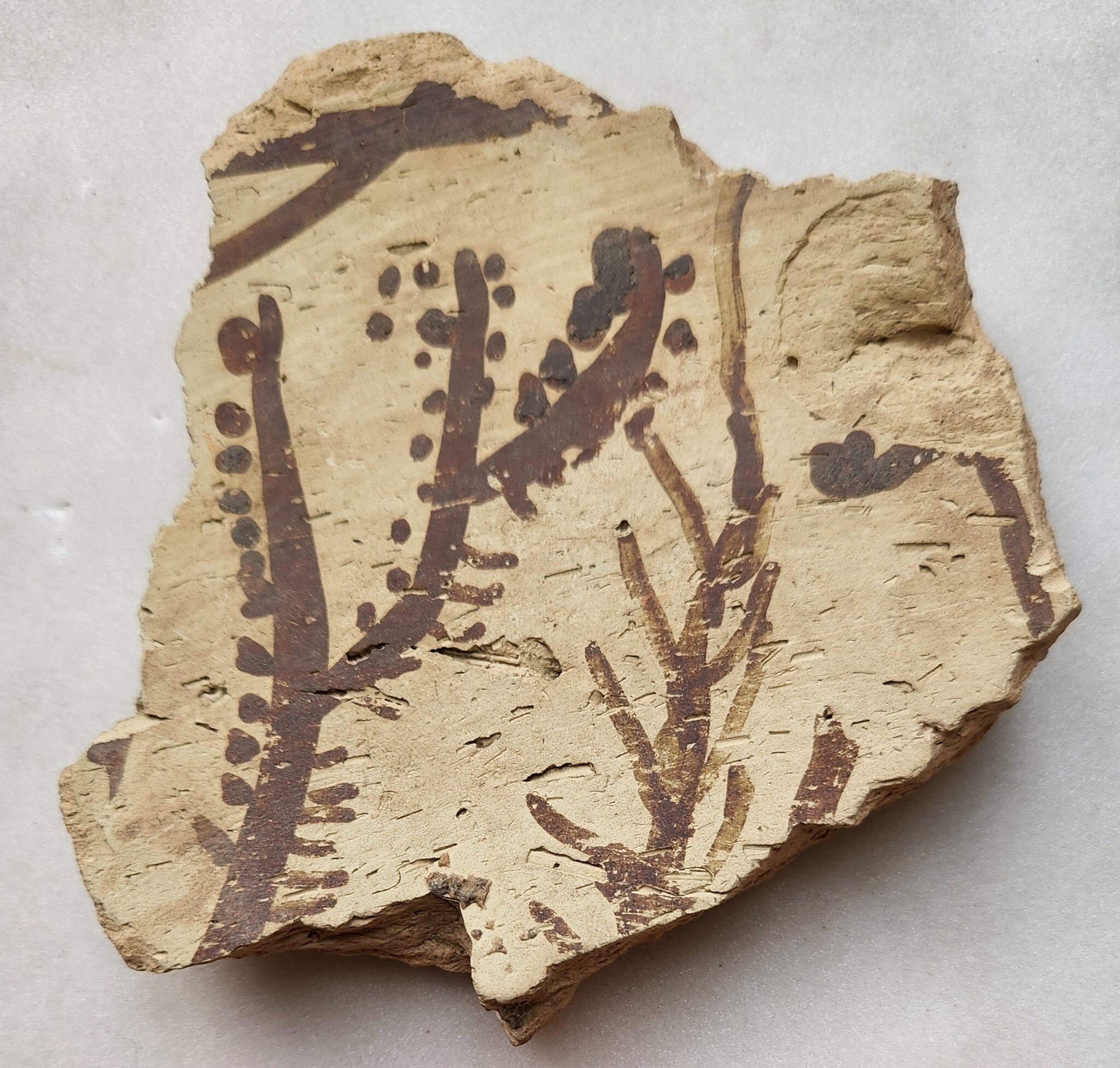
Some of the earliest artistic expressions of botanical motifs could indicate that humans developed mathematical and geometric thinking thousands of years before they could write out their calculations — or anything at all — according to a new study from Jerusalem’s Hebrew University.
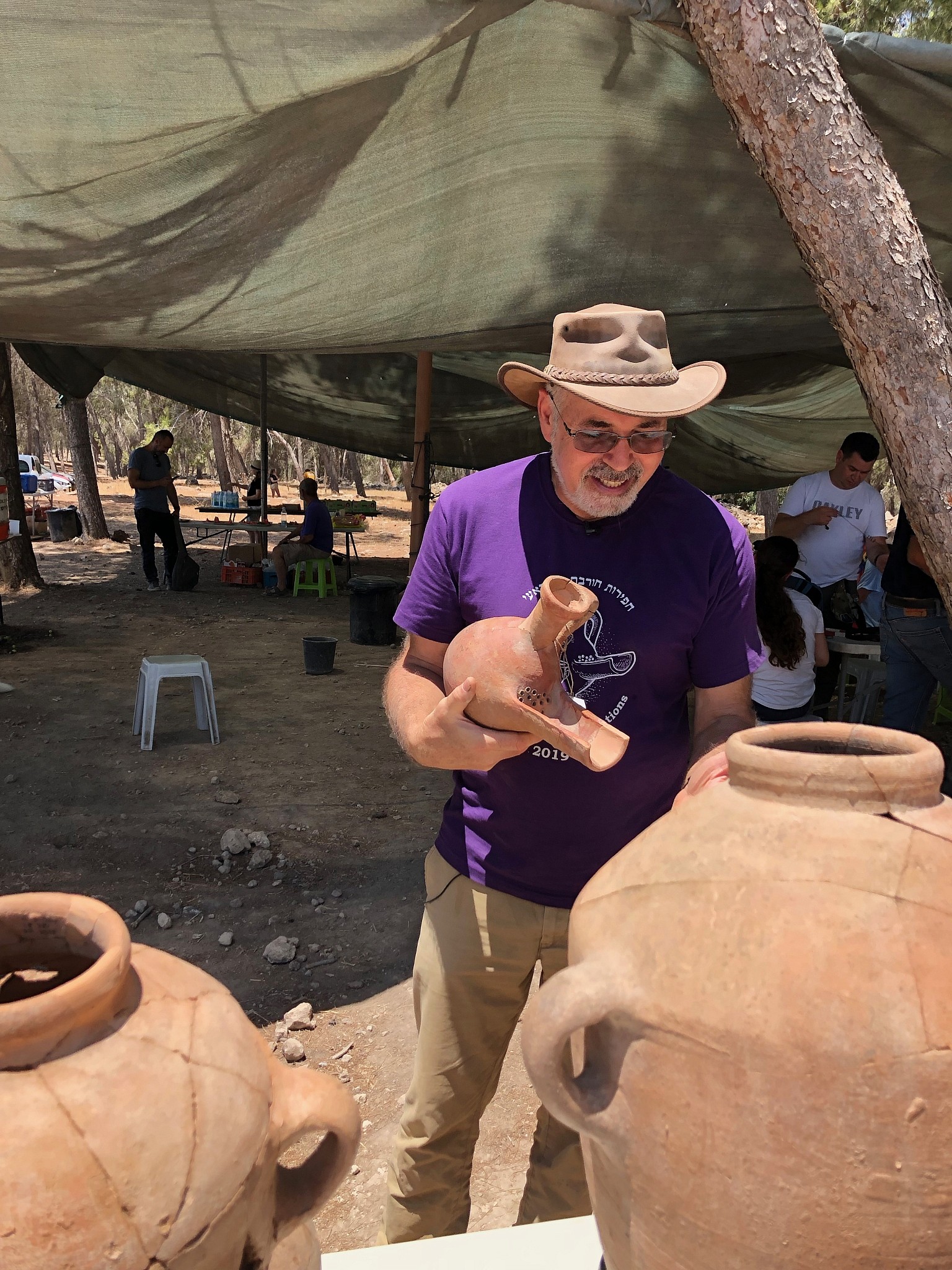
In an extensive analysis of ancient pottery published on December 5 in the Journal of World Prehistory, Prof. Yosef Garfinkel and Sarah Krulwich investigated images of flowers, shrubs, branches, and trees on hundreds of pottery sherds from the Halafian culture of northern Mesopotamia and the northern Levant from around 6200–5500 BCE.
They found a level of symmetry, repetition, and geometric organization indicating what they described as “a sophisticated grasp of spatial division long before the appearance of written numbers.”
“These patterns show that mathematical thinking began long before writing,” Krulwich adds. “People visualized divisions, sequences, and balance through their art.”
According to the two researchers, “The decoration of flowers on Halafian pottery clearly reflects sophisticated knowledge in the field of symmetry and in the ability to divide the circle into symmetrical units of 4, 8, 16, and 32… These numbers are not accidental.”
Earlier prehistoric art focused primarily on humans and animals. Halafian pottery marked the first systematic and visually sophisticated entry of the plant world into human artistic expression.
Garfinkel and Krulwich documented vegetal motifs from 29 archaeological sites, some naturalistic, others abstract, all reflecting conscious artistic choice.

“In each site, only a small number of sherds were decorated with vegetal motifs, which have consequently received little attention in the research,” says Garfinkel and Krulwich’s report. “It is only when the relevant data from the various reports is combined that the outstanding importance of the vegetal motifs becomes apparent.”
The researchers add that “no one seems to have noticed that this is one of the world’s earliest extensive uses of vegetal motifs, and the earliest in the Near East.”
“These vessels represent the first moment in history when people chose to portray the botanical world as a subject worthy of artistic attention,” they note. “It reflects a cognitive shift tied to village life and a growing awareness of symmetry and aesthetics.”
The motifs range from annual, short-leaved plants with two leaves, a tall stalk, and a flower, to small flowers with four petals, a “meticulously executed” drawing of a single large flower, depicted in a symmetrical arrangement that is typical of plants of the Compositae (daisy) family, and a tree with leafy or twigged symmetrical branches growing laterally from a central trunk.
The sheer variety of plants on the pottery “indicates awareness of the entire botanical world, from plants of different sizes to various parts of plants like branches and flowers,” the paper says, adding that “the motifs were chosen because of their beauty and probably their pleasing symmetry.”
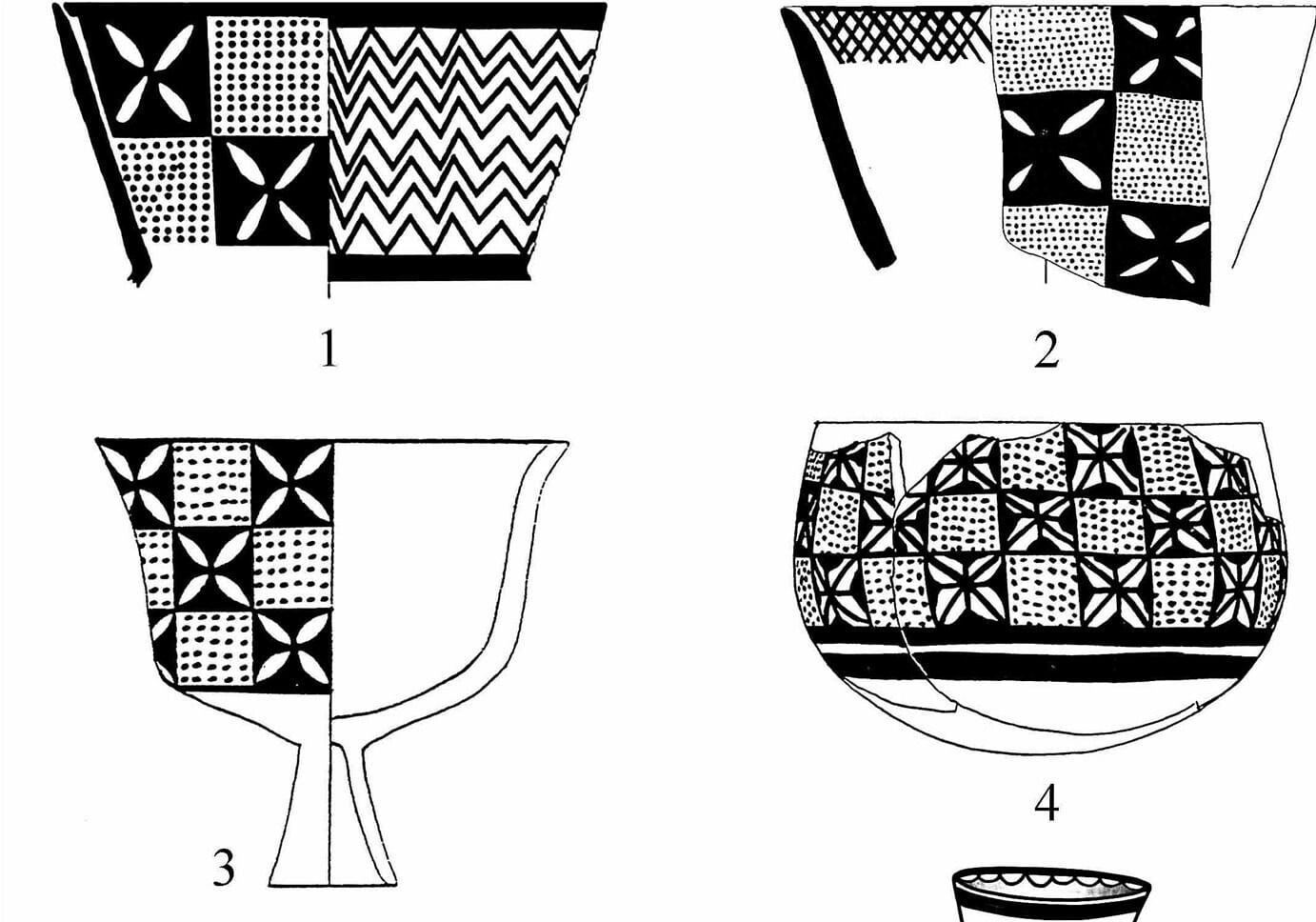
“The ability to divide space evenly, reflected in these floral motifs, likely had practical roots in daily life, such as sharing harvests or allocating communal fields,” says Garfinkel.
None of the images depict edible crops, suggesting that the purpose was aesthetic rather than agricultural or ritualistic, according to the researchers. Flowers, the authors note, are associated with positive emotional responses, which may explain their prominence.









The Times of Israel Community.