

‘Total disorder’: Comptroller accuses government, IDF of ‘systemic failure’ in post-Oct. 7 evacuations
Report finds gaps in preparedness, lack of up-to-date plan, shirking of ministry responsibility for 210,000 evacuees; Defense Ministry says response was coordinated despite challenges
 Add ToI as a Preferred Source on Google
Stav Levaton is a military reporter for The Times of Israel
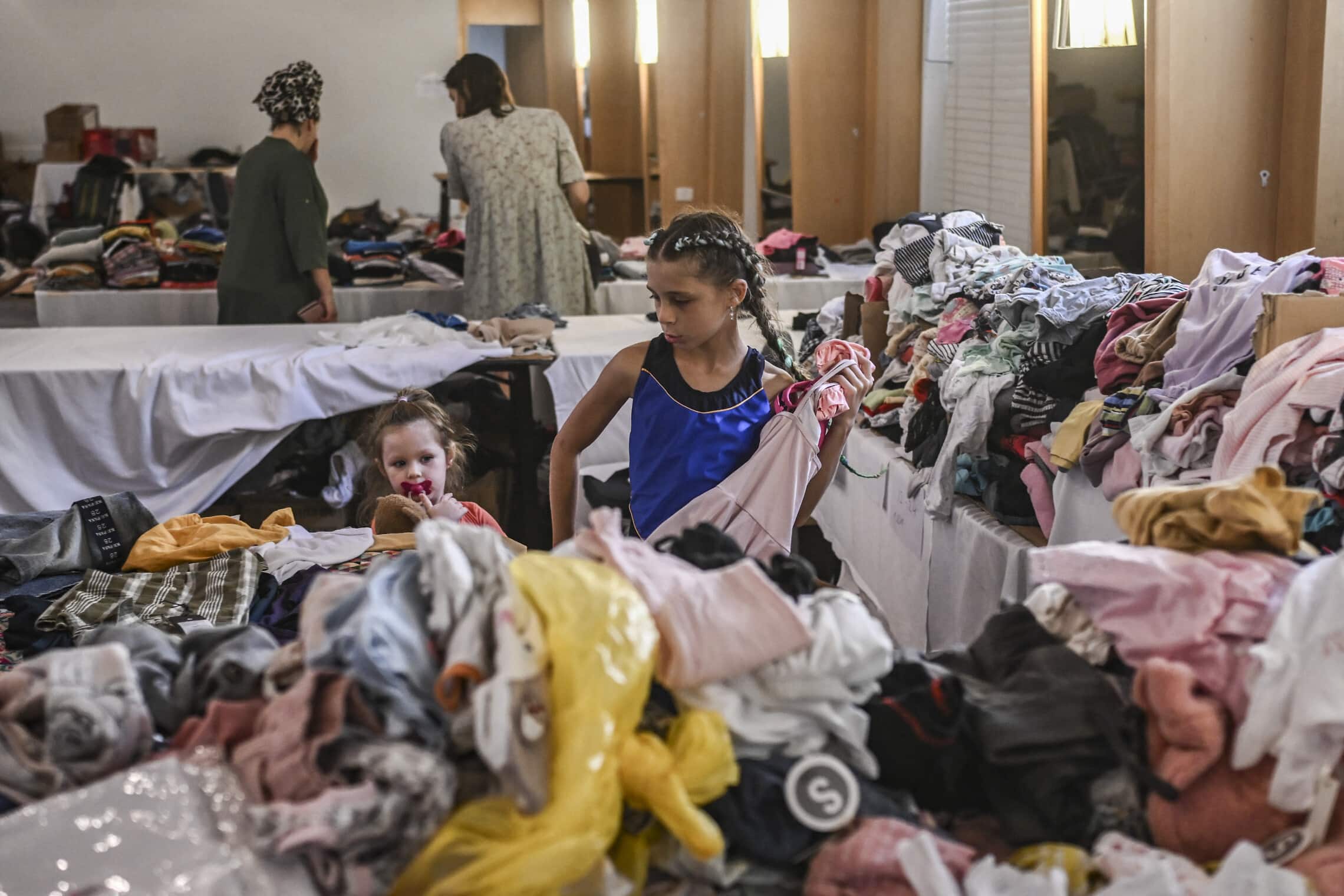
A state comptroller report published Tuesday found a series of major failures on the part of the government and emergency authorities in the mass evacuation and relocation of over 200,000 civilians in the immediate aftermath of Hamas’s October 7, 2023, onslaught, including late and sloppy evacuation processes, shirking of responsibility, and the lack of an agreed-upon, up-to-date protocol.
The damning report — exposing deep gaps in preparedness, coordination and responsibility among key government bodies tasked with managing the home front — is the 32nd by State Comptroller Matanyahu Englman on civilian aspects of the post-October 7 attack period.
The report examined the evacuation and relocation of some 210,000 residents from southern and northern communities during the opening stages of the war. It reviewed the preparedness of local authorities before the war, the evacuation process after its outbreak, the housing of evacuees in hotels and other facilities, and the provision of basic education and welfare services.
“The government and the IDF failed in evacuating the residents and absorbing them,” the report found, adding that authorities had, since the 2006 Second Lebanon War, been told to formalize an orderly plan, yet did not do so.
The ombudsman concluded that residents didn’t manage to coordinate their evacuation with the IDF, and in some cases, were put in needless danger during the course of their evacuation.
In many cases, the formal evacuation process began very late and took days, long after Hamas infiltrated and massacred locals.
In Kibbutz Nahal Oz near Gaza, the evacuation only began 14 hours after the start of the Hamas invasion, and ended 24 hours after the attack began. The evacuation of Kibbutz Kfar Aza took 36 hours. In Kibbutz Nir Am, the evacuation was initiated 20 hours after the invasion, and in Mefalsim after 17 hours.
“The picture that emerged in the report is one of total disorder,” it said, finding a “systemic failure” by emergency authorities.
No up-to-date mass evacuation protocol
According to the report, a 2012 government decision established a national framework for the organized mass evacuation and relocation of civilians in emergencies, dividing responsibilities between the IDF and local authorities and tasking the Interior Ministry with identifying nationwide facilities capable of housing up to 300,000 people. The plan prioritized the use of schools and public institutions, with expansion to boarding schools, hostels and, if necessary, hotels.

An updated version was formulated in 2022 but was not approved due to a lack of agreement on finding funding, the state comptroller found. As a result, when the war broke out, there was no approved up-to-date evacuation and relocation plan in place.
As a result, when the October 7 Hamas-led attack triggered large-scale evacuations from communities within four kilometers of the Gaza border — and later from northern border towns, including Kiryat Shmona — the response relied heavily on ad hoc decisions and government resolutions passed during the crisis.
Instead of prioritizing housing in public facilities such as schools and community institutions, as envisioned in the 2012 plan, the government quickly shifted to placing evacuees in hotels nationwide.
Additionally, the comptroller found that only 41 of the 317 facilities used during the war to host evacuees had been defined in advance as official housing facilities under the Interior Ministry.
Shirking of responsibility
The report also detailed disagreements between the National Emergency Authority — which is responsible for coordinating the civilian home front — and the Interior Ministry and the Israel Defense Forces regarding responsibility for managing evacuation and relocation. It stated that the Interior Ministry did not activate its emergency response system and maintained that, because a different framework was adopted from that specified in the 2012 government decision, its responsibility was not triggered.
However, the comptroller asserted that even if the original plan was not implemented, the Interior Ministry still had responsibility as the authority in charge of relocation.

In the north, the report noted that the city of Kiryat Shmona had not been included in the national “Safe Distance” plan — a framework prepared by the IDF and the National Emergency Authority for evacuating residents of communities located within five kilometers (three miles) of the border with Lebanon during wartime, with temporary housing planned for up to 21 days. This was despite previous audit findings concerning protection gaps and vulnerabilities, as well as the fact that Kiryat Shmona is approximately one kilometer away from the Lebanese border.
Some 10,000 residents of the city evacuated independently before a formal government decision was issued on October 18, 10 days after Hezbollah began launching rocket and drone attacks on northern Israel.
Inadequate preparedness
Across both the north and south, the report found that evacuation drills conducted before the war did not simulate scenarios on the scale that occurred on October 7, and that local emergency files did not include full evacuation scenarios in several of the 13 authorities examined. Specifically in the south, four of the five authorities did not practice evacuations of their residents.
The comptroller further stated that there was no unified system for managing real-time data on evacuees’ locations.
The report also reviewed the provision of services to evacuees in the first weeks of war, stating that many evacuees relied heavily on donations, and education and welfare services had to be improvised.
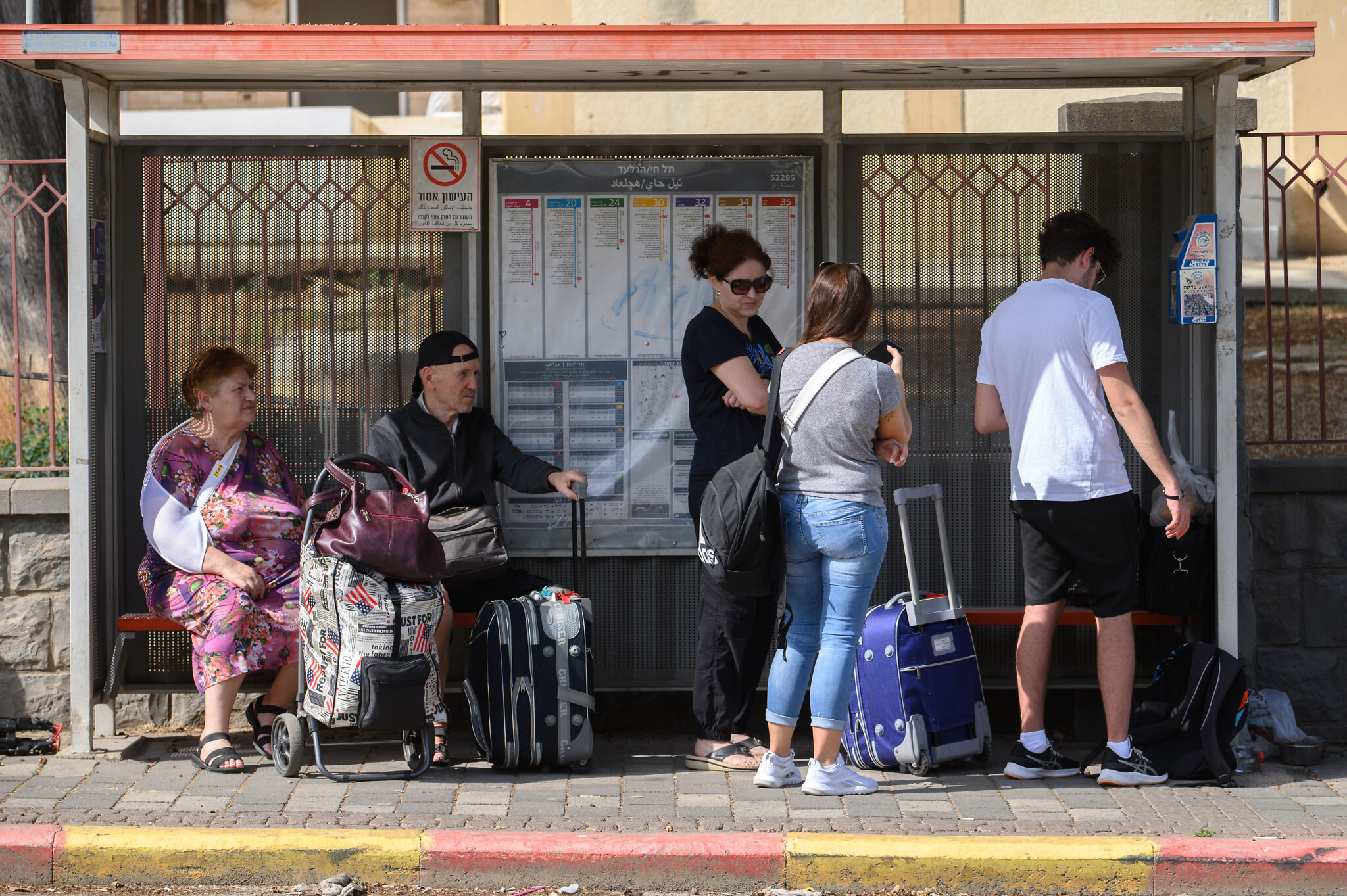
The comptroller concluded that the October 7 attacks exposed gaps in the regulation of emergency preparedness and in defining a coordinating authority with binding powers for managing the civilian home front during emergencies.
In response, the Defense Ministry, under which the National Emergency Authority falls, argued that it “acted and continues to act with an expansive approach since the beginning of the war” and led inter-ministerial coordination for the treatment of evacuees from the south and later from the north.
The ministry said that the authority established a command center to coordinate between government ministries and local authorities and worked to ensure a “continuous, orderly and professional response at all stages of evacuation, absorption and return to routine.”

According to the ministry, approximately 124,000 evacuees from the south and north were relocated to dozens of hotels across the country in what it described as an unprecedented event in Israel. It said the evacuation was based on plans formulated over the years by the National Emergency Authority and the Home Front Command and was implemented despite complex circumstances and numerous challenges.
The Defense Ministry added that the National Emergency Authority continues to operate “around the clock” with the Home Front Command and government ministries to strengthen home front preparedness, improve coordination mechanisms and deepen national preparedness for an array of emergency scenarios.
The IDF commented that the Home Front Command deployed approximately 1,000 regular and reserve commanders and soldiers to assist authorities in establishing command centers and leading the required response. The military said it operated in accordance with the approved “Safe Distance” plan and the scope of evacuation defined by the National Emergency Authority.










The Times of Israel Community.