

Ultra-Orthodox demand immediate progress on exemption from IDF service as vote postponed
Goldknopf calls on Netanyahu to honor his agreements and ‘complete the settlement of the status of Torah students in the Land of Israel’
 Add ToI as a Preferred Source on Google
Sam Sokol is a former political correspondent at The Times of Israel. He was previously a reporter for the Jerusalem Post, Jewish Telegraphic Agency and Haaretz. He is the author of "Putin’s Hybrid War and the Jews"

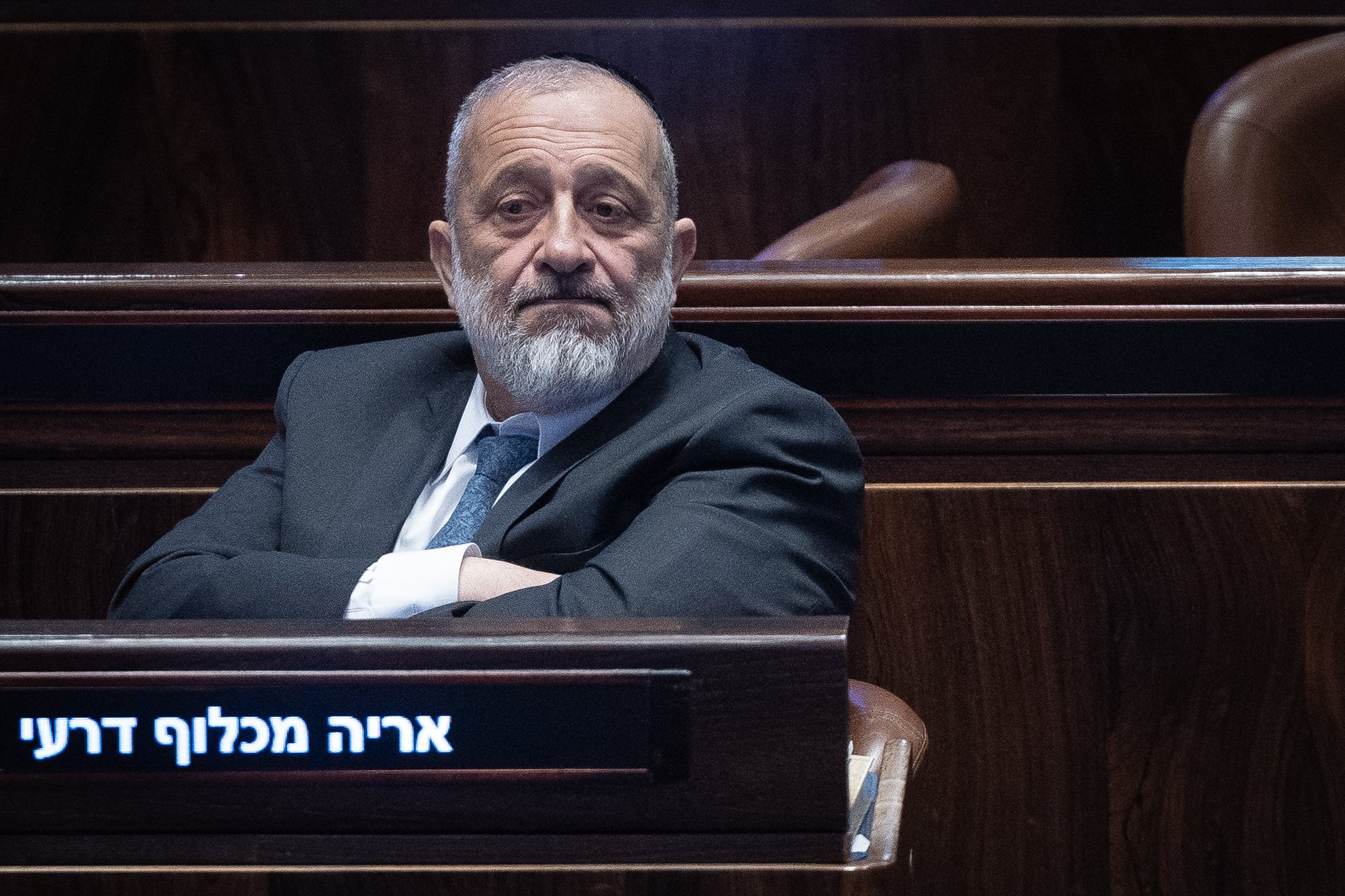
The United Torah Judaism party demanded on Thursday that Prime Minister Benjamin Netanyahu “immediately” pass a bill broadly exempting Haredi males from IDF conscription, after it emerged that the latest version of the controversial legislation was removed from next week’s Knesset agenda.
“The attorney general continues to persecute Torah students, but the blame lies solely with the government, which should have passed the conscription law as it pledged in the coalition agreements and would have brought an end to the persecution,” a spokesman for party chairman Yitzhak Goldknopf told The Times of Israel.
“We expect the prime minister to honor the agreements and immediately complete the settlement of the status of Torah students in the Land of Israel.”
The Attorney General’s Office released a letter on Wednesday detailing the military’s new plan to increase enforcement against draft evaders, eliciting harsh condemnations from representatives of Haredi coalition parties, who indicated they were running out of patience with the government over the delays to the legislation exempting yeshiva students from mandatory army service.
According to a coalition source, a vote on the coalition’s ultra-Orthodox enlistment bill was removed from the Knesset Foreign Affairs and Defense Committee’s agenda for next week, delaying the advancement of the controversial legislation with just weeks to go before the end of the Knesset summer session.
The bill was originally slated to appear on the agenda next Tuesday afternoon, but “at the last minute, there were disagreements, so a different bill was placed on the agenda instead,” a source familiar with the matter told The Times of Israel. The vote would have allowed the bill to be referred to the plenum for the final two readings necessary for it to become law.

Haredi lawmakers hope to pass the bill into law before the Knesset goes on recess at the end of the month. A spokesman for Edelstein declined to comment about the delay.
Members of the committee have yet to be presented with a draft of the revised legislation, whose sanctions on draft dodgers were reportedly watered down by committee chairman Edelstein last month as part of a last-ditch effort to prevent the Haredim from voting in favor of dissolving the Knesset.
After reaching an agreement in principle on Edelstein’s compromise terms to head off that crisis, the ultra-Orthodox parties announced that “understandings have been reached regarding the principles for the law preserving the status of yeshiva students,” adding that “another few days” were needed to “complete the final version” of the legislation.
The following day, however, Israel launched a series of airstrikes against Iran’s nuclear program, setting off a 12-day war and delaying any discussion of the legislation in the Knesset.
Edelstein met with former Shas MK Ariel Atias on Sunday to present the bill, but what he presented failed to satisfy the Haredi factions. Asked about the meeting, a senior UTJ source told The Times of Israel on Monday that Edelstein had presented Atias with “nonsense” and that they were still waiting for a more serious offer.

Another UTJ source asserted that Edelstein has presented general principles, but has not yet shown them a detailed text of the bill. The Haredi parties are currently boycotting voting on coalition legislation until presented with the new version of the legislation.
To pressure Edelstein into presenting the revised bill, both Haredi parties have been boycotting votes on coalition legislation in the Knesset plenum, with UTJ stating that it would “not vote with the coalition until the draft law is presented.”
Yated Ne’eman, the mouthpiece of UTJ’s Degel Hatorah subfaction, issued a stark warning on Wednesday morning that Netanyahu may no longer be able to rely on his Haredi partners if they fail to see movement on the enlistment-avoidance issue.
Likening the prime minister to the great British wartime leader Winston Churchill in a front-page editorial titled “Lessons from the past,” the paper noted the British premier “was a great statesman, a respected politician, and a brilliant commander” who foresaw threats others dismissed and “led Britain to victory in the war against the cruel enemy that threatened his country and the world.”
But then, his popularity declined. “Drunk on victory, he underestimated the intensity of the unrest and made empty promises of change. He did not listen to the needs of the exhausted people, and instead of making repairs at home, he sold them victory speeches.”
Months after leading the UK to victory over Nazi Germany, Churchill was voted out of power by a British public seen as more concerned about the postwar future than the achievements of the war, Yated Ne’eman noted.
Jerusalem Affairs Minister Meir Porush, a member of UTJ’s Hasidic Agudat Yisrael faction, went even further, intimating that the conscription of yeshiva students undercut the legitimacy of the state itself.
“If they had told us back then that Torah scholars would be arrested because that’s what the attorney general wanted, in my opinion, Agudat Yisrael would have said it did not want a Jewish state to be established,” he declared from the Knesset rostrum on Wednesday.
Speaking with Channel 12, a UTJ source complained that unless Edelstein presents his bill on Sunday, “we won’t have time to approve the law,” but his party no longer has any additional leverage to pressure the coalition in this matter.
“We have done everything. We are not interested in escalating and dismantling the government,” the source insisted.
Writing in party mouthpiece Haderech on Thursday, Shas spokesman Asher Medina accused Edelstein of seeking to “reopen issues that had already been closed,” adding that the Haredim have very little trust left in Edelstein.










The Times of Israel Community.