

US prosecutors oppose release of ex-Palestinian terrorist pending sentencing
Rasmieh Odeh awaits punishment for lying about role in bombing attack in Israel, faces 10 years in jail or deportation
 Add ToI as a Preferred Source on Google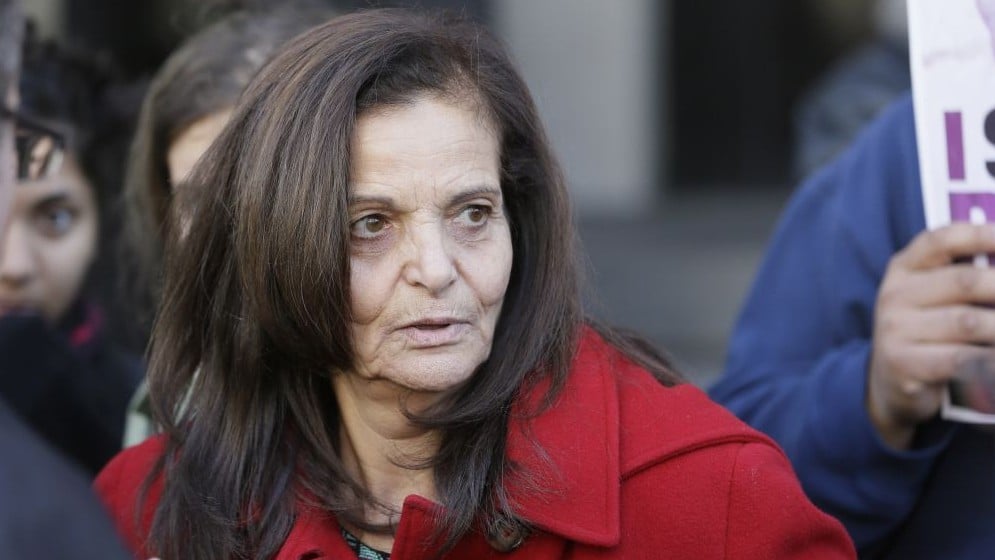
DETROIT — Federal prosecutors in Detroit are opposing the release of a former Palestinian terrorist who awaits sentencing for lying about her conviction in a fatal terrorist bombing in Israel to obtain US citizenship.
Sentencing is set for March 2015.
Prosecutors say Rasmieh Yousef Odeh committed “serial dishonesty” for decades and can’t be trusted to return to court in March. Prosecutors responded Wednesday to Odeh’s request for release from jail.
Odeh is associate director of Chicago’s Arab American Action Network. She is widely respected in Chicago for her work with immigrants, especially Arab women.
Odeh was convicted last week of intentionally failing to disclose convictions for bombings in Israel in 1969, one of which killed two people.
Israel released Odeh after 10 years in a prisoner exchange with the Popular Front for the Liberation of Palestine.
She answered “no” when asked about criminal history on her 2004 citizenship application. She says she believed it referred to US convictions.
The criminal case against her angered pro-Palestinian activists who accused the US government of trying to silence critics of Israel. Dozens of supporters traveled from Chicago to watch the trial last week, either in the courtroom or in a separate courtroom that carried a video feed. Many also gathered outside the downtown courthouse and chanted slogans, carried signs and held Palestinian flags.
Odeh had said Israeli authorities tortured her to get a confession. But US District Judge Gershwin Drain barred reference to that at trial. He said what happened in Israel was not relevant to whether she lied on the citizenship form.
“I think your verdict is a fair and reasonable one based on the evidence that came in,” Drain told the jury after the verdict was announced.
Outside, Odeh addressed supporters, many in tears, and told them to be “strong.” As she spoke, they cheered and chanted her name, and responded with “naam,” the Arabic word for “yes.”
“I didn’t lie,” she told The Associated Press, adding “I felt the verdict is not justice. … The government did not allow us to defend ourselves.”
Odeh faces up to 10 years in a US prison and loss of her US citizenship. Defense attorney Michael Deutsch said he hopes that the judge continues her bond because she is neither dangerous nor a flight risk.
Deutsch said he was upset that jurors spoke to government lawyers for a half-hour after the verdict but declined to meet with defense attorneys. He also was displeased that the judge took the “very unusual” step of complimenting the jurors on their verdict.
“That was a window into the judge’s thinking about this trial,” he said. “We feel we have some very strong issues for appeal, and we hope somebody will listen to us.”
Odeh and Assistant US Attorney Jonathan Tukel clashed during her testimony last week when she insisted she didn’t believe the criminal history questions extended beyond the US.
She was interviewed in 2004 by a Detroit immigration officer, Jennifer Williams, who told jurors she always tells citizenship applicants that criminal history applies to “anywhere in the world.” Odeh, however, testified that Williams didn’t use those words.
“I remember exactly what she said. … She didn’t add questions,” Odeh said.
During closing remarks, Deutsch said there was plenty of reasonable doubt for the jury.
“How hard would it be to make a form that clearly states what they’re asking?” he said.









The Times of Israel Community.