

US slaps new sanctions on networks aiding Iran’s proxies in Middle East
Actions target entities and individuals in Iraq, UAE, Lebanon and Turkey that Washington says supported Iraqi Shia paramilitary group Kataeb Hezbollah
 Add ToI as a Preferred Source on Google
The US government announced new sanctions on Thursday against firms and individuals that it says are aiding Hezbollah and other Iranian proxies in the Middle East as it intensified its campaign to isolate Iran economically.
The latest sanctions are part of the Treasury Department’s “Operation Economic Outcast,” announced August 24, which aims to cut off Tehran’s funding for the war, missile construction, cyberattacks and the Islamic Revolutionary Guard Corps, or IRGC.
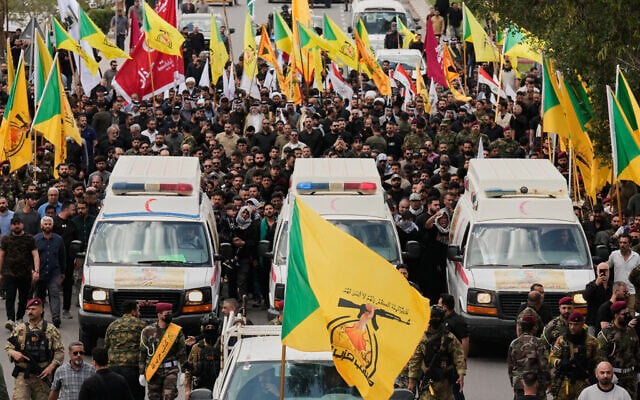
Thursday’s actions by Treasury’s Office of Foreign Assets Control hit entities and individuals in Iraq, the United Arab Emirates, Lebanon and Turkey that Washington said supported Kataeb Hezbollah, an Iraqi Shia paramilitary group under the command of the IRGC, and Hezbollah, a Lebanese Shia party, Treasury said in a statement.
Treasury also announced a settlement with a US citizen who agreed to pay $1.43 million to settle their potential civil liability for 39 apparent violations of sanctions on Iran, and issued a broad whistleblower appeal for tips on any sanctions evasion or money laundering by Iran.
OFAC issued a bulletin making clear that it would deny most Iran-related licensing requests, except in exceptional circumstances, and said its licensing division had immediately begun denying “the vast majority” of outstanding Iran-related specific license requests.
“OFAC will maintain this licensing policy until Iran changes its behavior, including obstructing the Strait of Hormuz, attacking US personnel and partners in the Gulf, and pursuing nuclear and conventional weapons,” Treasury said.
“Operation Economic Outcast is targeting those who continue to stand with the failing Iranian regime,” US Treasury Secretary Scott Bessent said in a statement. “Whether they finance terror, launder money, or help Iran evade sanctions, we will find them, cut them off from the US financial system, and dismantle the networks keeping the regime afloat.”
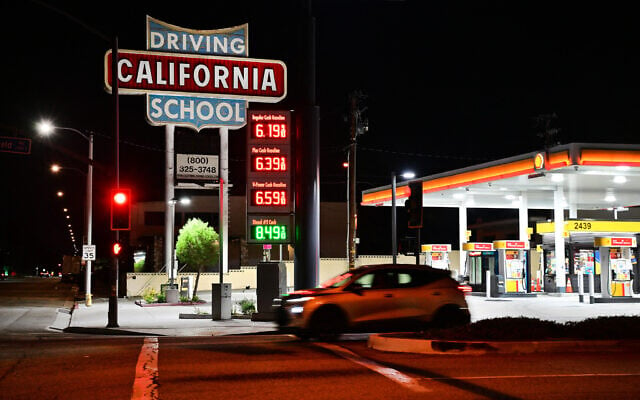
The Iran war, now in its seventh month, has dragged down President Donald Trump’s approval rating as Americans grapple with far higher gasoline prices, and could threaten his Republican Party’s chances of keeping control of Congress in midterm elections in November.
Far from the quick US military operation in Venezuela that ousted leader Nicolas Maduro, the Iran war has dragged into a battle of attrition punctuated by attacks on oil tankers that is also spreading to neighboring countries.
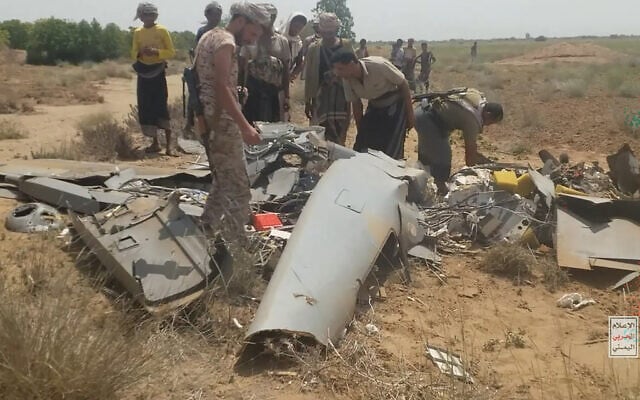
The new sanctions did not target Iran-aligned Houthis, who seized control of Yemen’s port city of Mocha on Thursday and advanced down the Red Sea coast, gaining further leverage over the Bab el-Mandeb Strait, the southern outlet of the Red Sea and one of the world’s most important shipping routes.
Impact on oil shipments
But a US official said Treasury’s campaign was hitting Iran’s economy hard while the US naval blockade was squeezing Tehran’s ability to move oil. Loadings of Iranian oil were down to about 0.2 million barrels per day over the past 30 days from 1.8 million barrels per day in January and February, they said.
Offloadings had dropped to 0.9 million barrels per day from 1.4 million barrels per day before the war, the official said.
The amount of Iranian or suspected Iranian oil on the water had averaged just 110 million barrels over the past week, down from over 180 million barrels in January and February.
Food prices increased sharply, the official said, while the Iranian rial depreciated by about 30% versus the US dollar since the start of the war, the official added.
Brett Erickson, managing principal with Obsidian Risk Advisors, said the latest sanctions would have only a marginal impact on Iran’s ability to move hard currency.
“These in no way move the needle,” he said. “Beyond this, they target Hezbollah, but not the far more consequential Iranian proxy in the Houthis that are wreaking havoc on the global energy markets.”
US to sanction unnamed ‘large’ bank on Monday, Bessent says
Bessent said on Thursday the Trump administration will sanction a large bank next week as it continues to apply economic pressure on Tehran to end a more than six-month US conflict with Iran.
He named neither the financial institution nor its country during his appearance on “Real America’s Voice,” but said the move would happen on Monday.
Bessent said the move was originally scheduled for Friday but was postponed because of the ceremonies marking the 25th anniversary of the September 11, 2001, attacks — the deadliest assault on US soil.
“We are just going to continue with this process until everyone stops dealing with this regime,” he said.
“We will make it so unprofitable that if you want to risk an extinction-level event for your company or for your person, your personal finances, then have at it. But we are coming for you.”
The United States has imposed a range of economic measures against Iran since the conflict began in February, targeting oil exports, shipping networks, weapons procurement channels, financial intermediaries, digital asset exchanges and aviation links.
The Trump administration escalated its campaign last month with what Bessent called “Operation Economic Outcast,” imposing sanctions on nearly 60 entities, individuals and vessels and expanding the scope of secondary sanctions on those doing business with Iran in sectors including shipping, aviation, technology, gold and digital assets.
Despite the increasing pressure on Iran, Trump predicted on Wednesday that the war will not end until after November’s midterm elections.





The Times of Israel Community.