

What would Maimonides do, as Supreme Court untangles conversion knots
Bench set to rule whether to accept independent conversions, which may have strong implications for Liberal Jewish movements in Israel
 Add ToI as a Preferred Source on Google
Deputy Editor Amanda Borschel-Dan is the host of The Times of Israel's Daily Briefing, What Matters Now and The Reel Schmooze podcasts, and heads up The Times of Israel's features.
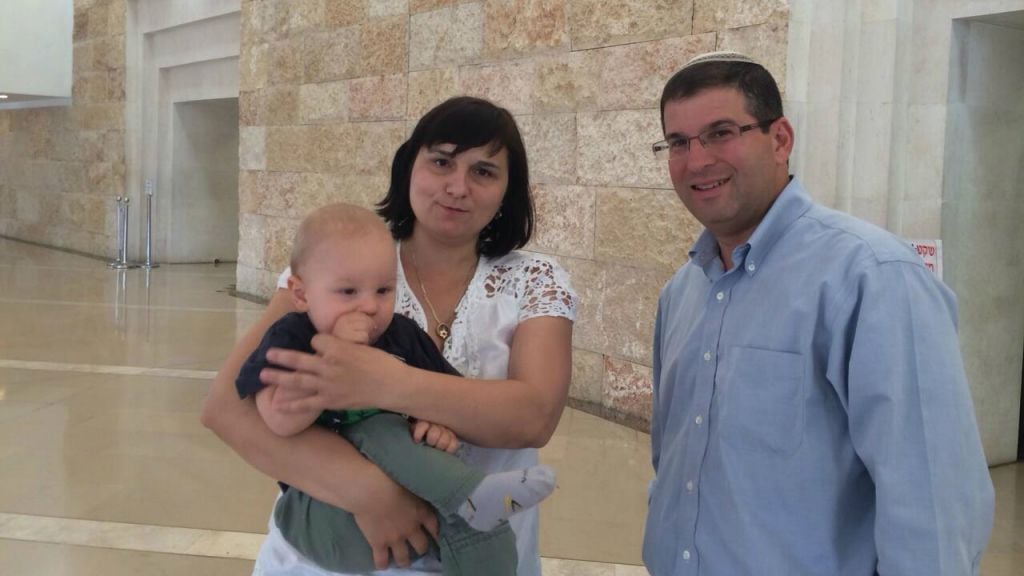
When an Israeli state attorney begins quoting the 12th century sage Maimonides during a hearing in the state’s secular Supreme Court, the lines between religion and state may be just a bit blurry.
After nine years on the docket, Martina Ragacova’s petition to have her Orthodox conversion recognized by the State of Israel was heard by nine Supreme Court judges on Tuesday. Joined by two other petitioners from 2011, the 2006 Ragacova case is complicated, and has many potential far-reaching consequences.
Ragacova, who lives in Prague today, became halachically Jewish after undergoing an Orthodox conversion in the ultra-Orthodox Israeli city Bnei Brak through the religious court of Rabbi Nissim Kurelitz. Kurelitz, who heads one of the most respected religious courts in the haredi Jewish world, has converted dozens of individuals in his private religious court who are today not recognized by the State of Israel as Jews.
These conversions are “kosher” according to Jewish law. Maimonides wrote very leniently about conversion in a statement in his Jewish law code Mishneh Torah (which was ratified by the Shulhan Aruch and became a basis of Orthodox Jewish law today) that “a convert whose intentions were not checked nor who was informed about the commandments and their punishment, but was circumcised and immersed in front of three laymen: he is a convert.”
‘A convert whose intentions were not checked nor who was informed about the commandments and their punishment, but was circumcised and immersed in front of three laymen: he is a convert’
Indeed, state’s attorney Yochi Genesin cited Maimonides during the hearing Tuesday, and agreed that any three “simple people,” usually translated as laymen, can form a religious court. However, because of this leniency, said Genesin, the state must avoid recognizing private conversions, essentially making a “slippery slope” argument in support of maintaining the state’s legal monopoly on Orthodox conversion in Israel.
There are two issues at stake in the petition: whether conversions in Israel completed through independent conversion courts outside of the state’s Conversion Authority should be recognized by the Interior Ministry, and whether those without legal status as residents of Israel, who today cannot gain citizenship through the Law of Return, may convert in Israel and subsequently petition for citizenship.
In the case of those individuals who converted through Kurelitz’s Bnei Brak court, which strictly adheres to Jewish law, the situation is almost a Catch-22: They were rejected from the state’s conversion program because they lacked legal resident status. But once they become halachically Jewish, unlike other Jews who convert abroad — including through the Reform and Conservative movements — they are not eligible to gain citizenship under the Law of Return.
Rabbi Seth Farber heads the nonprofit Itim which help immigrants navigate the state’s religious bureaucracy. His organization has been working with Ragacova for the past seven years. In a conversation with The Times of Israel immediately following the hearing, Farber said that until now, since the Knesset had ostensibly been working on the issue of local conversion courts, the judges have been putting off this hearing.
Today, said Farber, the issue of conversion courts is no longer on the Knesset’s roster and the judges have taken up the challenge. After today’s hearing Farber predicts that the court will rule that in the absence of a law, independent courts can be created, but the Interior Ministry must create criteria for regulating who is eligible for immigration.
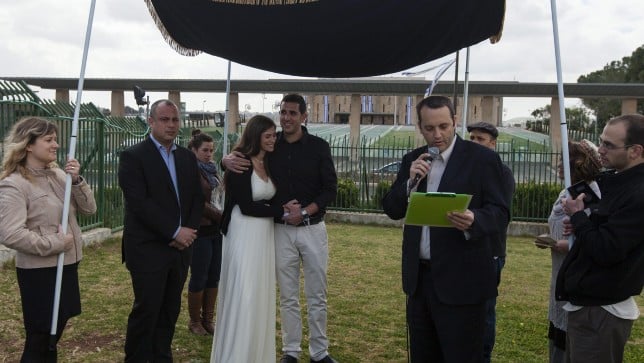
Lawyer Nicole Maor represented the Reform and Conservative movements as a respondent to the petition at the court’s request. Speaking with The Times of Israel while driving home from the hearing, Maor explained that Liberal Jewish movements in Israel are already converting those who have immigrated to Israel through the Law of Return. Their conversions, like those of the independent Orthodox conversions, are not recognized by the chief rabbinate for life-cyle purposes, but the Liberal movements do not convert those without legal resident status.
Although she disagrees, the state, said Maor, argues that the same legal question arises in whether to accept these private Liberal conversion courts. The Reform and Conservative movements, however, would be happy to have their conversions overseen and recognized by the state’s Conversion Authority, said Maor.
‘We’d be happy to have a state conversion — as long as it recognized all streams of Judaism’
“There is a conversion authority which allows people to convert in Israel, but that conversion authority is only for Orthodox conversions. We have asked the state many times to have a non-Orthodox program within the state authority. We’d be happy to have a state conversion — as long as it recognized all streams of Judaism,” said Maor.
According to Maor, the arguments basically came down to the question of regulation, so that potential converts in Israel aren’t taking advantage of the conversion to get residency status.
There have been several cases in the past that may feed the state’s fears that some may have ulterior motives in their conversions. Earlier in June, the Supreme Court heard a case in which the immigration petition of a Bolivian man who converted in Argentina in a recognized Conservative community was rejected by the Interior Ministry. The man, the state said, had lived in Israel under illegal circumstances, and had recently married a Christian woman (his third wife since living in Israel).
Because of his illegal stays in Israel, and several previous attempts to become a citizen through his previous wives’ status, the court rejected his petition and said that although his conversion was from a recognized court, his motivations for conversion were questionable.
Interestingly, however, the same Maimonides cited by state’s attorney Genesin addresses this question of motives.
“Even if we know that he is converting for an ulterior motive, if he was circumcised and immersed he is no longer considered a gentile, although we are suspicious of him until his righteousness becomes apparent,” the sage writes in his Mishneh Torah legal code.









The Times of Israel Community.