

Yesh Atid alleges Haredim were offered money for draft law
About-face comes as Netanyahu calls emergency debate to find way forward for controversial legislation, amid ultra-Orthodox threats to topple the government
 Add ToI as a Preferred Source on Google
Raoul Wootliff is a former Times of Israel political correspondent and Daily Briefing podcast producer.
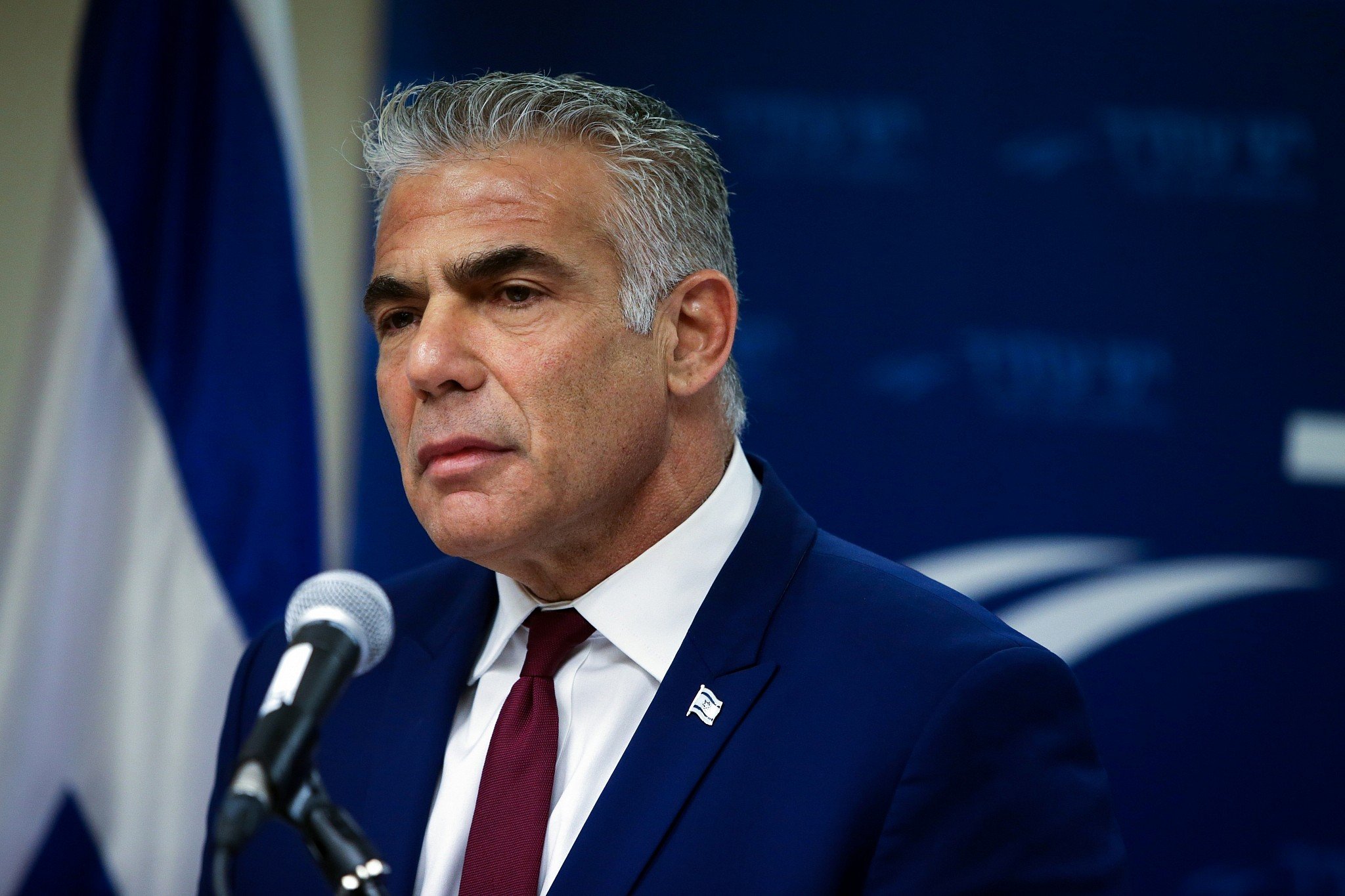
MK Yair Lapid announced Monday that his opposition Yesh Atid party will vote against the coalition’s bill on the military draft of ultra-Orthodox men, claiming that the government is preparing an “under the table” deal that would change the import of the legislation.
“Finance Ministry officials have been told to prepare compensatory funds for the ultra-Orthodox,” Lapid said, claiming that coalition leaders had told the ultra-Orthodox parties: “Don’t worry about the economic sanctions, we’ll send you the money under the table.”
He alleged that the secret agreement between the ruling Likud party and its ultra-Orthodox coalition partners featured a financial package that would offset any losses suffered by the ultra-Orthodox community due to the sanctions against draft dodgers set out in the legislation.
“We’re done being suckers. Yesh Atid will vote against the conscription law,” he declared.
Lapid’s party had previously announced it would support the Defense Ministry’s version of the 2018 enlistment bill, but would likely refrain from backing a softened, revised edition spearheaded by the Haredi parties.
He said that instead of passing the law now, “We should go to elections. After the elections, a government headed by me will pass the draft law without any wheeling and dealing or fraud.”
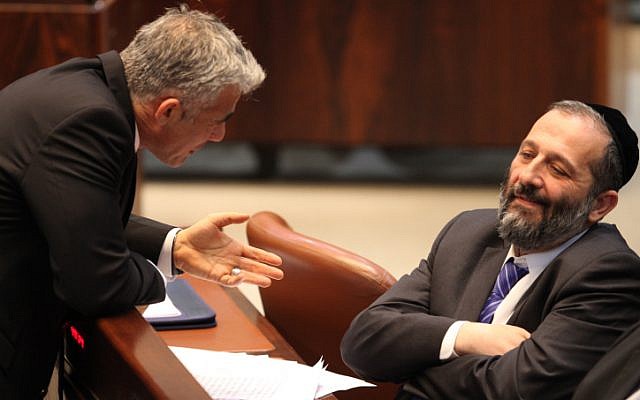
Zionist Union faction chairman Avi Gabbay welcomed Yesh Atid’s “zigzag” decision, calling the proposal a “bluff that will not bring equality to the [draft] burden.”
Speaking at his party’s Knesset faction meeting, Gabbay claimed that it was the Zionist Union’s “steadfast opposition” to the bill that prompted Yesh Atid to reconsider its support for the legislation.
“IDF soldiers risk their lives for our security and then a political deal is made at their expense in return, one that means we will not recruit any more ultra-Orthodox, and will not give a proper reward to those who serve,” he said. Gabbay also pledged that “within a year of him being prime minister” he will pass a law to give significant financial benefits to soldiers.
Lapid’s announcement came after Prime Minister Benjamin Netanyahu called an emergency meeting of coalition heads on Monday to debate the bill, in a last-ditch attempt to resolve the impasse over the contentious legislation that increasingly threatens to bring down the government.
The heads of the various coalition parties were set to meet at the Prime Minister’s Office in Jerusalem at 1 p.m., a day before the Knesset is to begin preparing the bill for its final readings and less than a month before the Supreme Court-imposed deadline to pass a new version of the current law.
Last September, the court ruled that a 2015 version of Israel’s draft law granting most yeshiva students exemptions from service was unconstitutional, telling lawmakers they must pass new guidelines for ultra-Orthodox enlistment. Earlier this month, the court granted the government a further month and a half to pass the bill, extending an early December deadline to mid-January.
Without the extension, thousands of yeshiva students would have become eligible to be drafted.

As it stands, the ultra-Orthodox parties are split over the current proposal and appear to be presenting an inextricable problem for the coalition: The Shas party is backing the bill and has reportedly said it will leave the government if it doesn’t pass, while a faction within the United Torah Judaism says exactly the opposite, threatening to leave if it does.
Following Netanyahu’s announcement, the Yisrael Beytenu opposition party also made allegations of a back-door deal with the ultra-Orthodox, saying in a statement that the coalition, “in a cynical move, is turning the draft law from a substantive issue into an electoral one.”
The party, led by former defense minister Avigdor Liberman, said it would support the original version of the law and withdraw its backing should it be altered to benefit the ultra-Orthodox parties.
In a statement of its own, the Likud party accused Yesh Atid and Yisrael Beytenu of playing “petty politics” with the draft law.
“In contrast to the spin they are publicizing, there are no deals or agreements being made with anyone else — the law will be presented, without any changes, as it was in its first reading, when it was supported by Liberman,” the Likud statement said.
If UTJ opposes the bill, the coalition must rely on either Yesh Atid or Yisrael Beytenu’s support to guarantee its passage.
But even with opposition backing for the bill, with the coalition holding a paper-thin majority of just 61 of the 120 Knesset seats, either ultra-Orthodox party could bring down the government and force new elections.
Elections are currently slated for November 2019, though recent coalition changes have threatened to bring that date forward.
The Defense Ministry-drafted bill, the current proposal on the table, would set minimum yearly targets for ultra-Orthodox conscription that, if not met, would trigger financial sanctions on the yeshivas where the students study. At the same time, it would also formalize exemptions for the vast majority of yeshiva students.
The current version sets the target for ultra-Orthodox recruits for 2018 at just below 4,000 recruits, with that number increasing by 8 percent per year for three years, 6.5% for the three years after that and 5% for a further four years. If 95% of the targets are not met, sanctions in the form of cuts to state funding allocated to ultra-Orthodox yeshivas failing to show sufficient recruitment numbers from among their students would go into effect. The cuts would increase each year the targets are missed.
Most in the ultra-Orthodox community eschew the mandatory military service required of other Israelis, and the community has historically enjoyed blanket exemptions from the army in favor of religious seminary studies.
But many view the current bill as the best possible deal for the ultra-Orthodox, and some in the community have warned that rejecting it will lead to chaos and mass conscription.
While the Shas party and the Degel Hatorah faction within the United Torah Judaism party have called for the bill to pass as it is, UTJ’s Agudat Yisrael faction is still demanding that minor changes be made.
Last month, UTJ’s chairman, Deputy Health Minister Yaakov Litzman, informed the cabinet that an earlier decision by his party’s rabbinical council meant that if the latest proposal for a new version of the bill is passed into law, he and fellow faction member Deputy Education Minister Meir Porush would be forced to resign.







The Times of Israel Community.