

A rocket and fury, signifying (almost) nothing
The airstrike in response to Friday’s Gazan rocket can be chalked up to election-season bluster, as neither side wants to escalate, but it may not stay that way

 Add ToI as a Preferred Source on Google
Avi Issacharoff, The Times of Israel's Middle East analyst, fills the same role for Walla, the leading portal in Israel. He is also a guest commentator on many different radio shows and current affairs programs on television. Until 2012, he was a reporter and commentator on Arab affairs for the Haaretz newspaper. He also lectures on modern Palestinian history at Tel Aviv University, and is currently writing a script for an action-drama series for the Israeli satellite Television "YES." Born in Jerusalem, he graduated cum laude from Ben Gurion University with a B.A. in Middle Eastern studies and then earned his M.A. from Tel Aviv University on the same subject, also cum laude. A fluent Arabic speaker, Avi was the Middle East Affairs correspondent for Israeli Public Radio covering the Israeli-Palestinian conflict, the war in Iraq and the Arab countries between the years 2003-2006. Avi directed and edited short documentary films on Israeli television programs dealing with the Middle East. In 2002 he won the "best reporter" award for the "Israel Radio” for his coverage of the second intifada. In 2004, together with Amos Harel, he wrote "The Seventh War - How we won and why we lost the war with the Palestinians." A year later the book won an award from the Institute for Strategic Studies for containing the best research on security affairs in Israel. In 2008, Issacharoff and Harel published their second book, entitled "34 Days - The Story of the Second Lebanon War," which won the same prize.
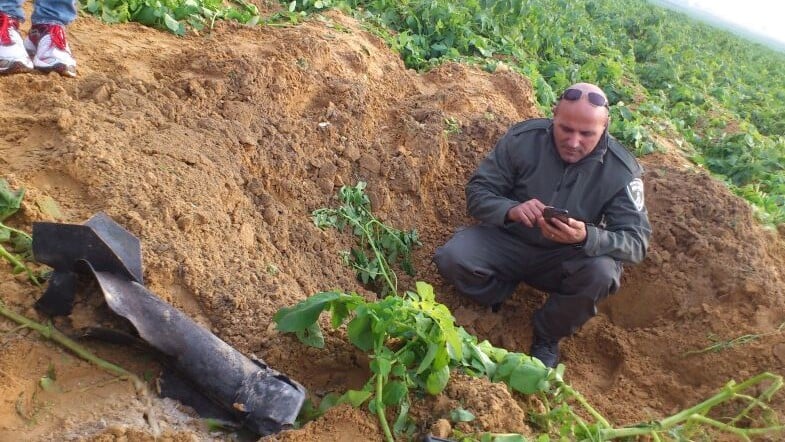
It is not difficult to imagine what would have happened had election season not been in full swing when a rocket was fired from the Gaza Strip toward Israel’s southern towns on Friday.
The answer, quite simply, is nothing. The lone projectile landed in an open field, injuring no one.
Normally, we’d hear or read only a cursory report of the incident on the margins of radio newscasts and websites. But during this election frenzy, any such attack is followed by a series of noisy statements, bellicose threats, and politicians urging the public to hold them back or else, leaving the media with no real ability to ignore the situation.
The security establishment in Israel is fairly certain at this point that Hamas has no interest in escalating tensions. The Gaza-based organization, which is still patching up the wounds left by this summer’s war, is not nearly prepared to engage in another round of violence with Israel.
On this side of the fence, despite the dramatic, combative statements uttered by Israeli officials and politicians over the weekend, you can rest assured that nobody in Israel wants to be dragged into another war with Gaza.
This holds especially true for Prime Minister Benjamin Netanyahu, who realized long ago that waging battle is bad for political business.
Hamas has fired quite a few rockets at the Mediterranean Sea lately, as part of its efforts to rearm and as a message to Israel about its capabilities.
Hamas apparently has even tried to restore some of its attack tunnels — so far, it seems, without much success. However, despite media reports, the Israeli defense establishment has no clear indication that cement transferred into the Strip is being used by Hamas to build the cross-border subterranean passageways.
The general assessment in Israel is that, given the development of the black market for cement in Gaza, a small amount may have been allocated to tunnel building. But again, there is no solid proof anything of the sort took place.
Hamas has clarified, time and again, that it does not want an escalation in tensions. Moussa Abu Marzouk, a leading figure in the organization, recently stressed the notion in no uncertain terms.
Over the past 48 hours, Hamas has also made a point of warning the many Palestinian factions in the Strip not to fire at Israel again.
And the Israel Defense Forces, for its part, responded to the recent rocket attack by firing at a single target — a concrete plant located in the Hamas training camp of Hittin — a site that had been bombed by the Israeli army on more than one occasion. It remains unclear whether this plant received the concrete from black-market merchants, or perhaps from another source.
What, then, was the reason for Friday’s rocket attack on Israel? The answer may be as simple as no major reason at all.
It is possible that the rocket fire was not a message to Israel on behalf of Hamas, but a display by a rogue organization that enjoys making life a little bit more difficult for both Israel and the current rulers of the Strip.
But even if that rocket was meaningless in the larger scheme of Hamas-Israeli tensions, the next one may not be.
While construction materials are steadily flowing into the Strip, the problem now is that many donor countries have yet to fulfill their pledges to transfer funds for the rehabilitation of homes in Gaza.
With reconstruction continuing to lag, and the political horizon as dark as ever, both Israel and Hamas may soon be pushed into a more serious confrontation.








The Times of Israel Community.