

Bibi’s got backing
Barring any last-minute surprises, a coalition is just about in place
 Add ToI as a Preferred Source on Google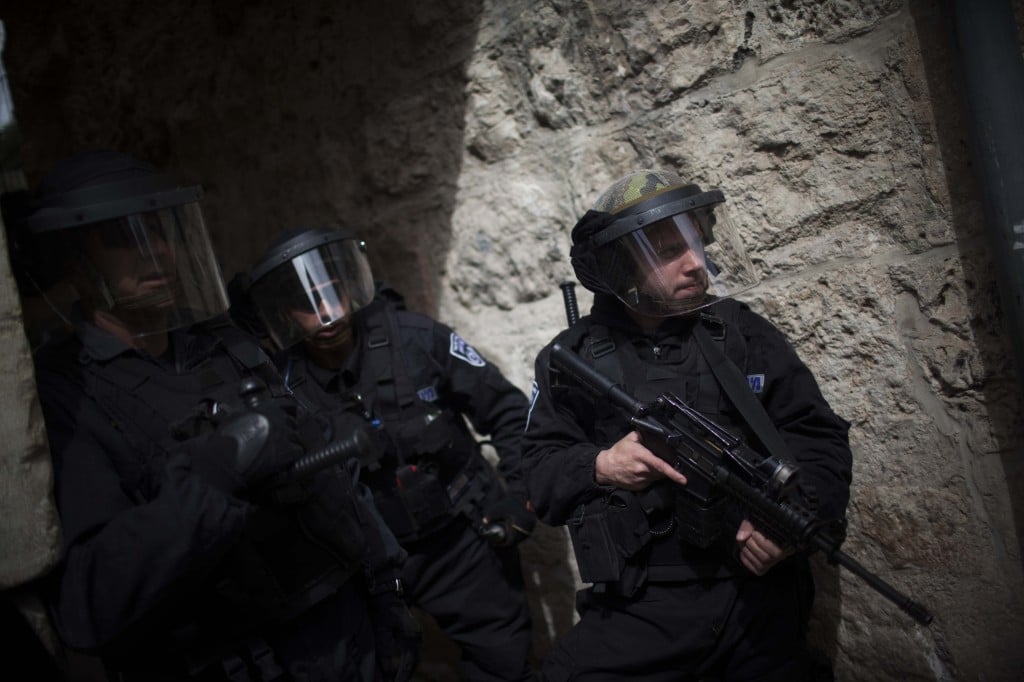
In the ever-shifting landscape of coalition negotiations it’s hard to believe that anything is final, but Sunday’s Israeli papers sound very confident that a coalition is basically set.
Most of the papers make the latest update easy to understand, with pictures of which politicians are taking which ministry. Only Maariv uses its headline to describe who gets what: “Lapid — finance minister, Bennett – trade minister; Netanyahu’s government to be sworn in this week.”
Yedioth Ahronoth offers a two-page spread with all 25 expected ministers and their party affiliation. The article itself deals primarily with Lapid’s reluctance to take the Finance Ministry, saying that after seeing that he wasn’t going to get the Foreign Ministry, he had to concede.
In an accompanying opinion piece, Sima Kadmon writes that “Yair Lapid has something that other finance ministers had– like [current finance minister] Yuval Steinitz, he has strong political power behind him.”
Haaretz columnist Yossi Verter also tackles Lapid’s ascendance to the Finance Ministry and writes that the post will be very challenging for the rookie politician. Lapid has to look forward to possibly alienating his middle class base by implementing heavy budget cutbacks, as well as attacks from Knesset members, particularly Labor’s Shelly Yachimovich. Verter writes of the possible confrontation, “It will be a pitched battle between two journalists — and something to look forward to.”
After opting to stay out of the government, Yachimovich told Labor Party activists that “Labor is going to lead the opposition,” Israel Hayom reports. Yachimovich outlines the role of the opposition: “It’s a place to make big changes, influence, lead the way, implement processes, avoid wicked schemes and work hard to produce an alternative power.”
Aside from squabbles between Labor and Yesh Atid, what else can we expect in the upcoming Knesset? Israel Hayom writes that perennial coalition partner Shas is upset at being left out of the government. Eli Yishai wrote in a Facebook post that freezing out the ultra-Orthodox was a huge mistake. He warns, “Beautiful words cannot sweeten the fracture and the depth of the rift created in the current period, but will be remembered for years to come forward. ”
So with Lapid as finance minister and Bennett as trade minister, everything is all wrapped up, right? There is still one government ministry that is in flux: the Education Ministry. Yedioth reports that Yesh Atid wants their man, Shai Piron, to take the ministry while Likud-Beytenu is fighting to let current education minister Gideon Sa’ar keep his job. Yedioth points out that Piron campaigned on improving the education system, but despite that, it looks like Sa’ar will remain. Instead of getting the Education Ministry, Piron is expected to get the Welfare Ministry.
Unfortunate firsts
Aside from the coalition negotiations, Maariv reports on a riot that broke out at the Dome of the Rock on Friday in which Palestinian protesters used Molotov cocktails against police for the first time. The paper tied the riot to the upcoming Obama visit to the region and quoted a report from the Palestinian news agency Ma’an in which Hamas sources warned, “If Obama comes to the Temple Mount, it will be a declaration of war on the Arab world.”
Israel Hayom reports that rumors that Obama may cancel his trip to Israel if there is no coalition in place are false. The paper quotes Josh Earnest, the White House’s deputy press secretary, who said, “We’re coming.” Earnest stated that the primary reason for the trip was that Obama wants to speak to the Israeli public and show that the US is committed to Israel’s security. The second reason for Obama’s trip was to visit the region, which has undergone significant change.
Obama may want to demonstrate that he is committed to Israel’s security, but what about Israel’s youth? Yedioth reports that as the springtime draft begins on Sunday, the percentage of able-bodied youth who want to join combat units is at lowest in two years. In March of 2011, 79.5 percent of healthy new recruits wanted to join combat units, but now that percentage has dropped to 71.6%. Even one year ago, the percentage was a bit higher, at 72.3%. Of those who did request combat, the most requested unit was the Golani Infantry brigade, followed by the paratroopers.
In other military matters, Haaretz reports on the unsolved mystery of the sinking of the Dakar submarine, noting that documentation released by the state archives raises more questions than answers into the mysterious sinking of the submarine in 1968. One revelation is that Israeli officials suspected that the Soviet Union was responsible for the incident. However, that scenario was second to human error or mechanical failure. The documents also reveal that during the search for the submarine, Turkey refused to let Israel search along its coast but did conduct its own search based on Israel’s guidelines. The submarine was eventually found in 1999 off the coast of Cyprus.
Finally, Maariv reports on another woman who was murdered by her husband over the weekend. In this instance, an 81-year-old Jerusalem man stabbed his 78-year-old wife to death and then called police and told them, “I killed my wife.” According to the report, no one arrived on the scene and only five hours later, when the man called the police again, were forces sent. Police blamed the delay on negligence on the part of the call center. Maariv points out in an adjacent article that this is the third time in one week that a woman was murdered by her husband.









The Times of Israel Community.