

Both sides target the journalists
Reporters are under attack by cops and Palestinian protesters in East Jerusalem and the West Bank
 Add ToI as a Preferred Source on Google
Avi Issacharoff, The Times of Israel's Middle East analyst, fills the same role for Walla, the leading portal in Israel. He is also a guest commentator on many different radio shows and current affairs programs on television. Until 2012, he was a reporter and commentator on Arab affairs for the Haaretz newspaper. He also lectures on modern Palestinian history at Tel Aviv University, and is currently writing a script for an action-drama series for the Israeli satellite Television "YES." Born in Jerusalem, he graduated cum laude from Ben Gurion University with a B.A. in Middle Eastern studies and then earned his M.A. from Tel Aviv University on the same subject, also cum laude. A fluent Arabic speaker, Avi was the Middle East Affairs correspondent for Israeli Public Radio covering the Israeli-Palestinian conflict, the war in Iraq and the Arab countries between the years 2003-2006. Avi directed and edited short documentary films on Israeli television programs dealing with the Middle East. In 2002 he won the "best reporter" award for the "Israel Radio” for his coverage of the second intifada. In 2004, together with Amos Harel, he wrote "The Seventh War - How we won and why we lost the war with the Palestinians." A year later the book won an award from the Institute for Strategic Studies for containing the best research on security affairs in Israel. In 2008, Issacharoff and Harel published their second book, entitled "34 Days - The Story of the Second Lebanon War," which won the same prize.
Tali Meir, a photographer from Walla! News, is recovering in Hadassah Hospital at Ein Kerem from surgery on her face.
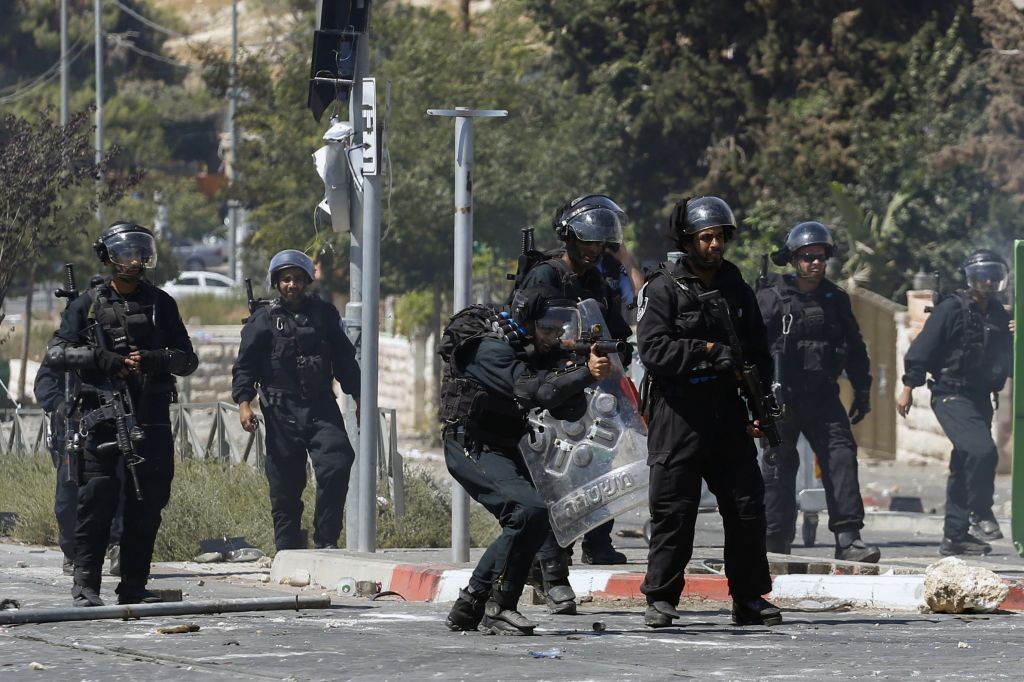
She suffered a fractured jaw, courtesy of a particularly foolish officer, who fired some kind of rubber bullet directly at her during Thursday’s demonstrations in East Jerusalem’s Shuafat neighborhood.
The police or Border Police will doubtless assert that Meir, 25, was caught in the crossfire, that officers shot because they believed their lives were in danger, and that she was not being targeted at all.
But Meir, with whom I have worked for years in the territories, and who has been a photographer since her army service, was not close to the demonstrators when she was hit. She was standing to the side, she was wearing a helmet and a protective vest, and she was holding a camera. It couldn’t have been clearer that she was a member of the press.
I have worked with Meir at funerals, demonstrations and in other highly tense situations, and she does not lose her cool. That’s how she was on Thursday too. Then she was shot.
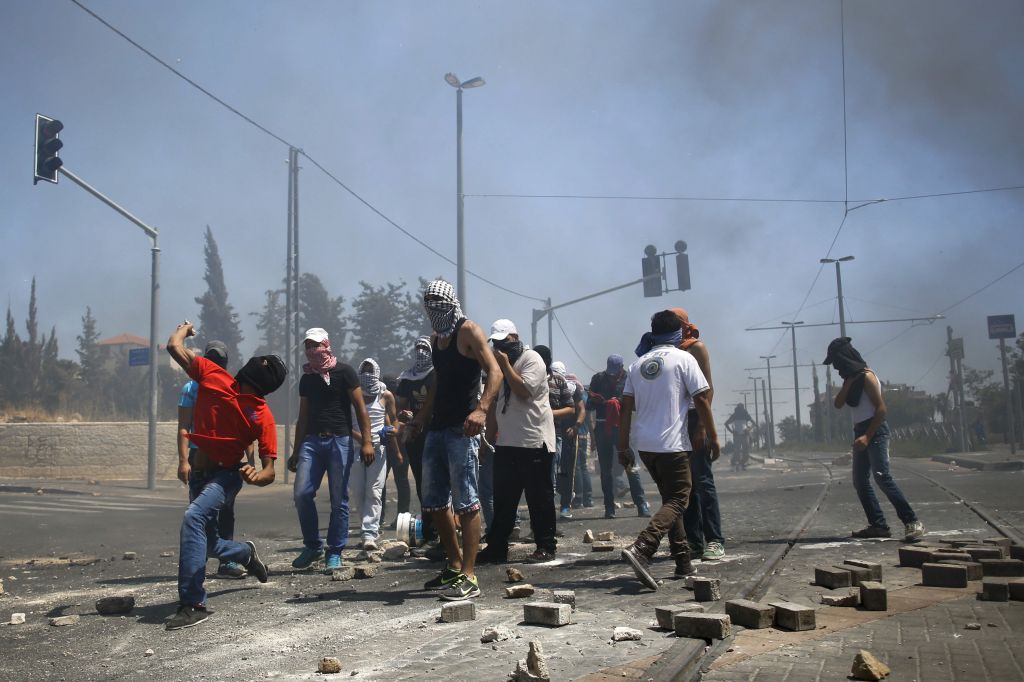
There were dozens of police and Border Police deployed to try and keep the protests, prompted by the murder Wednesday of 16-year-old Muhammed Abu Khdeir, from getting out of control. From early in the morning, things had seemed unusually tense; first thing in the morning, a photographer and a reporter from Palestinian television had been hit by rubber bullets. Hours later, Meir was shot in the face. Then a Ynet photographer was shot in the leg with a rubber bullet. I was fortunate; my price for trying to cover the protests was merely to be shoved aside by a cop.
But it wasn’t only the cops doing the pushing and the hitting.
A Palestinian journalist suspected of being an undercover Israeli officer was badly beaten by the Palestinian protesters.
Two of my Israeli journalist colleagues, Elior Levy and Gal Berger, were attacked by masked Palestinian gangs, who apparently believed they were also undercover Israeli troops. The two were dragged off and threatened, with stoning no less, and the threats of more violence against them continued even after they had shown their Palestinian Authority-issued press cards. They were only let go after some very tense minutes.
These incidents underline the sad reality for Israeli and Palestinian journalists in East Jerusalem and the West Bank nowadays. We have to face a combination of hot-headed and/or brainless Palestinian youths and trigger-happy Israeli cops, the latter of whom, I suspect, didn’t so much as hesitate before firing at the head of Tali Meir.


The Times of Israel Community.