

Progressive UK rabbis say West Bank sanctions necessary to combat settler violence
Welcoming measures, several religious leaders denounce ‘repugnant’ violence as counter to Jewish values, in contrast to UK’s chief rabbi, who called announcement a ‘dark day’
 Add ToI as a Preferred Source on Google
Michael Horovitz is a breaking news editor at The Times of Israel
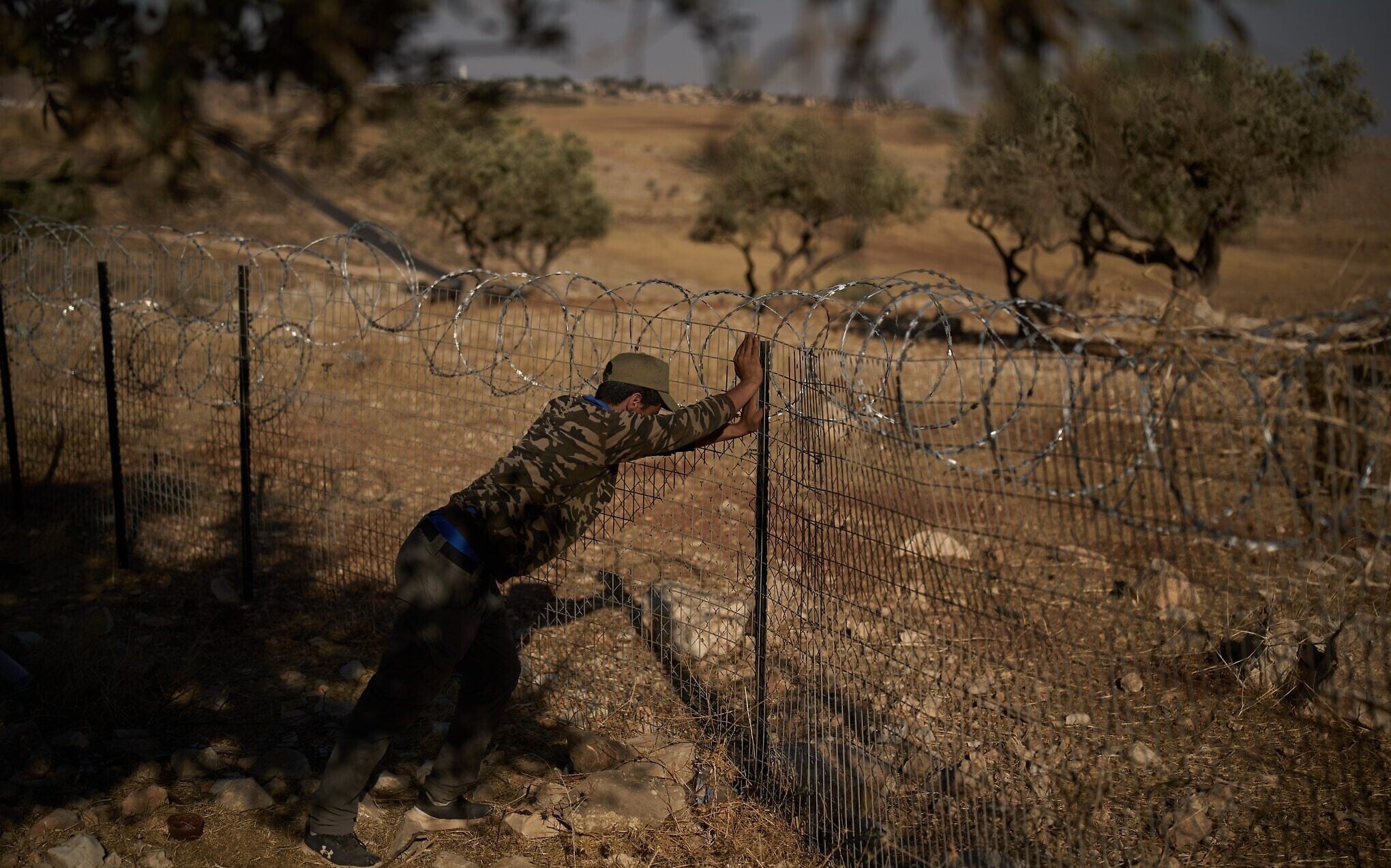
Several progressive British rabbis on Wednesday expressed support for the sanctions on West Bank settlements announced by UK Foreign Minister Ed Miliband this week.
While British Chief Rabbi Ephraim Mirvis charged that the announcement was a “dark day for Jews,” other senior rabbis emphasized the necessity of taking action against the extremist settlers committing daily violent attacks against Palestinians in the West Bank.
Miliband on Tuesday announced that Britain, France and Canada would end all dealings with Israeli settlements, denounced the “unlawful occupation” of the West Bank, and accused “settler terrorists” of “ethnic cleansing,” indulged or supported by the government of Prime Minister Benjamin Netanyahu.
The new “comprehensive sanctions regime” is expected to take effect within six to nine months, with what he called “appropriate religious exemptions.”
Rabbi Jonathan Wittenberg, a senior rabbi of Masorti Judaism UK and rabbi of the New North London Synagogue, said in a post on his Substack that he was in the Palestinian village of Umm al-Khair during Miliband’s speech, where he had witnessed “the results of settler violence with my own eyes.”
Wittenberg noted that he shared “concerns of many Anglo-Jewish leaders” over antisemitism and wanted to know that the government would take action against extremist slogans and behaviors against Jews and Israel.
But he added: “The village is under siege. Mere meters from the home in which I stand, the army has declared ‘a military zone.’ This means that families who’ve lived here for decades can’t enter parts of their own land, can’t reach their livestock (except 5 minutes a day to feed them) or even access their toilet. Yet the settlers hang out on that very land with impunity, and mock.
“This is the place where they kidnapped a British activist, whom the police had to free, then promptly deported. (That could be me next time),” he wrote, referring to an incident last month in which armed settlers detained activist Finn Joughlin and handed him to police after accusing him of assaulting a minor.
“What is taking place today in the West Bank is a Chillul HaShem, a violation of God’s name of the worst order. We cannot stay silent. This is terrible for Palestinian people who want to get on with their lives in peace. It is terrible for Israel,” he said, insisting Jews must speak out.
New London Synagogue Rabbi Jeremy Gordon also expressed support for the sanctions in a post on Substack, stating that he found the settler violence “behavior repugnant and contrary to every understanding I have of what it means to be a Jew and what it means to be an ethical person.
“I condemn, obviously, Palestinian violence against Israelis, but I do not accept the levels and nature of Israeli settlement violence is, in any way, justifiable on that basis,” he said.
“Those opposing the clearly unacceptable actions of settler extremists include leading politicians in Israel’s government as well as in the British Jewish community. But there is, in Israel and this country, a divergence that emerges at that point — how broad is the blame for these extremist actions to be ascribed, what should be done?
“It is wrong to argue for silence, inaction or ‘the use of carrots’ – appeasement – before the settler movement and those who support it. The playbook of these settlers is predicated on the notion that they will be appeased or ignored, and that well-meaning Jews the world over overlook their illegal and criminal actions,” he wrote.
In a statement cited by The Guardian, London’s Liberal Jewish Synagogue Rabbi Alexandra Wright, who is also vice chair of the British Friends of Rabbis for Human Rights, said she had recently visited Umm al-Khair and backed the sanctions.

“The sanctions are the UK’s commitment to a two-state solution. The Anglo-Jewish community is committed to a Jewish state that is founded, not on oppression and violence, but, in the words of Israel’s Declaration of Independence, ‘on freedom, justice and peace as envisaged by the prophets of Israel,'” she said.
Wright insisted action was necessary as “the occupation and escalating violence are harming Palestinians and Israelis.”
London’s Kingston Liberal Synagogue Rabbi Lev Taylor said that “the government is moving in the right direction” on its policy against settler violence, in a statement cited by The Guardian.
“Some of my Israeli members have been campaigning for sanctions exactly like this… The Judaism in which I believe repudiates this brutal occupation,” he said, citing The Democrats MK Gilad Kariv, who blamed the government’s policies for the sanctions.
Mirvis, the UK’s chief rabbi, on the other hand, labeled the measures as “little more than political flag-bearing.”
He said it was “truly a dark day for British Jews,” predicting that the measures “will succeed only in bolstering the very extremism they seek to target.”
The West Bank has seen near-daily incidents of settler violence and harassment in recent months. Arrests are rare, and critics have accused the government of condoning or even encouraging the attacks.
In response to the sanctions, Israel has told the British consulate in East Jerusalem, which is accredited to the Palestinian Authority, that it must close and that diplomats assigned there will lose their accreditation within 30 days, an Israeli official and two sources familiar with the matter told Reuters on Wednesday.
British representatives assigned to a US-led Gaza coordination mission in Israel, as well as British diplomats based in Ramallah, must leave within seven days, the two sources said.
Times of Israel staff contributed to this report.






The Times of Israel Community.