

Breaking bread with a master chef
TV contest winner Avi Levy’s Jerusalem restaurant, HaMotzi, is thriving — drawing plenty of Ashkenazim to the Sephardi cuisine he learned from his mother
 Add ToI as a Preferred Source on Google
Jessica Steinberg, The Times of Israel's culture and lifestyles editor, covers the Sabra scene from south to north and back to the center
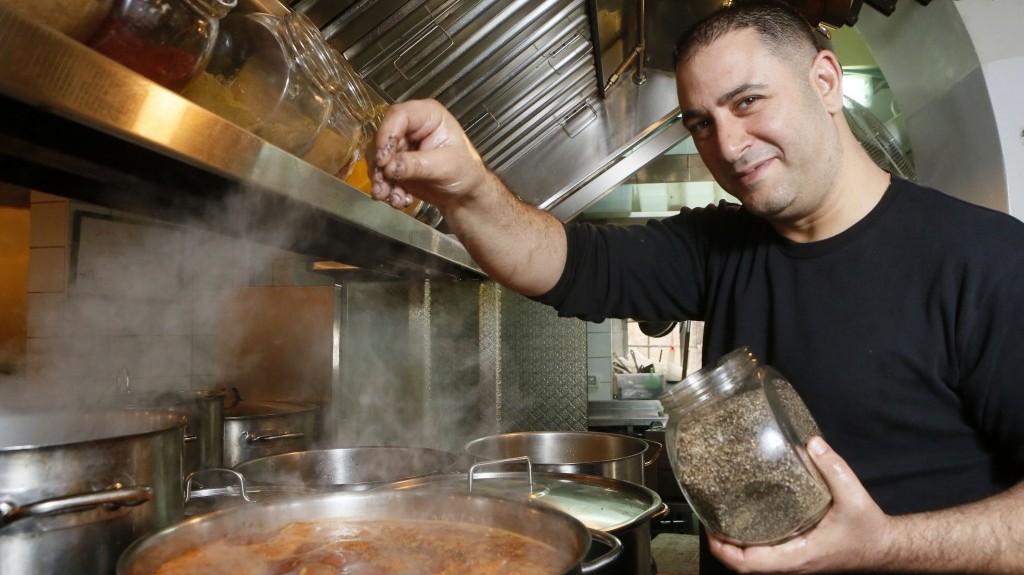
Chef Avi Levy, winner of Master Chef Israel in September 2011, and now the owner of HaMotzi, a home-style restaurant that reflects his Algerian and Moroccan heritage, isn’t the kind of man who overemphasizes his celebrity.
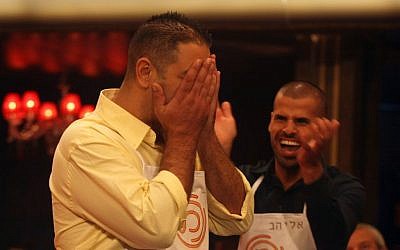
Sure, it was fun when a group of this season’s Master Chef contestants piled into his small, cozy space off Agrippas Street in Jerusalem, right near the Mahane Yehuda market, for dinner on a Wednesday night, and he did let them have the prime table in the center of the crowded restaurant. He also wasn’t the only one who raised a smartphone to capture a photo of Eti Levy, Elinor Rahamim, Jackie Azoulay and friends, as they sat down to enjoy some of Levy’s creations.
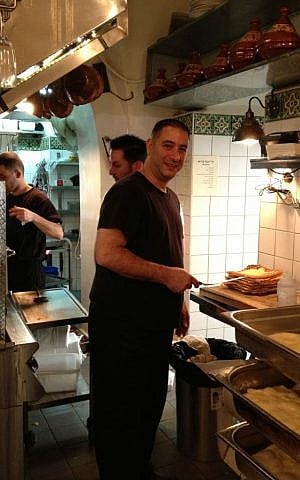
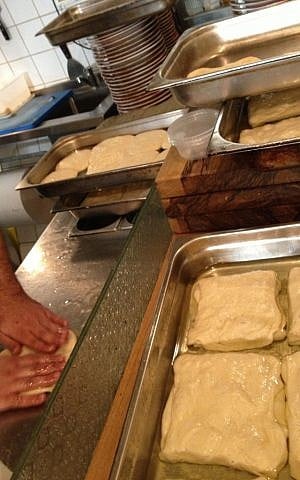
But he seems much more comfortable when it’s cooking time in his kitchen, and he has a cup of espresso beside him, while plying stretchy sheets of oily durum-flour dough into folded squares of mufleta, to be fried and served with caramelized onions, mushrooms and duck livers.
The restaurant, said Levy, 37, is for feeding people the food that he and his mother, Marie Levy, 70 (the “soul of the place,” said Levy) — who has her own cooking corner in the restaurant — love to prepare. Just simple, straightforward dishes that he learned to prepare in her kitchen, and in a casual atmosphere, the kind of place where the waiters drink shots of arak with the customer — as they do, all night long, offering friendly but uneven service — and where customers sit at tables positioned close to one another, gabbing loudly over their plates of chicken pastilles and stuffed cigars, following a meze of fresh salads scooped up with soft, white challah.
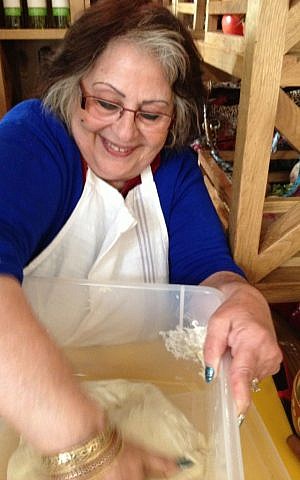
“It’s all fresh and spicy,” said Marie Levy, kneading a vat’s worth of dough for the day’s stuffed treats. “That’s how I always cook, and that’s what Avi learned from me.”
His mother’s son, to be sure — albeit after years of stress and worry over a recurrent drug addiction that Levy was finally able to overcome. Now, it seems, his greatest concern is what to add to the menu at the restaurant, and finding time to work on a cookbook with some 100 recipes developed at HaMotzi.
The Times of Israel: There’s a lot of interest in chef’s restaurants, in the personalities in the kitchen, and in you, particularly given your fame from Master Chef. You’ve created that kind of atmosphere here, with an open kitchen that shows customers what’s going on behind the counter.
Avi Levy: I’m a chef, but this isn’t a gourmet restaurant. My food will always be comforting, filling, tasty. We’re careful about ingredients, and using fresh produce, but I’m not interested in having people pay a lot of money for nothing on their plate. I wanted them to have an authentic place that has the atmosphere of home.
ToI: Who’s eating here every day?
Levy: Around 70% of our customers are Ashkenazi; they want something new, something different, and that’s why they come here. It’s also not so expensive (many of the main dishes cost between NIS 62 and NIS 69; about $17-19), but you have to reserve ahead of time. There’s not a whole lot of room in here.
ToI: You’re located near the shuk, on this quaint little alleyway off Agrippas, but you’re not in the shuk, which has become such a central destination for Jerusalemites. Why?
Levy: I didn’t want to be in the shuk, where there’s a lot of overcharging; it’s not legitimate, in my opinion. I wanted something quiet, something off to the side, a place that’s private, but not overdone. This is big enough for me.
ToI: You just went to Morocco, in part to add some new fare to the menu. What’s cooking there these days?
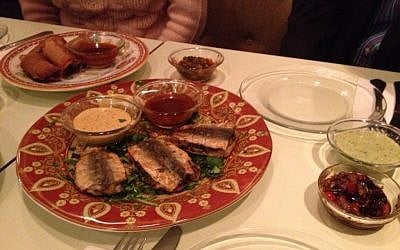
Levy: It was my first time in Morocco (Levy’s father was born in Casablanca), and I spent two weeks eating my way through the country. I fell in love with their mufleta (fried Moroccan pancakes served with honey and sugar), and am now serving them as a first course. I also tasted these amazing sardines, jujim, stuffed with fresh herbs — the scent of them in the market just stopped me in my tracks. I didn’t change anything about them, just added that concept to the menu. And I adapted their chicken pastilles, which they prepare by cooking the chicken before stuffing it into the dough. But I sauté it instead with a lot of onions, almonds and walnuts, and I use spring chickens, pargiyot, which are juicier and add more flavor.
ToI: How long did it take you to adapt what you discovered in Morocco for HaMotzi?
Levy: It takes me a few days to think over the dishes, figure out how I want to alter them. Then I spend another few days making the dishes over and over, until I feel they’re ready. It’s part of the experimentation process.
ToI: What are you planning for the summer menu?
Levy: There will be lighter fare, fewer slow-cooked stews, more salads. I developed a new salad after the Morocco trip, with cherry tomatoes, couscous and black olives. It’s a good salad, because you can always find cherry tomatoes; they were an Israeli invention.
ToI: You’ve been open for eight months, and it’s packed nearly every afternoon and night. Is it time to think about opening more restaurants?
Levy: We’re finally at the point where everything is working smoothly. And it’s true, I could start thinking about other places, but I’m not there yet. It’s good to strike while the iron is hot, but it depends on so many other factors. HaMotzi is the base for all of us who work here, so we have to make sure we have what we need here, first. Besides, it feels good to be here in my kitchen, working with my crew every day.
HaMotzi, 4 Mashiach Baruchof Street, Jerusalem, 02-631-0050




The Times of Israel Community.