

Death north and south
Analysts break down Israel’s (alleged) airstrike in Syria, while local news focuses on health and education
 Add ToI as a Preferred Source on Google
Ilan Ben Zion is an AFP reporter and a former news editor at The Times of Israel.
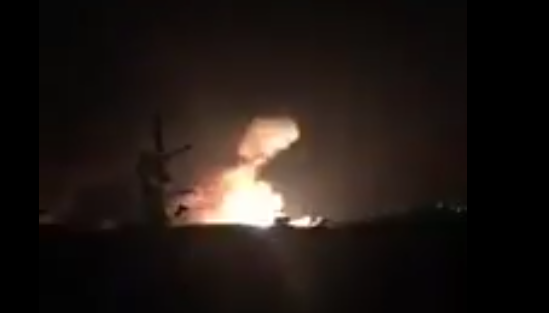
Israel bombed Syria in a Tuesday-Wednesday overnight raid to stop weapons from reaching Hezbollah, and the Thursday papers pick apart the incident. The Syrian Army’s report that Israel hit it for the second time in a week with a surface-to-surface missile leads most of the coverage, with Defense Minister Avigdor Liberman’s non-confirmation of the event playing second fiddle.
The Syrian Army said the missiles fell on the Mazzeh air force base and caused fires but no injuries, and the Israeli papers dutifully report this. But it’s Liberman’s comments that grip Israel Hayom, which obligingly headlines with them. The paper headlines the defense minister’s hyperbolic quotes as gospel: “We are preventing the smuggling of weapons of mass destruction,” and “we are defending the safety of our citizens.”
The analyses of the incident by the various newspaper pundits all take a similar approach, addressing potential causes and effects and coming to almost identical conclusions.
What is Russia’s stance on such activities, asks Haaretz‘s Amos Harel in his breakdown of the incident, which he says is part of Israel’s high-wire balancing act in Syria. “It seems Israel operates when it identifies a threat that crosses a red line, and assesses that this matter won’t cost it a direct conflict with Moscow.”
He understands Liberman’s remark about weapons of mass destruction to mean chemical weapons. Since Russia is aligned with Syrian President Bashar Assad and Hezbollah against the rebels, while simultaneously coordinating air force operations in the area, he asks whether “Russia is notified in advance about the strikes, and turns a blind eye, or is completely surprised by the bombings?”
In Israel Hayom, Yoav Limor writes that the attack will have “serious implications for the northern front in the near future.” If Syria’s claim that Israel used surface-to-surface missiles is correct, it may indicate an IDF attempt to limit possible conflict over Syrian airspace, particularly after last week’s airstrike attributed to Israel, he says. If Hezbollah is trying to up the ante and obtain chemical weapons, such a move would be “an earthquake, no less, that requires Israel to make heavy decisions.”
Yedioth Ahronoth, which downplays the significance of the incident far more than the other two dailies in favor of its latest pet issue, comes to similar conclusions to Israel Hayom. Use of missiles instead of planes to strike Syria is a shift in the military’s strategy concerning engagement in the civil war to avoid aerial conflict with Russia. Apparently answering Haaretz’s question, pundit Yossi Yehoshua says Israel Air Force commanders said in the past that Israel doesn’t warn Russia in advance about airstrikes in Syria despite the close coordination between the two.
Instead of leading with the Syria strike, Yedioth Ahronoth reports on new stats from the Health Ministry which find that death rates in the smaller cities outside central Israel are higher than the major cities, and that access to healthcare is much worse. “One of the known principles is that it’s better to be healthy and wealthy than poor and sick,” is the paper’s boneheaded lead to a story highlighting one of the many disparities between the center and the periphery, as urban and rural Israel are known.
Death rates in southern and northern towns are over five per thousand people per year, while in the main cities those figures are under five. Is that difference significant? It’s not clear, but a graphic makes it seem important. Tel Aviv has over five doctors per thousand people, while the north has just 2.3, and the south 3.1 (the national average is 3.1 per 1,000 people, the lowest in the OECD, the paper notes). Part of the problem is Israel’s growing population relative to the number of trained medical professionals, and the retirement of doctors who arrived in the early 1990s from the former Soviet Union.
While the education system here in Israel continues to fall short of the mark, and is plagued by budget shortfalls, Haaretz reports that the Diaspora Affairs Ministry will be investing NIS 136 million in the coming years in Jewish education abroad. “This is the first time in which the state proposes a broad education plan that isn’t intended for Israeli schools,” the paper notes.
Second in the batting order for Israel Hayom is a report in Le Monde based on documents leaked by Edward Snowden that showed that the NSA and Britain’s GCHQ spied on Israeli officials. The paper perhaps consciously downplays a quote from 2008 which said that “the Israelis are still a significant threat to regional stability, especially because of their stance concerning the Iranian issue.”
The fact that the Knesset passed the first reading of the settlement “regulation” bill, which seeks to retroactively legalize illegal outposts, barely gets any coverage. Meanwhile Yedioth Ahronoth continues its reportage on the submarine scandal. It reports that former defense minister Moshe Ya’alon had no idea that Iran had shares in the company that builds Israeli ships.







The Times of Israel Community.