

Erdogan sweats and the reactionaries gloat
The protests in Turkey have put a smile on the faces of Assad and Israel, Arab columnists write
 Add ToI as a Preferred Source on Google
Elhanan Miller is the former Arab affairs reporter for The Times of Israel
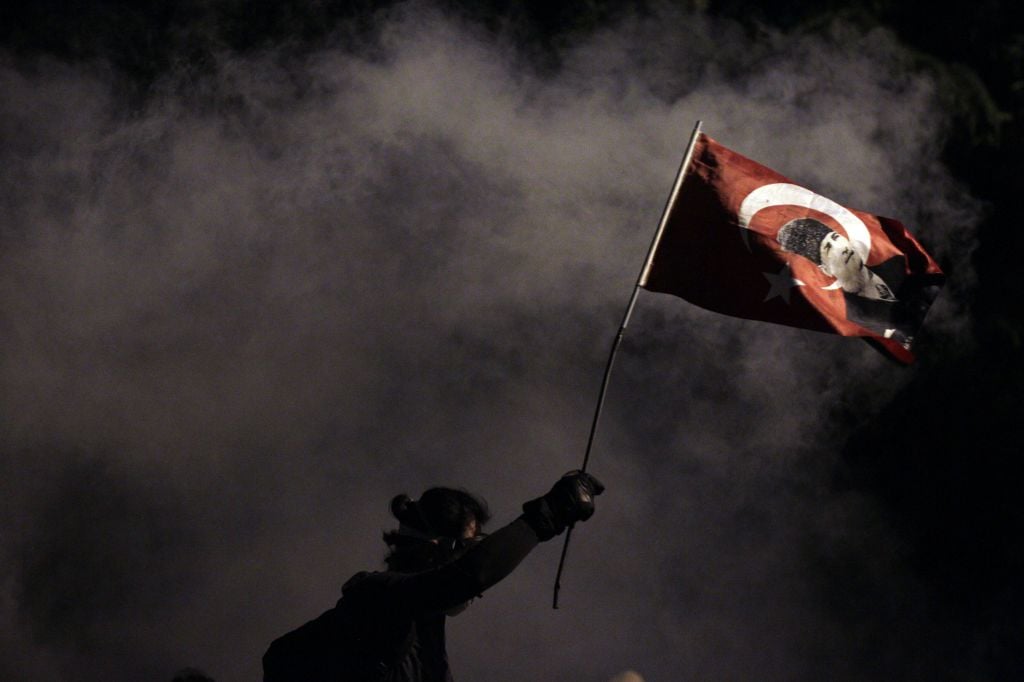
Clashes between demonstrators and police in Turkey continue to make headlines in Arab media on Tuesday, with one daily calling the protest movement “the Turkish Spring.”
“The first casualty in ‘the Turkish Spring’ and a discrepancy between Erdogan and Gul,” reads the headline in the London-based daily Al-Hayat. The paper reports that while Prime Minister Erdogan considers the protest movement a “conspiracy” and mocks the demonstrators, Gul is attempting to placate them and claiming that “their message was received.” It doesn’t mention the two that Amnesty reported killed over the weekend.
“Erdogan accuses foreign elements of motivating the protests,” reads the headline in the Saudi-owned daily A-Sharq Al-Awsat, which also leads with the difference in attitude between good cop Gul and bad cop Erdogan.
The paper claims that on Monday the situation was “hotter” in the capital Ankara than in Istanbul, where protesters dominated Taksim Square but were pushed back by police as they attempted to advance toward the presidential palace.
Erdogan was two hours late landing in the Moroccan capital, Rabat, on Monday, reports A-Sharq Al-Awsat, underscoring the prime minister’s decision to go forward with his North African tour as planned. Meanwhile, Al-Hayat’s reporter in Rabat claims that the Turkish demonstrations will force Erdogan to shorten his trip, in which he planned to proceed to Algeria and Tunisia.
“The Turkish protesters are insistent on continuing their mobilization against the prime minister and Erdogan challenges his opponents: If they assemble 100,000 protesters I will assemble a million,” reads the lengthy top headline of London-based daily Al-Quds Al-Arabi.
“Has the Syrian curse affected Turkey?” wonders the editorial in Al-Quds Al-Arabi, arguing that Assad must be gloating at Erdogan’s misfortune, given that the latter had criticized Assad for oppressing a popular uprising which began in Daraa in quite a similar way to the clashes sweeping Turkey at the moment.
Despite the deep political differences between Syria and Turkey, both Assad and Erdogan accused “foreign elements” of fanning the flames — an accusation which is true regarding Syria but false regarding Turkey.
“Many states are currently fighting on Syrian soil, directly or indirectly, including — paradoxically — the Turkish government itself, which supports the Syrian opposition and enables arms and money to reach its fighters inside Syria, opening the gates of Istanbul to host opposition conferences and leadership meetings.”
It is difficult to disassociate the Turkish demonstrations from the Arab Spring, writes Elias Harfoush in an op-ed in Al-Hayat titled “Erdogan’s responsibility for the Arab Spring.”
“Tying the Turkish disturbances to the Arab events is connected to the leadership role which Turkey played, led by the Justice and Development party, in the revolutions against the Arab regimes. Erdogan has escalated his position against his old friend, the head of the Syrian regime.”
“Therefore, the last remaining supporters of the fallen regimes found a golden opportunity in the disturbances to gloat at Erdogan and his party. They have used the phrase ‘Turkish Spring’ to describe the confrontation in Turkish cities, as the Syrian information minister did not hesitate to call on Erdogan to resign because of his ‘oppressive’ policy toward his people! What insolence,” writes Harfoush.
In an op-ed in A-Sharq Al-Awsat full of praise for the many achievements of the Erdogan regime, Saudi columnist Hussein Shabakshi joins the Turkish regime in blaming outside regional forces for the Turkish instability.
“The only two elements benefiting from the events in Turkey (moreover, the two cooperating elements) are the Assad regime and Israel. The two have indirectly agreed that the Assad regime is part of Israel’s security, which they have said more than once in various ways. Today in Turkey strange elements are being mobilized from certain areas (led by Alawite from an opposition party). This leadership forcefully opposes aiding the Syrian rebels and insists on supporting Assad,” writes Shabakshi.
—




The Times of Israel Community.