

For new Saudi king, overt Iranian hostility, covert Israeli contacts
Israel should not expect a royal visit, but Salman recognizes that Jerusalem plays an important part in battles against Tehran, radical Sunnis

 Add ToI as a Preferred Source on Google
Avi Issacharoff, The Times of Israel's Middle East analyst, fills the same role for Walla, the leading portal in Israel. He is also a guest commentator on many different radio shows and current affairs programs on television. Until 2012, he was a reporter and commentator on Arab affairs for the Haaretz newspaper. He also lectures on modern Palestinian history at Tel Aviv University, and is currently writing a script for an action-drama series for the Israeli satellite Television "YES." Born in Jerusalem, he graduated cum laude from Ben Gurion University with a B.A. in Middle Eastern studies and then earned his M.A. from Tel Aviv University on the same subject, also cum laude. A fluent Arabic speaker, Avi was the Middle East Affairs correspondent for Israeli Public Radio covering the Israeli-Palestinian conflict, the war in Iraq and the Arab countries between the years 2003-2006. Avi directed and edited short documentary films on Israeli television programs dealing with the Middle East. In 2002 he won the "best reporter" award for the "Israel Radio” for his coverage of the second intifada. In 2004, together with Amos Harel, he wrote "The Seventh War - How we won and why we lost the war with the Palestinians." A year later the book won an award from the Institute for Strategic Studies for containing the best research on security affairs in Israel. In 2008, Issacharoff and Harel published their second book, entitled "34 Days - The Story of the Second Lebanon War," which won the same prize.
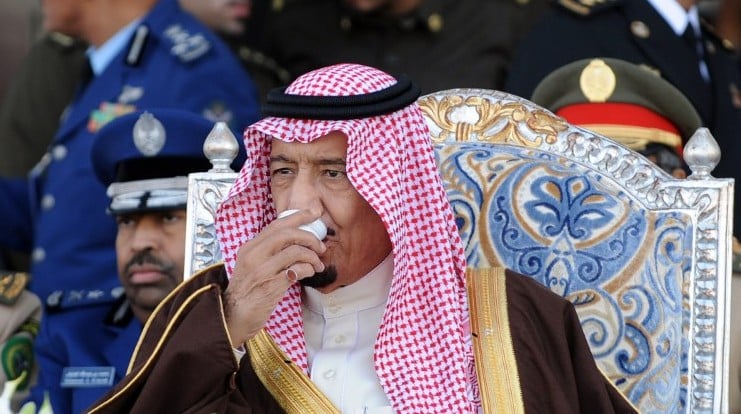
Meet Salman bin Abdulaziz, the new king of Saudi Arabia. As heir to the throne, the 79-year-old was already the nation’s de-facto ruler in recent weeks, as his brother Abdullah’s condition worsened and prevented him from carrying out his royal duties.
Most recently Salman served as defense minister, but he is best known in the kingdom as the governor of Riyadh province, a position he held for 40 years. He is one of the 45 sons of the kingdom’s founder, Abdulaziz Ibn Saud, and the sixth son to inherit the throne following the deaths of his predecessors.
His brother Crown Prince Moqren, next in the line, is ten years younger.
Salman also served as a secretary-general of sorts to the royal family – the man who was responsible for handling its affairs quietly and discretely, away from the media and the public.
King Salman is not expected to make dramatic changes to Saudi Arabia’s foreign and defense policies. He was a central decision-maker in the kingdom since being appointed as heir to the throne in 2012. He held high-level meetings with Arab leaders such as Egyptian President Abdel Fattah el-Sissi during that time, and has been involved in shaping the Middle East’s moderate Sunni camp.
Together with el-Sissi, Jordan’s King Abdullah II and even the Palestinian Authority’s Mahmoud Abbas, Salman is likely to try to block the advancing radical Sunni camp on the one hand (the Islamic State, al-Qaeda) and the Shiite camp, on the other.
Neither task will be easy. A day before Abdullah passed away, the Houthis in Yemen completed their de-facto takeover of most of the country. This move signifies a Shi’ite presence (even though the Houthis are Zaidiyyah Shittes, different from the Shiites in Iran) on Saudi Arabia’s southern border with clear economic and military support from Tehran.
Iran, Saudi Arabia’s biggest enemy, is thus setting up a base of support south of the kingdom on the day that King Salman takes the throne. It’s safe to assume that the coming days and weeks will have some challenges in store for the new king. The Iranians are likely to do everything possible to make it difficult for him to run the kingdom.
Even if a new regime rises in Yemen that includes Sunnis and Houthis, the latter are likely to run the show and are expected to allow the Iranian Revolutionary Guards to operate in the country.
This will make the lives off all the countries in the moderate camp — and especially the UAE emirates — much more difficult. The ouster of Yemeni president Abd Rabbo Mansour Hadi raises the fear of chaos in south Yemen; four southern provinces have announced they will not surrender, despite a new regime in Sanaa. Although they are in an area further from the Saudi border, this will have consequences for the traffic of goods in the Persian Gulf and the Red Sea and has already opened the door for increased al-Qaeda activity in half of the country.
The outgoing president also allowed the US to operate against al-Qaeda in Yemen, and it is far from certain that the new regime led by the Houthis will continue that policy. This is very bad news, especially for Saudi Arabia.
Another matter that King Salman will have to address is the price of oil. Riyadh has refused to raise prices over the past few months; indeed, it has actually driven prices down. The kingdom wanted to prevent competition in the energy field from American companies that specialize in gas oil separation. This had the added result of dealing a blow to the Iranian economy even without additional Western sanctions. The question is whether Salman will change policy on oil production; hours after the death of King Adbullah, the price of oil surged.
And what about Israel? Jerusalem should not expect a royal visit anytime soon. King Salman is likely to continue advancing the policy that has prevailed over the past two years — that is, the recognition that Israel is an important part of the war against the radical Sunni axis and the Shiite camp.
From time to time, we hear of covert meetings between Israeli and Saudi officials and those from the Gulf. It’s safe to assume that Salman will keep that channel open and perhaps even expand it.



The Times of Israel Community.