

Moving the match away from the powder keg
Op-ed: The prime minister’s decision to ban all parties with vested interests from going to the Temple Mount is one of the wisest made here in recent years

 Add ToI as a Preferred Source on Google
Avi Issacharoff, The Times of Israel's Middle East analyst, fills the same role for Walla, the leading portal in Israel. He is also a guest commentator on many different radio shows and current affairs programs on television. Until 2012, he was a reporter and commentator on Arab affairs for the Haaretz newspaper. He also lectures on modern Palestinian history at Tel Aviv University, and is currently writing a script for an action-drama series for the Israeli satellite Television "YES." Born in Jerusalem, he graduated cum laude from Ben Gurion University with a B.A. in Middle Eastern studies and then earned his M.A. from Tel Aviv University on the same subject, also cum laude. A fluent Arabic speaker, Avi was the Middle East Affairs correspondent for Israeli Public Radio covering the Israeli-Palestinian conflict, the war in Iraq and the Arab countries between the years 2003-2006. Avi directed and edited short documentary films on Israeli television programs dealing with the Middle East. In 2002 he won the "best reporter" award for the "Israel Radio” for his coverage of the second intifada. In 2004, together with Amos Harel, he wrote "The Seventh War - How we won and why we lost the war with the Palestinians." A year later the book won an award from the Institute for Strategic Studies for containing the best research on security affairs in Israel. In 2008, Issacharoff and Harel published their second book, entitled "34 Days - The Story of the Second Lebanon War," which won the same prize.
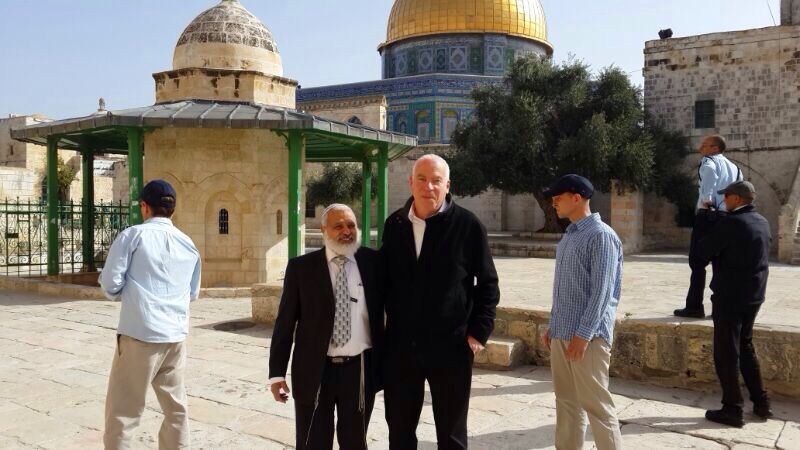
Better late than never: Prime Minister Benjamin Netanyahu has remembered to ban politicians, whether Jews or Arabs, from going to the Temple Mount. The step is one of the wiser moves taken in Israel in the past few years and one can only wonder what would have happened in September of 2000 had then prime minister Ehud Barak announced a similar step and banned opposition leader Ariel Sharon’s visit to the site — a precursor to the Second Intifada.
The compound, called Haram a-Sharif by the Palestinians, has always been considered a powder keg. The trouble is that despite, or perhaps because of its volatility, politicians, whether Palestinian or Israeli Arab or Jewish, have always tried to leverage it for political gain. The Israeli public and the media may not be too bothered by the sequence of events, but the latest wave of terrorism started after Agriculture Minister Uri Ariel and several dozen Jews went to visit the Temple Mount on the eve of Rosh Hashanah, the Jewish New Year.
That incident was not the main reason for the current upsurge but it certainly was the spark that started the fire. Since then, the Temple Mount became a focal point of intensified hostility and hatred between the sides. Hamas and the Islamic Movement had a field day with Ariel’s pilgrimage and presented it as an attempt to change the status of Muslims on the Mount. Joining them in the chorus were Palestinian Authority President Mahmoud Abbas and, as has become inevitable, Arab Israeli lawmakers.
MK Jamal Zahalka, chairman of Balad, one of the parties making up the Joint (Arab) List, is head of a decidedly secular party, with both Muslim and Christian members, and yet he decided one day last week to block with his very body the entrance of Jewish worshipers to the Temple Mount.
All of a sudden Balad, never considered an Islamist party, cares so much about the al-Aqsa Mosque, it warms the cockles of the heart. The prohibition issued Thursday morning by the prime minister (and promptly challenged by Zahalka moved even the head of the Joint List, Ayman Odeh, to quickly announce that the Arab MKs will not heed Netanyahu’s ban. The secular Odeh (who was filmed having lunch in the middle of Ramadan recently) is not considered an Islamist, to put it mildly.
And of course another usual suspect waded in: Sheikh Raed Salah, head of the northern branch of the Islamic Movement, for whom creating provocation relating to the issue of the Temple Mount is a life-long project. Salah was quoted by Arabic media outlets on Thursday (he refrains from giving interviews to Jewish outlets) as saying that “to die for al Aqsa is a great honor… They cannot scare us with jail or deportation.”
But the politicians from the Palestinian side are not alone. There are not a few on the Jewish side who have tried and will continue trying to make quick political gain from the violence. Netanyahu’s decision does not mean that Jews cannot go to the Temple Mount: People who have no “vested interest” can still do so. But those who look for publicity and provocations just to make it into the news editions will from now need to find another powder keg to set their matches to.
A final comment on incitement: After countless accusations from the Israeli government and rightwing politicians that Abbas is inciting to violence, officers from the IDF’s Military Intelligence explained Wednesday that things are not as they seem. They talked of the important role Abbas plays in efforts to restore the calm.
A similar occurrence happened several months ago, when Shin Bet security service chief Yoram Cohen, a man not suspected of being a left winger or liking Abbas too much, said the Palestinian president is part of the solution, not part of the problem.
So could this Palestinian leader be a partner in negotiations after all, or are the IDF and the Shin Bet throwing dust in our eyes again?








The Times of Israel Community.