

Putin orders surprise Russian military pullout from Syria
President says partial withdrawal, planned for Tuesday, coordinated with Assad regime after army’s mission achieved
 Add ToI as a Preferred Source on Google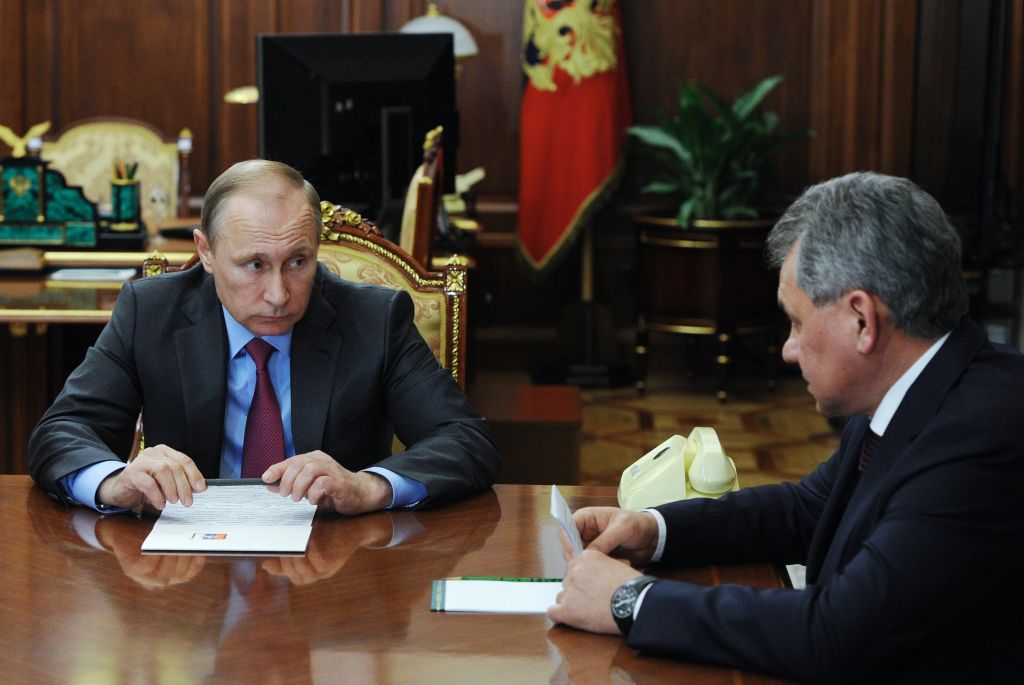
Russian President Vladimir Putin ordered a partial pullout of the Russian military from Syria Monday, voicing hope that the move will contribute to the success of Syria peace talks that began earlier in the day.
Announcing his decision in a televised meeting with Russia’s foreign and defense ministries, the president said the Russian air campaign has allowed Syrian President Bashar Assad’s military to turn the tide of war and helped create conditions for peace talks.
“The task that was set before our defense ministry and armed forces has as a whole been completed and so I order the defense ministry to from tomorrow start the withdrawal of the main part of our military contingents from the Syrian Arab Republic,” Putin told Defense Minister Sergei Shoigu in televised comments.
Putin said that the Russian airbase in Hemeimeem in Syria’s coastal province of Latakia and a naval facility in the Syrian port of Tartous will continue to operate.
The Kremlin announced that Putin had called President Bashar al-Assad to inform Moscow’s long-standing ally of the surprise move that appears to end the main part of its intervention in Syria’s conflict that began in September.
“The leaders noted that the actions of the Russian airforce allowed to radically change the situation in the fight against terrorism, to disorganise the fighters’ infrastructure and inflict significant damage on them,” the Kremlin said in a statement.
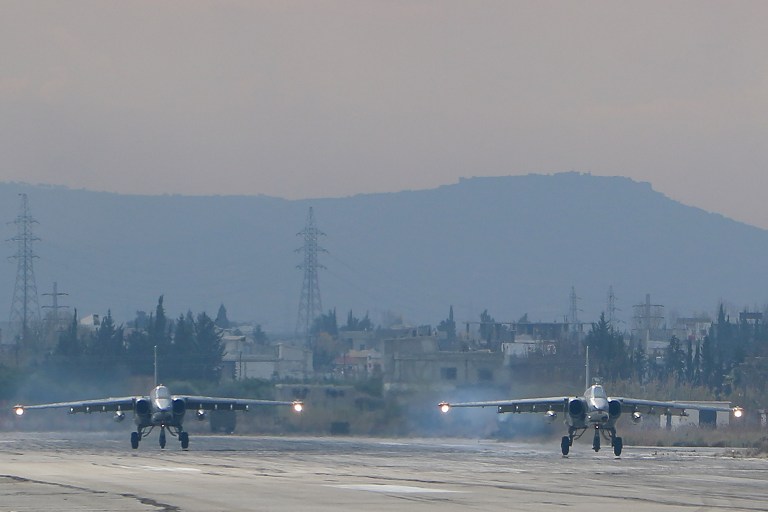
“Taking that into account, the President of Russia stated that the main tasks set before the armed forces of Russia in Syria had been completed. It was agreed to carry out the withdrawal of the main part of Russia’s air force contingent,” the statement said.
The two leaders, however, also agreed that Moscow would maintain an air force facility in Syria to help monitor the progress of a ceasefire in the war-torn country.
“Assad noted the professionalism, courage and heroism of the officers of the Russian armed forces that took part in the military operations and expressed deep appreciation to Russia,” the Kremlin statement said.
Syria’s state news agency quoted Assad as saying that the Russian military would draw down its air force contingent from Syria but won’t leave the country altogether.
State TV also quoted Assad saying Russia will decrease its presence to levels “in line with the situation on the ground and the continuation of the cessation of hostilities.”
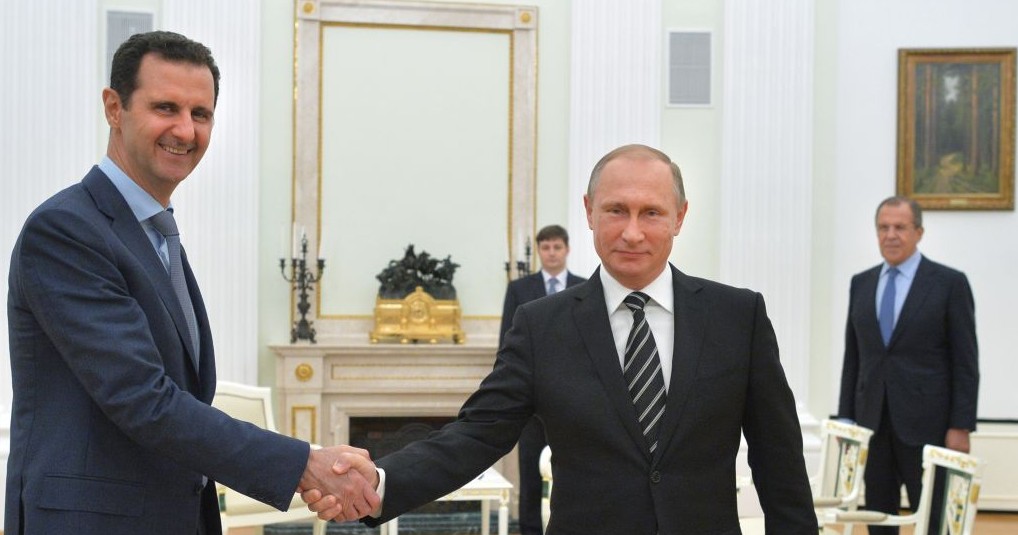
Assad said the collaboration between Russian and Syrian forces had secured “victories against terrorism and returned security to the country.”
Russia began its bombing campaign in support of Assad’s forces in September, a move that helped shore up the Syrian regime’s crumbling forces and go on the offensive.
A fresh round of talks to end Syria’s civil war opened in Geneva on Monday, but hopes for a breakthrough remained remote with the sides locked in a bitter dispute over the future of President Bashar al-Assad.
A temporary ceasefire in the country introduced on February 27 has largely held, despite accusations of violations from both sides, allowing aid to reach some 150,000 people living under siege.
The pullout date will coincide with the five year anniversary of the civil war, which began on March 15, 2011 with a peaceful protest movement calling for Assad to step down..
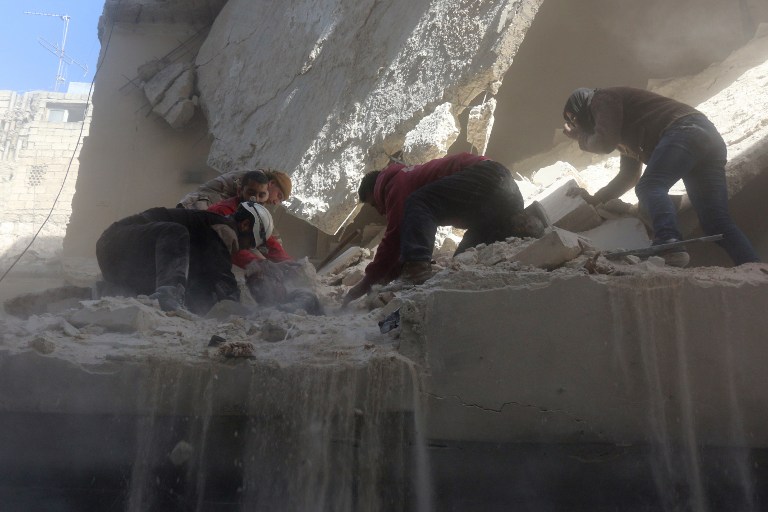
But the uprising turned violent after the government launched a brutal crackdown on dissent, and its key players became the various armed forces — regime, opposition, jihadist, Kurdish — and their respective backers.
Russia and the United States have exerted their influence over opposing sides of the complex war to broker a landmark truce that has been holding since February 27.
The US got militarily involved in Syria in September 2014, as part of a bombing campaign against the Islamic State group.
One year later, Russia launched its own air war backing Assad after a devastating string of losses for the regime in the spring and summer of 2015.






The Times of Israel Community.