

Rare return allows re-reading of reclusive Roth
As he turns 80, a new documentary — opening Wednesday in New York — examines the career of the world’s pre-eminent Jewish author
 Add ToI as a Preferred Source on Google
Jordan Hoffman, a member of the New York Film Critics Circle, is The Times of Israel's long-time film reviewer and the co-host of The Reel Schmooze.
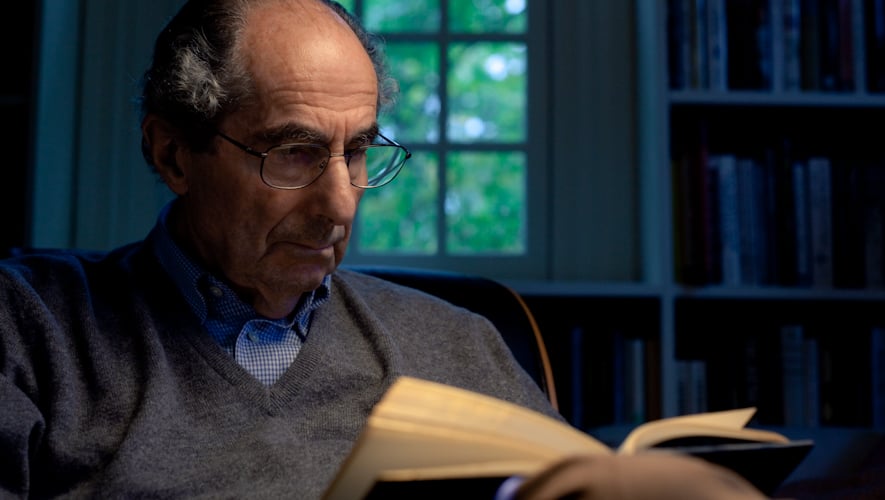
Philip Roth, the New Jersey-born Jew many consider the world’s greatest living novelist, is about to turn 80. Not coincidentally, a new documentary, “Philip Roth: Unmasked,” opens Wednesday at New York City’s Film Forum, where it will play through March 19, the author‘s birthday.
In an unusual move, all tickets will be free thanks to a grant from the Ostrovsky Family Fund, an organization that also supports the Jerusalem Cinematheque and Israel Film Archive.
“Philip Roth: Unmasked” is a rare, straightforward look at the author, a paradoxically shy man who creates unusually graphic, seemingly confessional novels.
It’s easy for readers to think they already know everything about Roth from his work: His recurring protagonist, Nathan Zuckerman, is a New Jersey-born Jewish novelist also raised in Newark, and appears in nine of Roth’s 31 books.
The character “Philip Roth” appears in five others, only two of which are labeled non-fiction. Both Zuckerman and “Roth” are often at pains to distance themselves from Portnoy (called Carnovsky in the Zuckerman stories), the iconically self-loathing, sex-obsessed, neurotic schlemiel from Newark whose shonda antics in “Portnoy’s Complaint” propelled Roth to literary and pop culture superstardom in 1969.
If that web of self-reference is confusing, know that it is all intentional, and something filmmakers Livia Manera and William Karel hope to get to the bottom of with “Unmasked.”
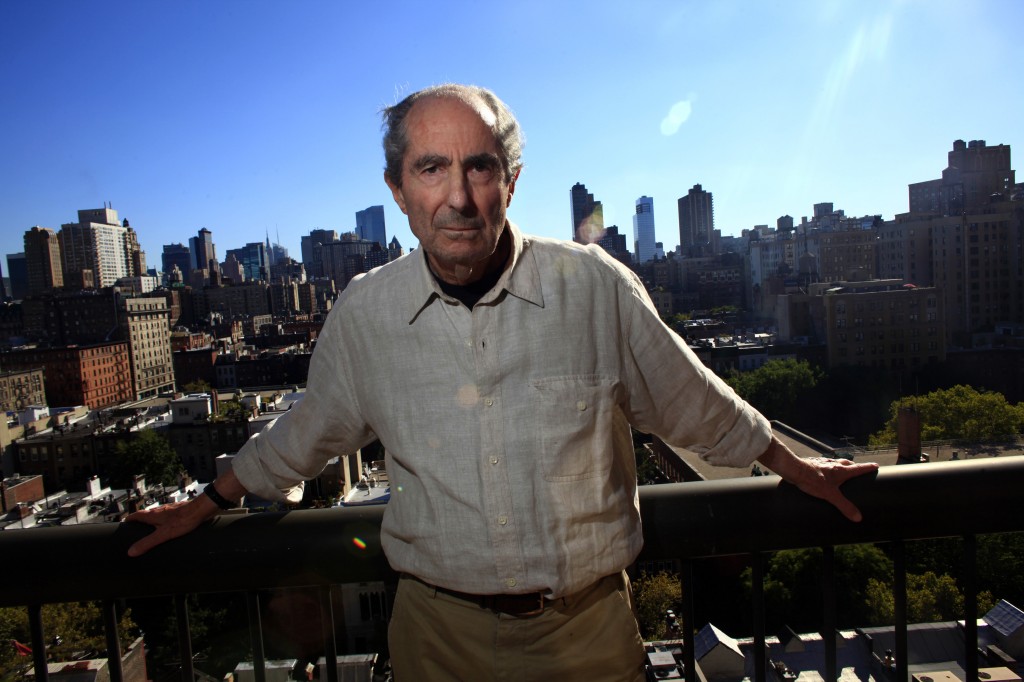
The film, which will make its American TV debut March 29 on PBS, is hardly confrontational. There’s nothing about Roth’s acrimonious marriage to actress Claire Bloom, or his literary rivalries with the likes of Irving Howe. Instead, the biggest bombshell is the discovery that Roth does all of his writing standing up, the result of a back injury (yes, the one from “The Anatomy Lesson”), and that he doesn’t feel particularly at home in New York. He’s lived in recent years mostly in solitude in Connecticut, occasionally going to concerts at Tanglewood (yes, like in “The Human Stain”), and spends roughly two years laboring on each novel, or one year each on his recent quartet of shorter books.
Roth claims to have retired, and insists that 2010’s “Nemesis” is his final work.
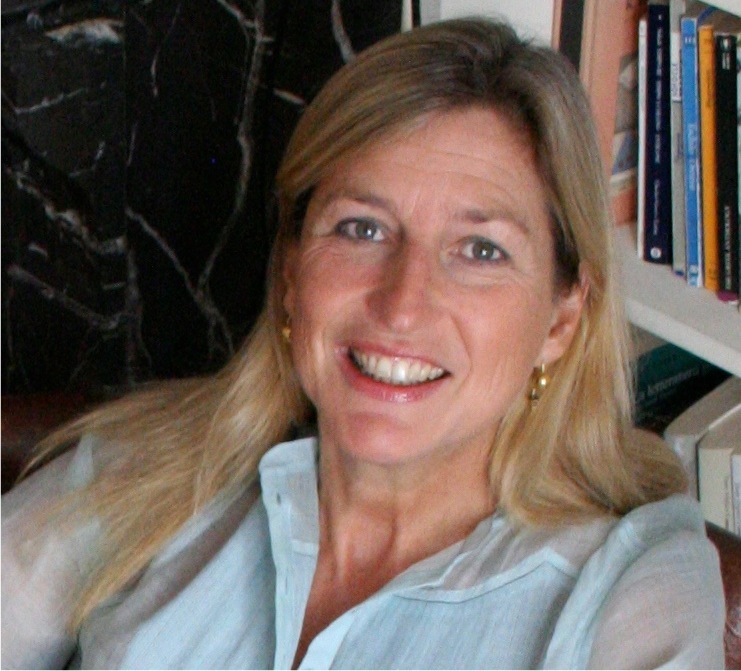
“I feel that he’s saying that he’s merely given up the obligation to write,” Manera, an Italian literary critic, told The Times of Israel from his home in Paris. “It has changed his life and his mood. But have you ever heard of a ‘former writer?’ I don’t buy it.”
The film concludes with Roth settling in to re-read the works of his favorite authors — James Joyce, Saul Bellow — one last time, from an older perspective.
The film’s back story is unique. Manera, who befriended Roth in 2000, initially approached the novelist for suggestions for an Italian TV documentary about American writers. Perhaps sensing that some sort of end-of-career film was inevitable, Roth offered his own name. Manera quickly dropped the other writers from the project, read and re-read more than 8,000 pages of Roth’s published work, and got him talking.
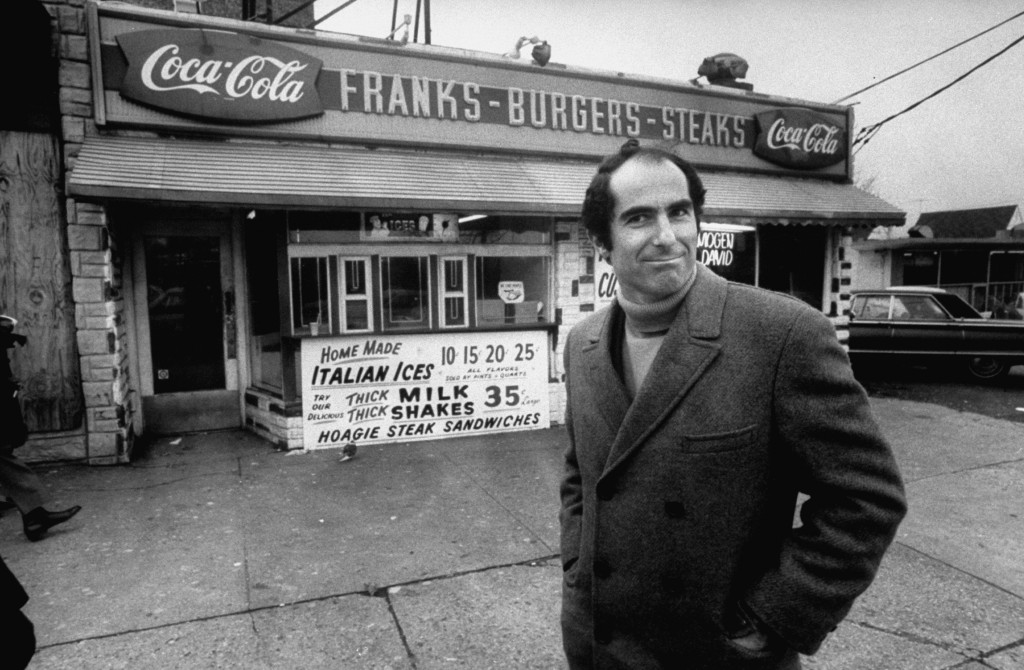
The film reflects on Roth’s upbringing in the Weequahic section of Newark, including a family life that was far less overbearing and histrionic than the one in his stories. (One similarity: As in “Indignation,” Roth’s father wasn’t too keen on his leaving home to go to college, if not quite to the same extent as in the book.) Roth’s first published short story, “Defender of the Faith,” dropped him right into one of the central controversies of his career — the charge of being a self-hating Jew.
Published in the March 14, 1959, issue of the New Yorker, the story is about an upstanding, assimilated Jewish-American known as Sergeant, and his struggles with a fellow Jew, Private, whose schnorrer tendencies test his wits. The story flirts with stereotypes, as well as with Jewish embarrassment around those stereotypes. Indeed, it might be considered highly offensive, if it weren’t also so very funny and, many argue, insightful.
“Philip Roth: Unmasked” shows how the author refused to back down from criticism, and may have wanted it. Just before the publication of “Portnoy’s Complaint,” Roth sat down with his parents to warn them that their lives were about to change. Roth later discovered that the conversation led his mother to tears — not because she worried people would mistake her for the overbearing monster in the book, but because she feared her son had delusions of grandeur. (This is among the few times in recorded history when a Jewish mother was wrong.)
All of Roth’s writing involves Jews. In the film, he paraphrases his mentor, Bellow: “Should I write about Portuguese?”
Two of his books, “The Counterlife” and “Operation Shylock: A Confession,” take place in Israel, but are overlooked in a movie that has much to cover in its 90 minutes.
“The Counterlife,” published in 1987, was an important milestone in Roth’s career — it was among his first to play significantly with narrative form. The reader is unsure which sections of the story are “real,” which are mere daydreams, and which are revised by the characters within. (It’s a little heavy.) Furthermore, it was among the first to dive into world politics, explored through the character of Nathan Zuckerman’s brother Henry.
In the book, Henry must choose whether to stay on heart medication and remain impotent, or try a risky surgery. He goes for the operation, causing great guilt for his wife, who thinks his decision is based on trying to keep her happy, not on an affair he’s having with his dental assistant. Later, he takes an unforeseen path, making aliya and moving in with hardline settlers in the West Bank. As Nathan follows him, he encounters Israelis of every political stripe ready to argue their point of view.
“Operation Shylock,” from 1993, offers an even stranger and funnier Gordian knot of a narrative. The character “Philip Roth,” a novelist run ragged by side effects from a medication for back pain, discovers he has an imposter in Israel who, in addition to wooing women, is promoting a theory of “Diasporism” that argues that Jews should leave Israel and “return” to Europe.
Roth immediately flies to Jerusalem — the false Roth is staying at the King David Hotel, naturally — to find the country embroiled in the John Demjanjuk/Ivan the Terrible trial. The legal proceedings are mirrored by the trial of a group of Palestinian boys in a Ramallah military court. As “Roth” investigates, he dives deeply into the many contradictions of Israeli life, encountering numerous characters, both real and fictional (from Ariel Sharon to Moishe Pippick), who all seem convinced theirs is the only solution.
“Philip Roth: Unmasked” isn’t the writer’s first dalliance with cinema. Over the years, four of his works, “Goodbye Columbus,” “Portnoy’s Complaint,” “The Human Stain” and “The Dying Animal” (renamed “Elegy”), have been adapted as feature films. None were critical successes, and none are mentioned in the documentary.
“He dismissed them,” Manera said. “I think he feels ‘Goodbye Columbus’ isn’t so bad, but he was quick to say, ‘I don’t want to talk about this topic.’ ”
Also not discussed is the fact that Roth has received every imaginable prize a writer can win — the Pulitzer, the National Book Award (twice), the PEN/Faulkner (three times), even the Sidewise Award for Alternate History (for “The Plot Against America,”) — but has been overlooked for the Nobel Prize. This missing distinction re-emerges as a topic of conversation before each year’s selection.
Even without that award, Roth’s impending 80th birthday marks a good moment to do what the author did with his own role models: pick up his books and take a fresh look.










The Times of Israel Community.