

Advice for non-white moms-to-be
Video responds critically to baby formula ad excluding families of color
- See more Times of Israel on Google - add us as a Preferred Source
Renee Ghert-Zand is the health reporter and a feature writer for The Times of Israel.
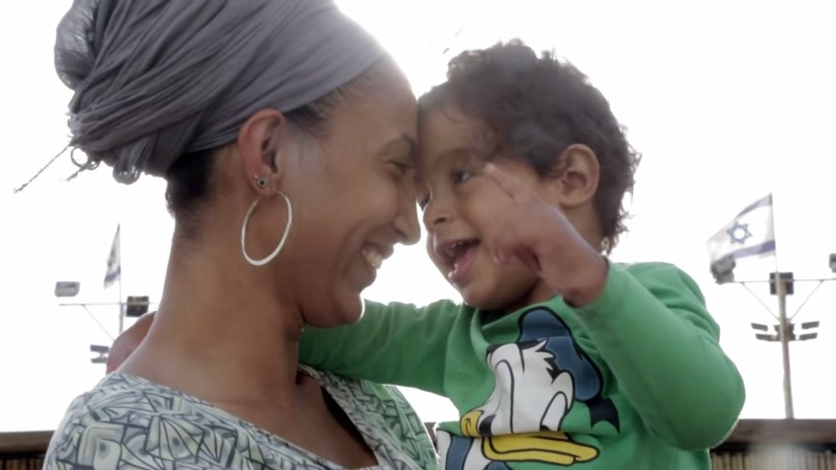
It’s hard not to love an ad featuring cute little babies, but a new video spot for Materna, a popular baby formula in Israel, has some people ranting more than cooing.
It’s not that they don’t like the infants they see. Rather, they’re upset over those that they don’t see. Namely, there are no young children of color in the commercial. Nor are there any non-white mothers, who are actually more the focus of the spot than the kids.
At a time when young Ethiopians are taking to the streets of Israeli cities to protest against racism, it’s not surprising that some have questioned why the ad with mothers offering advice to mothers-to-be is so tone deaf to the current headlines. Indeed, in 2015, a spot featuring solely families of white Israelis of European extractions (called “Ashkenazi” in Hebrew) is not reflective of the country’s multi-cultural and multi-hued reality.
So, rather than getting mad, those taking issue with the Materna ad are getting even by producing an alternate video modeled on the original. It’s not so much a spoof as it is a cynical and sarcastic response.
In the Materna ad by ad agency JWT, the mothers are seen cuddling with their babies and holding up cue cards on which they have written bits of advice for mothers-to-be: Sleep now, be ready to fall in love, rely on your intuition, don’t give up on yourself, you’ll know what he needs, and the like.
In the response video, the background music is clearly Middle Eastern in style, and the mothers – all of Ethiopian or Mizrahi (or Eastern) appearance – hold up signs with advice reflecting a harsher reality: It would be preferable if you had a white child, don’t expect them to film your kids for commercials – unless they’re for hummus, it’s better find a white man, and so on.
According to Hebrew language blogs, the response video, titled, “Don’t let racism get past the screen,” was created by poet and social activist Shlomi Hatuka from the non-profit organization AMRAM, which has dealt with the suspected kidnapping and trafficking in Yemenite babies during the 1950s, along with dramatist Eden Uliel.










The Times of Israel Community.