

After 84 years, time to retire UK Jewry’s annual veterans parade?
With dwindling attendance, there’s concern the AJEX march is counterproductive in showing the British public that Jews do their duty in the military
 Add ToI as a Preferred Source on Google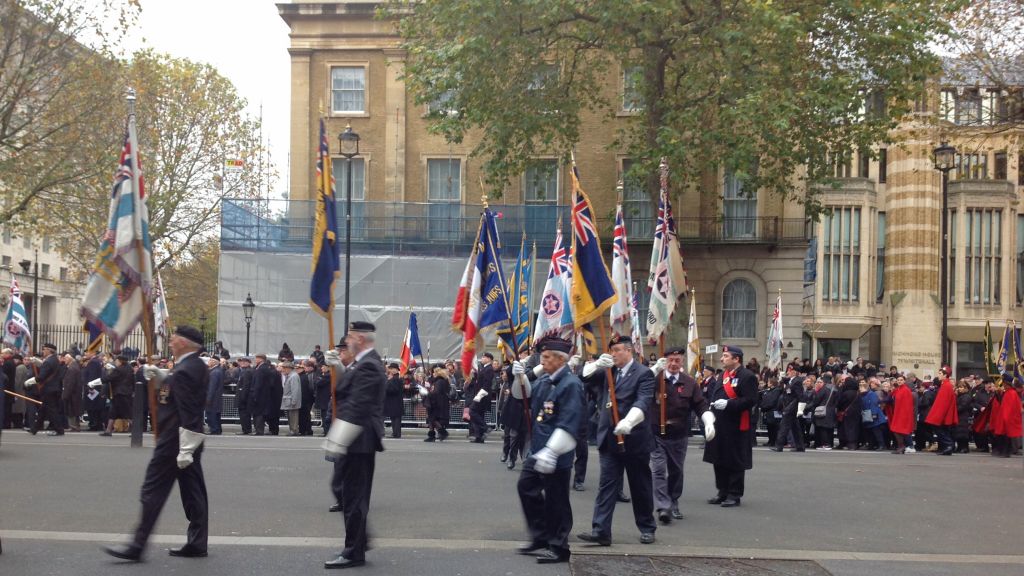
LONDON — A century after the start of World War I and 70 years since D Day, over 2,000 Jewish former servicemen marched through London on Sunday, as they have done almost without fail for more than eight decades.
The annual remembrance parade in central London, organized by the Association of Jewish ex-Servicemen and Women, is a fixture of the British Jewish calendar, taking place every year a week after the national commemoration of Armistice Day.
These days participant numbers are a shadow of the up to 60,000 British Jews who served in the trenches in the two world wars. But the atmosphere of the march and subsequent remembrance ceremony was buoyant Sunday, with a military band playing a popular setting of Jewish hymn “Adon Olam” and veterans proudly displaying their medals.
Former servicemen and women came from around the UK, their brightly colored standards recalling Jewish communities everywhere from Hull to Birmingham and across London.
At the ceremony wreaths were laid in the shape of stars of David, marking Jewish service in battles including D Day and Arnherm. Kaddish was recited in memory of the fallen, followed by the Last Post, a two minute silence, and the national anthem, with British Chief Rabbi Ephraim Mirvis and the chaplain to the troops, Rabbi Reuben Livingstone, among those present.
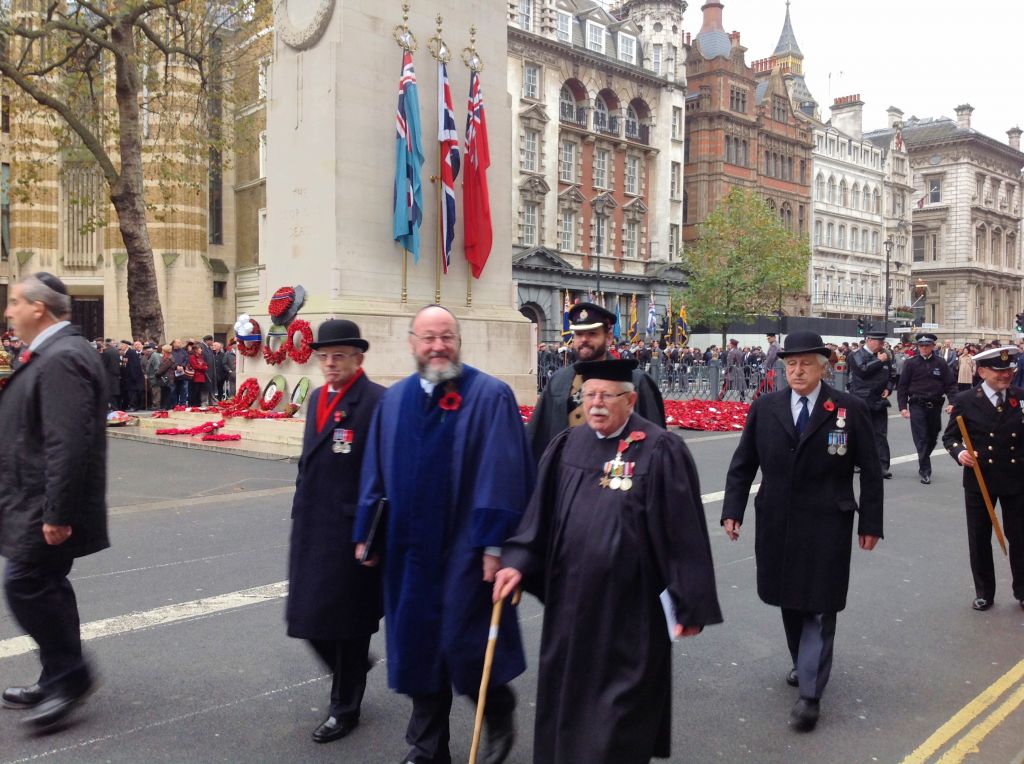
With their numbers declining and many World War II veterans now physically unable to march, the baton has been passed to the next generation, including the children and grandchildren of veterans, the Jewish Lads and Girls Brigade, pupils from Jewish schools, and 30 of the several hundred Jewish servicemen still active in the British army, some of whom have fought in Afghanistan or Iraq.
“Quite a lot of elderly veterans can still march, but also there has been a big push to get national servicemen who served in the 1950s and 1960s, people who served in places like Cyprus, Malaya, Korea, or in peacetime in the Territorial Army,” said Martin Sugarman, Chief Archivist of the Jewish Military Museum. “Attendance is down, and the number of Second World War veterans has declined, so we are also bringing youth and Jewish scouts in to it.”
The Admiral of the Fleet, Lord Boyce, gave the salute at the culmination of the ceremony, recalling British Jewish service from the mid 1700s onwards, including in the Napoleonic wars, at Waterloo and in the Crimean and Boer wars.
In future wars “I am sure Jewish servicemen and women will play their part on the sea, on the land and in the air,” said the Admiral, adding that it was a privilege to be at the ceremony.
First organized 84 years ago to mark the service of those who fought in the trenches, the AJEX parade has taken place almost uninterrupted ever since, albeit with a break during the Second World War.
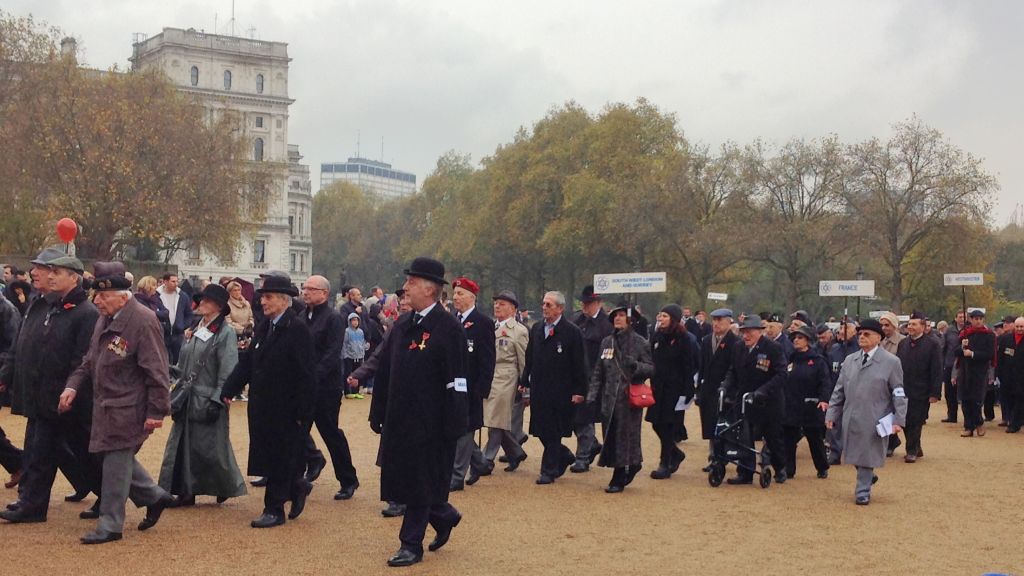
In the early years, particularly after WWII, it was a riotous occasion, with a well-attended rally and reunion celebration afterwards, and usually an address from the British prime minister.
“The parade used to be the most magnificent thing imaginable, people walked with pride. We all joined it, in those days it was a very big thing,” said Hymie Labovitch, 94, who served for four years in North Africa “There were thousands of people, military bands. The streets were packed.”
‘The parade used to be the most magnificent thing imaginable, people walked with pride’
“I was in Glasgow and we had a special train to bring down the branch contingent, Manchester had two,” said Arthur Lawson, a former AJEX national chairman who served in Burma with the Highland Light Infantry. “It was a huge thing, a celebration of British Jewish service.”
“It had a huge element of remembrance of the dead, and meeting old comrades,” added Sugarman. But the purpose went further. “They wanted to demonstrate to non-Jews that the Jews made a huge contribution.”
Even after the war, anti-Semitism remained pervasive in Britain, with Oswald Mosley and his revived Fascist party raising questions of Jewish loyalty.
“We wanted to prove we were all called up and did our bit and were all patriotic,” said Labovitch.
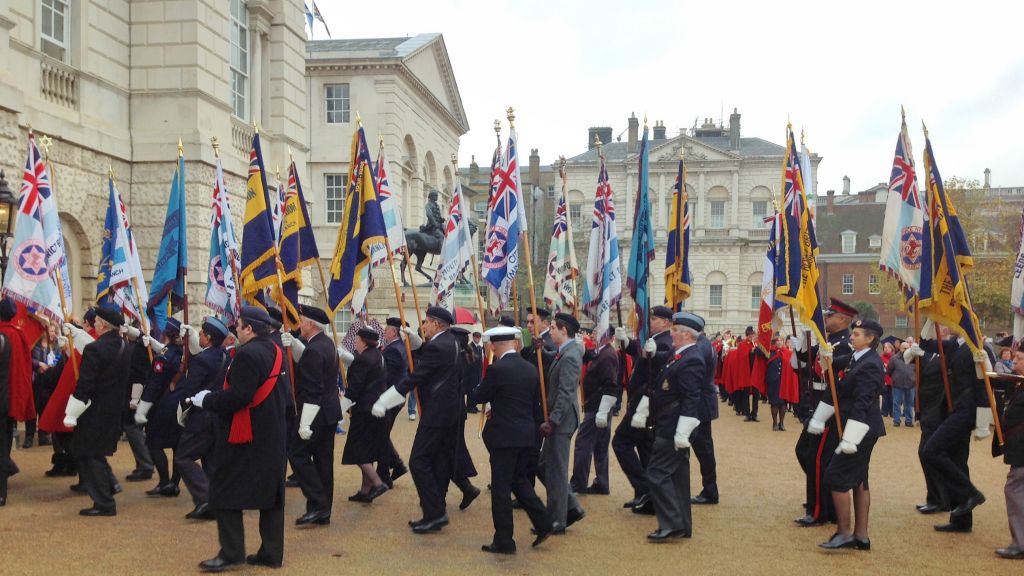
Seventy years on, there is concern among some AJEX members that that message is not lost.
“I’m very committed to remembering the fellows who were killed, said Lawson, who has been researching the names of the Jewish servicemen from his local area of Westminster killed during the war.
“That drives me very strongly,” said Lawson. So far he has collected 340 names, including rank, full name, regiment, service number, age when they died, the date they died, and where they were buried. “It’s about making sure those people are honoured still.”
The march remains a proud occasion, but there are questions over its future. As Labovitch points out, anybody who fought in WWII “must be 90 years old or more and can’t possibly walk up Whitehall.” And while there were crowds out to support the veterans, attendance is far lower than in the past.
‘They wanted to demonstrate to non-Jews that the Jews made a huge contribution’
For some, the best course might be to retire the annual march.
“It’s been known for 70 years that Jewish people served in the war and went through everything with everybody else,” said Labovitch. “It is important for people to know all about it but the story is well documented.”
AJEX organizers have been discussing what to do for the last decade or so, said Sugarman. “We are still going strong and there is no sign yet that we have to stop the parade. But we may have to curtail it.”
Lawson suggests that the parade will have to change format, but he is keen to ensure that the Jewish contribution to Britain’s great wars is not lost to history, and the parade remains a vital part of that.
“Part of keeping it is to demonstrate that we did serve, and part of it is remembrance,” he said. “We still want to get across the message that Jews served. That we did our duty.”
He is concerned, however, that it may become counterproductive.
“People looking at it saying Jews are claiming they served — and is that all they’ve got to show for it?” he said.








The Times of Israel Community.