

‘All these people are so devoted’: Hostage advocates bid farewell at last NYC rally
Weekly Central Park demonstrations for the captives come to emotional close after over two years, as activists look to channel infrastructure and energy into other advocacy efforts
 Add ToI as a Preferred Source on Google
Luke Tress is The Times of Israel's New York correspondent.
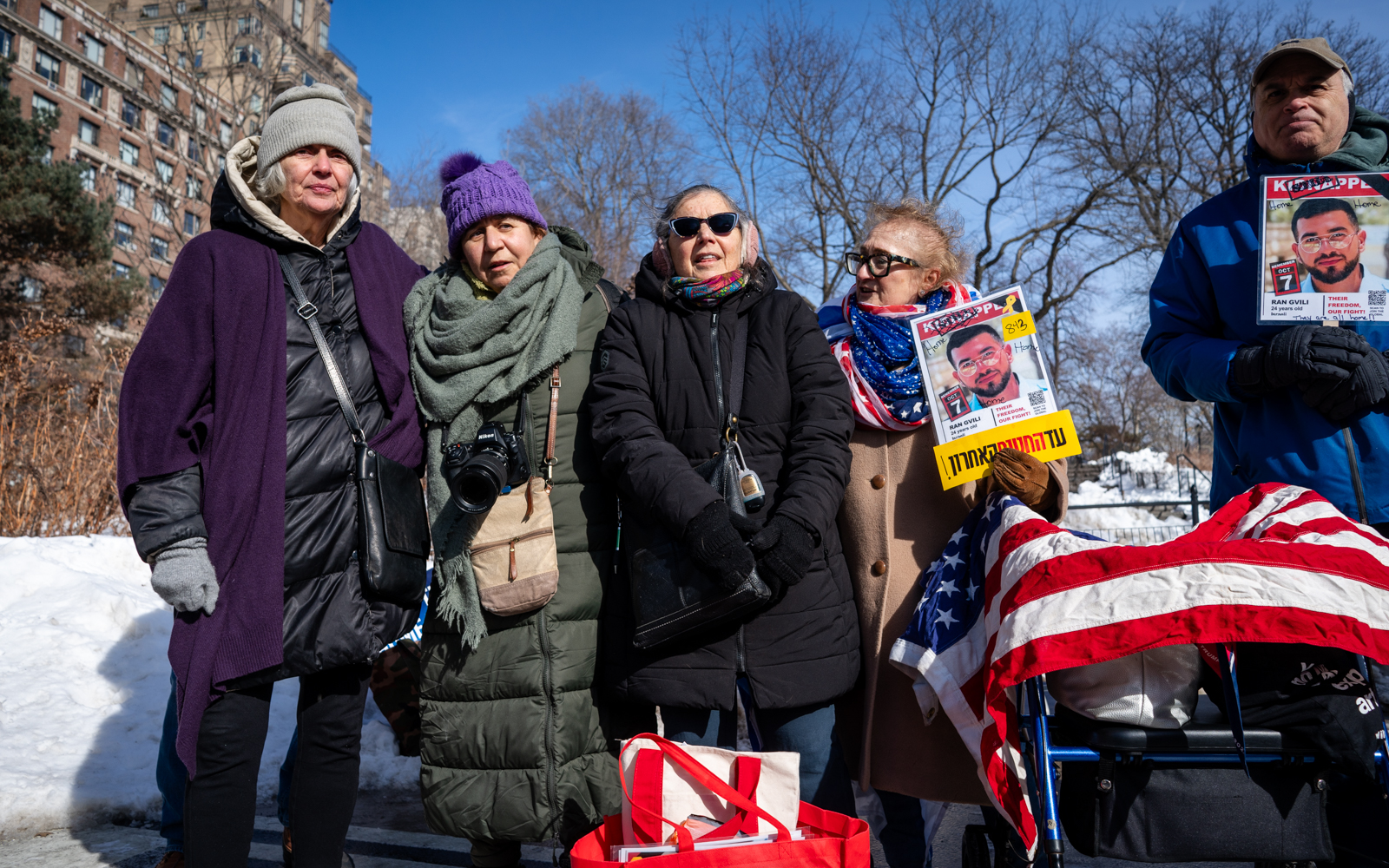
NEW YORK — Ellen Muss, a Jewish activist in New York City, has attended rallies for the hostages held in Gaza for more than two years, often carrying “missing person” milk cartons showing the faces of the captives.
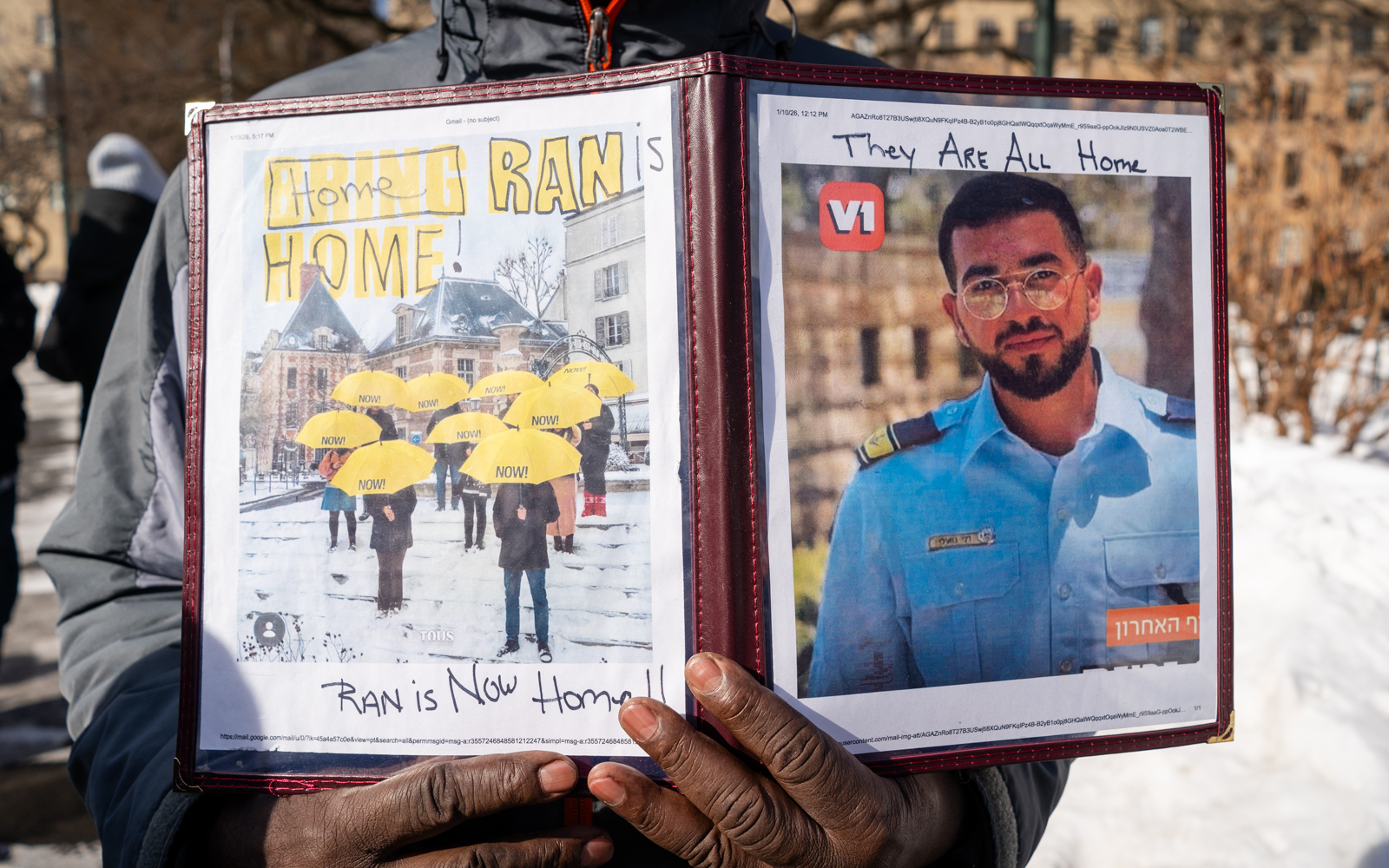
On Sunday, Muss and other advocates for the hostages gathered one last time in Central Park in below-freezing temperatures, as icy snow covered the ground and children were bundled in snowsuits. Less than one week earlier, the body of Ran Gvili, the final hostage, had been recovered in Gaza.
“We never thought that we would see this day, that there would be no more hostages left in Gaza,” Muss said, as she bid farewell to the demonstrations. “We’ve been out here since the beginning, every Sunday, so it’s a feeling of relief.”
The core group of activists continued to gather at the weekly meetings in the park after the Israeli-led Hostages and Missing Families Forum ended most of its activities in late December, more than two months after the final living hostages returned home.
The Sunday rally marked a final, bittersweet chapter for the group, which has hosted the emotional events, and found community with each other, since shortly after the Hamas-led October 7, 2023, attack. But not everybody plans to say goodbye: Some attendees hope to harness the energy of the rallies and direct it toward other areas of advocacy.
The advocacy efforts in New York City for the hostages began immediately after the October 7 attack, as the community grappled with the devastation in southern Israel and the catastrophic kidnapping of 251 people. The effort to free the hostages served as common ground for nearly all of the New York City Jewish community, whose roughly 1 million members are often riven by political and religious divides.
The Central Park rallies, as well as similar events in the city, sometimes drew thousands of participants, including former hostages, families of the captives, Jewish community leaders and elected officials.
After the hostages forum ceased operations late last year, local organizer Barbara Bezalel called some of the other New York demonstrators and found an interest in keeping the Central Park rallies going as long as there was a slain captive still in Gaza. Sunday’s meeting was not affiliated with the hostages forum.
“We felt that we needed to continue,” she said. “It’s just a group that felt that they still needed to stand and show presence here, and to inform people that, yes, there still is one more hostage, yes, there still needs to be somebody to come home, and yes, we promised to be here until the last hostage.”
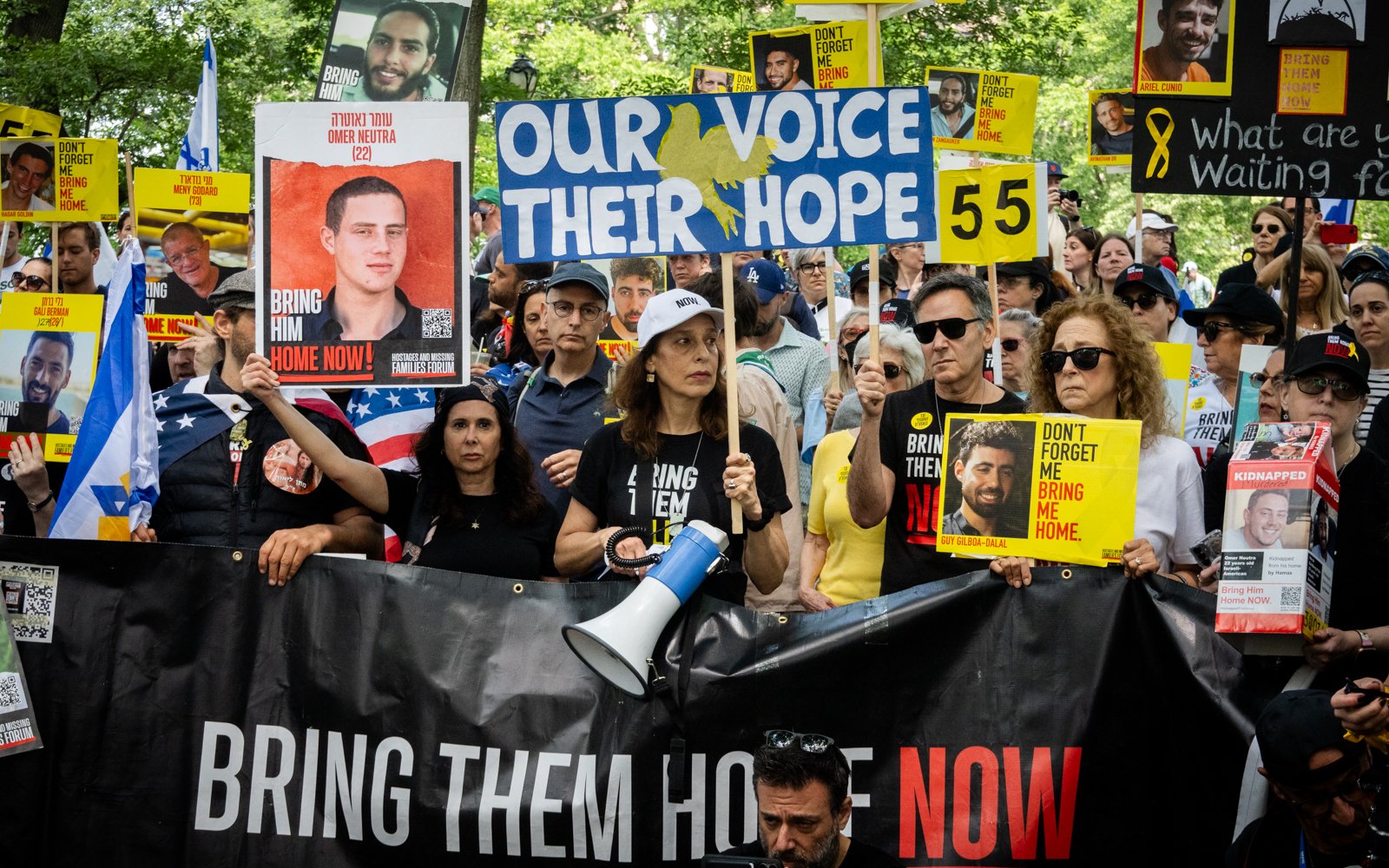
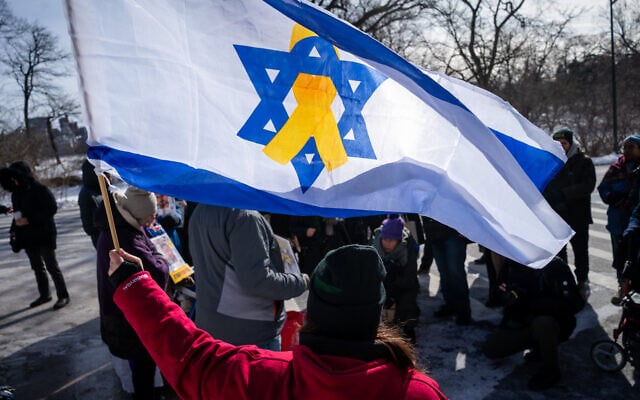
At the end, a core group of several dozen gathered on Sunday at their traditional meeting point in the Upper West Side. (A rally planned for last week, after the recovery of Gvili’s body, was canceled due to a snowstorm.) They held signs showing Gvili’s face, Israeli flags intertwining the Star of David with a yellow ribbon, a symbol of the captives, and hats bearing the trademark designs of the hostages forum. The crowd came in from Manhattan, Queens and Brooklyn, as well as Long Island and Teaneck, New Jersey.
The crowd ended the rally with a rendition of Israel’s anthem, Hatikvah.
"Hatikvah" at the last hostages rally in Central Park welcoming the return of Ran Gvili, after more than two years of weekly gatherings pic.twitter.com/jUodX6YwqC
— Luke Tress (@luketress) February 1, 2026
The demonstrators expressed a mix of emotions at the rally, from relief at the hostages’ return to lingering sorrow at their families’ loss, and gratitude to the community.
“All these people are so devoted for all this time and really caring from their hearts and always crying and always here no matter what the weather. I admire them all so much,” said Joan Roth, 83, a regular attendee. “We all grew very close, just love and admire each other.”
“I feel relieved, but it’s not over. The pain is there for the families that were affected. Now that all the hoopla is down, they still have to face their lives and live their lives without people that were part of their family,” said Nira Bendor, an Israeli-born activist from the Upper West Side.
“I don’t feel like the whole ordeal is over,” Roth said. “I still worry, and I just hope there’s never any more hostages ever again.”
Bezalel said she had been present in Tel Aviv’s Hostages Square to hear remarks from the sister of Hadar Goldin, a soldier whose body was held by terrorists in Gaza for 11 years before it was recovered in October. Ayelet Goldin told the crowd she had been “scared the square would be empty.”
“That hit me tremendously, so when I found out that Ran had finally come home, I get emotional about it. We made a promise and kept to it,” Bezalel said, her voice breaking. “Because of what happened with Hadar Goldin, it became such a point of not letting it go another 10 years, 12 years.”
“We played a small part in it, but we did it, so I’m very grateful,” she added.
The demonstrators also bid farewell to the other activists with whom they had stood at the moving gatherings for more than two years. Muss said that, at the rallies, she had reconnected with an old college friend, made new friends, and got to spend time each weekend with her brother and sister-in-law.
“We want to continue to know each other,” Bendor said, comparing the group’s dissolution to the dislocation Israelis face after finishing mandatory service in the military. “It’s hard to part from this thing because it was going on for two-and-something years and it was a community.”
“It’s a community, a strange community, but it’s a community, and I think nowadays especially people want to have communities,” she said.
Leaving the Sunday rally, many of the demonstrators embraced and made plans for future meet-ups. One group headed from the rally to get lunch together at Edgar’s Cafe, a nearby restaurant.
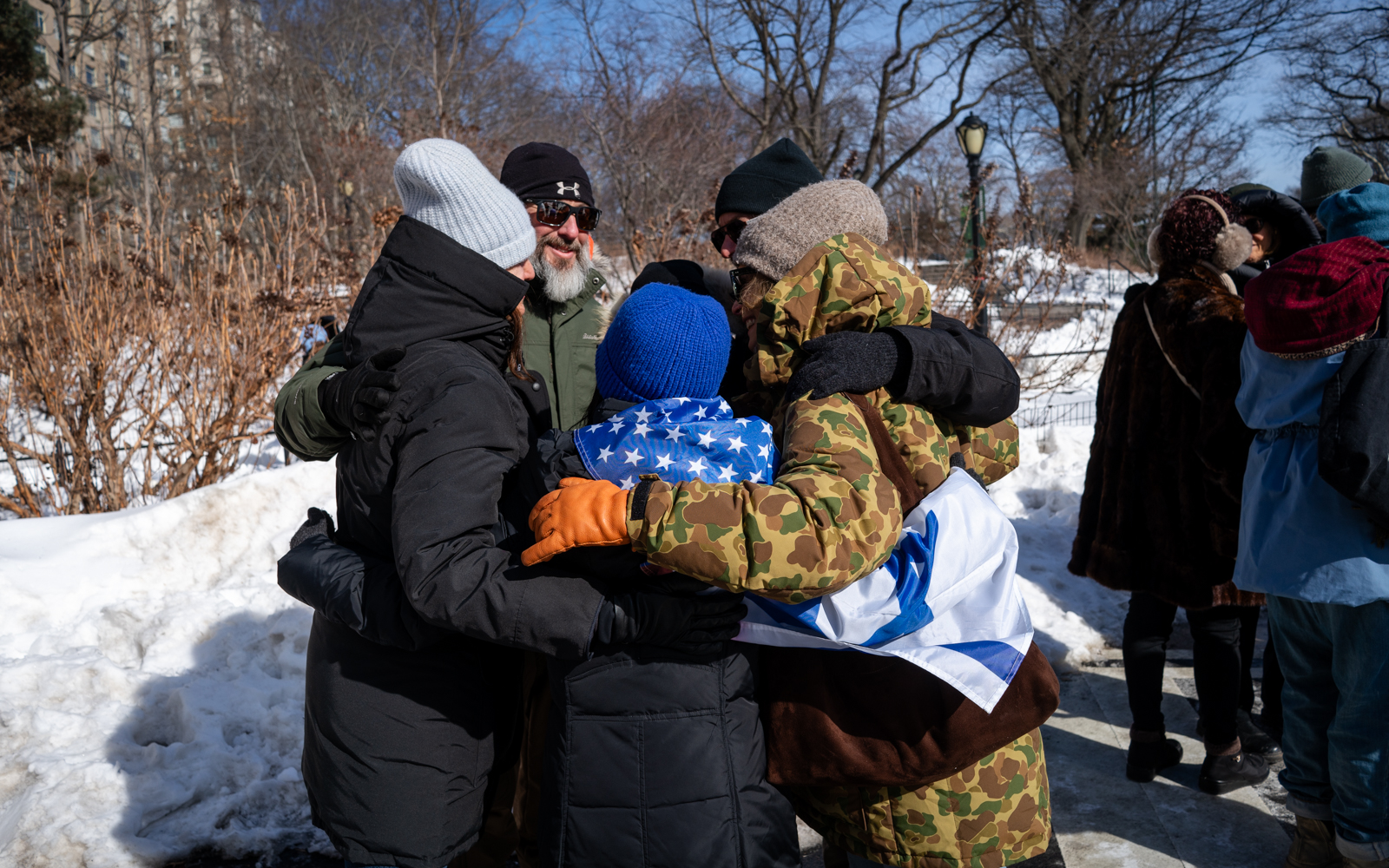
Bezalel said her life had “been almost hijacked” since the start of the war by her advocacy for the hostages, from the rallies to writing letters to members of Congress and the White House, and visiting Washington, DC.
While that effort has ended, she and other demonstrators plan to channel their activism in other directions.
“Stay active, keep fighting, find out what you think is really important at this point in time, especially as a Jew,” she said.
“Things seem to be taking a turn for the worse,” she added, referring to antisemitism.
“I hope everyone stays positive and the Jewish community stays unified and we don’t let political divisions divide us. It remains to be seen,” Muss said.
The hostage advocacy network in New York City grew out of a campaign against the Israeli government’s judicial overhaul beginning in early 2023. The plan to reform the judiciary sparked unprecedented protests in the New York Jewish community as well as in Israel, as organizers created a sprawling network of activists linked by WhatsApp groups.
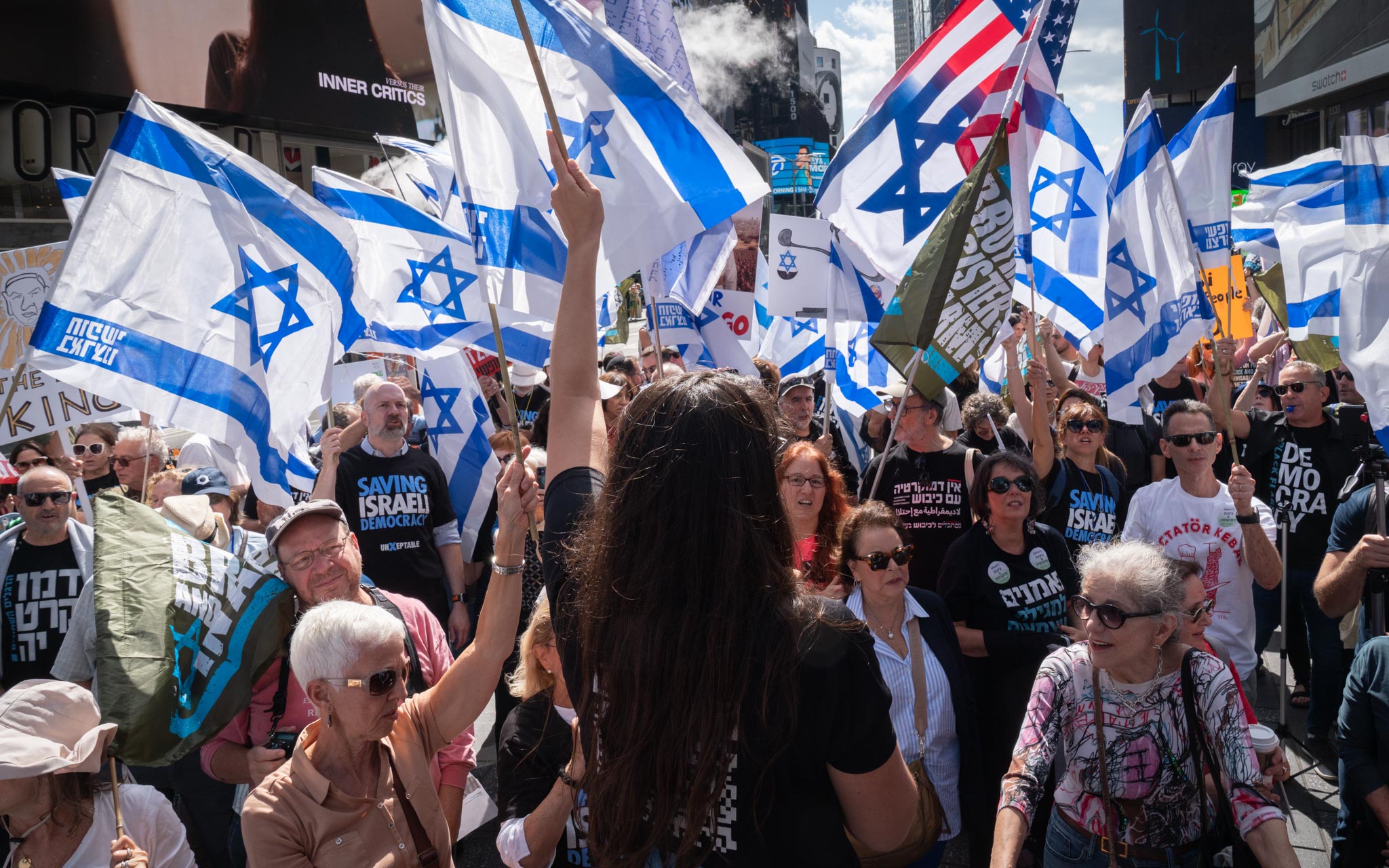
After the October 7 attack, that network immediately pivoted to supporting Israel and advocating for the hostages. Bendor said she got involved in the protests against the judicial overhaul before turning to the hostage rallies, ferrying supplies to and from the demonstrations in her car.
Some of the demonstrators are now redirecting that energy and tapping into their network for further Jewish community advocacy.
Elisha Fine is one of the organizers of a new grassroots group called Hineni, Hebrew for “Here I am,” for which he recruited at the Sunday rally. The project is led by Shai Davidai, a former Columbia University professor who came to prominence by protesting the university.
“What grew out of this, out of the rally, was a whole incubator of scenes,” he said. He and other activists printed out stickers for the hostages, an expansion of a poster campaign for the captives that took off after the start of the war. He estimated that the network had printed 400,000 stickers that they distributed at the rallies and sent elsewhere in the mail.
Hineni had a breakout moment last month, Fine said, after the employees of the Israeli-owned Breads Bakery unionized, demanding that the company halt its “support of genocide,” citing offenses such as partaking in a Jewish food festival. Hineni put out a call to support the chain’s Upper West Side location, and hundreds showed up.
The group has started holding weekly events, such as political phone banking against the far-left, anti-Israel Democratic Socialists of America, and a visit to the Museum of Jewish Heritage to view an exhibit on Arthur Szyk, a Jewish 20th-century anti-fascist artist.
“People need somewhere to put” their activist energy, now that the hostage rallies are over, Fine said. “It’s all growing very quickly because we’re building on the energy of what comes next.”
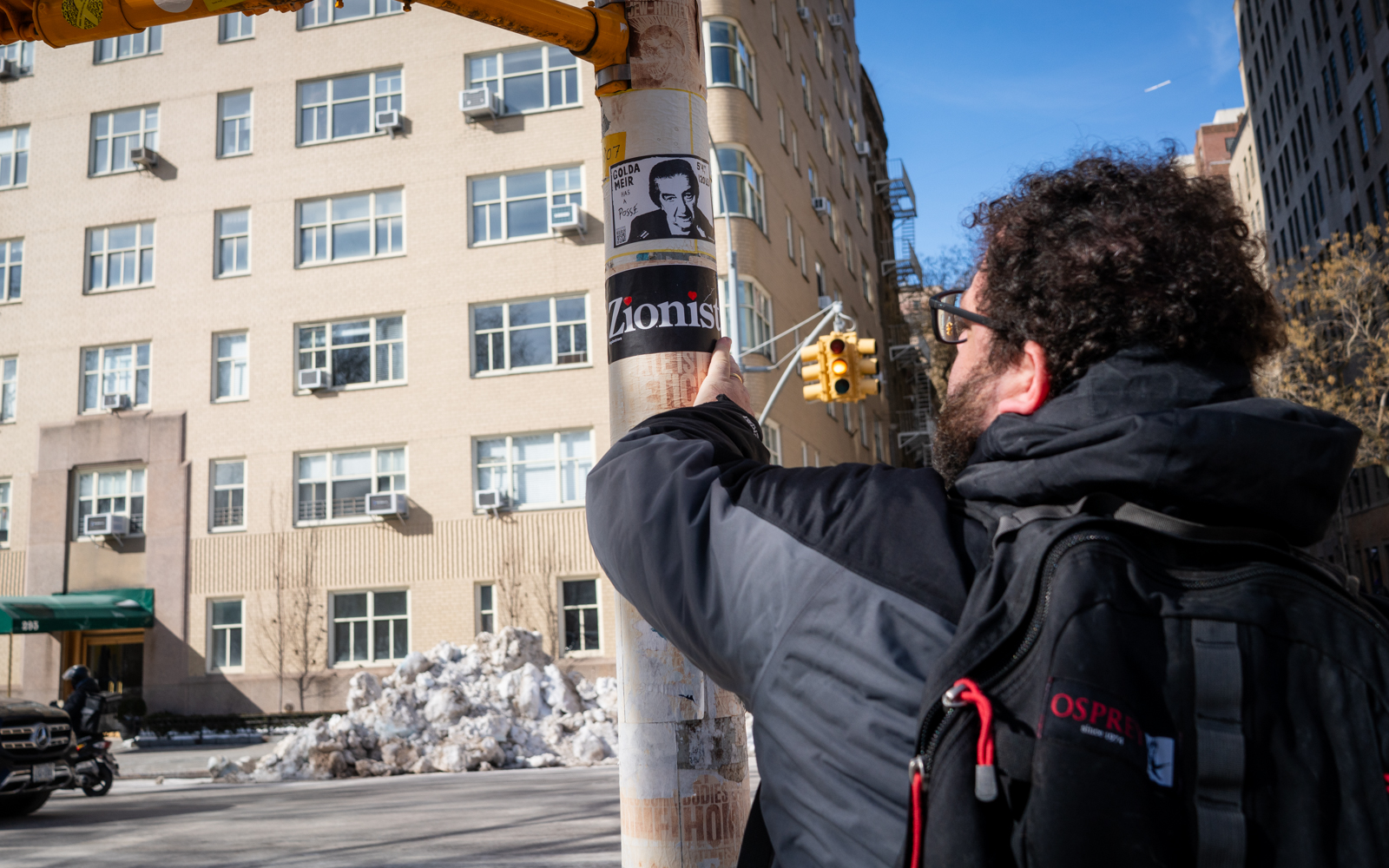
Fine, the founder of a group called the Sticker Campaign, is distributing stickers with positive messaging, such as “make love, not intifada,” and “punks against Jew-hatred.” Many of the messages are inspired by scholars such as Adam Louis-Klein and Naya Lekht who are advancing the idea that anti-Zionism is a new iteration of anti-Jewish hatred, an ideology that is increasingly gaining ground.
Fine attended Sunday’s rally with his golden retriever, Punum, who accompanies him to every demonstration and was bundled in an insulated Carhartt jacket against the cold. He passed by a lampost at the entrance to the park that was plastered with faded stickers for the hostages.
“We have been putting things on this pole for two years now, so it’s a bit of a monument,” he said.
On his way out, he appended one sticker showing former prime minister Golda Meir, as well as another adorned with hearts that said “Zionist,” above the hostage stickers.



The Times of Israel Community.