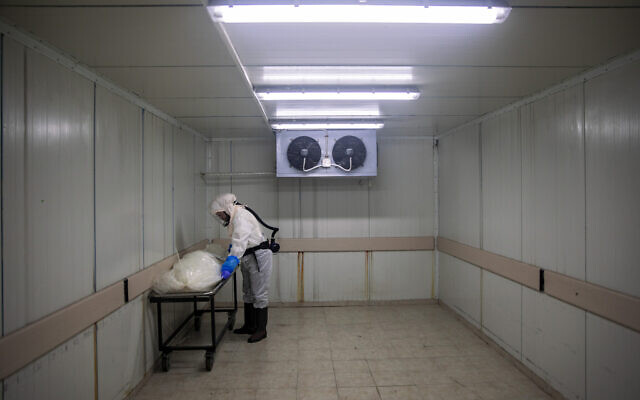
A worker from Hevra Kadisha, Israel's official Jewish burial society, prepares a body before a funeral procession at a special morgue for COVID-19 victims in Holon, September 23, 2020. (AP/Oded Balilty)
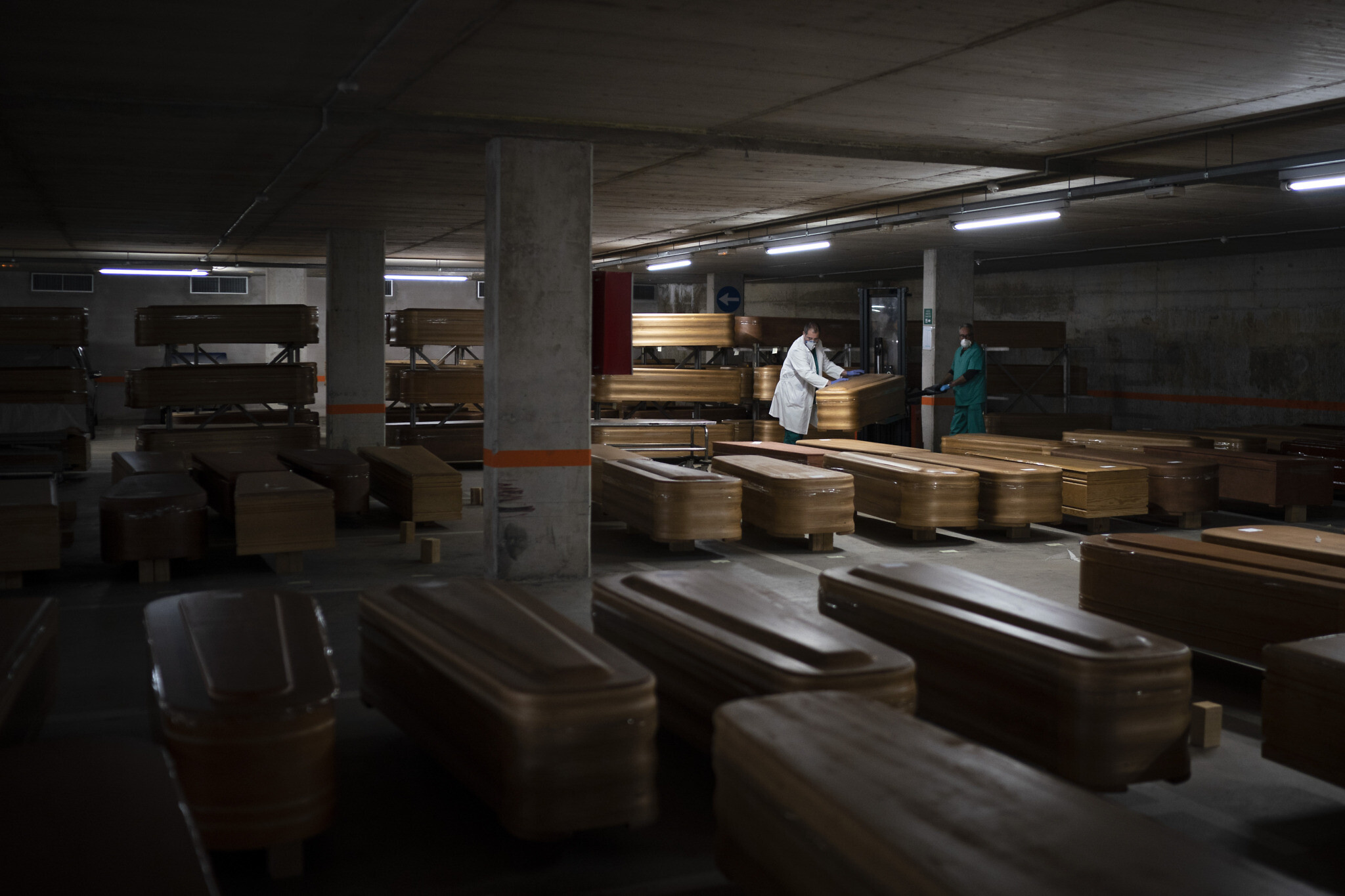
Coffins carrying the bodies of people who died of coronavirus are stored waiting to be buried or incinerated in an underground parking lot at the Collserola funeral home in Barcelona, Spain, April 2, 2020. (AP/Felipe Dana)
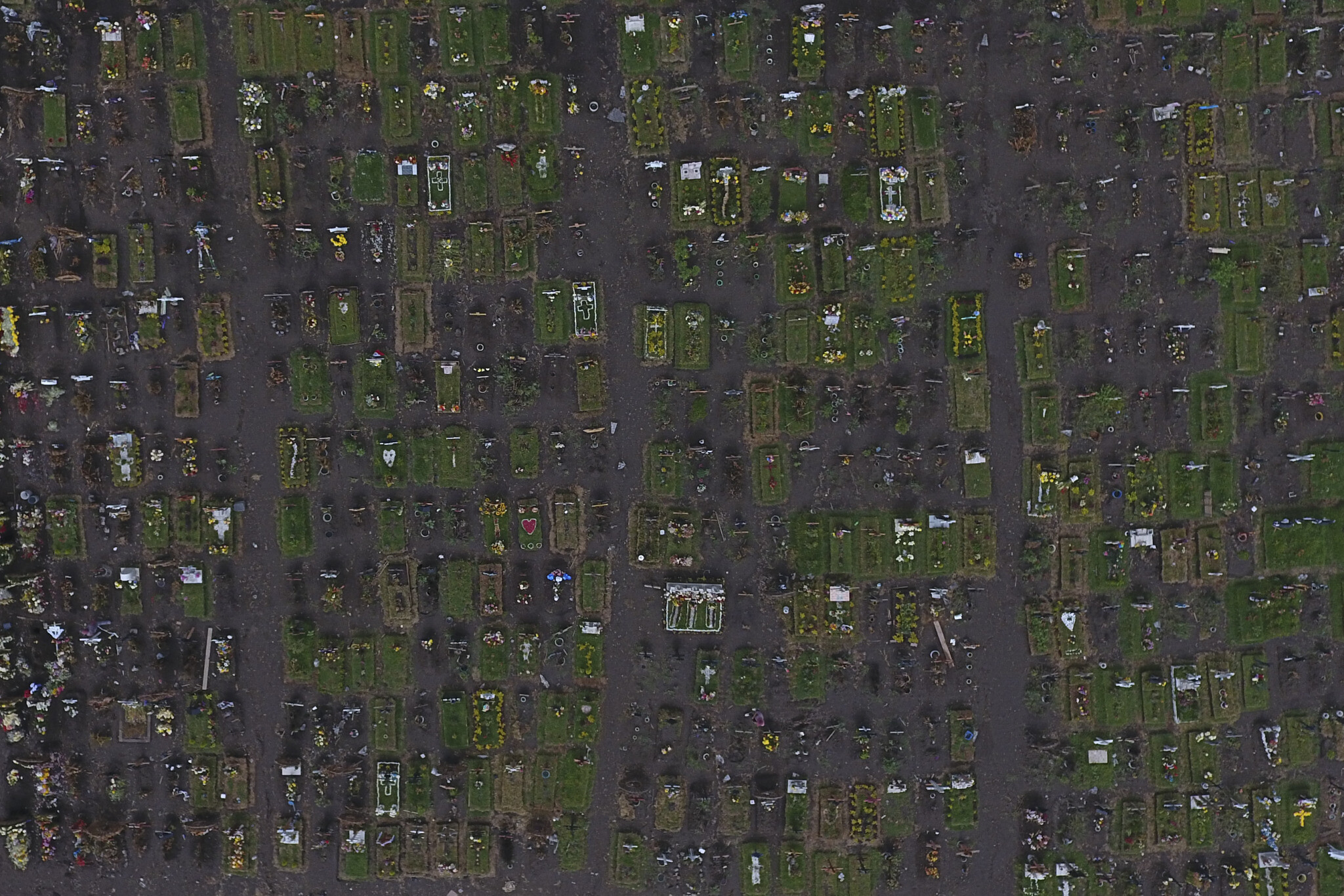
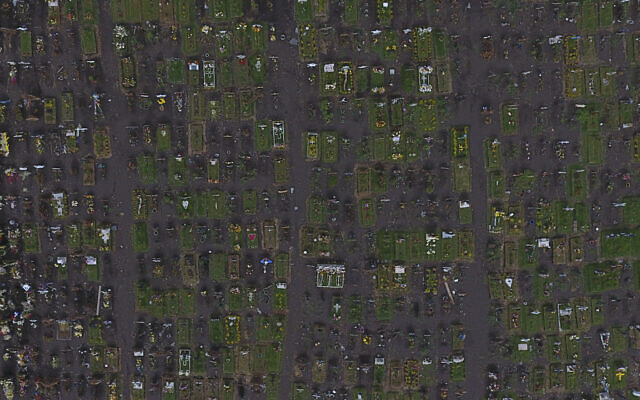
Graves are decorated with crosses and grass in a section of the Valle de Chalco Municipal Cemetery which opened early in the coronavirus pandemic to accommodate the surge in deaths, on the outskirts of Mexico City, Tuesday, Sept. 22, 2020. (AP/Rebecca Blackwell)
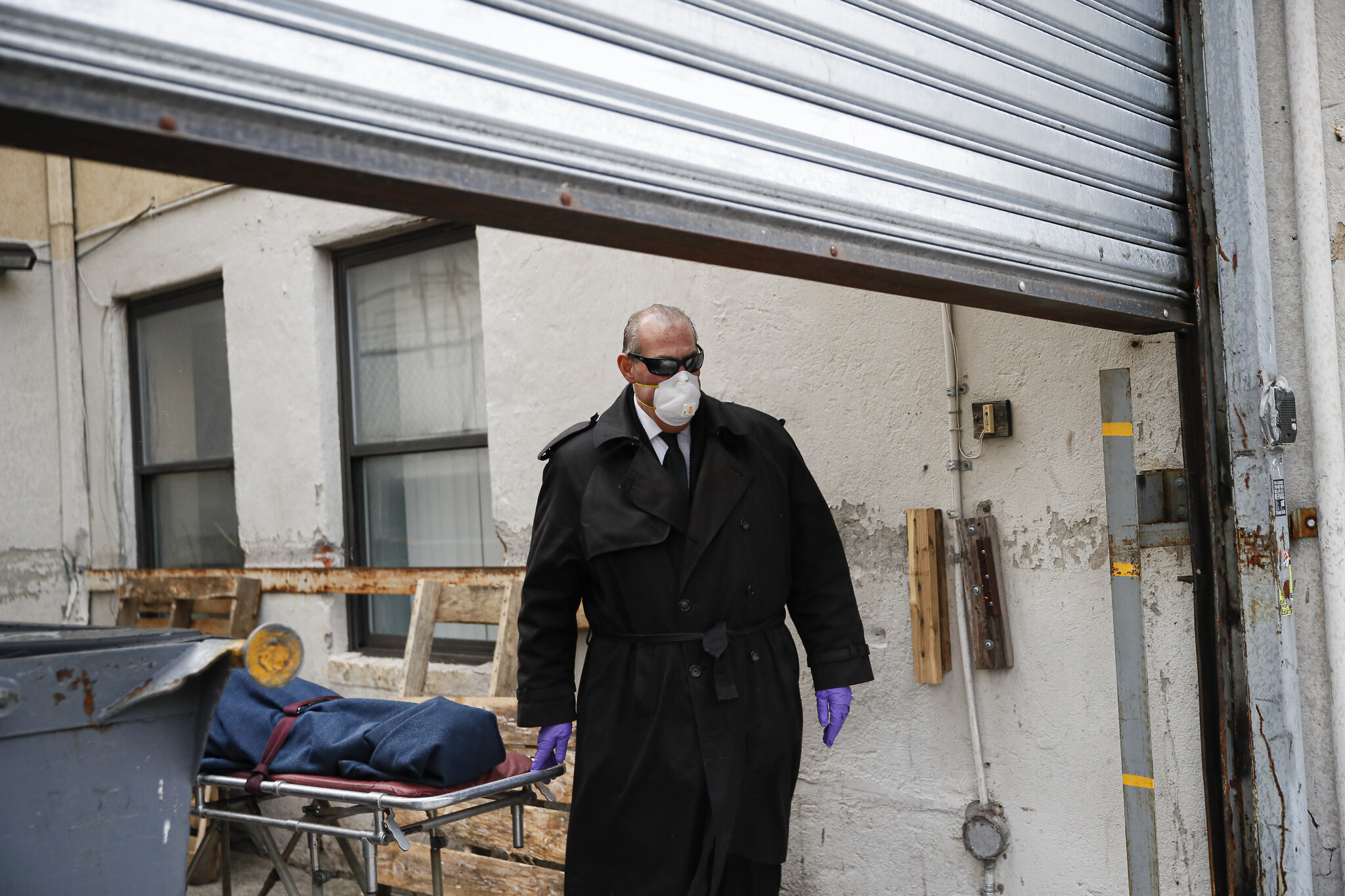
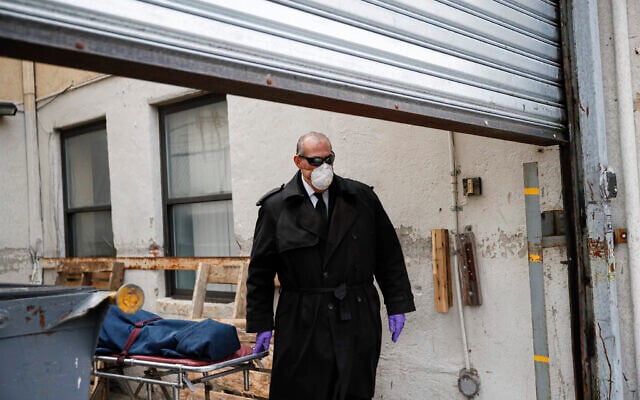
Funeral director Tom Cheeseman wears personal protective equipment due to COVID-19 concerns as he collects a body from a nursing home, Friday, April 3, 2020, in the Brooklyn borough of New York. 'We took a sworn oath to protect the dead, this is what we do,' he said. 'We're the last responders. Our job is just as important as the first responders.' (AP/John Minchillo)
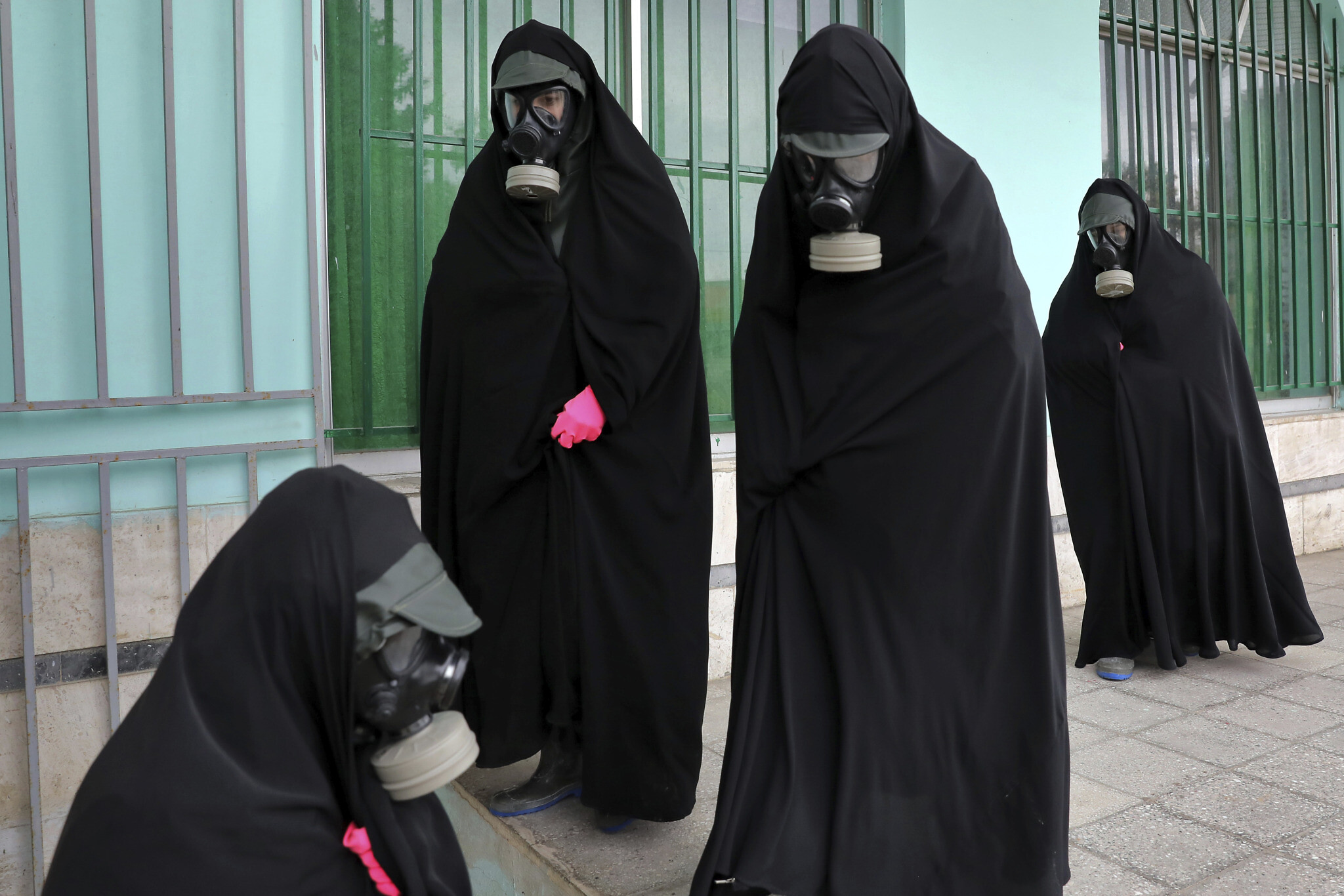
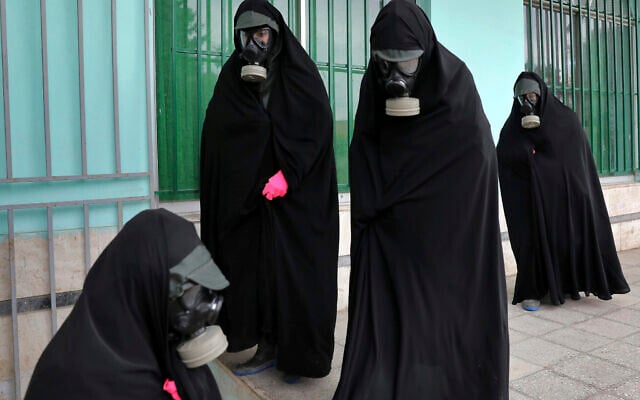
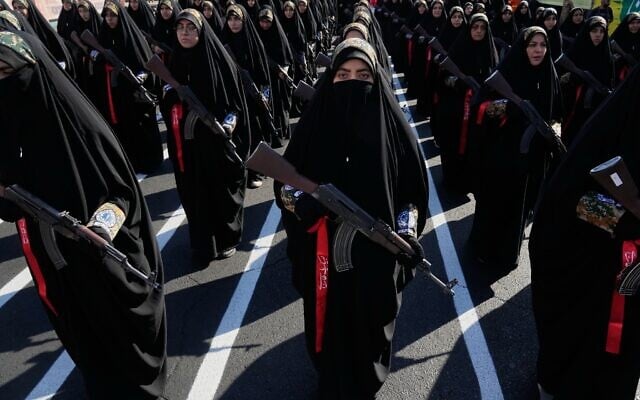
Cleric women wearing protective clothing and 'chador,' a head-to-toe garment, arrive a cemetery to prepare the body of a victim who died from the new coronavirus for a funeral, in the city of Ghaemshahr, in north of Iran, Thursday, April 30, 2020. (AP/Ebrahim Noroozi)
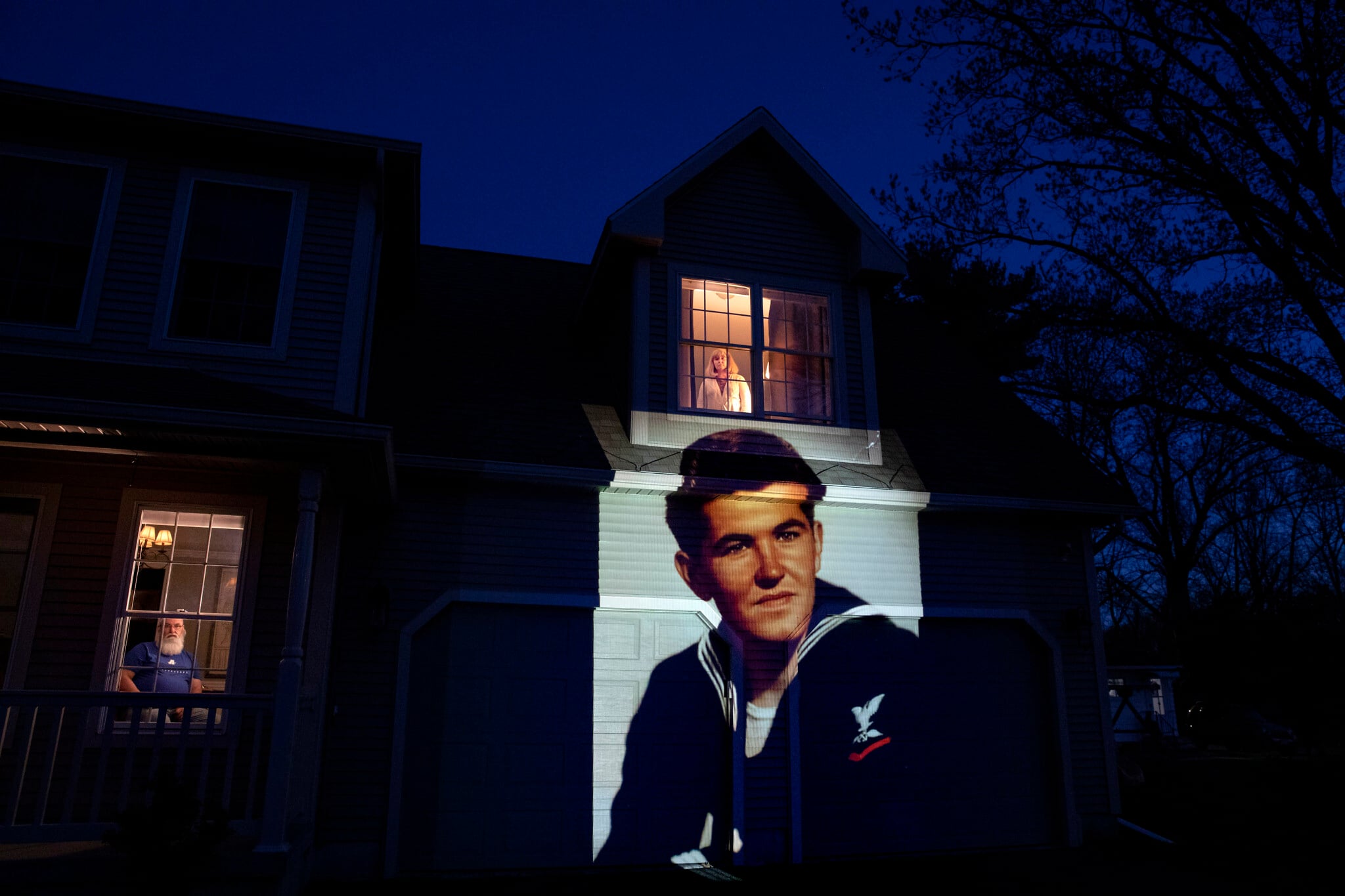
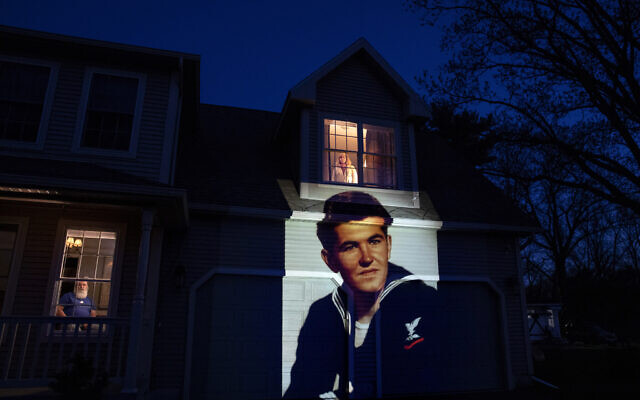
An image of veteran Stephen Kulig is projected onto the home of his daughter, Elizabeth DeForest, as she looks out the window of a spare bedroom as her husband, Kevin, sits downstairs in Chicopee, Mass., Sunday, May 3, 2020. Kulig, a US Navy veteran and resident of the Soldier's Home in Holyoke, Mass., died from the COVID-19 virus at the age of 92. After saying goodbye to her father for the last time in person, Elizabeth slept in the spare bedroom upstairs for two weeks as a precaution against possibly infecting her husband. Seeking to capture moments of private mourning at a time of global isolation, the photographer used a projector to cast large images of veterans on to the homes as their loved ones are struggling to honor them during a lockdown that has sidelined many funeral traditions. (AP/David Goldman)
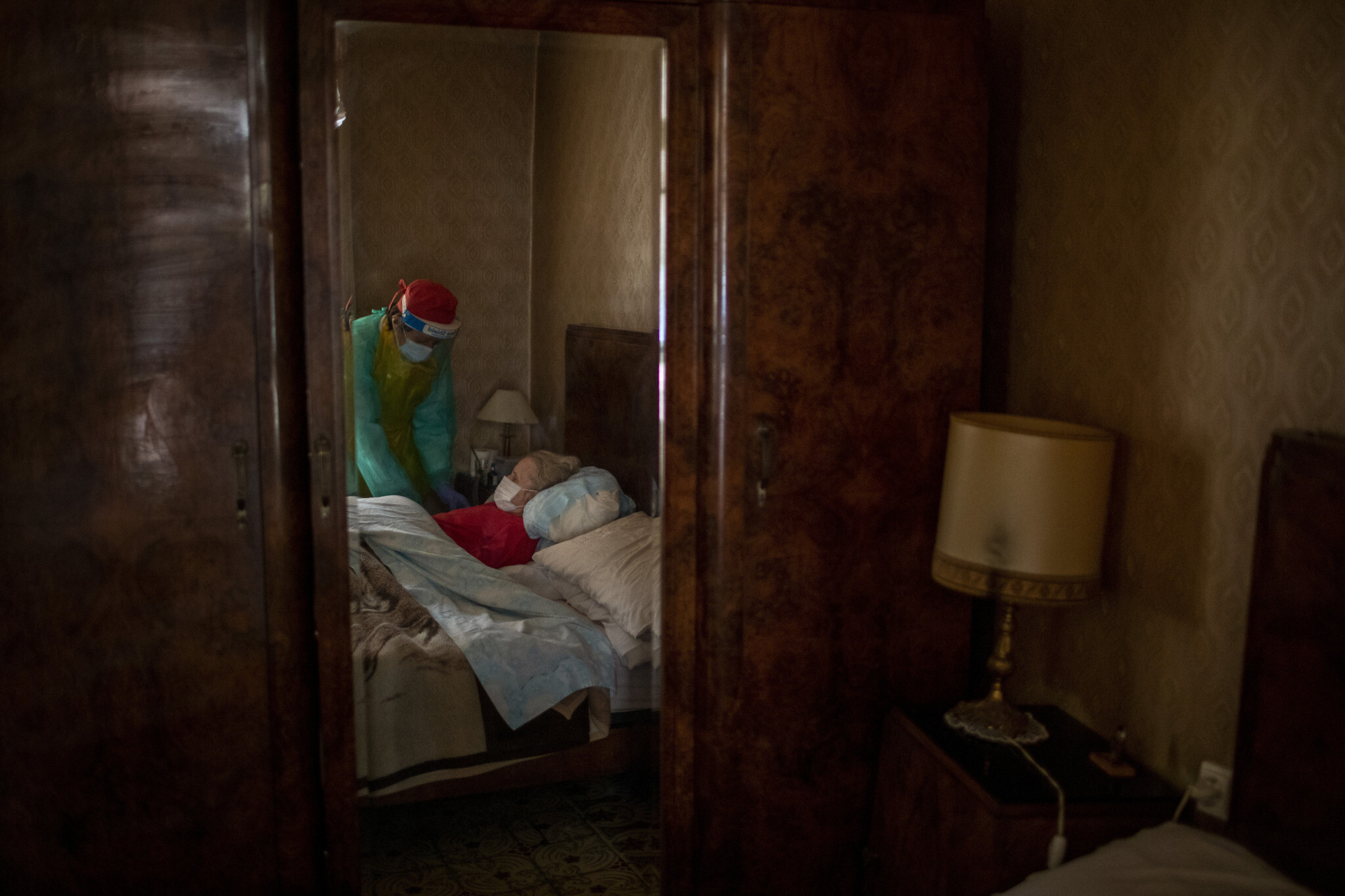
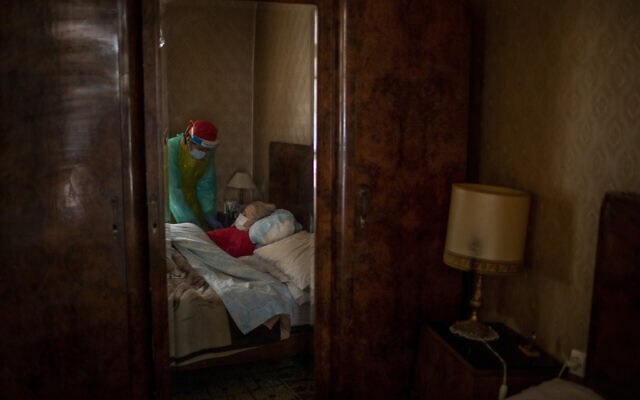
Josefa Ribas, 86, who is bedridden and suffers from dementia, is attended to by nurse Laura Valdes during a home care visit in Barcelona, Spain, April 7, 2020. Ribas' husband, Jose Marcos, fears what will happen if the virus enters their home and infects them. 'I survived the post-war period (of mass hunger). I hope I survive this pandemic,' he said. (AP/Emilio Morenatti)
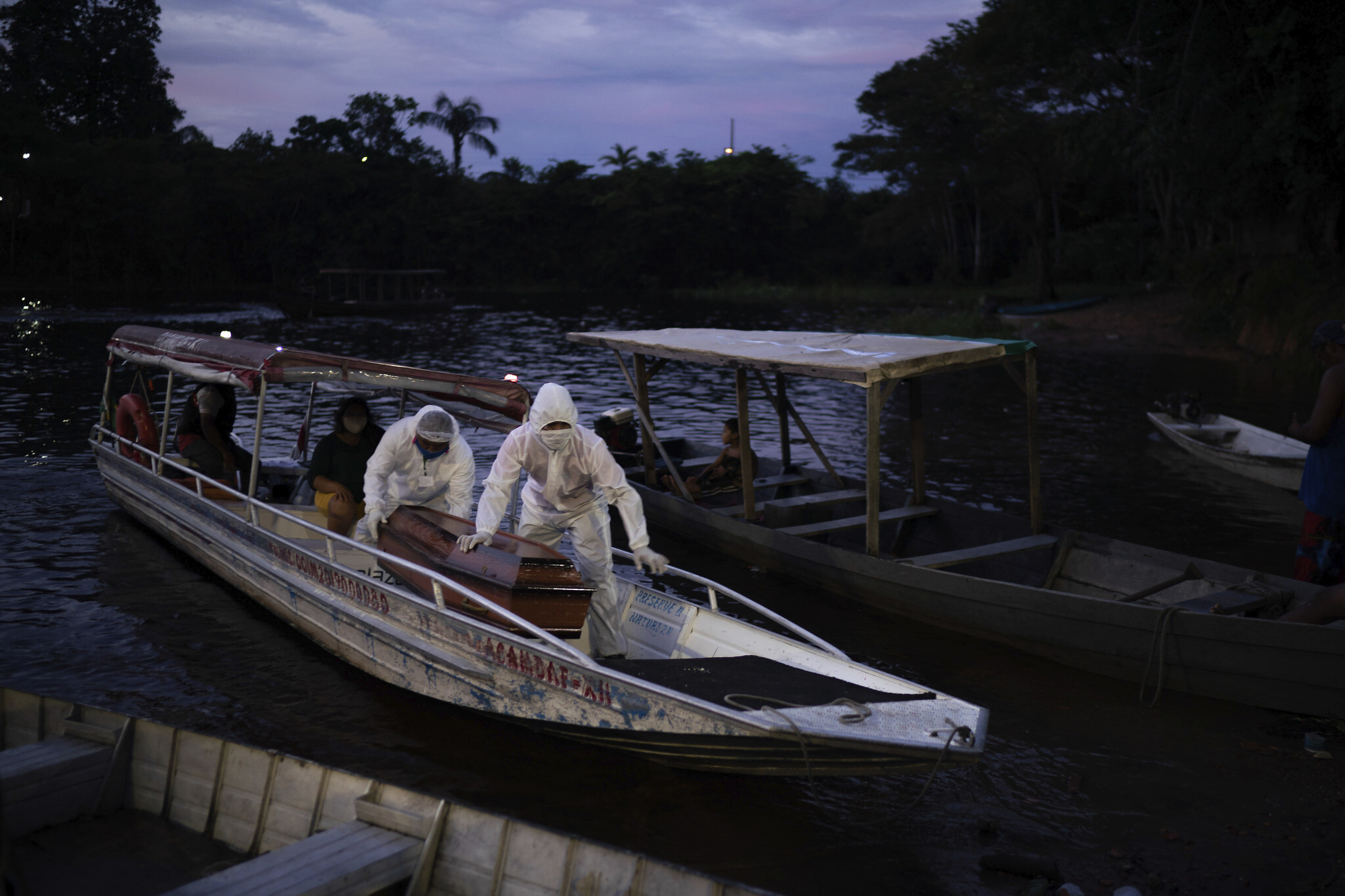
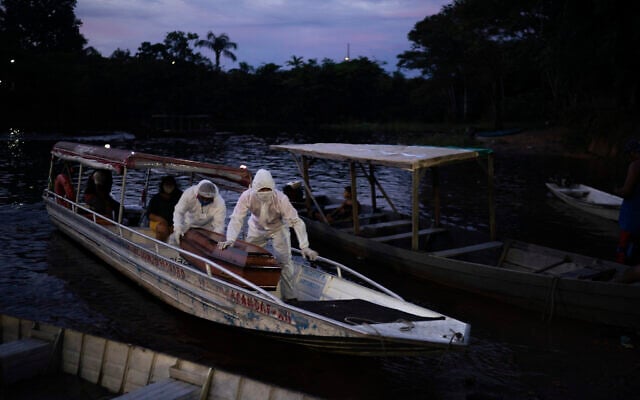
SOS Funeral workers transport by boat the coffin containing the body of a suspected COVID-19 victim that died in a river-side community near Manaus, Brazil on May 14, 2020. The victim, an 86-year-old woman, lived by the Negro river, the largest tributary to the Amazon river. (AP/Felipe Dana)
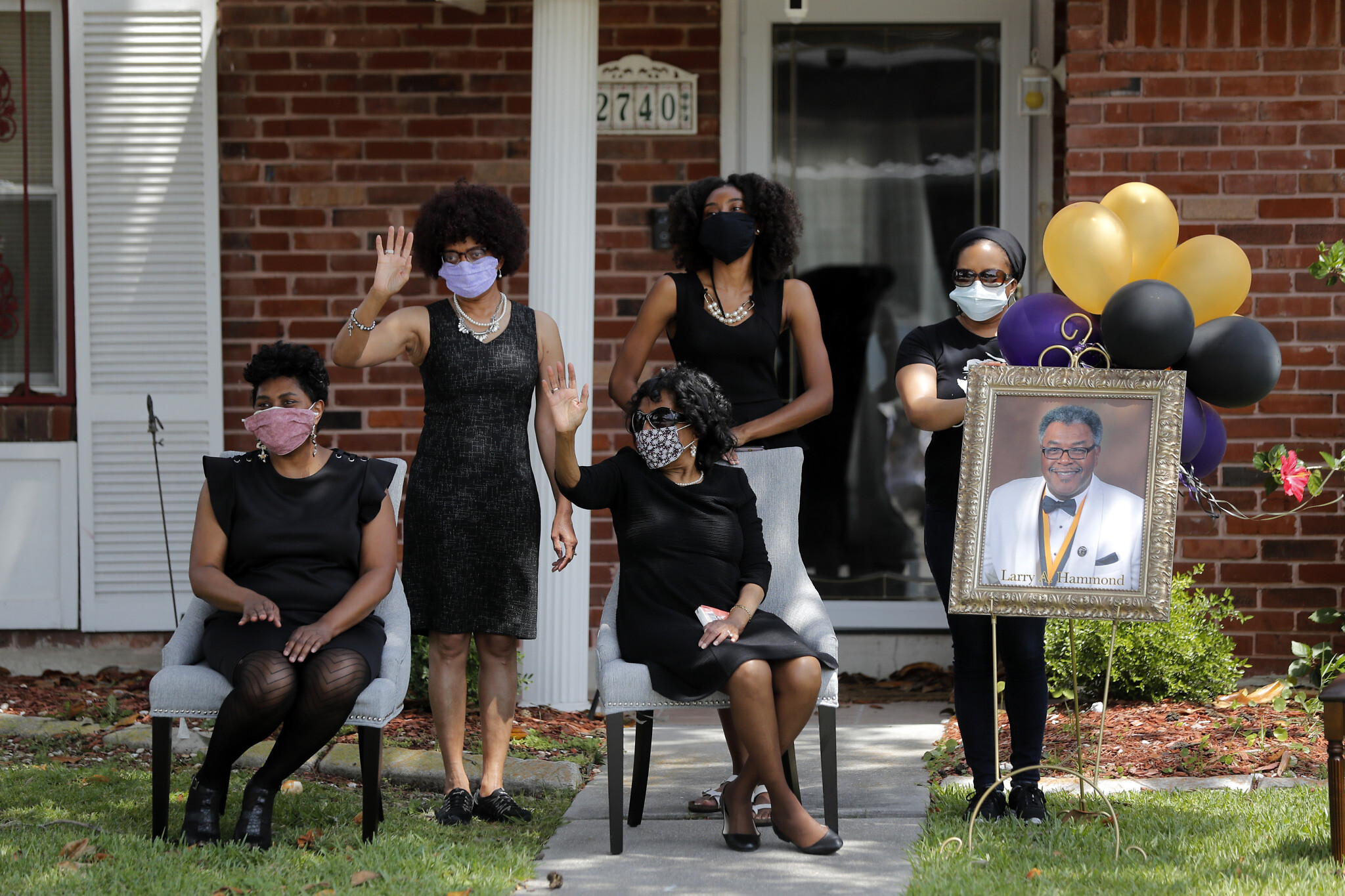
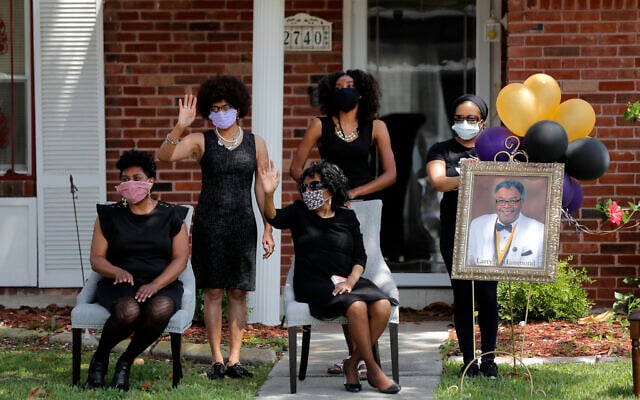
The family of Larry Hammond wave as a line of cars with friends and family, who could not attend his funeral because of limits of gatherings of more than 10 people, due to the coronavirus pandemic, pass by their home, in New Orleans, April 22, 2020. (AP/Gerald Herbert)
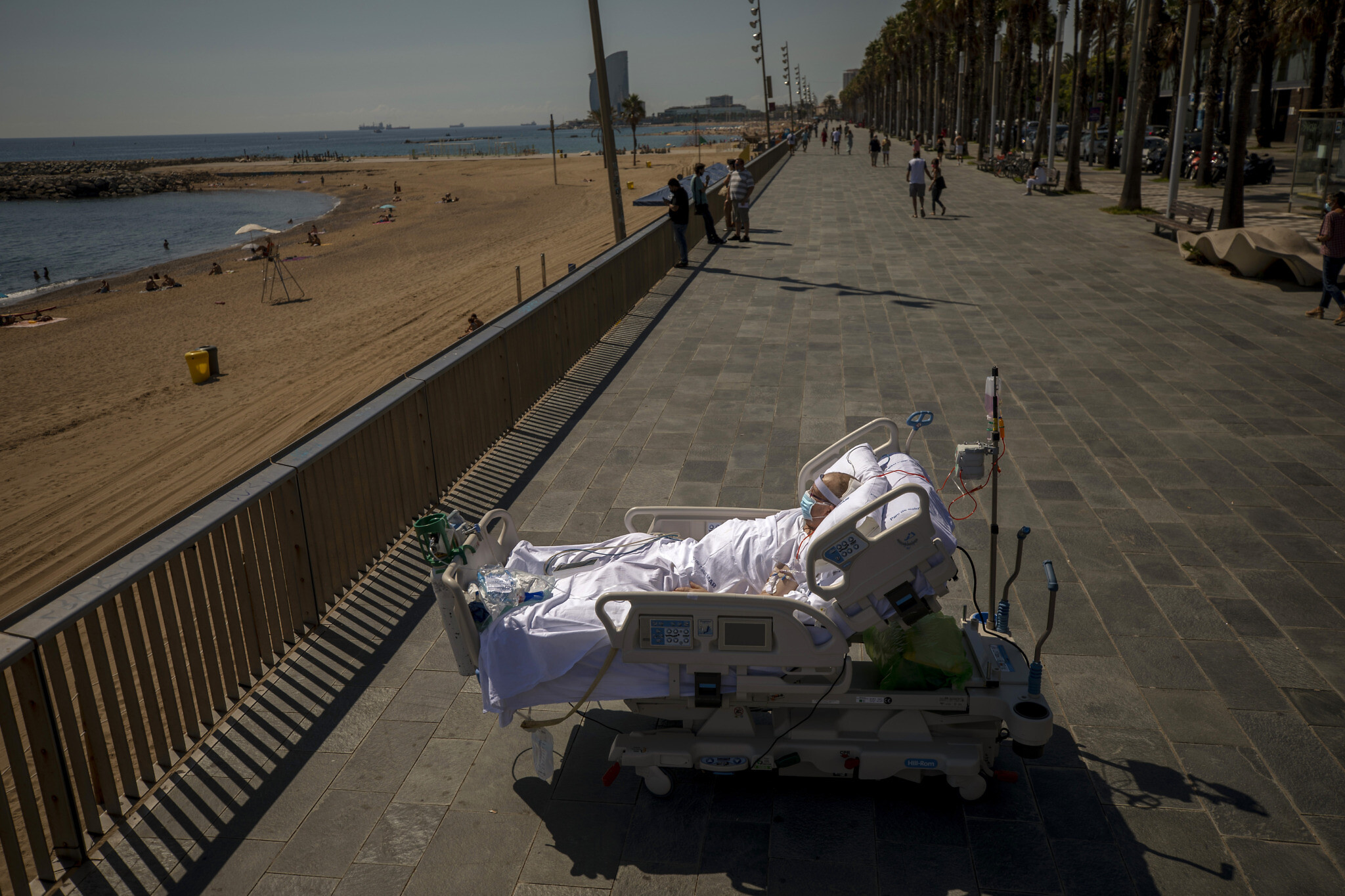
Francisco Espana, 60, looks at the Mediterranean sea from a promenade next to the Hospital del Mar in Barcelona, Spain, Friday, Sept. 4, 2020. Francisco spent 52 days in the Intensive Care unit at the hospital due to coronavirus, but he was allowed by his doctors to spend almost ten minutes at the seaside as part of his recovery therapy. (AP/Emilio Morenatti)
As it marched from East to West this year, the coronavirus pandemic sank economies and transformed social interactions. It shut schools and businesses, stopped the sports and entertainment industries dead in their tracks, and even brought low the Olympic Games.
And it killed. Over 1 million deaths have been recorded worldwide to date, according to data tracked by Johns Hopkins University.
The effects were global — but also personal. The virus changed how people socialized and shopped, worked and dressed. It changed how they cared for their loved ones and how they mourned them.
It even changed the language they used. The word “hero” was employed with more frequency — and the definition expanded to include delivery and sanitation workers, cleaners and waiters. And, of course, health care workers, who in China and Italy, Iran and South Africa, the United States and Brazil toiled in hazmat suits for hours on end to treat the sick.
A worker from Hevra Kadisha, Israel’s official Jewish burial society, prepares a body before a funeral procession at a special morgue for COVID-19 victims in the central Israeli city of Holon, near Tel Aviv, Wednesday, Sept. 23, 2020. (AP/Oded Balilty)
The virus changed how people interacted and how they thought about interaction. People isolated to stay healthy — and then worried about what isolation was doing to their health.
Get The Times of Israel's Daily Editionby email and never miss our top stories
In Spain, one of the hardest-hit countries, nursing home residents were shut off from the outside world for months in an effort to protect them. When visitors were allowed again, husbands and wives pressed lips to plastic sheeting for several minutes; mothers and daughters clutched each other through the film.
Many people were unable to say goodbye to their loved ones because of restrictions at hospitals; others held them in their final moments, draped head-to-toe in protective gear. Funerals were also sterile affairs if they happened at all.
And still the pandemic is far from over. The toll is climbing. By around 5,000 a day, a death every 17 seconds somewhere in the world.
Advertisement
Francisco Espana, 60, looks at the Mediterranean sea from a promenade next to the Hospital del Mar in Barcelona, Spain, Friday, Sept. 4, 2020. Francisco spent 52 days in the Intensive Care unit at the hospital due to coronavirus, but he was allowed by his doctors to spend almost ten minutes at the seaside as part of his recovery therapy. (AP/Emilio Morenatti)Graves are decorated with crosses and grass in a section of the Valle de Chalco Municipal Cemetery which opened early in the coronavirus pandemic to accommodate the surge in deaths, on the outskirts of Mexico City, Tuesday, Sept. 22, 2020. (AP/Rebecca Blackwell)The family of Larry Hammond wave as a line of cars with friends and family, who could not attend his funeral because of limits of gatherings of more than 10 people, due to the coronavirus pandemic, pass by their home, in New Orleans, April 22, 2020. (AP/Gerald Herbert)SOS Funeral workers transport by boat the coffin containing the body of a suspected COVID-19 victim that died in a river-side community near Manaus, Brazil on May 14, 2020. The victim, an 86-year-old woman, lived by the Negro river, the largest tributary to the Amazon river. (AP/Felipe Dana)Cleric women wearing protective clothing and ‘chador,’ a head-to-toe garment, arrive a cemetery to prepare the body of a victim who died from the new coronavirus for a funeral, in the city of Ghaemshahr, in north of Iran, Thursday, April 30, 2020. (AP/Ebrahim Noroozi)Funeral director Tom Cheeseman wears personal protective equipment due to COVID-19 concerns as he collects a body from a nursing home, Friday, April 3, 2020, in the Brooklyn borough of New York. ‘We took a sworn oath to protect the dead, this is what we do,’ he said. ‘We’re the last responders. Our job is just as important as the first responders.’ (AP/John Minchillo)Josefa Ribas, 86, who is bedridden and suffers from dementia, is attended to by nurse Laura Valdes during a home care visit in Barcelona, Spain, April 7, 2020. Ribas’ husband, Jose Marcos, fears what will happen if the virus enters their home and infects them. ‘I survived the post-war period (of mass hunger). I hope I survive this pandemic,’ he said. (AP/Emilio Morenatti)An image of veteran Stephen Kulig is projected onto the home of his daughter, Elizabeth DeForest, as she looks out the window of a spare bedroom as her husband, Kevin, sits downstairs in Chicopee, Mass., Sunday, May 3, 2020. Kulig, a US Navy veteran and resident of the Soldier’s Home in Holyoke, Mass., died from the COVID-19 virus at the age of 92. After saying goodbye to her father for the last time in person, Elizabeth slept in the spare bedroom upstairs for two weeks as a precaution against possibly infecting her husband. Seeking to capture moments of private mourning at a time of global isolation, the photographer used a projector to cast large images of veterans on to the homes as their loved ones are struggling to honor them during a lockdown that has sidelined many funeral traditions. (AP/David Goldman)
Help us report truthfully on social media
As a multimedia journalist, my job is to take the quality, fact-based journalism produced by The Times of Israel newsroom and make it accessible across every platform — from Instagram posts to podcasts to short-form videos.
This is how many, especially young people, consume news these days. But misinformation is rampant on social media. Our team at ToI produces accurate, responsible short-form reporting on Israel and the Jewish world.
If you believe in the importance of factual social media journalism, please consider joining our reader support group, The Times of Israel Community. Your financial support is essential to sustain responsible multimedia reporting.
We’re really pleased that you’ve read X Times of Israel articles in the past month.
That’s why we started the Times of Israel - to provide discerning readers like you with must-read coverage of Israel and the Jewish world.
So now we have a request. Unlike other news outlets, we haven’t put up a paywall. But as the journalism we do is costly, we invite readers for whom The Times of Israel has become important to help support our work by joining The Times of Israel Community.
For as little as $6 a month you can help support our quality journalism while enjoying The Times of Israel AD-FREE, as well as accessing exclusive content available only to Times of Israel Community members.
Thank you, David Horovitz, Founding Editor of The Times of Israel


 Add ToI as a Preferred Source on Google