

At UN, European states reject Israeli sovereignty over Golan
Belgium, UK, France, Germany and Poland say no change in stance on strategic plateau after Trump recognition, warn move could have negative consequences
 Add ToI as a Preferred Source on Google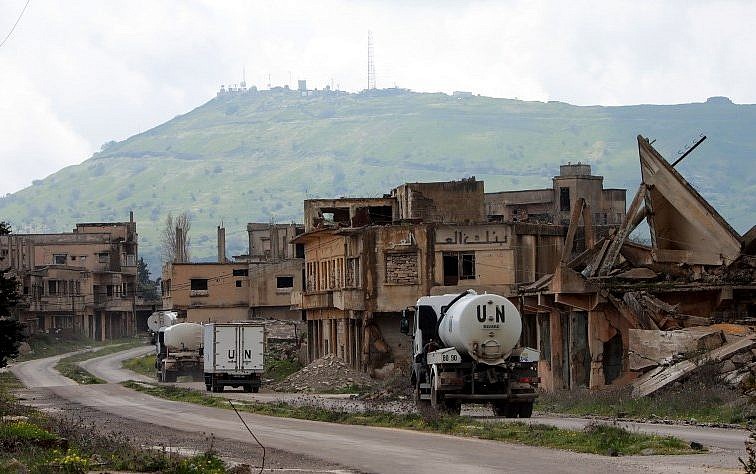
UNITED NATIONS — Five European countries that sit on the UN Security Council on Tuesday rejected US President Donald Trump’s decision to recognize the Golan Heights as Israeli territory and voiced concern the move could have broad consequences.
Belgium, Britain, France, Germany and Poland insisted that the European position had not changed and that the Golan was Israeli-occupied Syrian territory, in accordance with international law enshrined in UN resolutions.
“We do not recognize Israel’s sovereignty over the territories occupied by Israel since June 1967, including the Golan Heights, and we do not consider them to be part of the territory of the state of Israel,” Belgian Ambassador Marc Pesteen de Buytswerve told reporters.
“We raise our strong concerns about broader consequences of recognizing illegal annexation and also about the broader regional consequences,” he said, flanked by the ambassadors of the four other countries.
???? In line with int’l law & relevant #UNSC resolutions, notably Resolutions 242 and 497, we don’t recognize Israel’s sovereignty over the territories occupied by Israel since June 1967, including the Golan Heights
????Full statement: https://t.co/gVrZ8AWVps pic.twitter.com/9fxSc8bFkv
— Belgium UN New York (@BelgiumUN) March 26, 2019
Three UN Security Council resolutions call on Israel to withdraw from the Golan, which it captured from Syria in the 1967 Six Day War. It later applied Israeli law to the area in 1981, a step tantamount to annexation, but the move was never recognized internationally.
On Monday, Trump signed a proclamation in which the United States recognized the strategic plateau as Israeli territory, breaking with decades of US policy.
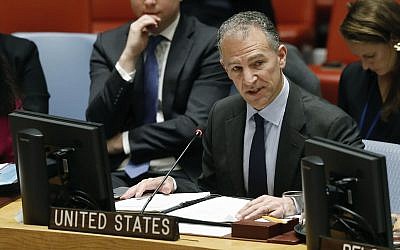
US Acting Ambassador Jonathan Cohen told a council meeting on the Middle East that Washington had made the decision to stand up to Syrian President Bashar Assad and Iran.
“To allow the Golan Heights to be controlled by the likes of the Syrian and Iranian regimes would turn a blind eye to the atrocities of the Assad regime and malign and destabilizing presence of Iran in the region,” said Cohen.
There “can be no peace agreement that does not satisfactorily address Israel’s security needs in the Golan Heights,” he added.
Russia and China spoke out against the US decision during the council meeting as did Indonesia and South Africa, two countries that strongly support the Palestinians.
The council is scheduled to discuss the US move on Wednesday when it meets to discuss the future of the peacekeeping force deployed on the Golan, known as UNDOF.









The Times of Israel Community.