

Bibi’s back: 11 days of fighting have bolstered Netanyahu’s survival prospects
Early last week, the PM appeared to be on the way out, with his rivals about to announce a coalition. Now they have only a few days left, and much reduced chances
 Add ToI as a Preferred Source on Google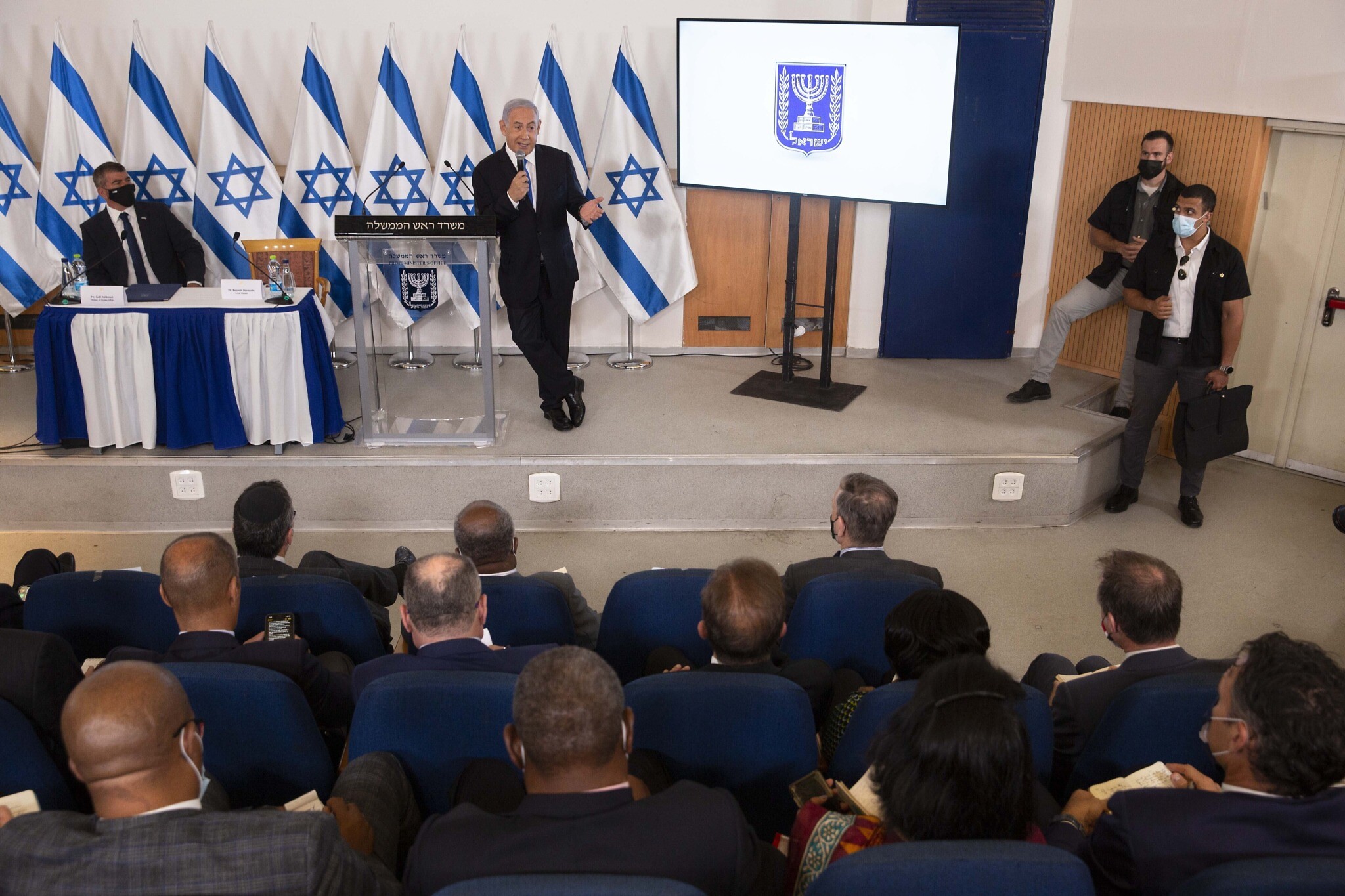
AP — Israel has been at war with Hamas, Jewish-Arab mob violence has erupted inside Israel, and the West Bank is experiencing its deadliest unrest in years. Yet this may all bolster Prime Minister Benjamin Netanyahu.
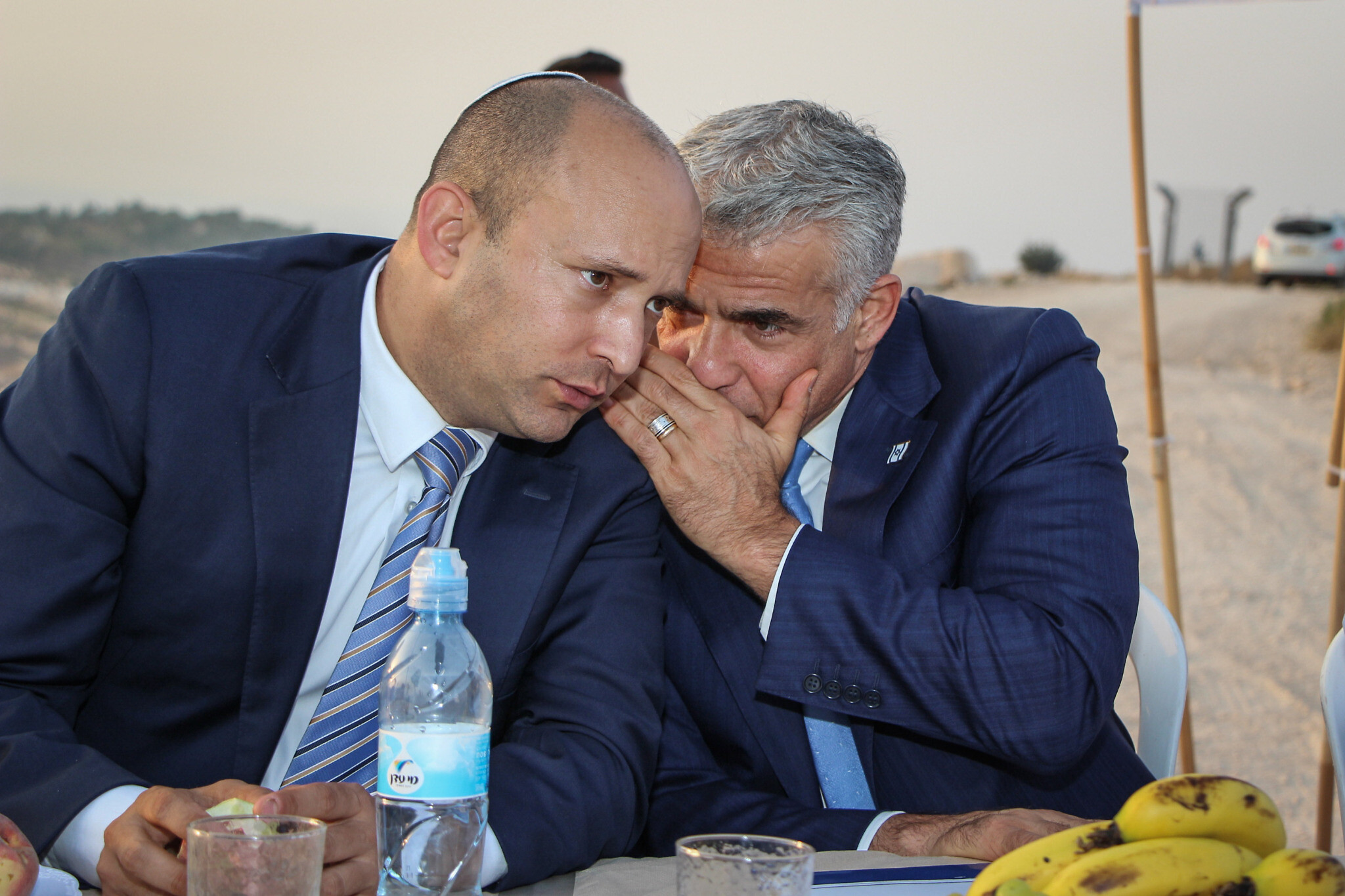
Just 11 days ago, the longtime Israeli leader’s political career seemed all but over. He had failed to form a coalition government following an indecisive parliamentary election, and his political rivals — led by Yesh Atid’s Yair Lapid and Yamina’s Naftali Bennett — were on the cusp of pushing him out of office.
Now, after Israel and Gaza’s Hamas rulers waged their fourth major conflict in just over a decade, Netanyahu’s fortunes have changed dramatically. His rivals’ prospects have crumbled, Netanyahu is back in his comfortable role as Mr. Security, and the country could soon be headed for yet another election campaign that would guarantee him at least several more months in office.
The stunning turn of events has raised questions about whether Netanyahu’s desperation to survive may have pushed the country into its current predicament. While opponents have stopped short of accusing him of hatching just such a conspiracy, they say the fact that these questions are being asked is disturbing enough.
“If we had a government, security considerations would not be mixed with political considerations,” opposition leader Lapid wrote on Facebook. “No one would ask themselves why the fire always breaks out just when it’s most convenient for the prime minister.”
Lapid appeared to be poised to make history early last week, saying he was wrapping up the final details of arranging a government that would end Netanyahu’s 12-year rule.
“In a few days, we should be able to swear in a new Israeli government that is functional and that is based on broad agreements and the common good,” he declared, hours before the conflict erupted.
The sudden outburst of fighting was the culmination of a series of events that have made it increasingly difficult, and maybe impossible, for Lapid to assemble his coalition.
His alliance was to include diverse groups that span the spectrum from right-wing to left-wing Jewish parties, as well as an Islamist party, Ra’am, unified by little more than their opposition to Netanyahu.
Such a coalition would make history. An Arab party has never officially been part of an Israeli governing coalition.
Netanyahu himself had courted the same Arab party when he was granted the first chance by Israel’s figurehead president to assemble a coalition government after the March 23 elections.
But as it became clear Netanyahu could not secure the required parliamentary majority, things began to heat up between Jews and Arabs in parts of Jerusalem, in large part due to the actions of the prime minister’s allies.
Israelis and Palestinians both claim east Jerusalem and its sensitive holy sites in and around the Old City. These competing claims lie at the heart of their conflict and have repeatedly triggered violence.
The cabinet minister in charge of police, a Netanyahu loyalist, authorized the closure of a popular gathering spot outside Jerusalem’s Old City used by Palestinians during the Muslim holy month of Ramadan. When protests broke out, heavy-handed Israeli police tactics led to days of unrest that peaked with Palestinian riots and police raids at the Al Aqsa Mosque atop the Temple Mount.
At the same time, far-right Jewish groups pressed ahead with attempts to evict dozens of Palestinians from their homes in a nearby east Jerusalem neighborhood, Sheikh Jarrah. Itamar Ben Gvir, a leader of a racist anti-Arab faction aligned with Netanyahu, temporarily set up what he called a “parliamentary office” in the neighborhood, further enraging residents.

On the afternoon of May 10, Hamas threatened Israel with an ultimatum, saying all Israeli security forces had to be removed from the Temple Mount and the Sheikh Jarrah neighborhood by 6 p.m., or else the so-called “joint operations room” — a body representing the various terror groups in the Strip — would attack.
That same afternoon, thousands of flag-waving mainly Orthodox-nationalist Israelis gathered for a planned march to the Western Wall via the Muslim Quarter of the Old City — an annual Jerusalem Day event to celebrate Israel’s capture of east Jerusalem in the 1967 war.
At the last minute, the Israeli government ordered marchers to change their route, but soon after, Hamas launched a barrage of long-range rockets at the city, sparking the 11-day conflict.

As the fighting intensified, violent clashes between Jews and Arab mobs erupted in cities across Israel. The violence also spilled over to the West Bank, where thousands of Palestinians have protested and rioted, and more than 20 Palestinians have been killed in stone-throwing demonstrations against Israeli security forces in recent days, according to Palestinian health officials.
In this fraught environment, it appears unlikely that Lapid will be able to cobble together a government by a June 2 deadline.
Bennett, an Orthodox-nationalist politician and key partner, abandoned his talks with Lapid last week after the fighting began. Mansour Abbas, the leader of Ra’am, suspended negotiations. He said he would resume them when the fighting ended, but time is running out.
Still, with a cease-fire declared at 2 a.m. Friday, and signs of public anger over the inconclusive outcome of the war, Lapid has a little time to seek a deal.
Lapid’s office says he will work until the last minute to try to form a government. If he fails, the country most likely will be plunged into an unprecedented fifth election in little over two years.
It is a script that fits Netanyahu’s needs well and reinforces his image as a survivor. The unrest has diverted attention away from his ongoing corruption trial, and Netanyahu is at his best when focused on security issues, projecting a calm and powerful demeanor in his frequent TV appearances.
Netanyahu has been desperate to remain in office throughout his trial, using the position to rally public support and lash out at police and prosecutors.
A new campaign would leave him in office until at least the new election this fall. It would also give him another chance at forming a friendlier coalition with his religious and nationalist allies that could grant him immunity from prosecution.
Gayil Talshir, a political scientist at Israel’s Hebrew University, said she did not think Netanyahu had conspired to keep himself in office. But she called him a master of manipulating events in his favor.
“I think he controlled how much oil he puts into the fire,” she said.
“From Netanyahu’s perspective, he’s looking only at his trial and his power base,” she added. “This is where Israeli politics are at. It’s the political survival of this prime minister and not the public interest.”
Times of Israel staff contributed to this article.





The Times of Israel Community.