

Israel’s chief rabbi schools Californian Jewish students
David Lau fields questions on terrorism, ultra-Orthodox in the IDF and Israel’s fragmented society
 Add ToI as a Preferred Source on Google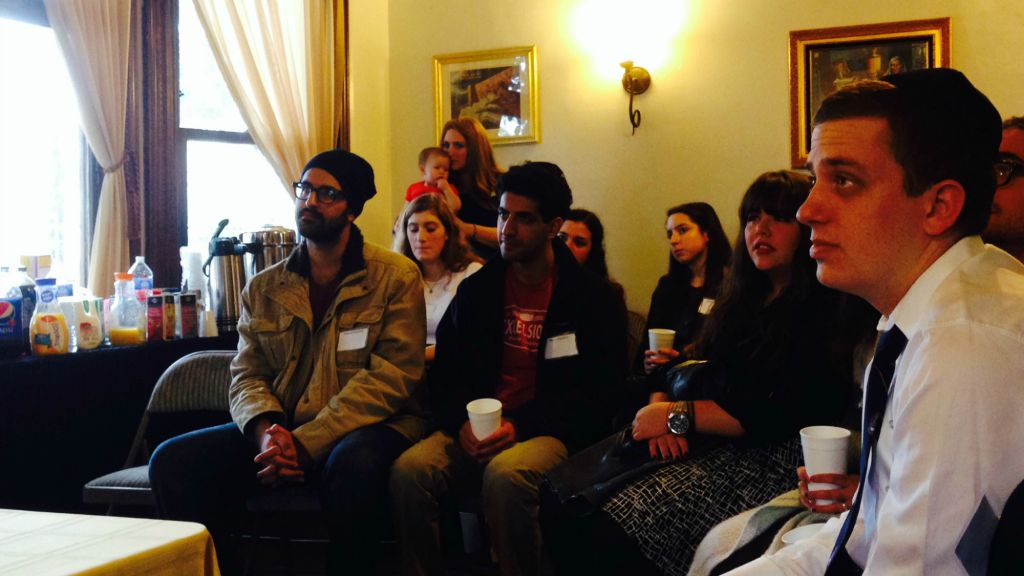
LOS ANGELES — Rabbi David Lau is accustomed to being a pioneer. The youngest candidate ever elected to the post of Israeli chief rabbi, he also was the first to harness the power of the Internet for answering questions on Jewish law. Additionally, Lau is a reserves major in the IDF’s intelligence corps.
This week he participated in an unprecedented meeting, sitting down for a frank question-and-answer session Sunday with 40 Jewish student leaders of different denominations from a slew of Southern California campuses.
While the student leaders were initially deferential and somewhat awed, they soon settled in and grilled the rabbi with probing questions.
Despite somewhat broken English, Lau managed to make his points clearly and fielded questions with a combination of humor, self-deprecation and seriousness. Following softball questions that ranged from asking what their role on campus as Jewish leaders should be to whether or not it was okay to invite non-Jews to a Shabbat meal, Lau was faced with several queries regarding the recent terrorist attacks in Paris.
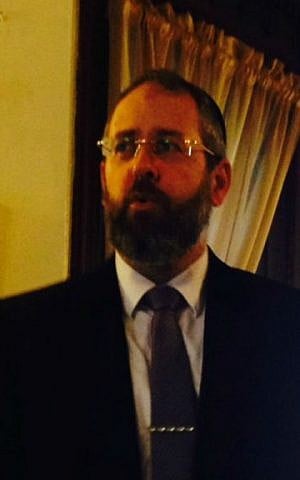
The event was held at the University of Southern California’s Chabad House and organized by USC Chabad Rabbi Dov Wagner and Chabad of Orange County’s Rabbi Dovid Eliezrie.
Asked whether Jews should leave Europe and make aliyah, or stay and fight back, Lau said that such a decision depended on the individual in question.
As an example he spoke of his late grandfather Moshe Chaim Lau, who was the chief rabbi of Piotrkow in Poland during WWII.
“His students sent him tickets to escape to Israel but he felt he had to stay,” Lau said. The Nazis later deported him to Treblinka, where he was killed.
“You need to know if you can help more by fighting anti-Semitism in the Diaspora,” Lau said. “It’s a good thing to stay and fight, but maybe you need to be in Israel and gain strength from that. Everyone has to ask themselves that question.”
One student hoped that Lau could shed some light on why there has been such a huge rise in anti-Semitism in Europe and the best way to combat it. Lau said he had no idea why it was happening now but the best way to combat it was by remaining true to Jewish tradition.
He noted that with 60 percent of Jews living outside of Israel (40% in America and the other 20% around the world), “our enemies try to find places for themselves and when they see our traditions it disturbs them because our traditions speak about peace and respect for all of creation.”
Referencing Lau’s IDF service, one student asked about the mass of ultra-Orthodox men refusing to serve.
‘There are 15 million Jews in the world and only 20,000 scholars. When one of them stops studying I will send him directly to the army’
Lau said he didn’t enter the IDF when he was 18 or 19. Rather, he waited “until I had enough knowledge and wisdom of our traditions and then I went to the army.”
He noted that the state allows those with a strong talent to do what they do best before inducting them into the army. He cited basketball players, other athletes and musicians as examples.
“We also need the best sages in our tradition,” he said. “And because of that I want those who learn today to continue to learn. There are 15 million Jews in the world and only 20,000 scholars. When one of them stops studying I will send him directly to the army,” Lau said.
Lau said some of the tensions in society stem from the fact that Israel wants to feel like it is a modern country.
“And it is,” he said. “We have smart people in hi-tech, we have good teachers and a good army. But because we are only 67 years old we sometimes have problems where we behave like teenagers. We forget from time to time that we are brothers and sisters and because of that we take arguments to the extreme, even insult each other from time to time.”
Lau strives to educate Israelis to focus on commonalities rather than differences.
“We have a wonderful tradition and we need to be proud of that and to open our arms to [all Jews around the world] and welcome them to Israel,” said Lau.









The Times of Israel Community.