

Court nixes murder case against former minister’s son due to statute of limitations
Binyamin Ze’evi was charged over 1986 homicide of teen Nissim Shitrit linked to cult of convicted sex offender rabbi Eliezer Berland; brother of victim may go to Supreme Court
 Add ToI as a Preferred Source on Google
A court on Monday dismissed a murder charge against the son of a former minister in a case tied to an extremist Orthodox Jewish sect, citing the statute of limitations and rejecting a prosecution claim that the nearly 40-year-old case should still be heard.
The Jerusalem District Court dismissed the charges against Binyamin Ze’evi, 72, in the 1986 murder of teenager Nissim Shitrit, who was linked to the Shuvu Bonim cult led by convicted sex offender Eliezer Berland. Though Shitrit’s body was never found, police in 2021 eventually charged Ze’evi and Shuvu Bonim follower Baruch Sharvit in the case.
Ze’evi is the son of former tourism minister and IDF general Rehavam Ze’evi. Known by the nickname “Gandhi,” the elder Ze’evi was a politician for the far-right Moledet party. He was shot dead in 2001 by Palestinian gunmen from the Popular Front for the Liberation of Palestine terror group at Jerusalem’s Hyatt Hotel. An investigative TV report in 2016 published allegations of rape and intimidation against him.
Prosecutors said they would study the ruling and consider their next steps, while Shitrit’s brother said he was prepared to take the case to the Supreme Court.
In her ruling, Judge Hagit Mac Kalmanovitz said that “the passage of time and the statute of limitations of the proceedings create a procedural barrier… thereby depriving the deceased’s family members of the right to legal ‘justice’ and the peace of mind” that would come with a trial, “for which we are very sorry.”
“We have no choice but to express our sincere participation in the grief of the deceased’s family, and to wish them comfort from heaven,” she said.

Defense lawyers welcomed the “brave decision,” saying the court had accepted their argument that the indictment should not have been filed.
“We have no doubt that even without cancelation of the indictment, Ze’evi would have been acquitted in the end,” they said in a statement.
Meir Shitrit, brother of Nissim, was quoted by the Ynet news outlet as saying that the ruling came down to “a technicality” that does not change the fact “that Zeevi murdered my brother.”
He pointed to the testimony given by the other suspect in the case, Sharvit, who told police that he had murdered Shitrit together with Ze’evi.
Meir Shitrit accused Ze’evi of using the statute of limitations as a loophole because “he knew how to keep quiet and now he is going free after committing murder 38 years ago. He and his whole group from Shuvu Bonim are simply murderers.”
Shitrit said he may independently appeal to the Supreme Court

The prosecution had told the court that the statute of limitation should not be applied because police had continued to investigate the case over the years, including in 2010 when, among other actions, they took a DNA sample from the Shitrit family.
Defense lawyers countered that the sample was taken for the purpose of adding it to an archive of information about missing people and not as part of a specific investigation into the case.
The court agreed, finding that “these are actions designed to promote the establishment of the new database… not included in the category of ‘investigative actions'” that would halt the statute of limitations.
The court also found that other police activities over the years were aimed at locating the missing person rather than identifying the perpetrators or prosecuting them.
Ze’evi left the sect a decade ago and has refused to talk about his time within the group, the Haaretz newspaper reported.
Police indicted Ze’evi and Sharvit a month after the latter met with Berland in the interrogation room, where the sect leader instructed his follower to provide information to the investigators, the Kan public broadcaster reported at the time.

The court decision on Ze’evi will affect the case of Sharvit, who has also yet to be tried, reported the Israel Hayom newpaper.
According to the indictment, the teenage Shitrit was suspected by members of Shuvu Bonim of having some form of relationship with a girl, in contravention of the sect’s strict religious norms.
The teen was picked up from his boarding school in Ashdod by the sect’s “religious police” in January 1986, four months before he disappeared. He was driven to Jerusalem and taken to a secluded location, where he was beaten.
Shitrit, who was a volunteer with the police, filed a complaint over the assault, and one of his eventual suspected killers was detained for questioning. That individual fled the country after Shitrit was killed in an attempt to construct an alibi, Channel 12 news reported.
The report said that Shitrit was lured to his death four months later by a woman connected to the sect who pretended that she wanted to spend the night with him. When Shitrit arrived at the address she gave him, he was beaten by the same group of followers who carried out the first assault.
When the suspects realized the attack was making too much noise, they moved to a second location outside Jerusalem, where they allegedly killed and buried Shitrit.
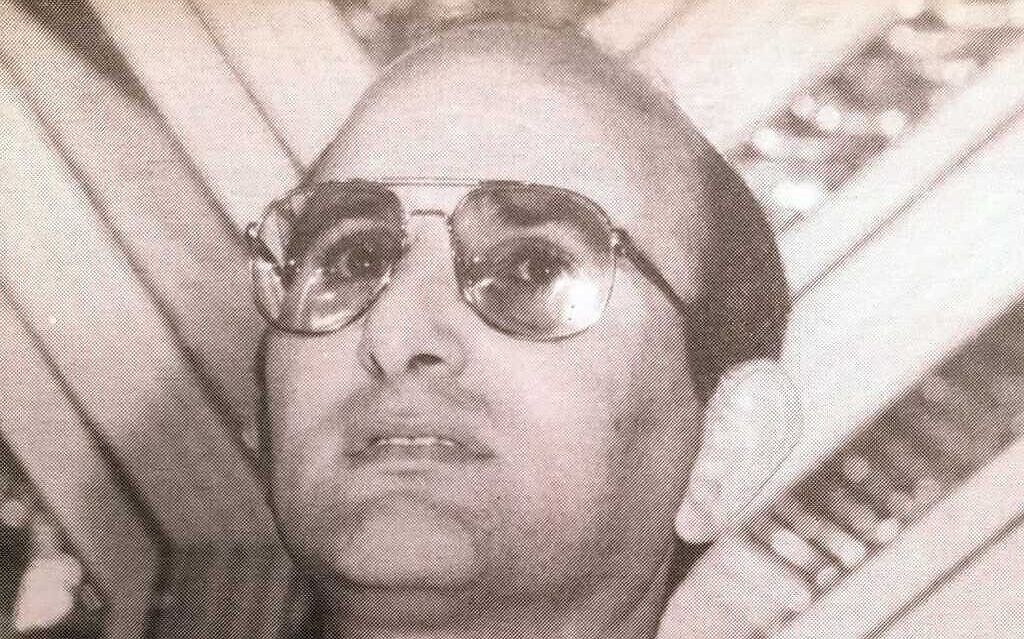
In a documentary broadcast by Kan in 2020, one of Berland’s former disciples said that the “religious police” murdered the boy, dismembered him, and buried his body in Eshtaol Forest near Beit Shemesh.
Nobody has been indicted yet in a second, related case of the murder of 41-year-old Avi Edri in 1990. He was found beaten to death in Ramot Forest in the north of Jerusalem.
Berland was detained in connection with the two murders and then released back to prison to complete a sentence on unrelated charges. Police have accused Berland of sending his followers to kill Shitrit. His followers have also been tied to Edri’s death.
Berland, 86, has served separate prison sentences in the past for sex offenses and fraud. He had previously spent years on the lam from Israeli authorities. A stay of exit order has been in place against him since 2017, though he has been known to leave the country as recently as September 2023.










The Times of Israel Community.