

Democrat Klobuchar vows to keep US embassy in Jerusalem if elected
Presidential hopeful says she thinks ‘it’s unfortunate it was done the way it was,’ but she wouldn’t reverse the move
 Add ToI as a Preferred Source on Google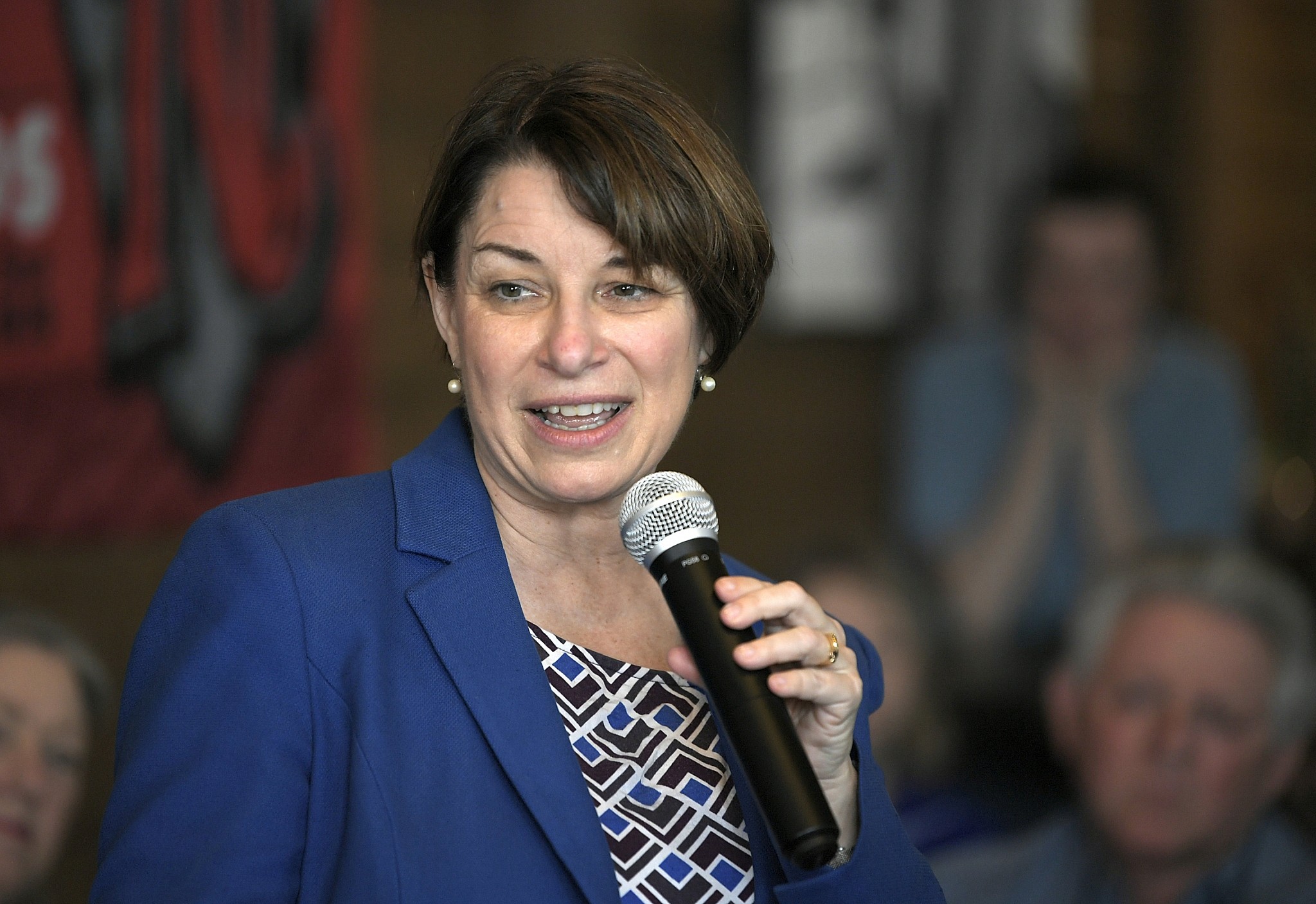
WASHINGTON — Presidential hopeful Amy Klobuchar vowed on Monday to keep the US embassy in Jerusalem should she be elected.
Despite her opposition to President Donald Trump relocating the American mission outside the context of a peace agreement, the Minnesota senator said she would not undo that decision.
“I think it would have been better if that was done as part of a negotiation for a two-state solution,” Klobuchar told Jewish Insider on the campaign trail in Iowa. “I think it’s unfortunate it was done the way it was done but I wouldn’t reverse it.”
South Bend, Indiana, Mayor Pete Buttigieg was the first 2020 Democratic presidential candidate to say he would not move the US mission back to Tel Aviv.
Trump formally recognized Jerusalem as Israel’s capital in December 2017, when he announced plans to move the embassy there. In May 2018, his administration opened the new facility — a decision that was met with intense controversy, both in Washington and in the Middle East.
Klobuchar, who’s more traditionally supportive of Israel than many of her opponents and who’s closely connected with AIPAC, castigated Prime Minister Benjamin Netanyahu ahead the elections in April for facilitating an agreement that allowed a racist anti-Arab party, Otzma Yehudit, a realistic shot at a Knesset seat.
This is wrong and has been rightly condemned. To quote the American Jewish Committee, "[The views of Otzma Yehudit] do not reflect the core values that are the very foundation of the State of Israel."https://t.co/r0VMI3FicH
— Amy Klobuchar (@amyklobuchar) February 26, 2019
She was also the only Democratic senator running for president to vote in favor of anti-BDS legislation, known as the Israel Anti-Boycott Act, which several of her opponents, including Massachusetts Senator Elizabeth Warren, California Senator Kamala Harris and New Jersey Senator Cory Booker opposed on the grounds that it stifled free speech.
It is not yet clear whether this will become a point of much contention during the primary campaign, despite discernible differences between several of the candidates.
Last week, the Democratic National Committee hosted the first debates of the election in Miami. Because the field is so crowded (there are currently 23 candidates), the party split the debate into a two-night event, with 10 different candidates, chosen at random, appearing on different nights.
No questions about Israel came up in either debate.
Klobuchar also criticized the US-sponsored Bahrain economic workshop last week, in which White House special adviser Jared Kushner and Mideast envoy Jason Greenblatt laid out the economic component of their plan for achieving an Israeli-Palestinian peace deal.
“The president’s son-in-law holding a summit where neither of the county’s leaders show up, I don’t think that’s really the beginning [of a two-state solution],” she told Jewish Insider.
While Palestinians boycotted the confab, as they have refused to engage with the Trump administration since the announced Jerusalem recognition, Israeli officials and ministers were not invited to attend and participate.
“This is a workshop where we will present our economic vision for the Palestinian people,” a US official told The Times of Israel in explaining the decision. “As such, we want the focus to be on the economic aspect, not the political.”



The Times of Israel Community.