

Deposed Saudi crown prince reportedly put under house arrest
Riyadh denies Mohammed bin Nayef barred from leaving his palace in bid to quash potential opposition to new heir expectant
 Add ToI as a Preferred Source on Google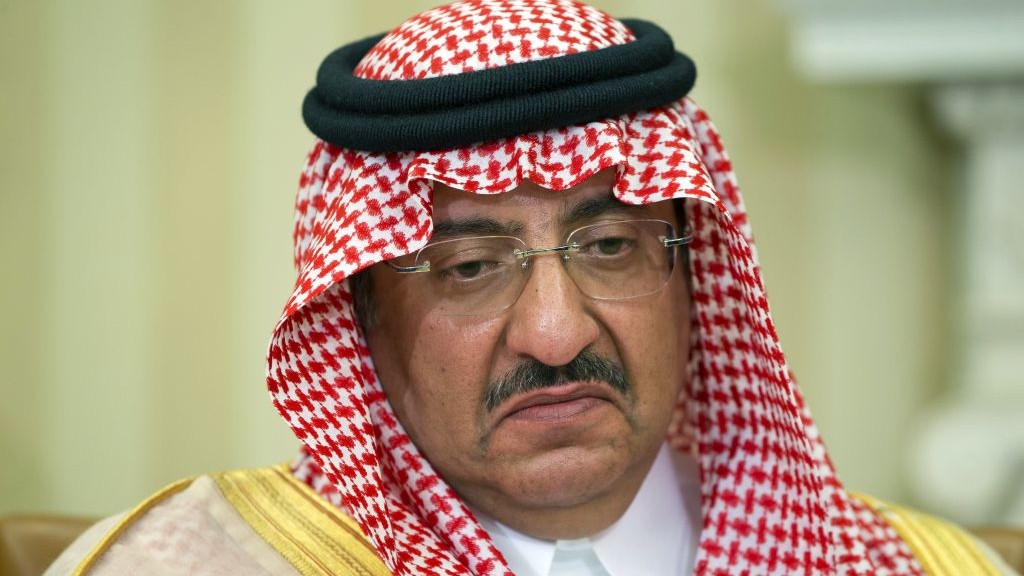
The recently deposed crown prince of Saudi Arabia Mohammed bin Nayef has been placed under house arrest at his Jeddah palace and is barred from leaving the kingdom, in a bid to thwart any internal opposition to the prince who took his place as heir apparent, the New York Times reported Thursday.
Citing four current and former US and Saudi officials with ties to the royal family, the report says bin Nayef is to be confined to his home in the coastal city for an unspecified amount of time.
Saudi Arabia’s Information Ministry was not reachable for comment, but a senior official from the Kingdom’s Foreign Ministry denied the report to The Times as “baseless and false.”
Earlier this month, King Salman fired bin Nayef and named his 31-year-old son Mohammed bin Salman crown prince and next in line to the throne.
Bin Nayef, 57, a veteran law enforcer who served as both crown prince and interior minister, was a favorite of Western governments due to his counter-terrorism expertise.
The shakeup in the royal family comes at a crucial time for Saudi Arabia, which is in a battle for regional influence with Iran, bogged down in a controversial military intervention in neighboring Yemen, and at loggerheads with fellow US Gulf ally Qatar.
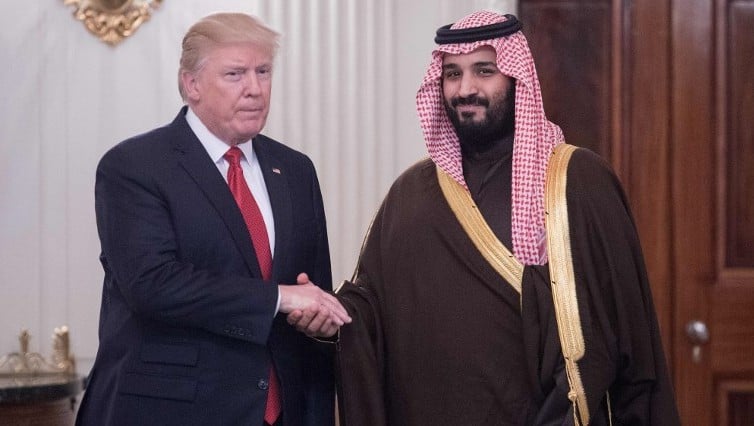
The 31-year-old prince already wielded huge power before he became heir, spearheading a sweeping economic and social reform program for the ultraconservative kingdom. His youth is a novelty for a country used to aging leaders — King Salman is 81 and his predecessor King Abdullah died in 2015 aged around 90.
Prince bin Salman’s rapid ascent in the past two years has symbolized the hopes of the kingdom’s young population, more than half of which is under 25.
Top Saudi officials pledged loyalty to their new crown prince in statements carried by the official news agency, while many ordinary citizens tweeted their allegiance.
But support for Mohammed has not been unanimous.
A royal order said his appointment was endorsed by 31 of 34 members on the Council of Allegiance, which decides on succession issues.
The king accompanied his son’s elevation with measures to woo the many Saudis who work for the government, either as civilian or military personnel.
King Salman ordered the reinstatement of all civil service benefits cut in a controversial move as part of an austerity package late last year. He also extended the end-of-Ramadan Eid Al-Fitr holidays until July 9 for civil servants.
The enticements come as the kingdom’s war in Yemen drags on and citizens for the first time paid taxes, imposed after oil prices fell.








The Times of Israel Community.