

Despite war, tech exits soared to $59 billion in 2025 thanks to Wiz deal — report
US buyers again lead with 43 M&A deals and IPOs, followed by Israeli purchasers with 30 transactions, according to annual PwC Israel report
 Add ToI as a Preferred Source on Google
Sharon Wrobel is a tech reporter for The Times of Israel

In 2025, a year of war and geopolitical uncertainty, the Israeli tech market for “exits” — mergers and acquisitions as well as initial public offerings of shares — is on track to record one of its best years over the past decade.
The value of Israeli tech exits, including M&As and IPOs, this year jumped by a whopping 340 percent to $58.8 billion, up from $13.4 billion in 2024, according to the 2025 exit report by consultants PwC Israel released on Monday. The big surge was driven by Google’s $32 billion acquisition of cybersecurity unicorn Wiz, the largest deal involving an Israeli-founded company. Excluding the Wiz deal, the value of M&A deals and IPOs doubled to $26.8 billion compared to 2024.
In the second-biggest exit in Israeli history, Palo Alto Networks, a Santa Clara, California-based cybersecurity firm founded by American-Israeli entrepreneur Nir Zuk, in July announced the acquisition of Israeli firm CyberArk in a deal valued at $25 billion.
“Both the Wiz and Cyberark deals set a new upper threshold for our position on the global exit map and prove that Israel holds a special place in setting the conventions for the future of global cybersecurity,” said Yaron Weizenbluth, partner at PwC Israel. “Conversely, in the past year, while the number of deals grew significantly compared to the previous year, their value, excluding the mega-deals, has decreased.”
There were another two acquisitions above $1 billion this year, including local fintech firm Next Insurance and Melio, bought for $2.6 billion and $2.5 billion, respectively.
Despite the large increase in the value of this year’s M&A transactions, the average acquisition deal size in 2025 dropped by about 40% to $160 million from $268 million in 2024, the report showed.
“Among other reasons, this is due to the growth in the number of ‘young’ companies, less than three years old, where 54% of them are defined as having a significant affinity for AI,” Weizenbluth explained.
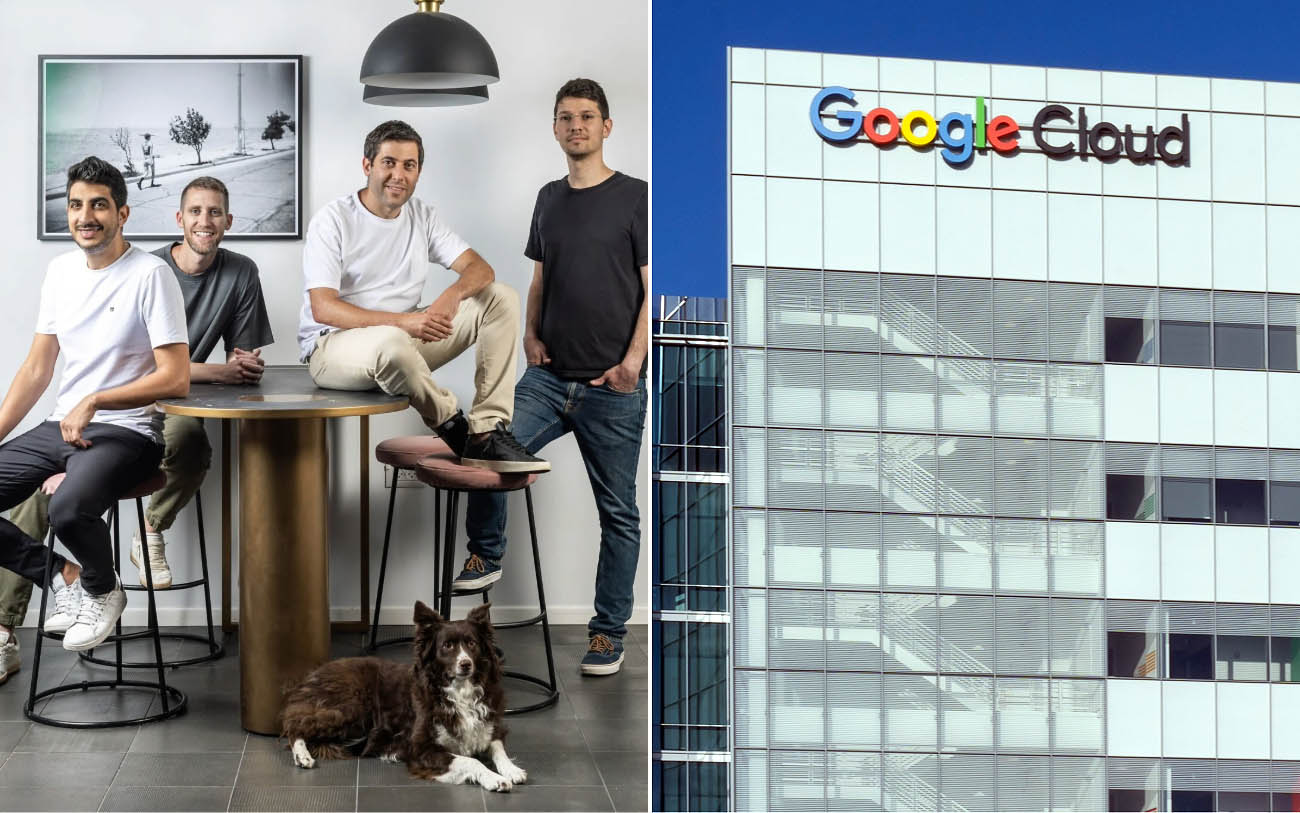
Weizenbluth elaborated that “such companies, thanks to small, efficient, and fast-moving teams, generate significant interest from larger technological companies seeking to improve themselves in the best case or perform a ‘defensive move’ in the other case.”
Weizenbluth cited Israeli startups Base44, acquired by Wix for about $80 million just a year after its founding, and Aim Security, sold to Cato Networks for $350 million before it turned three, as examples of a “trend that may intensify in the near future.”
The report found that the increase in the proportion of small deals resulted, among other things, from an increase in the number of young companies founded in the last three years and sold this year: 22 compared to only eight in 2024. Most of them were sold for less than $50 million, and half are AI companies that have become sought after by more mature technology companies.
In Israel’s tech ecosystem, startups are the lifeblood of future M&A, tax income, and employment creation. Tech employees pay more than a third of all tax income, which underpins the vital importance of the sector as a key driver for the recovery of an economy that is recovering from the repercussions of more than two years of war with the Hamas terror group.
Over the past two years, local startups and tech companies continued to run their businesses despite fundraising challenges as they sheltered from rockets, and many of their executives and employees were called up to reserve duty, following the outbreak of war on October 7, 2023, when thousands of terrorists burst into southern Israel from the Gaza Strip, killing some 1,200 people and abducting 251.
“Hi-tech companies globally face challenging pressures and changes, some of which may disrupt and alter world orders. Israel, in this regard, is even more sensitive and vulnerable,” said Weizenbluth. “Geopolitical instability expected changes led by artificial intelligence, and social and political developments all have high potential for impact.”

“One cannot ignore the fact that while many companies rely on the unique talent in Israel, more entrepreneurs and managers have already relocated their operations overseas,” he cautioned.
Overall, 84 M&A and IPO deals were executed this year, up from 53 in 2024. Despite the war challenges and a growing anti-Israel sentiment, American acquirers continue to be the most dominant in the Israeli ecosystem, with 43 deals, constituting 51% of the total number of deals, compared to 31 deals in 2024.
Weizenbluth noted that the figures showed a growing trend of an increase in the proportion and number of ‘Blue and White’ deals, where both the acquirer and the seller are Israeli companies or have a significant Israeli orientation.
In 2025, 30 such deals were recorded compared with 15 last year, constituting 35% of the total number of transactions versus 28% in 2024. The total value of these deals is about $1.9 billion, a decline of about 41% compared to $3.2 billion in 2024.
“The coming year will be marked by the ‘day after’ effect,” said Weizenbluth. “We are witnessing a reality where an older stream is giving way to a new one: AI-based companies, which are fundamentally different in nature and development trajectory.”
“The Israeli market has demonstrated an incredible ability to adapt and close gaps in the past,” he remarked.










The Times of Israel Community.