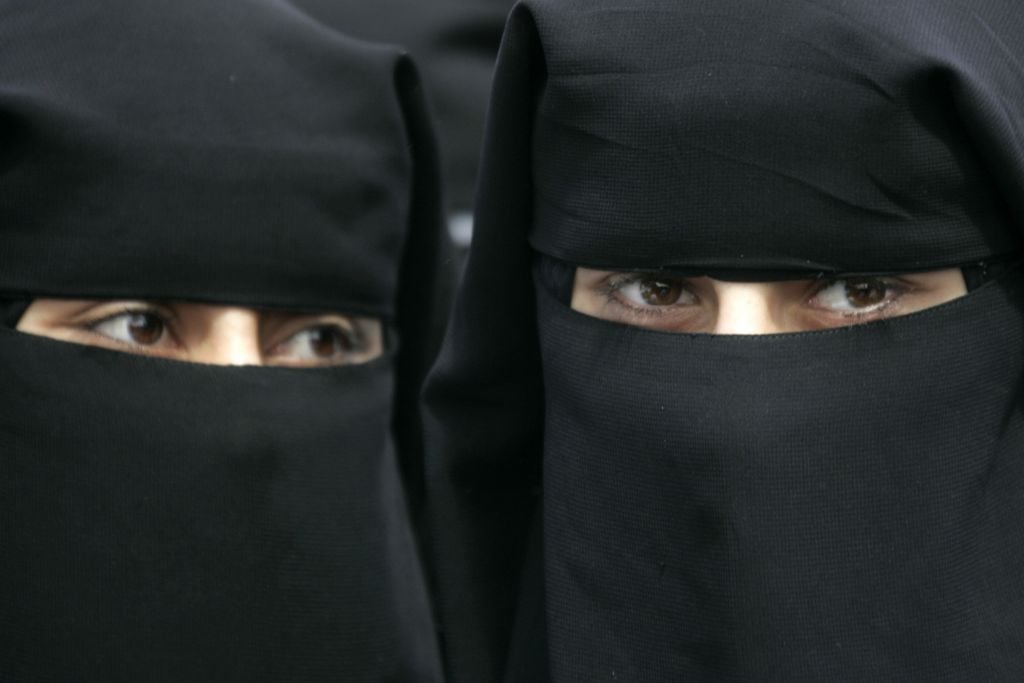
Egypt may soon ban women from wearing the niqab in public places and in government institutions, according to a report in the British Independent last week.
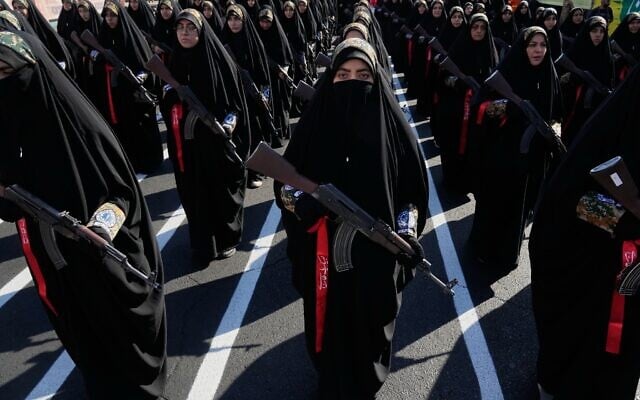
The niqab is a more severe head covering than the hijab, which covers the head and leaves a woman’s face revealed. A niqab leaves only the eyes visible and is usually black in color.
Parliament member Amna Nosseir, a professor of comparative jurisprudence at Al-Azhar University, is supporting the ban and said that the Niqab has non-Islamic origins.
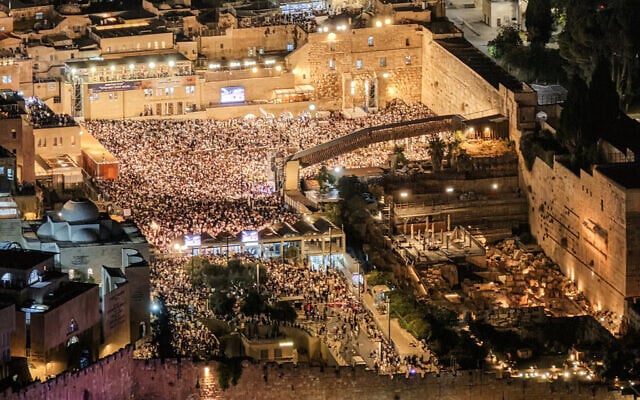
Nosseir said the restrictive head covering is in fact a Jewish tradition dating back to the Jewish communities that existed in the Arab peninsula before the beginning of Islam.
The female parliamentarian argued that several passages in the Quran contradict the use of a niqab and said the Muslim holy book advocates modest clothes and covered hair, but no cover for the face.
Get The Times of Israel's Daily Edition
by email and never miss our top stories
By signing up, you agree to the
terms
Egypt, the Independent reported, has already passed several restrictions on wearing the niqab. Last month, Cairo University banned nurses and doctors from wearing it in medical schools and teaching hospital, explaining that the ban would “protect patients’ rights and interests.”
In September 2015, the university banned academic staff from wearing niqabs in classrooms, after students complained that it was difficult for niqab wearers to communicate coherently with students.
Help us report truthfully on social media

As a multimedia journalist, my job is to take the quality, fact-based journalism produced by The Times of Israel newsroom and make it accessible across every platform — from Instagram posts to podcasts to short-form videos.
This is how many, especially young people, consume news these days. But misinformation is rampant on social media. Our team at ToI produces accurate, responsible short-form reporting on Israel and the Jewish world.
If you believe in the importance of factual social media journalism, please consider joining our reader support group, The Times of Israel Community. Your financial support is essential to sustain responsible multimedia reporting.
— Gabriella Jacobs, multimedia journalist
Support our work
Support our work
Already a member? Sign in to stop seeing this
You're a dedicated reader

We’re really pleased that you’ve read X Times of Israel articles in the past month.
That’s why we started the Times of Israel - to provide discerning readers like you with must-read coverage of Israel and the Jewish world.
So now we have a request. Unlike other news outlets, we haven’t put up a paywall. But as the journalism we do is costly, we invite readers for whom The Times of Israel has become important to help support our work by joining The Times of Israel Community.
For as little as $6 a month you can help support our quality journalism while enjoying The Times of Israel AD-FREE, as well as accessing exclusive content available only to Times of Israel Community members.
Thank you,
David Horovitz, Founding Editor of The Times of Israel
Join Our Community
Join Our Community
Already a member? Sign in to stop seeing this


 Add ToI as a Preferred Source on Google