

Event meant to build bridges between Israel and Diaspora goes up in flames
A panel discussion hosted by JTS and the Schechter Institute on the religious divide between American Jewry and Israel becomes a microcosm of the widening rift
 Add ToI as a Preferred Source on Google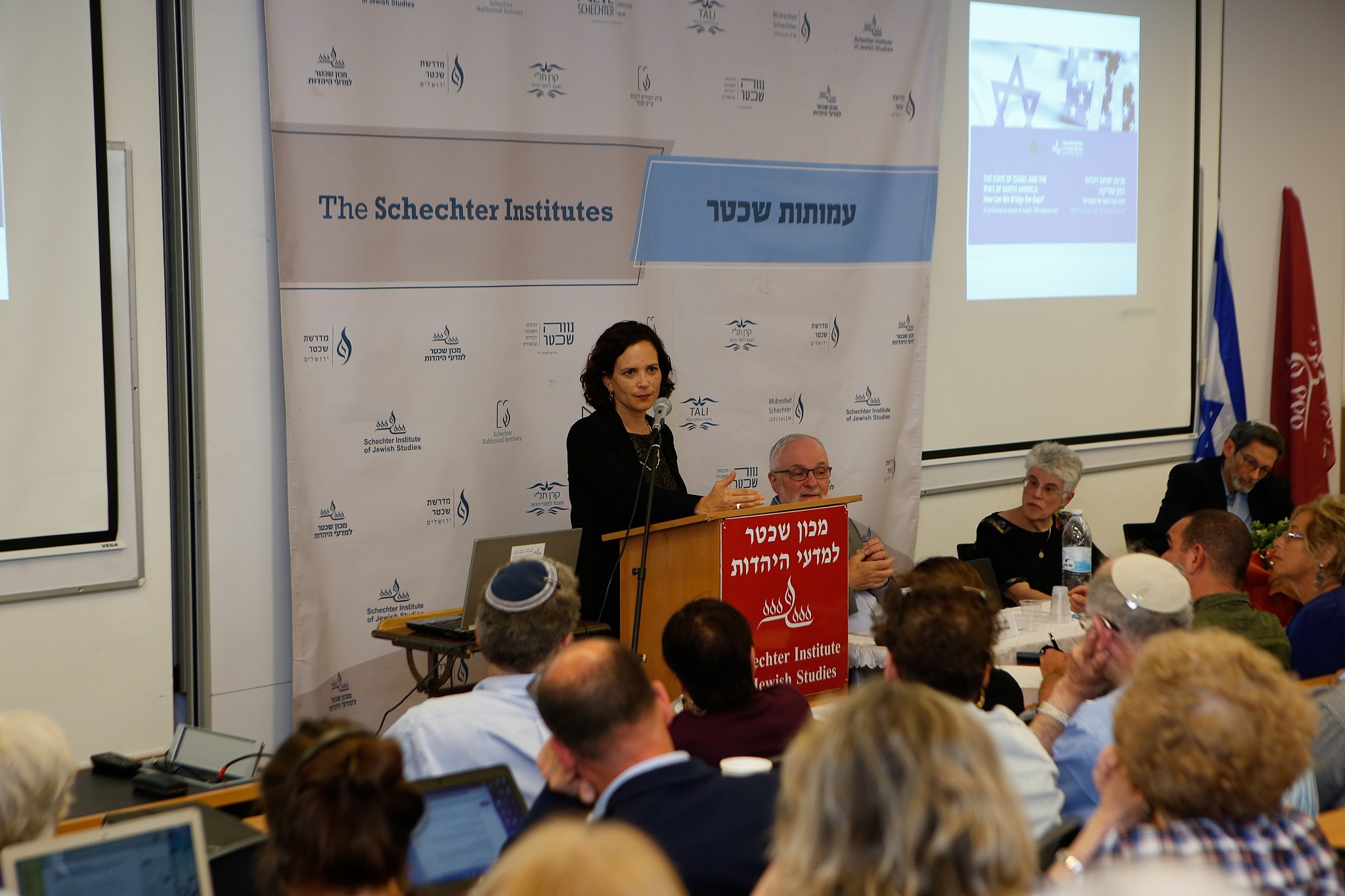
An event at Jerusalem’s Schechter Institute on Monday evening was yet another well-intentioned attempt to bring religious and political voices together to discuss a framework for closing the ever-increasing divide between the American and Israeli Jewish communities.
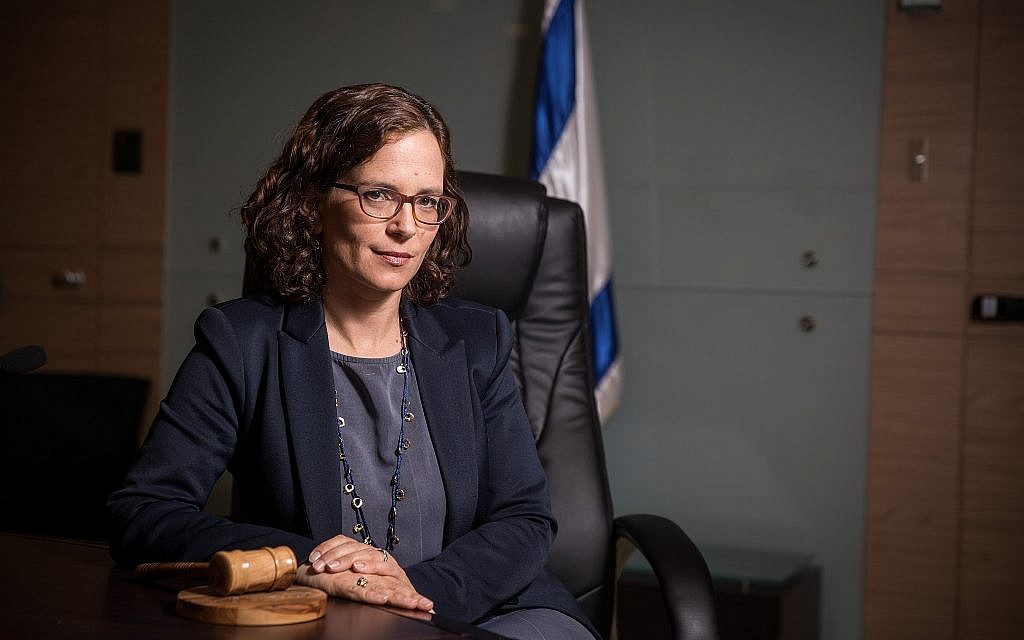
The event, largely catering to the Conservative movement’s Israeli and American rabbinical students and leaders, featured Kulanu MK Rachel Azaria along with Rabbi David Golinkin, president of the Schechter Institute, Rabbi Judith Hauptman of the Jewish Theological Seminary (JTS) and Rabbi Benny Lau, head of Jerusalem’s religious-Zionist Ramban Synagogue and 929 Project, an online source for Bible study.
In an hour-and-a-half discussion, panelists were meant to find common ground and potential solutions. While all speakers agreed on the severity of the issue and the need to take action, a clear split emerged as to who and what was responsible for the frayed relationship.
The discussion was moderated by Rabbi Joel Roth and took place during a half-day conference, “The State of Israel and the Jews of North America: How Can We Bridge the Gaps?” With close to 200 participants, the event was co-sponsored by the Schechter Institute and the Jewish Theological Seminary, the Israeli and American Conservative rabbinical and educational learning centers.
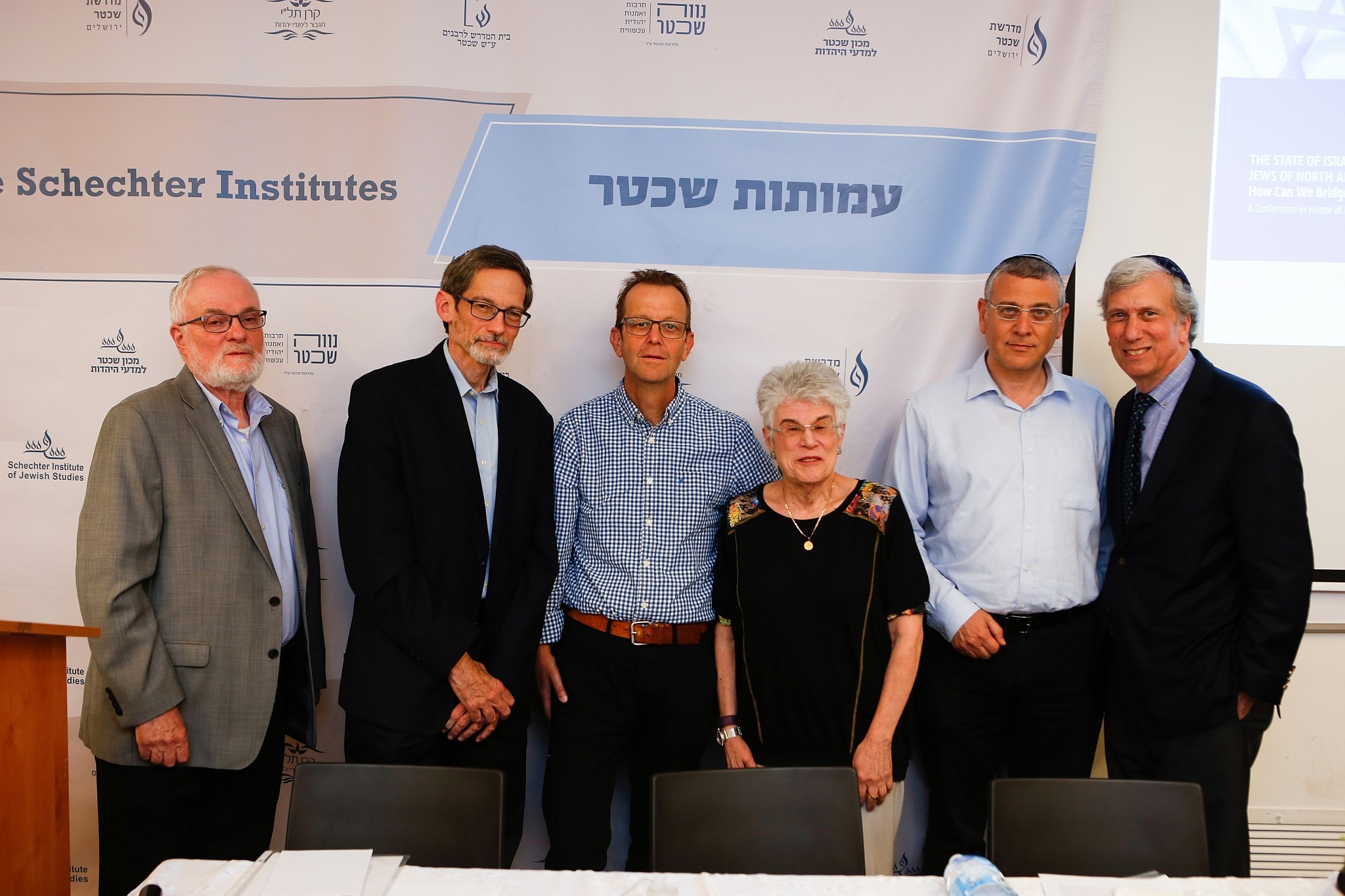
The two Conservative rabbis on the panel — both American born — cited Israel’s compliance with the Chief Rabbinate as the main issue behind the Israel-Diaspora divide. However, Orthodox Israeli Rabbi Lau, whose cousin is Rabbi David Lau and uncle is Rabbi Yisrael Meir Lau — the current and former Ashkenazi chief rabbi of Israel — claimed intermarriage and assimilation in the US as culpable for the disconnect. And MK Azaria pushed for a new method to stop the madness.
Israeli Judaism needs branding
Azaria rushed in minutes after the panel began, coming straight from the Knesset on her first day back after a two-month parliamentary recess. She spoke briefly, arriving shortly before giving her remarks and departing soon thereafter.
Azaria stressed the need for patience as Israel continues to define itself. “Here in Israel, we haven’t yet molded our brand of Judaism,” she said.
Speeding through a history of Israel’s challenges, Azaria said only today can Israel begin to focus on its latest obstacle: defining its Jewish identity.
“What is [Jewish identity]? How do we put together a vision of Judaism from so many places?” she asked rhetorically.
“The truth is, we really don’t know. We need time to mold our self-identity.
The bad news is that it’s going to take a lot of time. We do see that Israel is about to define its Judaism. It began by eliminating the rift between secular and religious,” Azaria noted optimistically.
“The next steps, as far as I’m concerned, are in [solving] mikveh issues, Shabbat, marriage, divorce, conversion and burial,” she said.
“Why is burial last? Because nobody goes to the polls on that issue,” Azaria said, receiving some laughs.
But to tackle these issues, said Azaria, a framework must be established for politicians to apply when negotiating a political compromise around these religious divides.
“What we need to do is manufacture the method — without the method, we will have a faulty compromise,” Azaria said.
Politicians such as herself, she said, can’t do this. Rather, “We need rabbis, intellectuals and an engaged public in order to find the method,” Azaria said, noting the panel discussion as a step in the right direction.
Azaria said the same basic principles which were used to check the rabbinate’s monopoly over kashrut certification in Israel can be applied to other religious matters. Azaria and the Hashgacha Pratit (Private Supervision) NGO she cofounded were influential in a September Supreme Court ruling allowing for restaurants to claim their food as “kosher” without the rabbinate’s direct approval. This case, she said, provided hope that a similar compromise can be found on other matters.
The Conservative take
The MK was sandwiched between two leading Conservative voices — Hauptman, who teaches in New York, and Golinkin, who teaches in Jerusalem.
Hauptman focused on making a halachic argument for pluralism and women’s leadership in Jewish ritual practices and called for a reinterpretation of Jewish law within the rabbinate. Golinkin lamented the power of the rabbinate before offering his own answer.
“The simple solution is to cancel the rabbinate,” he suggested to laughs.
Another solution, he said, is to create a “community model” in which each religious sect would have its own religious court rather than hold to one encompassing body. The community model’s legitimacy, he said, comes from Talmud times.
“It was not a model introduced in exile, it happened in Israel,” he told the crowd. “I don’t think we have to reinvent the wheel. The State of Israel has to acknowledge the reality of different communities,” he concluded.
Who is a player and who is a guest?
But Lau was having none of it.
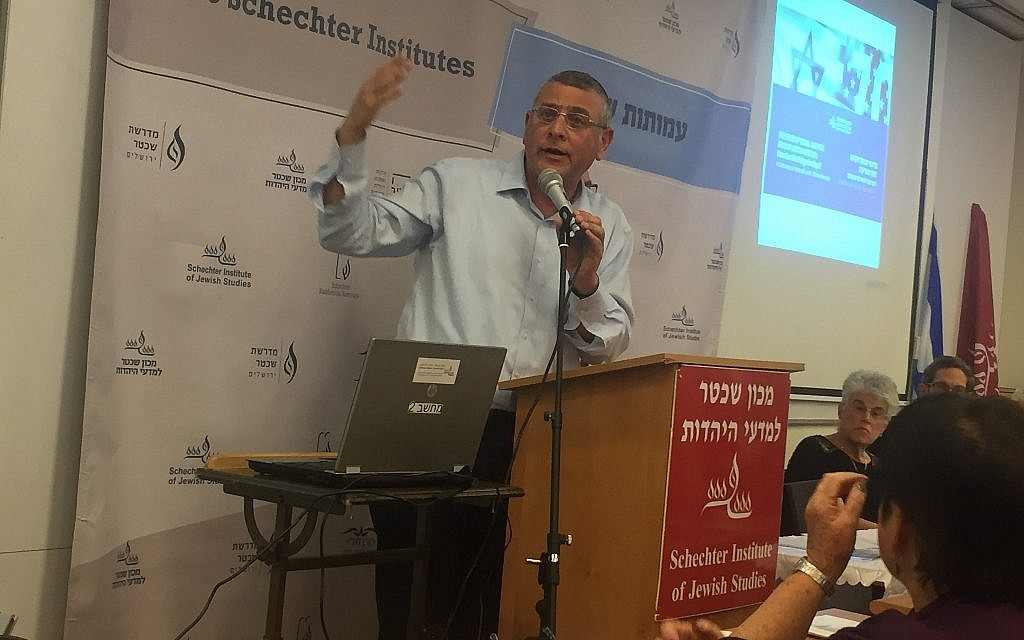
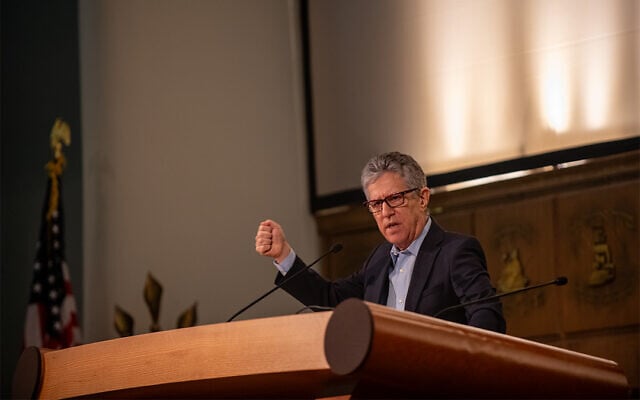
The last speaker to take the mic, Lau tore down Hauptman and Golinkin’s statements in a biting rebuke.
Taking no issue with the halachic interpretation presented, Lau instead questioned the legitimacy of American Jewry’s opinion on religious matters in Israel and defended the presence of the rabbinate, while citing his many disagreements with the institution.
“It’s absurd to speak in the name of pluralism that ‘We’re right and they’re wrong.’ That’s not pluralism, that’s zealotry,” he said of previous disparaging comments on the ultra-Orthodox rabbinate.
Referring to Diaspora Jewry as “visitors” in Israel, Lau asked, “Can I treat a hotel the way I treat my own home?”
On the issue of the Western Wall, Lau said it is important to acknowledge Orthodox Jews as the constant guardians of the site throughout the years.
“Let’s feel the pain of those custodians of the Western Wall. If we’re really pluralistic, if we’re truly such good people, shouldn’t we learn the pain of these people?” he asked.
Aware that he wasn’t exactly a crowd pleaser, Lau checked in with the group mid-speech: “Was I successful in annoying you?” he asked, before asking another rhetorical follow-up question: “Do you want to build the bridge or do you want to burn the bridge?”
“I can tell you that I am closer to you than the Haredi Jews, but you can try to abolish the rabbinate a thousand times over and you will never succeed,” he said.
Rather than American Jews’ commentary, Lau said he was interested in American Jewry’s presence in Israel.
“Instead of sending articles, send your children,” he said, perhaps in reference to Golinkin’s mention of his 2013 Jerusalem Report article titled, “Abolish the Chief Rabbinate.”
Instead of sending articles, send your children
Still recovering from the verbal body slam, Golinkin, who immigrated to Israel in 1972, calmly refuted the idea of Conservative Jewry being a “guest member of a household.”
“We have been here [in Israel] for over 40 years,” he said to clapping from the audience.
Noting the Israeli members of the Conservative movement in the room, Golinkin said, “We deserve to be a member of the household.”








The Times of Israel Community.