

Facebook to give Congress the contents of 3,000 ads bought by Russians
Mark Zuckerberg says company working with US government on its investigations into Russian interference in 2016 presidential election
 Add ToI as a Preferred Source on Google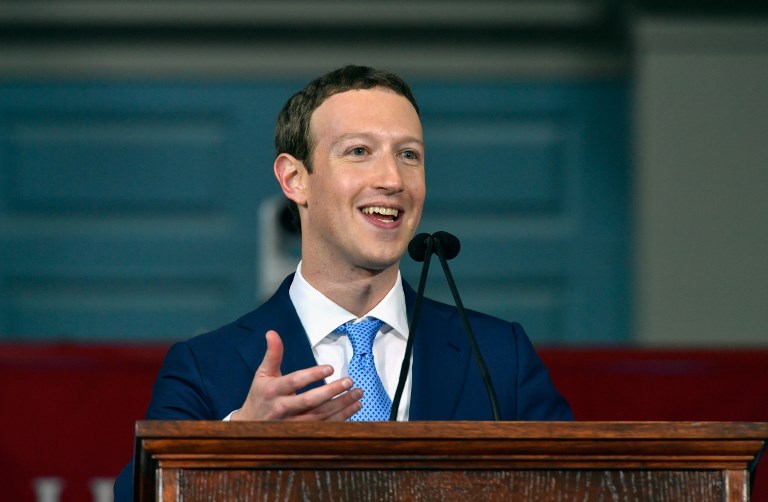
NEW YORK — Facebook said Thursday the company will provide the contents of 3,000 ads bought by a Russian agency to congressional investigators.
The move comes as the company has faced growing pressure from members of Congress to release the content of the ads.
Facebook CEO Mark Zuckerberg said the company is “actively working” with the US government on its ongoing investigations into Russian interference into the 2016 presidential election. Facebook had already released the ads to federal authorities.
Zuckerberg said in a Facebook post and live video on Thursday that he has directed his team to provide 3,000 ads, created by fake accounts linked to Russia, to Congress.
“We support Congress in deciding how to best use this information to inform the public, and we expect the government to publish its findings when their investigation is complete,” Zuckerberg wrote.
The leaders of the Senate Intelligence Committee have been seeking to bring Facebook executives before their committee since the company first revealed the existence of the ads two weeks ago.
But critics say Facebook should go further. They say the company should tell its users how they might have been influenced by outside meddlers.
Zuckerberg said that while his company is cooperating with the Russia investigation, no one should expect it to intercept all undesirable material before it hits its social network.
“I’m not going to sit here and tell you we’re going to catch all bad content in our system. We don’t check what people say before they say it, and frankly, I don’t think our society shouldn’t want us to,” Zuckerberg said. ” If you break our community standards or the law, then you’re going to face consequences afterwards.”
He added: “We won’t catch everyone immediately, but we can make it harder to try to interfere.”
But Zuckerberg hinted that the company may not provide much information publicly, saying that the fact that his company is a part of the federal investigation would limit what he can reveal.
Zuckerberg said Facebook will make political advertising more transparent.
“When someone buys political ads on TV or other media, they’re required by law to disclose who paid for them. But you still don’t know if you’re seeing the same messages as everyone else,” the Facebook CEO wrote in a post .
Going forward, political ads will have to link to the Facebook page that bought the ad. And users will have to be able to visit the page and see all the ads they are currently running to any audience on Facebook.
It was revealed earlier this month that hundreds of phony Facebook accounts, likely run from Russia, spent about $100,000 on ads aimed at stirring up divisive issues such as gun control and race relations during the 2016 campaign. The panel is one of several in Congress probing Russian interference and any connections to President Donald Trump’s campaign.
Facebook has briefed members of Congress and also provided the ads and other information to Robert Mueller, the special counsel in charge of the Russia investigation, the company said.
In all, the accounts purchased some 3,000 ads between June 2015 and May 2017. While the ads didn’t specifically reference the election, a candidate or voting, they nevertheless allowed “divisive messages” to be amplified via the social media platform, the company’s chief security officer, Alex Stamos, said in a statement Sept. 7.
In addition to the 470 accounts that appeared to be run from Russia, Stamos said its investigators also discovered an additional $50,000 in spending via 2,200 ads that “might have originated in Russia,” even including ads purchased by accounts with IP addresses in the US but set to Russian in the language settings.
Lawmakers have said they want to know more about the content of the ads pushed out by the Russian-based Internet Research Agency and whether they targeted specific voters or locations in the United States.
The company has come under intense pressure since the election to curb the flow of false information. After the election, it updated its advertising policy to say it wouldn’t run spots that are “illegal, misleading or deceptive, which includes fake news.”









The Times of Israel Community.