

Far-right European electoral success: A poisoned chalice?
Despite exuberance over its strong showing in German elections, history of nationalist parties in Europe may not bode well for AfD
 Add ToI as a Preferred Source on Google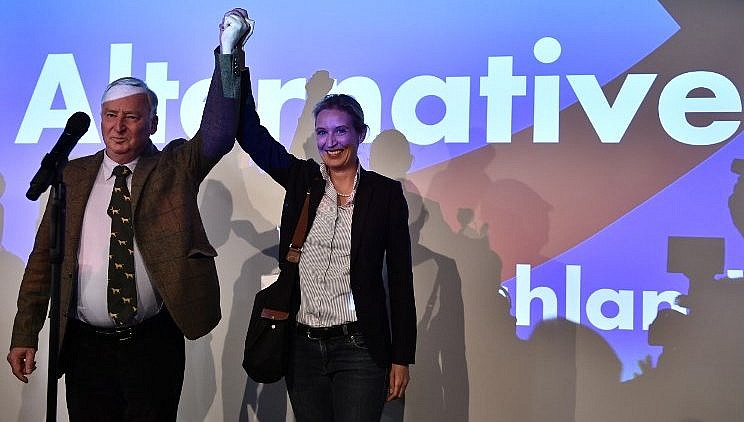
VIENNA (AFP) — For Europe’s nationalist parties, winning votes is the easy bit. The real challenge lies in keeping internal strife at bay. Just ask the Alternative for Germany (AfD) or the French National Front.
On Monday, a day after becoming Germany’s third-largest force in parliament, AfD co-chief Frauke Petry announced she would not sit with the party in parliament because of “dissent.”
Her bombshell brought into sharp relief the challenges that the first major right-wing party to sit in the Bundestag since 1945 will have keeping all its diverse strands united.
The AfD began life as a party opposed to the euro, but moved sharply rightwards, with provocative posters attacking Islam and questioning Germany’s culture of atonement for its Nazi past.
France’s National Front meanwhile saw Marine Le Pen triumphantly make it into the second round of the country’s presidential election in May, only to lose to Emmanuel Macron.
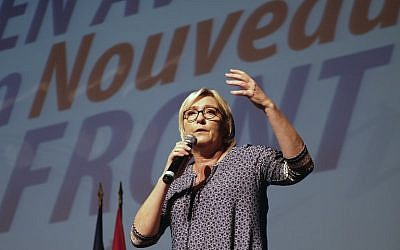
The party, whose image Le Pen had softened since the days of her more hard-line father and predecessor Jean-Marie, then won just eight seats in parliament.
Since then, the FN has been riven by divisions and earlier this month Florian Philippot, Le Pen’s right-hand-man and chief strategist, quit in a huff.
Philippot was unhappy about the “terrible backward slide” of moving away from economic nationalism and social issues, and back to issues like immigration and national identity.
His enemies blamed him for concocting Le Pen’s electoral proposal to bring back the franc, despite polls showing French voters running scared from the plan.
Jean-Yves Camus, a French expert in European far-right parties, said that both the AfD and the FN failed to keep the balance between their moderate and more extremist strands, just when success seemed close.
“Achieving critical mass is not enough, you also need to know what to do with it,” Camus told AFP. “There comes a time when the anti-system concrete fails to congeal.”
Austrian exception
“It’s not uncommon for relatively new and unorganized populist radical right parties to split directly after success, as they have no structure to divide the new spoils,” agreed Cas Mudde, associate professor at the University of Georgia.
Often, however, the splits are more strategic or personal, rather than ideological in nature, Mudde told AFP, and voters stay loyal, provided the party “survives in a fairly coherent manner.”
An example is the Freedom Party (FPOe) in Austria, which is widely expected to come second or third in elections on October 15 and become junior coalition partners of Sebastian Kurz’s People’s Party (OeVP) conservatives.
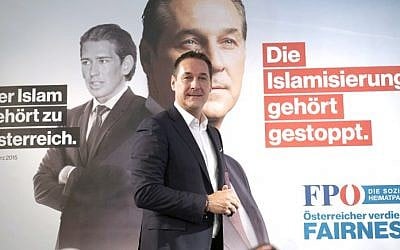
The FPOe last became part of the government in 2000 under controversial then-leader Joerg Haider, prompting protests, an outcry in Israel and Austria being ostracized in Europe for a time.
However, five years later the party went through a painful split as Haider, who later died in 2008, broke off to form his own movement.
Now though, the FPOe is riding high, with the party’s candidate Norbert Hofer coming close to winning the presidency last year and party chief Heinz-Christian Strache on the verge of becoming deputy chancellor.
‘Like a pressure cooker’
The FPOe “definitely learned from this process (after 2000) and are now trying to nip in the bud any possibility of splits,” Austrian political analyst Thomas Hofer told AFP.
Camus said that actually having experience of being in government — as is the case with the FPOe and the Northern League in Italy — and having the real prospect of returning to power can help heal rifts.
For the FN, “it’s like a pressure cooker. They’re wondering why things aren’t working, looking for scapegoats, tearing themselves apart over their fundamental issues,” he said.
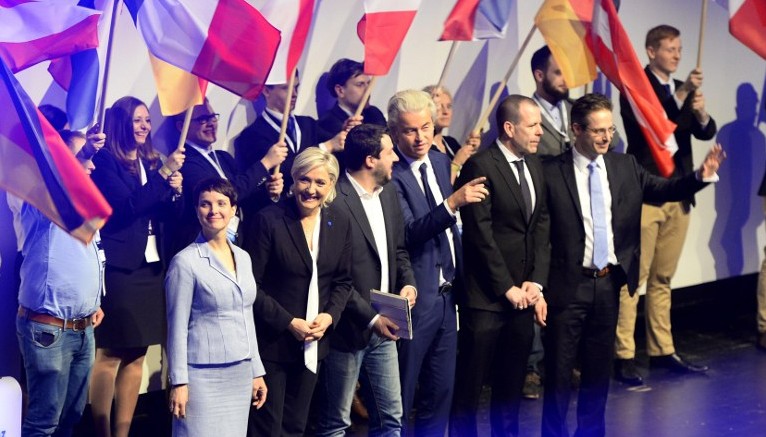
And for the FPOe, things may end badly if they perform poorly in next month’s vote.
“A disappointing result…could quickly change things and it could be the beginning of the end of the Strache era,” said Austrian expert Anton Pelinka.








The Times of Israel Community.