

Freed from Gaza, mom kidnapped with daughters is ‘still sleeping with one eye open’
Accounts from former hostages paint a picture of injuries, food deprivation, skin branding for children and the joy and relief of returning home: ‘I didn’t know if I would survive’
 Add ToI as a Preferred Source on Google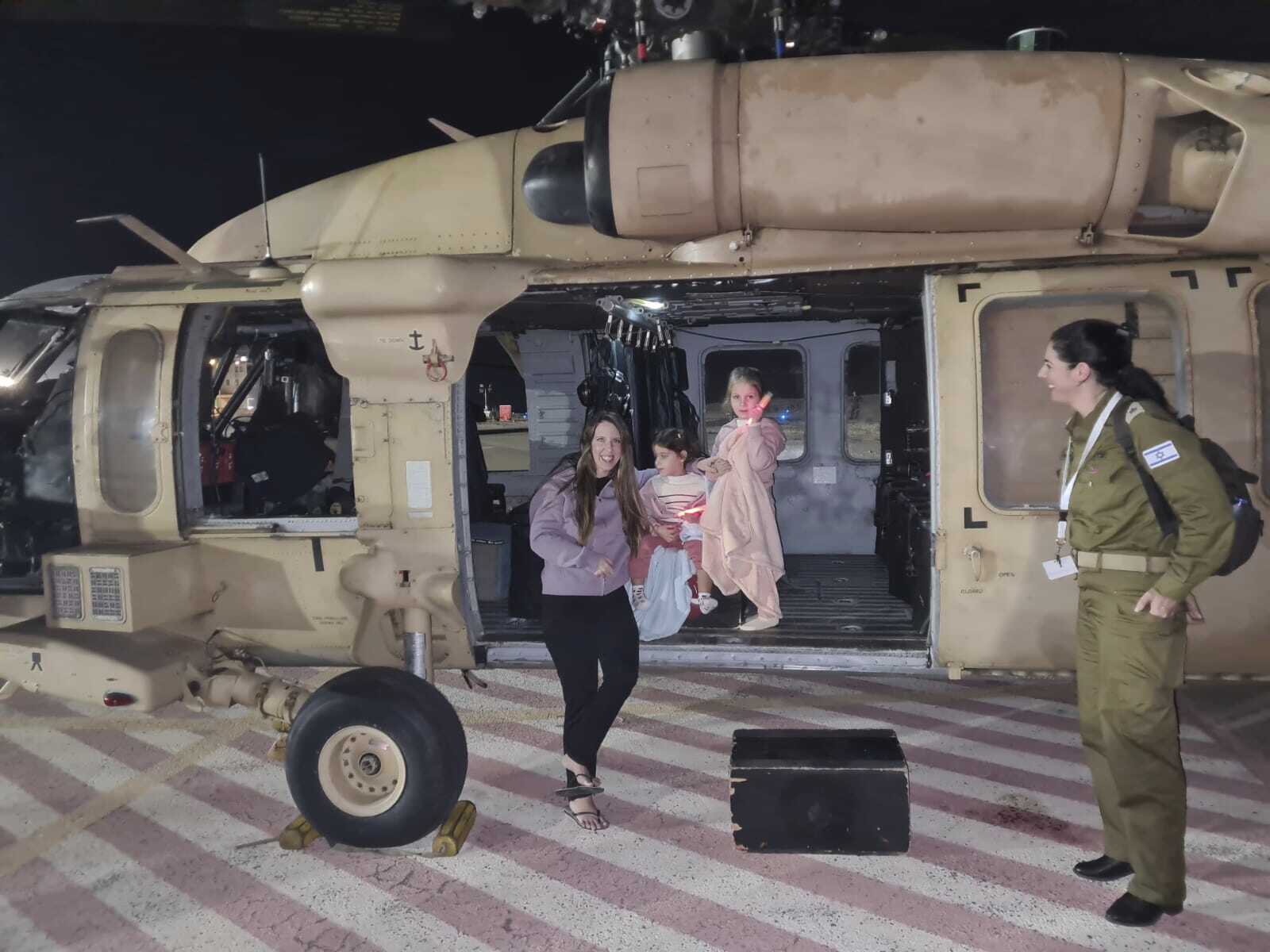
New accounts by released Israeli hostages of their time spent in the clutches of Hamas have emerged in recent days in Hebrew-language media, sometimes related by family members.
The accounts reveal the difficult experiences the former hostages faced, affirm their relief in being free, and act as a cry for more action to release the Israelis and others remaining in Gaza.
Yoni Asher’s wife and daughters were returned after 49 days in captivity as part of a wave of releases on November 25, during a pause in hostilities between Israel and Hamas to enable a hostage deal.
Asher’s wife, Doron, and their two young daughters Raz, 5, and Aviv, 2, were taken on October 7 from the sealed room of Doron’s mother’s house in Kibbutz Nir Oz, near Gaza. Doron’s mother, Efrat Katz, was killed in the assault.
Asher, who had stayed home in central Israel that day, became a prominent activist in the Hostages and Missing Families Forum, which sprang up after the attack.
“They were injured during the kidnapping,” Asher told Channel 12 in a Wednesday report. “They didn’t have enough food, there wasn’t a regular place to defecate.”
He added that the three were constantly afraid they would be separated and were regularly moved by their captors from location to location, out of fear that if neighbors discovered the Israelis, their lives would be in danger.
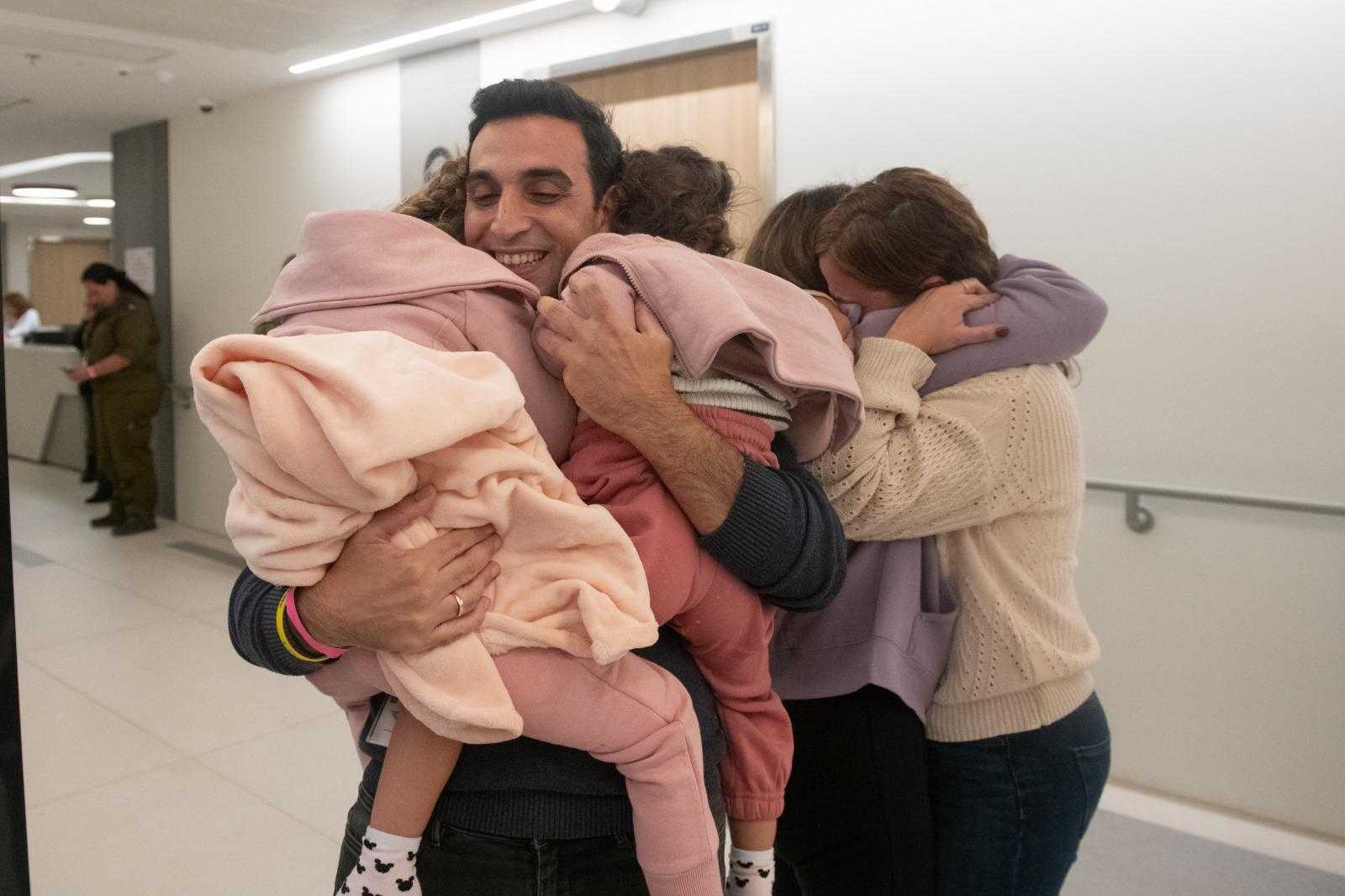
As time passed, their captors provided fewer provisions, Asher said. He described how when his daughters finally came home, they were amazed at how much food was in their kitchen and pantry.
His wife still sleeps “with one eye open” out of fear of being separated from the daughters, and has described to him how she hid her tears from the girls during captivity.
“We are learning as we go. I believe that they will return to normal in the coming days,” Asher added.
The Ashers were among some 240 people kidnapped by Hamas-led terrorists in an unprecedented assault into Israeli territory, now known as “Black Shabbat” in Hebrew. Over 1,200 people were killed, most of them civilians, often in brutal and horrific fashions.
Among the kidnapped were the elderly and children as young as 9 months old.
During a weeklong truce in late November, 81 Israeli hostages — all women and children except one Russian-Israeli man released as a gesture to Russian President Vladimir Putin — were released in exchange for 240 Palestinian prisoners.
Twenty-four foreign hostages — 23 Thai nationals and 1 Filipino — were also released at the same time in a separate deal.
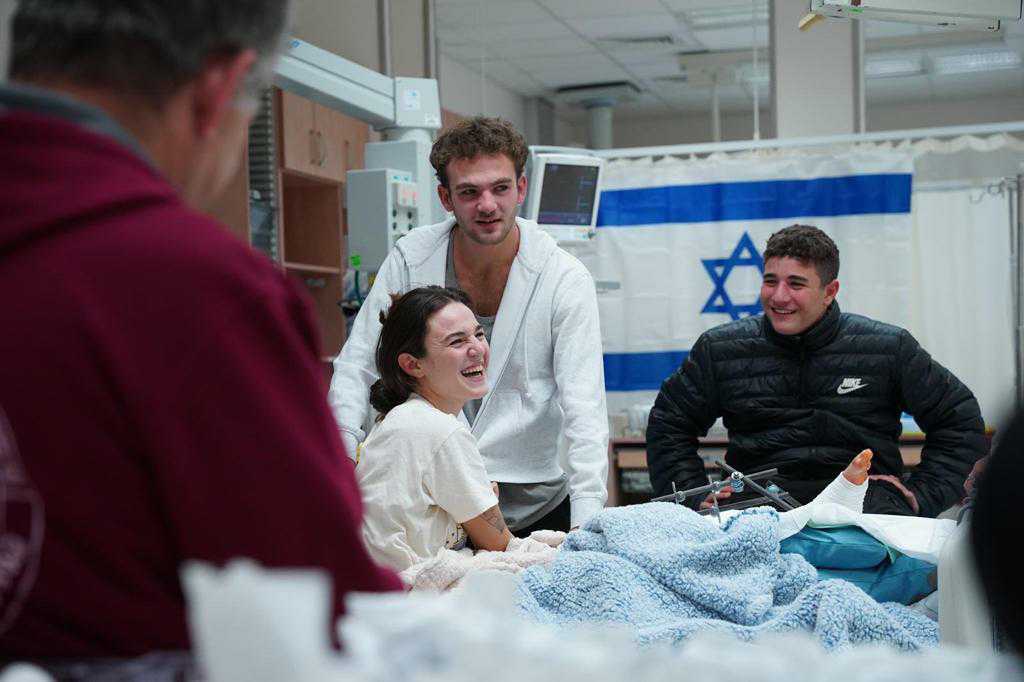
Itay Regev, 18, and his sister Maya, 21, were both released at the end of November as part of the exchange.
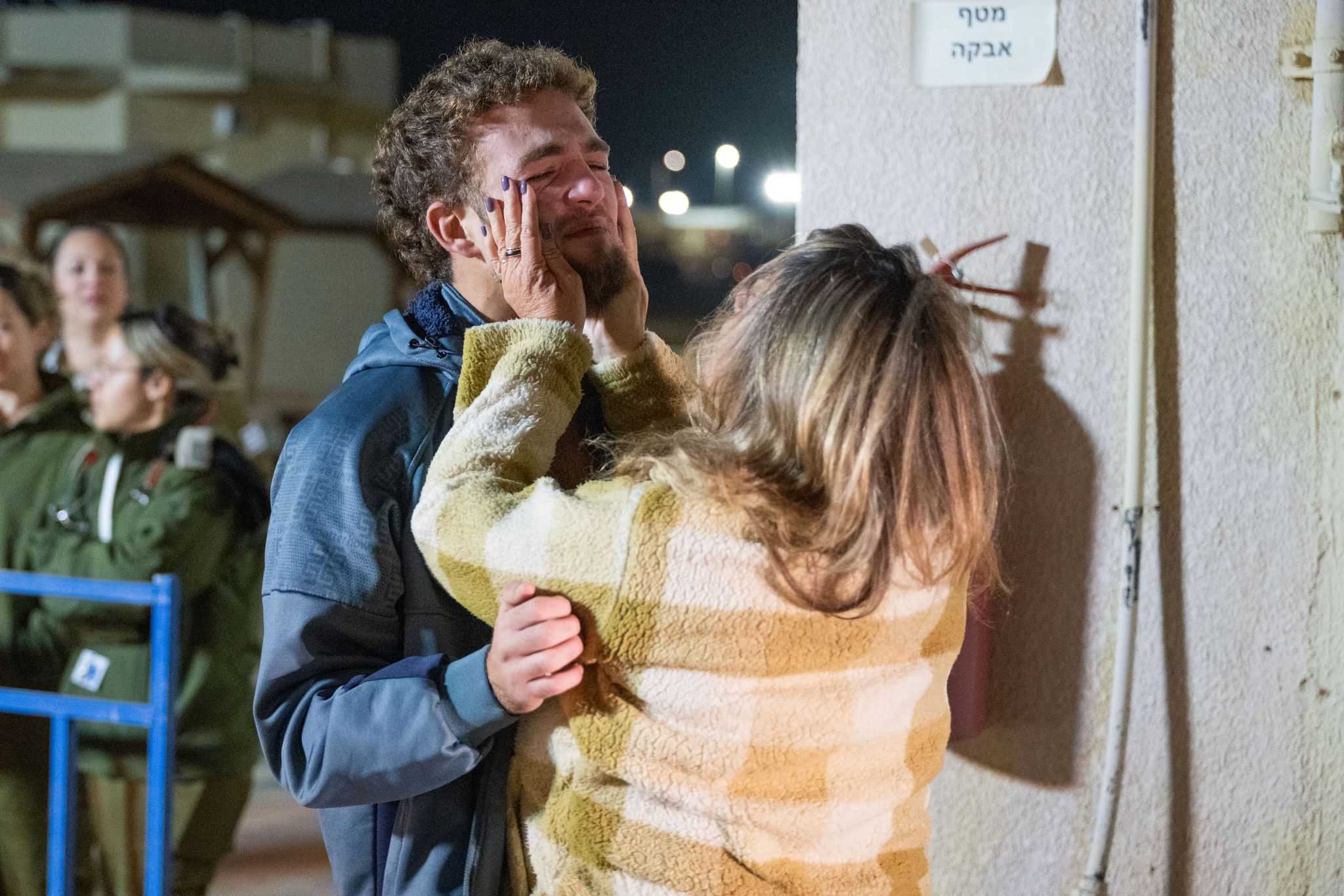
Maya Regev was shot in the ankle during the initial October 7 assault, and a recording of her calling her father moments before being abducted went viral in the week after the attack. The siblings had just returned from a vacation in Mexico and were at the Supernova party on the morning of October 7, where they were taken hostage.
Later, after the siblings were released, pictures from their joyous hospital reunion were widely shared on both traditional and social media channels.
“I still can’t digest what I went through, or the fact that I’m at home… but I wanted to say a big thank you to all of you. Thank you for not stopping for a moment, and for fighting for us until the last second. Thank you for fighting for the rest of the abductees, and of course thanks to the IDF soldiers, who fought and continue to fight for us and the country.
“We will not stop until everyone returns home, and until everyone is reunited with their families. There are no words to explain how grateful Maya and I are to you,” Itay Regev said in a Wednesday social media post, in what appears to be his first public comments after being released.
Sapir Cohen was kidnapped from Kibbutz Nir Oz on October 7 along with her boyfriend Sasha Trufanov and his family.
“Ten Hamas terrorists rolled me up in a blanket… they put me on a motorcycle, and on the way Gaza residents stood with sticks, screamed and threw cigarettes,” Cohen recounted, according to a Wednesday report on her lighting a public menorah in her hometown of Kiryat Ata.
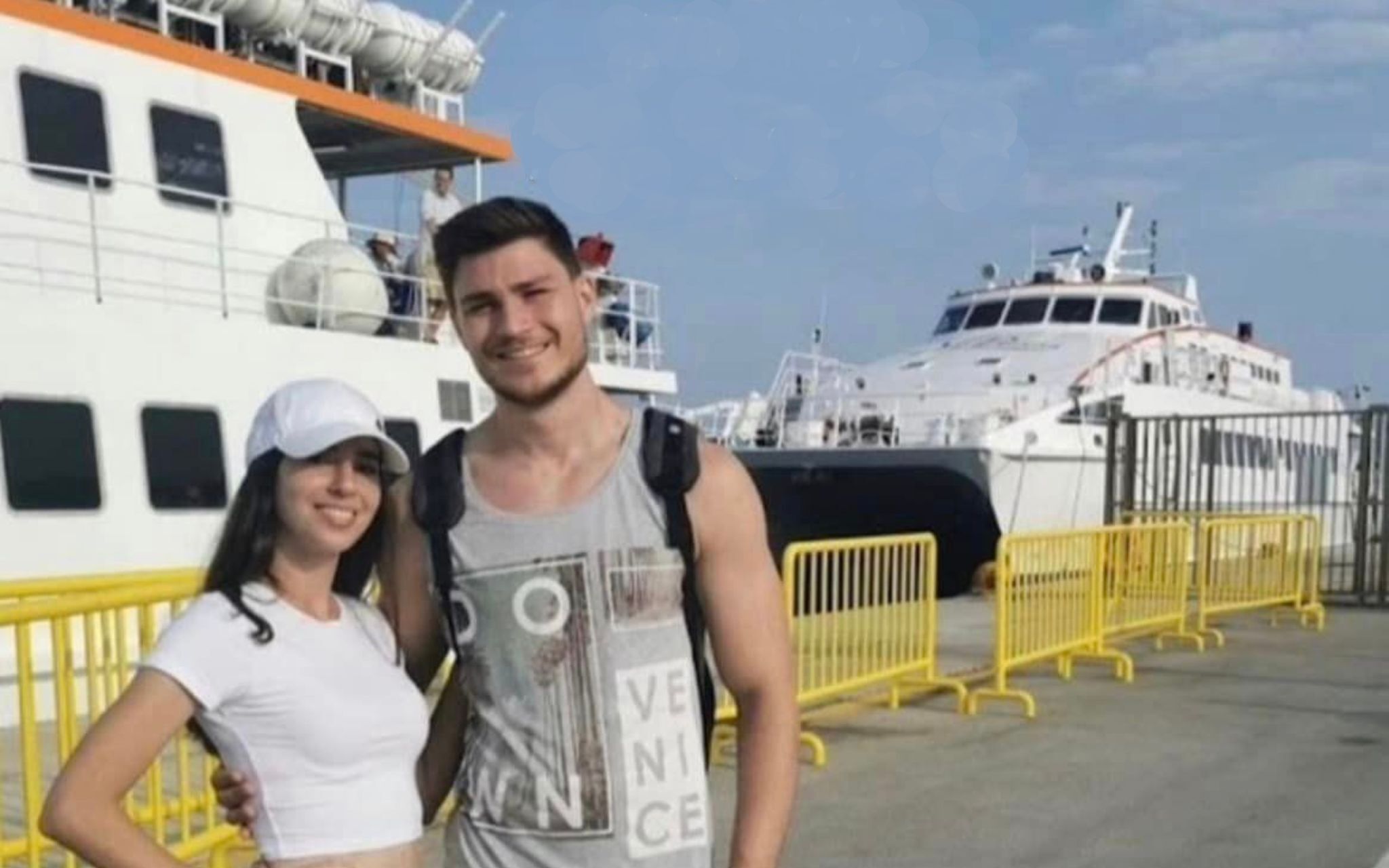
While in captivity, “there were days when I didn’t know if I would survive. I can’t explain too much, but in the tunnels, there are crazy things. Thank God I was rescued and I hope the state will bring back the abductees,” she added, noting that she “felt a chill” every time she thought of her boyfriend still being held.
Sasha Trufanov is still in Gaza. His father Vitaly was killed in the initial assault, but his mother Yelena Trufanova, 50, and grandmother Irena Trufanova, 73, both dual Israeli-Russian citizens, were released on November 29.
Brothers Yagil, 13, and Or Yaakov, 17, were released on November 27 after more than 50 days in captivity. They were home alone in Kibbutz Nir Oz on October 7 and were taken to Gaza, where, according to an uncle’s account from after they were released, they were both branded by a hot metal pipe to prevent their escape.
The boys’ father, who was kidnapped with his since-released partner, Meirav Tal, remains in captivity.
Their mother Renana Gome told Channel 12 news that Yagil was initially held by Islamic Jihad, not Hamas, and was mostly alone the entire time. He was only transferred to be with his elder brother just before they were released.
Or Yaakov, the older brother, was held in a group with people he knew, making the ordeal easier, she said.
She described how Yigal learned how to talk with his captors in Arabic and “unfortunately” watched a lot of Al Jazeera. “He really learned about them, who they were and how many children they have,” she said.
Yagil had appeared in an Islamic Jihad propaganda video, where they told him what to say. The video took “50 takes” in a special studio, he told her.
“He received a message sheet, prepared in advance… the most important thing for him is that everyone knows that he did not mean what he said there at all,” Gome said.
Yagil, who was 12 when captured, is now 13, but is waiting for his father to be released before he has his bar mitzvah ceremony, she said.
Agencies contributed to this report.









The Times of Israel Community.