

From Rome to Jerusalem
A priceless glass disc went from the hands of Roman tomb robbers to those of a Polish countess and Nazi troops before reaching the Israel Museum
- See more Times of Israel on Google - add us as a Preferred Source
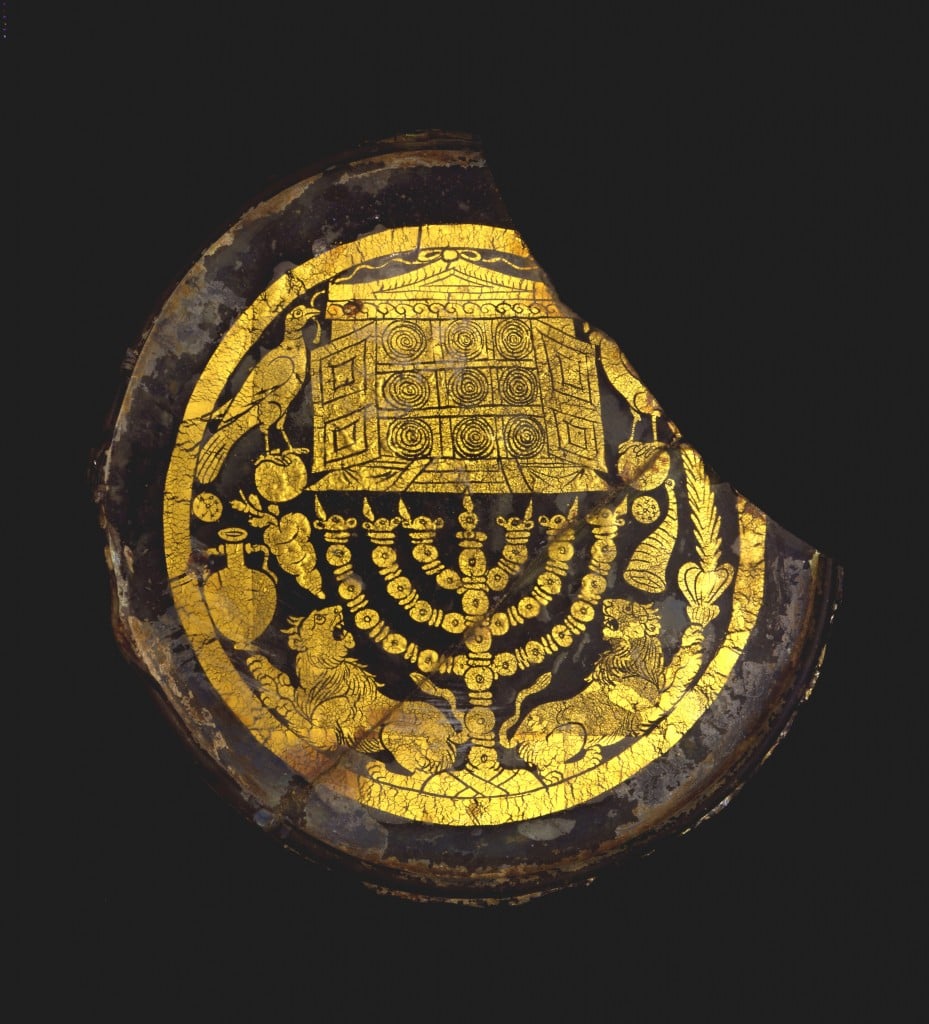
An ongoing series looking at history through a single object in the archaeology collections at Israel’s national museum
Before reaching its current home in a display case in Jerusalem, this small disc of glass and gold was buried in the catacombs beneath Rome 1,700 years ago, looted, kept in the castle of a Polish countess, stolen by Nazis, sold on the antiquities market in Vienna, tracked down and reclaimed by its previous owners and then purchased again.
In 70 CE, Roman legions destroyed the Temple in Jerusalem, taking Jewish captives and the Temple treasures back to the imperial capital. The image of the Temple’s seven-branched menorah was carved onto the Arch of Titus, built to celebrate the defeat of the Jews.
Two or three centuries later a Jew died in Rome and was buried in the catacombs, along with an image of that same menorah in gold leaf pressed between two round pieces of glass. The descendants of the exiles from Judea had come to use the image of the Temple’s candelabra to represent themselves.
The disc, 4.5 inches (11 centimeters) in diameter, was originally the base of a drinking glass, probably one used in a funeral banquet. The gold images, which also include lions and a Torah ark open to show three shelves of scrolls, make it one of the earliest objects found outside Israel to depict symbols associated with the Temple.
The Roman Jewish community that created it was a direct link to Jerusalem’s destruction, said James Snyder, the Israel Museum’s director: The city’s Jews, he said, were “the first community of the second Diaspora.”
Tomb robbers pried the disc from a stucco wall in the catacombs, and by the 1800s it had become part of a collection of antiquities and artwork amassed by Countess Isabella Dzialynska and kept at her castle in Goluchow, Poland.
After the Nazis took Poland in 1939, they seized the collection and moved it to an Austrian castle, where it was looted after the German defeat. The pieces of the collection were scattered among museums and private collections around the world. In 1966, the disc surfaced on the open market in Vienna, where it was purchased and donated to the Israel Museum.
Two similar Roman discs from the Dzialynska collection were purchased for the museum at the same time. One of those was also decorated with Jewish symbols, including two menorahs, as well as an evocative inscription that appears to have been addressed to the person buried along with it: “Drink and live, Elares.”
The countess’s heirs spent years “scouring Germany and Austria” for the missing pieces of their lost collection after the war, Count Adam Zamoyski, her great-great-nephew, said in 2008. That was the year the Israel Museum restored all three glass discs to the family. The two with Jewish symbols, which Snyder referred to as “priceless,” were purchased a second time, and they remain on display.
Between 250,000 and 600,000 pieces of art looted by the Nazis during WWII have never been claimed.
______
Follow Matti Friedman on Twitter.









The Times of Israel Community.