

Gay justice minister joins Jerusalem Pride event, but not everyone’s celebrating
The presence of Amir Ohana, Israel’s first openly gay cabinet minister, at annual parade in conservative capital may be a milestone, but does not mark a transformation

 Add ToI as a Preferred Source on Google
David Horovitz is the founding editor of The Times of Israel. He is the author of "Still Life with Bombers" (2004) and "A Little Too Close to God" (2000), and co-author of "Shalom Friend: The Life and Legacy of Yitzhak Rabin" (1996). He previously edited The Jerusalem Post (2004-2011) and The Jerusalem Report (1998-2004).
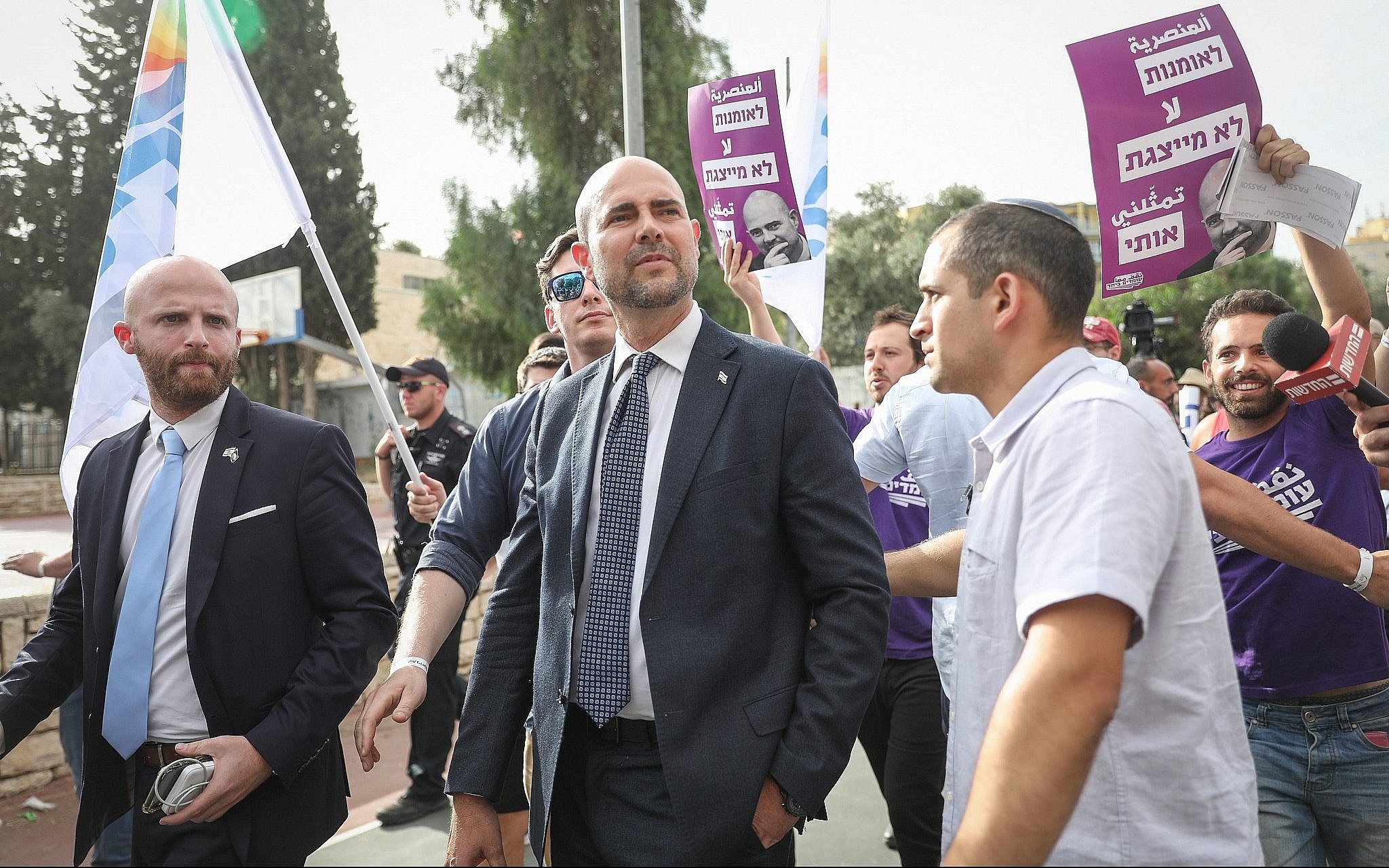
Shortly before the Jerusalem Pride march began its journey through the center of town late on Thursday afternoon, a very special participant put in an appearance: Israel’s new justice minister, the Likud MK and Benjamin Netanyahu-loyalist Amir Ohana.
Ohana was named to the prestigious and sensitive post by Netanyahu just a day earlier — as a temporary appointee, to keep the ministry ticking over until September’s elections and (it is to be hoped) the formation of a new government in the weeks after that.
The organizers of the Pride event had invited him to attend, as they invited all 120 Knesset members, before his surprise promotion. But now that Ohana was a cabinet minister, and a member of the inner security cabinet to boot, his presence was all the more significant.
It was also immensely symbolic, for Ohana is the first openly gay Israeli cabinet minister.
While Ohana was warmly embraced by some of those who were gathering in Liberty Bell Park as the march was getting under way, however, there was also some booing and heckling. “Go home, you hypocrite,” one man shouted. “Shame, shame,” called out others.
Yes, he was a trailblazer, but in a government, and under a prime minister, courting a stream of controversies over equality, or rather the threats to equality, in Israel. Plus, according to another participant in the march, “in four years, he has done nothing for the LGBT community.” Hence the decidedly mixed response to Ohana’s presence.
The MK who has had his heart set on the Justice Ministry, Bezalel Smotrich of the Union of Right-Wing Parties, caused a storm earlier this week when declaring that he looked forward to an Israel run according to the laws of the Torah, a veritable Jewish theocracy. No sooner than Netanyahu had slapped Smotrich down, than the prime minister was himself making headlines for having reportedly agreed, in the abortive negotiations for a majority coalition last month, to a demand by ultra-Orthodox parties to permit gender segregation at public events.
Enforcing legislation or government decisions to that effect would likely be impossible, given that Israel’s Supreme Court would prevent it, but Netanyahu and some of his supporters had also been preparing to legislate curbs on the Supreme Court’s right to intervene in such decisions — again, before the coalition talks collapsed. Netanyahu’s wider goal in reining in the court: trying to arrange immunity from prosecution in the three corruption cases he’s fighting, to place himself outside the reach of the law.
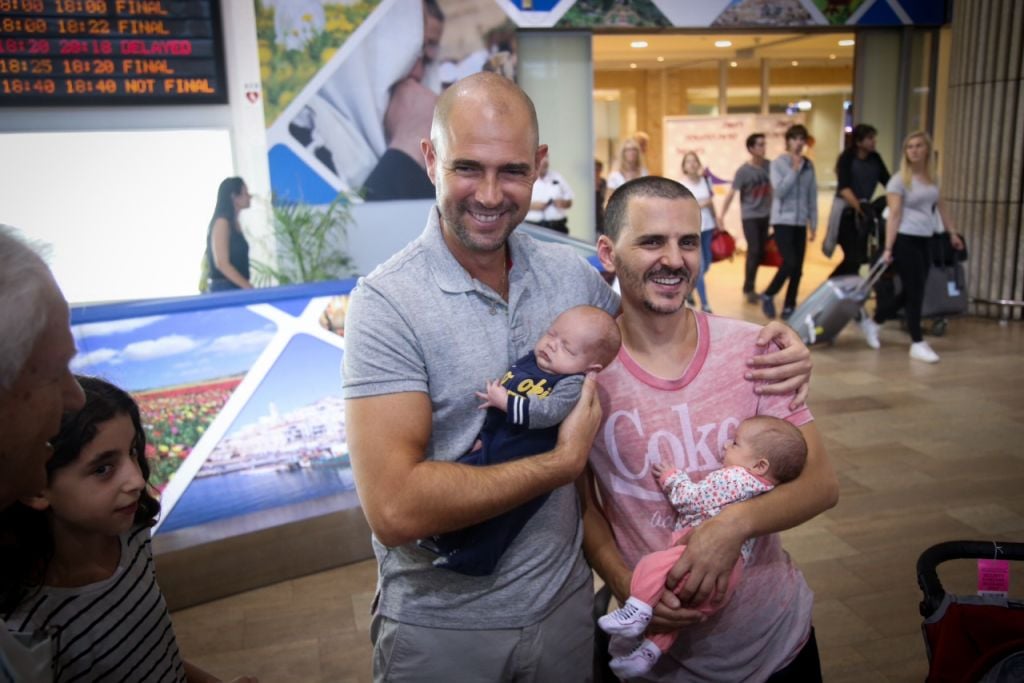
“It’s only thanks to the Supreme Court that you have a child,” one of Ohana’s hecklers in the park had called out.
Hours before the parade set off, Netanyahu even managed to undermine the message of tolerance and openness inherent in Ohana’s appointment, by reportedly assuring his ultra-Orthodox political allies that the new justice minister would not be holding that post for long, and would be dispatched to a less prominent and sensitive office when Israel finally gets itself a permanent government.
Thus a parade that might this year have celebrated a milestone ministerial appointment — and that marks the start of 50 such LGBT-related events nationwide — instead highlighted an ongoing struggle for greater tolerance and equality in Israel.
Turnout, at about 15,000, was significantly lower than organizers had expected and hoped, and lower than in recent years — possibly as the shock of the 2015 murder during the parade of teenager Shira Banki, by an ultra-Orthodox extremist, starts to recede.
Security was tighter than ever, with a reported 2,500 security personnel lining the route — many of them deployed facing outwards, keeping watch for threats from the residential buildings, offices and stores that line the route along Keren Hayesod and King George Street into the center of town.
The music paused, and so did the marchers, when they reached the site where Shira Banki was knifed to death
Police had reported 50 arrests by early evening, including one suspect found to be carrying a knife. (All suspects were released by Friday morning.) There were also several dozen raucous anti-parade protesters, fenced off near the start of the route, including the far-right activist lawyer Itamar Ben-Gvir, a leader of the Kahanist Otzma Yehudit political faction, who narrowly missed out on a Knesset seat in April’s elections.
His colleague Bentzi Gopstein, who heads the extremist Lahava organization that opposes LGBT rights, and plenty of other freedoms besides, had vowed to target the parade, which he branded “LGBT terrorism.” Reiterated Ben-Gvir as the march set off nearby, “We’ve come to demonstrate against LGBT terror.”
“When something is described as ‘terrorism,'” warned an uncle of the murdered Shira Banki in an Army Radio interview on Thursday morning, “the fear is that somebody, somewhere, will decide it needs to be tackled like terrorism.”
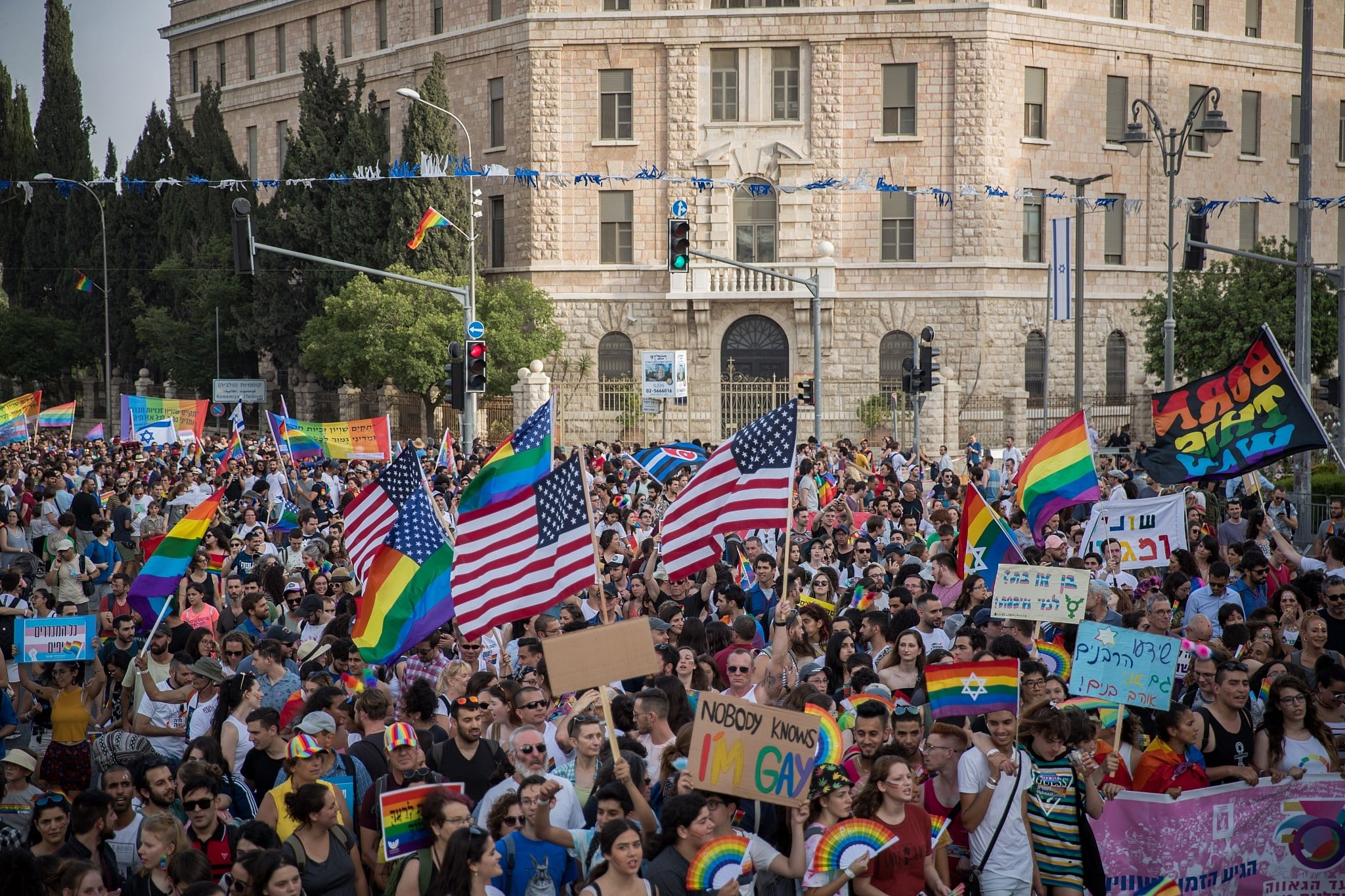
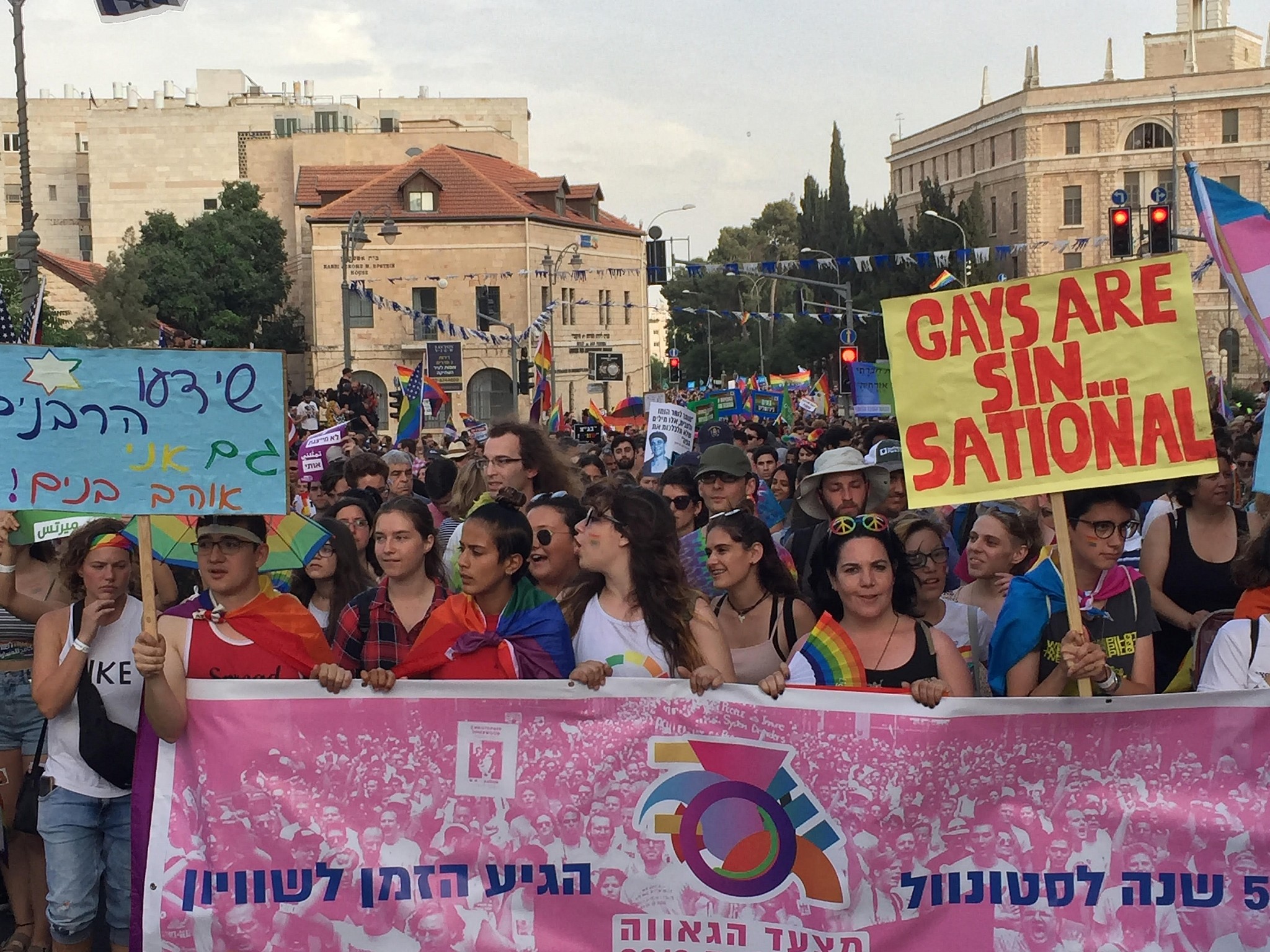
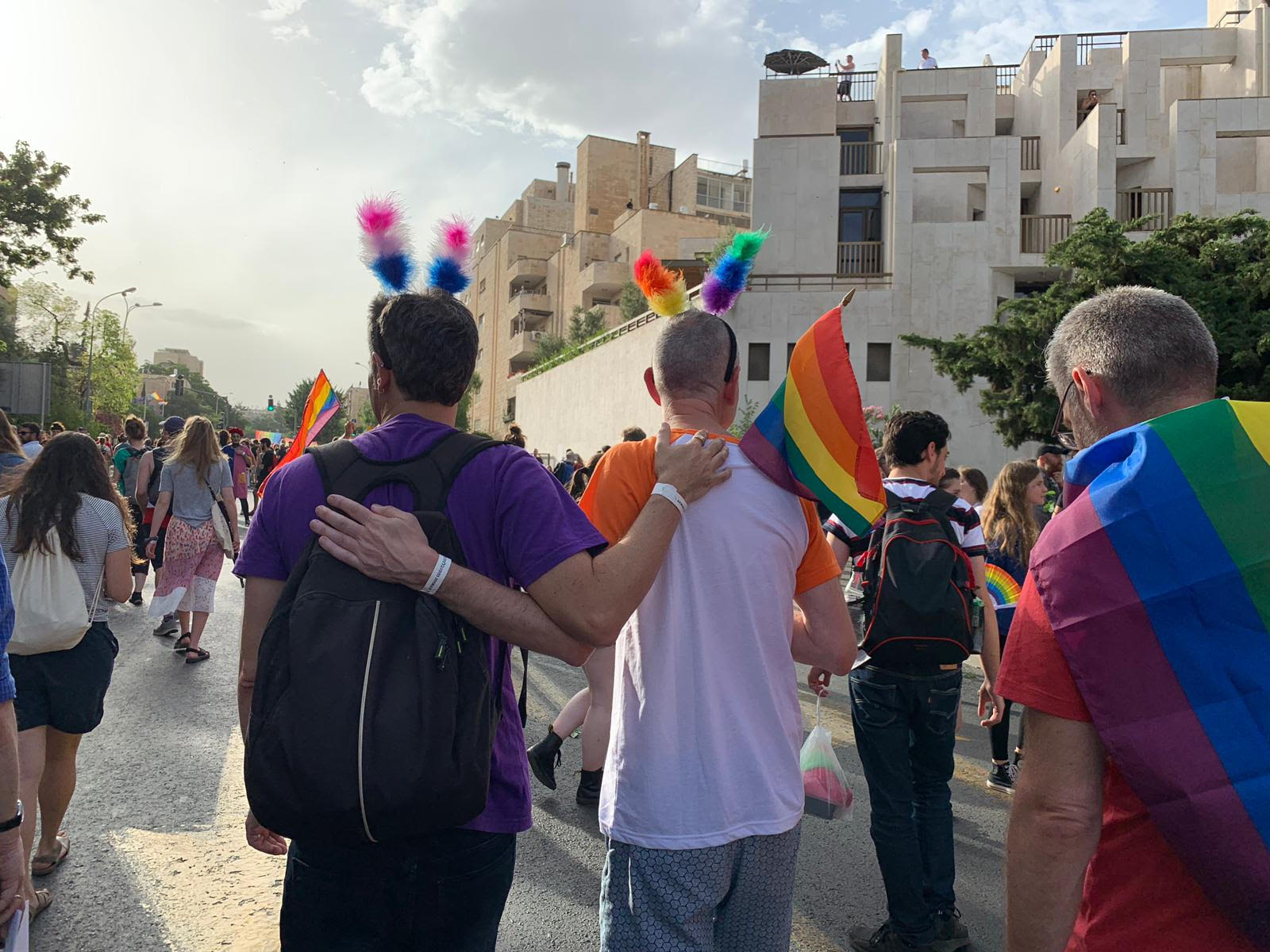
Threats and security notwithstanding, the marchers cut a colorful, joyful path through the conservative capital, waving rainbow flags and brandishing placards proclaiming “The Supreme Court = Equality” and “Love Thy Neighbor as Thyself.” There was singing and dancing and drumming. And a jaunty band kept up a tuba- and clarinet-led rendition of Netta Barzilai’s 2018 Eurovision Song Contest winner “Toy,” an anthem of empowerment.
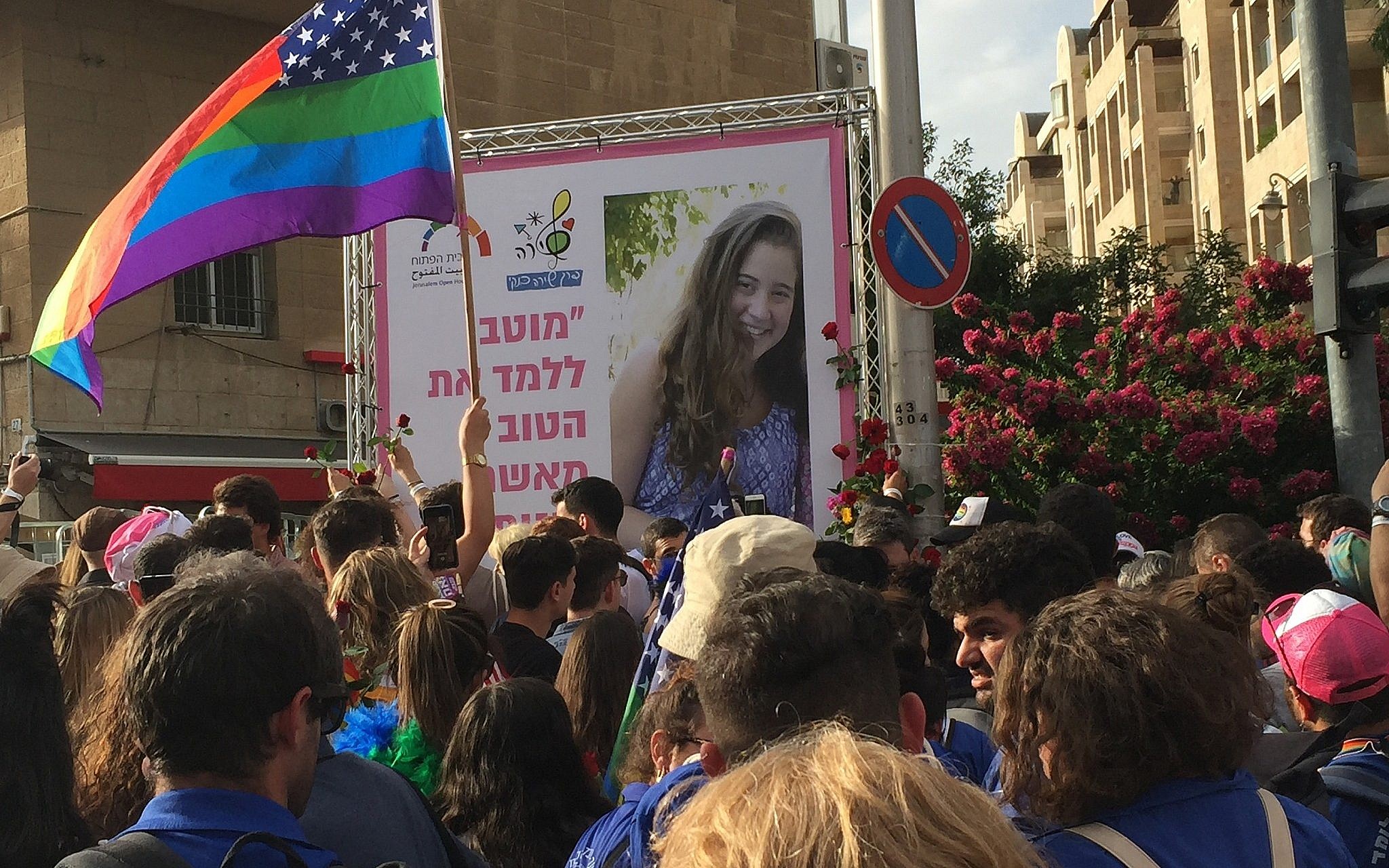
But the music paused, and so did the marchers, when they reached the site where Shira Banki was knifed to death.
“We are marching… for tolerance,” her father Uri told Channel 12 television in an interview at Liberty Bell Park. “We all want it for ourselves, but we find it harder to extend it to others… We can’t leave it to the politicians and the educators. We have to take responsibility ourselves.”
Nearby stood the bestselling author Yuval Noah Harari, who was set to address the rally at its conclusion. Recalling his childhood in Kiryat Ata in northern Israel, Harari, 43, said that he still bore the scars of growing up gay in the Israel of that era, and observed that “‘homo’ remains a widespread slur in the Israel of today.”
He was wearing a T-shirt that proclaimed “I’m a HOMO sapiens.” As are we all.









The Times of Israel Community.