

Guns quiet across Syria as breakthrough truce takes effect
Ceasefire brokered by Russia and Turkey begins with Damascus calling the move a ‘real opportunity’ for a settlement after almost six years of fighting
 Add ToI as a Preferred Source on Google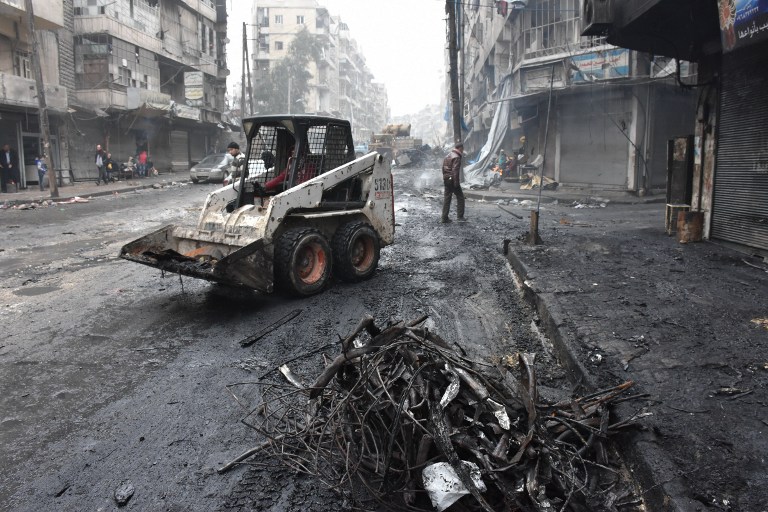
A nationwide ceasefire in Syria brokered by Russia and Turkey took effect on Thursday at midnight, in a potentially major breakthrough in the conflict of more than five years.
The deal, which does not include designated “terrorists” like the Islamic State group, was announced hours earlier by Russian President Vladimir Putin and confirmed by the Syrian army and opposition.
It was not immediately clear whether the truce was holding. It is expected to at least reduce the violence that has gripped the country, including government airstrikes.
Opposition activist Mazen al-Shami told The Associated Press that half an hour before midnight, the situation became “very calm” in the suburbs of the capital Damascus.
He added that a government offensive on the rebel-held Barada Valley northwest of Damascus that had been going on for days had stopped.
Rami Abdel Rahman, the head of the Syrian Observatory for Human Rights, said: “An hour before the truce started, all the fronts were calm with the exception of a few rockets targeting Aleppo city and two rockets falling in the suburbs of Damascus.”
The truce had the backing of both Russia and Turkey, which have been supporting opposing sides in the war, and was welcomed by Iran and the United Nations. Russia said the deal was signed by seven of Syria’s major rebel factions.
Several previous ceasefires all collapsed, some of them in a matter of days. Nevertheless, the deal this time raised hopes for a political settlement to the ruinous war in the coming months, in part because the landscape has significantly shifted recently.
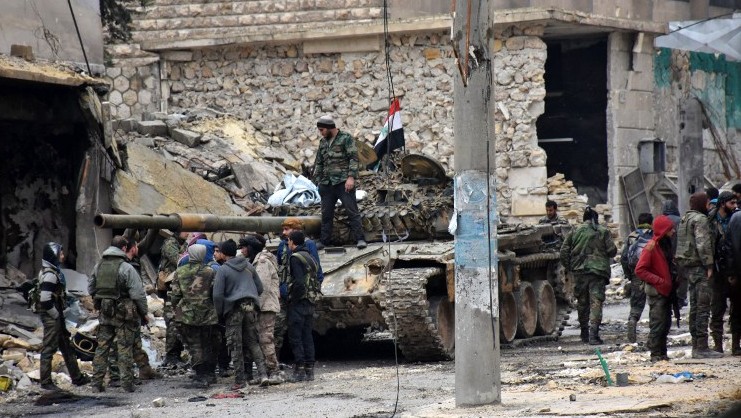
For one thing, the tide has turned in Syrian President Bashar Assad’s favor militarily over the past year, with the government retaking the city of Aleppo from the rebels just days ago. Also, Turkey, which is fighting Kurdish and Islamic militants at home, appears more willing to strike a bargain with Russia if it means protecting its borders.
“This is a different political scene, and one would expect some outcomes to emerge,” said Hilal Khashan, political science professor at the American University of Beirut. He cautioned, however, against expecting immediate results from the first round of talks.
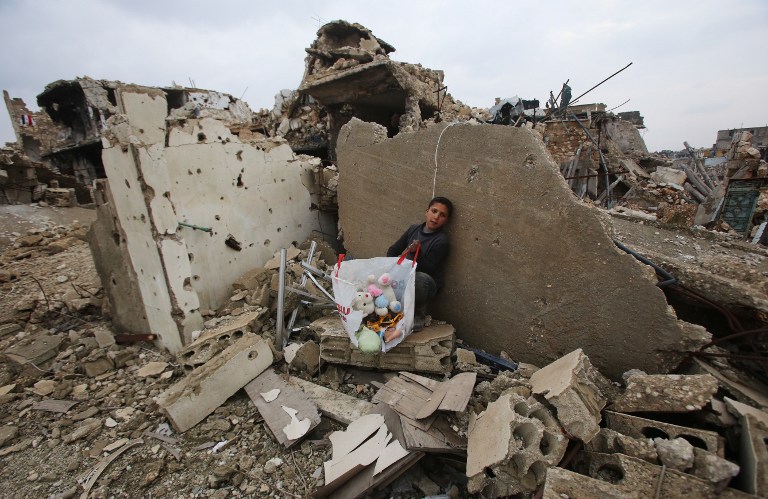
The agreement is a potential breakthrough in the six-year civil war that has left more than a quarter-million people dead and triggered a refugee crisis across Europe.
Russian President Vladimir Putin said that if the truce holds, it will be followed by peace talks next month in Kazakhstan between Syrian President Assad’s government and opposition groups.
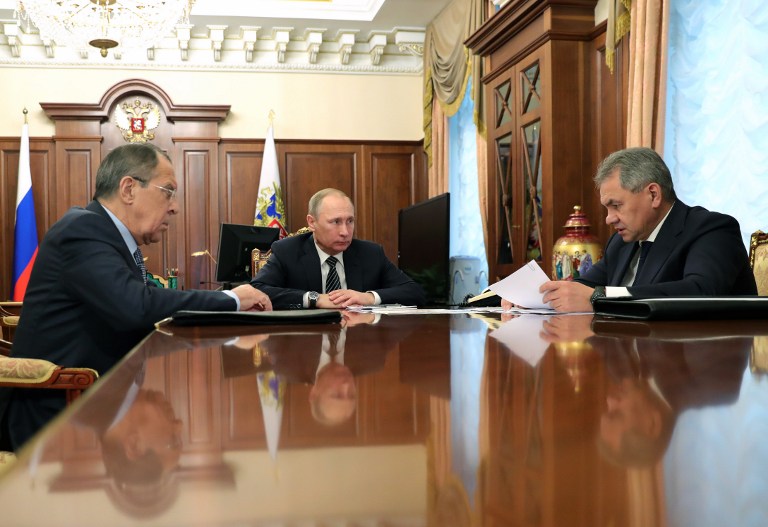
Putin called Syrian President Bashar Assad Thursday to discuss the cease-fire agreement and upcoming talks in the Kazakh capital Astana, the Syrian presidency said on its Instagram page.
Putin said the cease-fire will be guaranteed by Moscow — Assad’s chief patron and battlefield ally — and by Turkey. Turkey is a main backer of the opposition forces, who use the country’s long border with Syria to cross back and forth, and has wide influence on them. Iran, for its part, has been one of Assad’s strongest backers.
Russian Defense Minister Sergei Shoigu said that the truce will include 62,000 opposition fighters across Syria and that the Russian military has established a hotline with its Turkish counterpart to monitor compliance. Sergey Lavrov, Russia’s foreign minister, said President-elect Donald Trump’s administration will be welcome to join the peace process once he takes office.
Putin said he ordered the Russian military to scale back its presence in Syria, where it has provided crucial support to Assad’s forces. Putin didn’t say how many troops and weapons will be withdrawn. He said Russia will continue “fighting international terrorism in Syria” and supporting Assad’s military.
“The general command of the armed forces announces a complete halt to all hostilities on Syrian territory from the zero hour of December 30th,” Syria’s army said in a statement carried on state television.
It added that the halt excluded combat against the Islamic State group and the former Al-Qaeda affiliate previously known as Al-Nusra Front, now rebranded the Fateh al-Sham Front.
Syria’s foreign minister Walid Maollem welcomed the ceasefire agreement and said there is a “real chance” for a political settlement.
In comments made to Syrian TV Thursday, he said the Syrian government will attend peace talks in the Kazakh capital “with an open mind,” but suggested it would not be willing to compromise on the fate of Assad.
“Everything is negotiable except national sovereignty and the people’s right to choose its leadership.”
Cracks in the newborn truce also began to show as he lashed out at Turkey, calling it an “aggressive country and an occupier of parts of the Syrian territories.”
He also claimed Turkey was not mentioned in any of the documents that were signed, adding that Turkey was not a partner and “we didn’t negotiate with it.”
The ceasefire will be the first nationwide halt in fighting since a week-long truce September 12-19 that collapsed after several incidents of violence.
A previous truce was implemented in February, with both of those deals organized by Russia and the United States.
The agreement is the first nationwide ceasefire brokered with the involvement of Turkey, a backer of the Syrian opposition.
Russia is a key supporter of the Assad regime and began a military intervention in support of his government in September 2015.
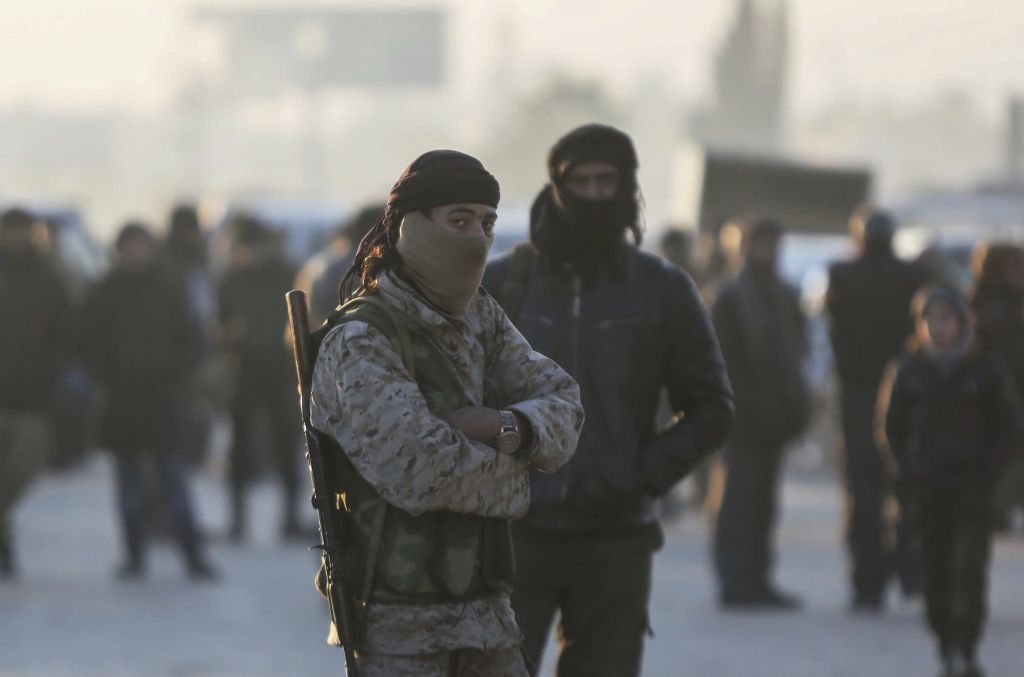
Despite backing opposing sides in the conflict, and a souring of relations after Turkey shot down a Russian warplane last year, Ankara and Moscow have worked increasingly closely on Syria.
They jointly brokered a ceasefire for Aleppo this month that allowed the last remaining rebels and civilians in the city’s east to leave to opposition territory elsewhere.
More than 310,000 people have been killed in Syria since the conflict began in March 2011 with protests against Assad’s government.
The UN special envoy for Syria, Staffan de Mistura, welcomed the ceasefire announcement, saying he hopes the agreement will save civilian lives, facilitate the delivery of humanitarian aid and pave the way for productive peace talks.
Earlier Thursday, Turkey called on Hezbollah to withdraw its fighters from Syria. The Iranian-backed extremist group has sent thousands of fighters to support Assad and has been playing an instrumental role in the civil war since 2013.
Foreign fighters from around the world have joined both sides of the Syrian conflict, which has displaced half the country’s population and produced more than 4 million refugees. Many of those refugees have been streaming into Europe, fueling anti-immigration sentiment and terrorist fears that are reshaping the continent’s political landscape.
Syria’s military noted that the ceasefire comes after the “successes achieved by the armed forces,” an apparent reference to the fierce fighting in Aleppo.
Osama Abu Zeid, a spokesman for mainstream Syrian opposition groups, told reporters in the Turkish capital of Ankara that 13 armed opposition factions have signed the five-point agreement and that they have agreed to abide by the ceasefire.
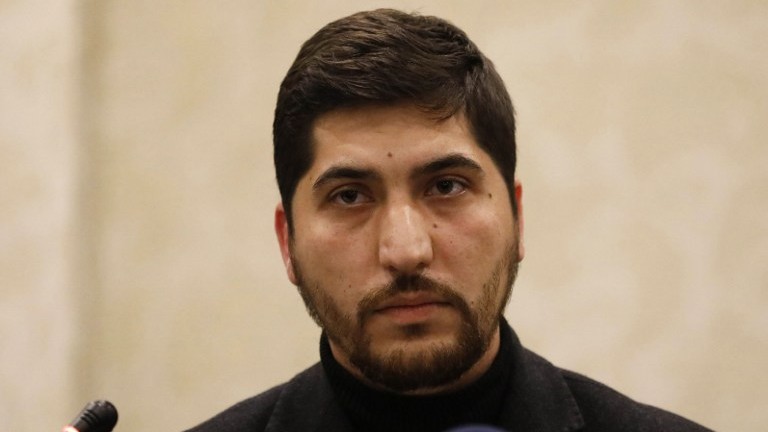
He said key rebel groups including the powerful Ahrar al-Sham and Army of Islam factions had signed the ceasefire deal, though there was no immediate confirmation from rebel officials.
Zeid said the peace talks will be based on the Geneva 2012 declaration that calls for a governing body with full executive powers to run affairs in Syria during a transition period. “This means that there will be no presence for Assad in the future,” he said.
Assad’s future has been the main sticking in previous negotiations between the warring sides, and he is seen as unlikely to step down, particularly when he’s on the winning side.
Khashan, the political analyst, said Assad’s exit is “out of the question.”
“Neither the Russians nor the Iranians would allow it to happen,” he said.
Saeed Sadek, a professor of political sociology at Cairo’s Future University, said Assad has no power to accept or reject any deals.
“He is now under the control of Moscow, Tehran and Ankara. All these countries will decide his future,” he said.



The Times of Israel Community.