

Health levels in periphery lagging behind center: report
Health Ministry review shows mortality and infant mortality higher among Arab population; fewer doctors, nurses available in the north and south
 Add ToI as a Preferred Source on Google
Stuart Winer is a breaking news editor at The Times of Israel.

A Health Ministry report released Thursday found worrying disparity between health levels and services among populations living in outlying regions compared to those living in the heavily populated center of the country.
In addition, the Israeli Arab population showed a higher mortality and infant mortality rate in the report which was published ahead of a ministry conference titled “Health system deals with inequality” scheduled for next Monday in the port city of Ashkelon.
Health Minister Yaakov Litzman said the report highlights the importance of addressing the discrepancies found among different parts of the population in health standards.
“The inequality in the health system is one of the most worrying phenomenon in Israel society,” Litzman said and noted that the ministry has made the issue a top priority.
“Despite the activity, the extensive gaps still exist, and the challenges of poverty and aging of the population are the significant challenges that stand before us as a government and society.”
Deaths per 1,000 residents ran at an average of 5.7 for men and 4.2 for women in 2015, the report found.
Beersheba and Jezreel Valley had the highest average mortality rate at 5.6, with the Golan Heights next at 5.4 per 1,000 residents.
In Tel Aviv, the figure fell to 4.9 and in Jerusalem it was 4.6. The lowest mortality rates were found among the Jewish populations in the West Bank where the average was 3.8.
Among Jews, the average figure was 5.5 and 4.2 for men and women respectively. In the Arab population, the mortality rate was 7.5 men per 1,000 and 5.3 for women.
According to the Health Ministry, in the 2015 average life span in Israel was 80.1 years for men and 84.1 years for women putting Israel in sixth place, alongside Australia, when compared to countries in the OECD.
Israel men live 2.4 years longer than the OECD average while women just 0.8 years longer than the average, putting Israeli women in 11th place alongside Greece, Poland, and Slovenia.
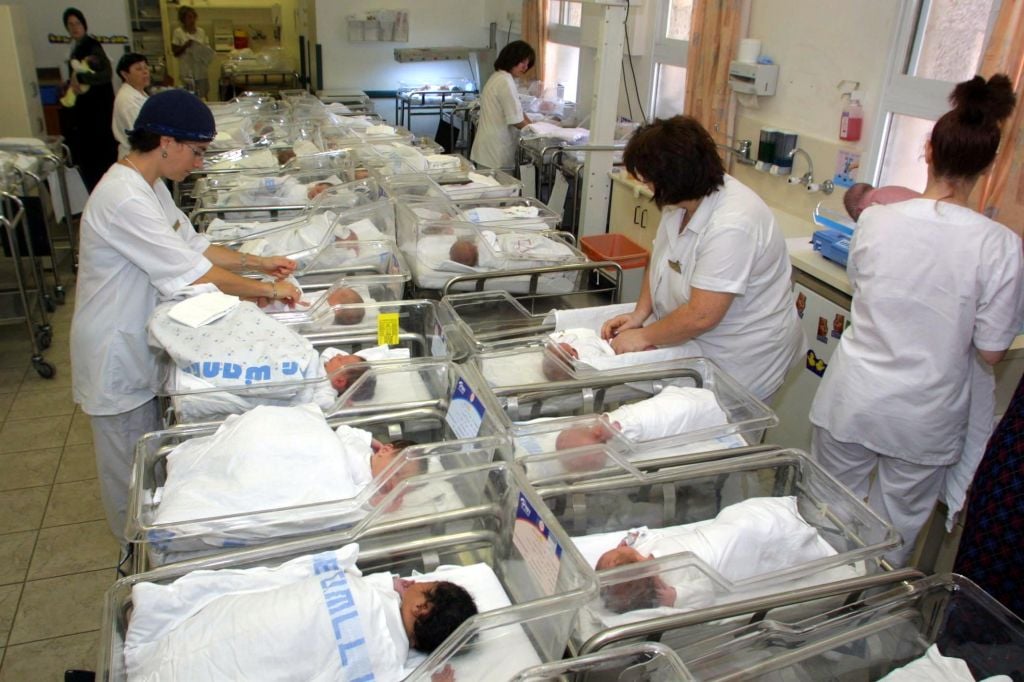
Infant mortality data also showed sharp differences between the Jewish and Arab populations.
In the period 2013-2015 the national average was 3.1 deaths per 1,000 births, but among Jews that dropped to 2.2 while in the Arab population the figure ran at 6.2 deaths.
During the same period the infant mortality rate among the Jewish population in Jerusalem was the same – 2.2 per 1,000 births — whereas among the capital’s Arab population it was 5.5.
According to the ministry, the most common reason for Jewish infant deaths are perinatal complication which accounted for 50 percent of the incidents while among the Arab population it is birth defects accounting for 40%.
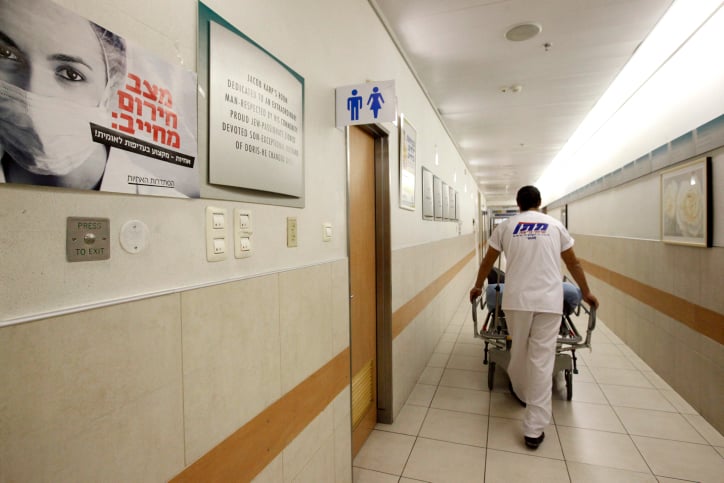
On average, in the period 2013-2015 there were 3.5 doctors per 1,000 residents in Israel. A key factor behind this figure was the retiring of many immigrant doctors from the former Soviet Union who arrived in Israel during the 1990s. At the time, the sudden influx of the medical professionals nearly doubled the number of doctors in the workforce and their recent departure has brought down averages.
Another consideration, the report found, was due to the increase in population outstripping the rate at which new doctors are entering the workforce.
During the sampled period in Jerusalem there were 3.8 doctors per 1,000 residents, in Tel Aviv 5.1, but in the south 3.1 and in the north just 2.3.
Nursing staff has also seen a steady drop over the past five years, the report said, and In 2014 there were 4.9 nurses per 1,000 resident compared to and OECD average of 9.5. Hospital beds are also lacking in the periphery; where as in Jerusalem there are 2.41 beds per 1,000 residents, and 2.02 in Tel Aviv, there are just 1.57 in the northern region and just 1.35 in the south. In total the country as 15,487 hospital beds available.
Director-General of the Health Ministry Moshe Bar-Simon warned that if the issue is not addressed then “the gaps in the health system and the again of the population are likely to overcome us and we have a duty to find a solution and to harness everyone to help: the government, third sector organizations together with the entire health system. One of the most most important functions of the health system is to preserve the solidarity in Israeli society and to narrow the gaps in it.”
Opposition MK Itzik Shmuli of the opposition Zionist Union called on the Health Ministry to act to reduce the gaps between the periphery and the central regions, the Hebrew-language Walla News website reported.
“The situation of health gaps is worrying and serious, and the practical implication is that lives of those who live in the periphery are worth much less,” said Shumli who is a member of the Knesset Labor Welfare and Health Committee.
The lawmaker called for budgeting greater incentives for doctors and improving nursing and infrastructure in the periphery.










The Times of Israel Community.