

Her-storical documents: 2 Esther scrolls copied by female scribes celebrate Jewish resilience
The only two known ancient megillahs written by women are part of a new exhibition at the Israel Museum in Jerusalem, whose opening has been postponed due to the Iran war
 Add ToI as a Preferred Source on Google
Rossella Tercatin is The Times of Israel's archaeology and religions reporter.
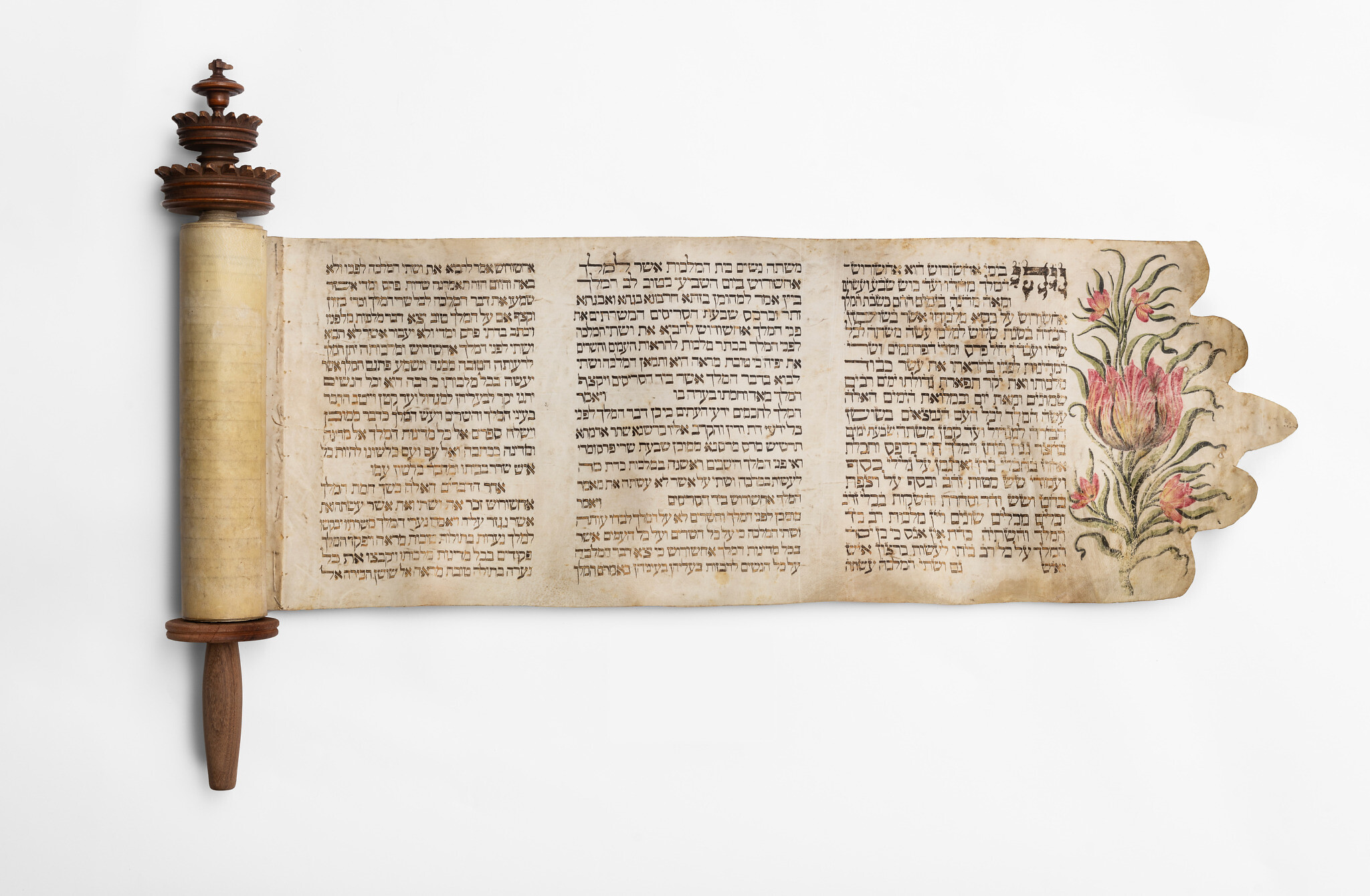
On February 9, 1767, just a few weeks before the Jewish holiday of Purim, a Jewish teen in Rome celebrated her 14th birthday by putting the final touches on a parchment scroll.
Joining the ranks of only some two dozen known female scribes through the mid-19th century, Luna Ambron had just completed writing a copy of Megillat Esther, the biblical Book of Esther, which Jews traditionally read from to mark the festival.
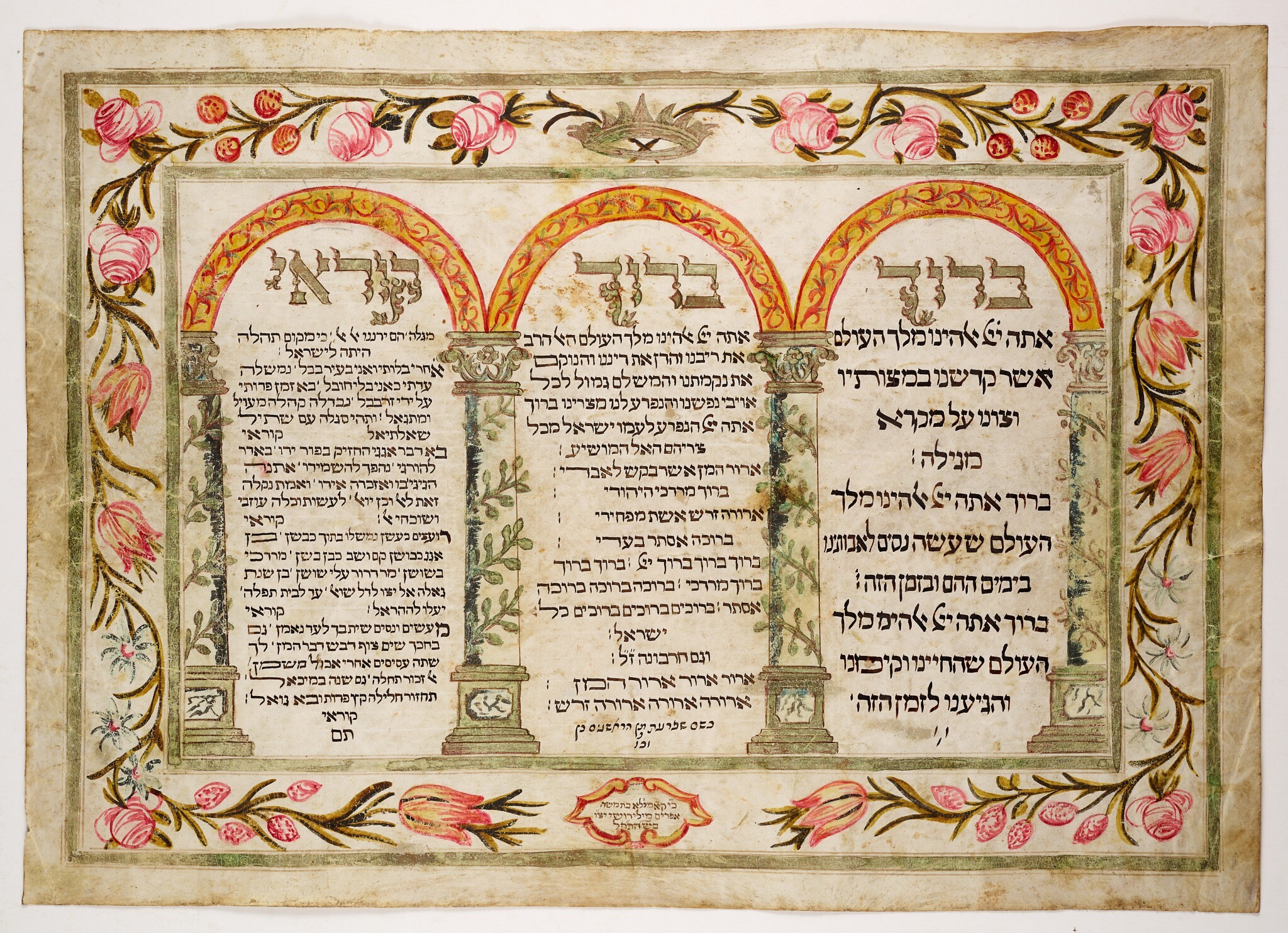
Accompanying the scroll was a separate blessing sheet, also written by Ambron in delicate Hebrew cursive, that marked the occasion. “With the help of the wondrous God of great deeds, the writing of these blessings together with the scroll was completed on the tenth day of the month of Adar 1 in the year 5527, all in script, written as if by the hand of the Lord who has taught understanding the modest and gracious girl, innocent lady Luna, daughter of the honorable gentleman Yehudà Ambron, may his Fortress preserve and sustain him in life,” read part of the sheet. “May the fruits of her hands rise before her.”
The megillah, or parchment scroll, is decorated with elaborate roses and is the highlight of the exhibition “The Girl Who Wrote” at the Israel Museum in Jerusalem.
It was set to open Sunday, days before Purim, and run until September 1, but the exhibit’s debut has been delayed indefinitely by the war with Iran, which has shuttered museums and other public institutions.
Among the 16th- to 19th-century items on display is the only other known medieval megillah copied by a woman that has survived to this day: a 16th-century scroll from Italy. It is, remarkably for a sacred text, decorated with salacious images inspired by Greek art featuring statues of largely naked women, their breasts bare.
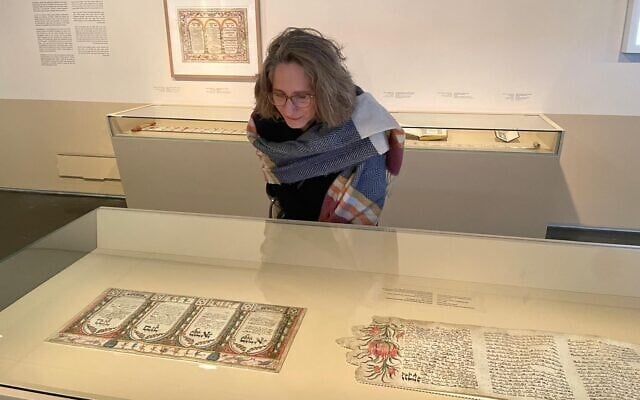
The exhibition features an additional megillah blessing sheet and some other liturgical documents by female scribes.
“Luna’s megillah is very unique; it is artistic, and at the same time, we can see that the handwriting belongs to someone who is learning,” curator Anna Nizza-Caplan told The Times of Israel during a tour of the exhibition last week.
Nizza-Caplan stressed that what is even more unique is the accompanying blessing sheet, featuring the blessings recited before and after the reading, and the fact that the two objects have survived together for over 250 years.
“Luna’s inscription on the blessing sheet gives us an opening into her world,” said Nizza-Caplan.
The sheet is also richly decorated with floral motifs and scenes from the Purim story, including Haman leading the righteous Mordechai on horseback and Haman’s hanging.
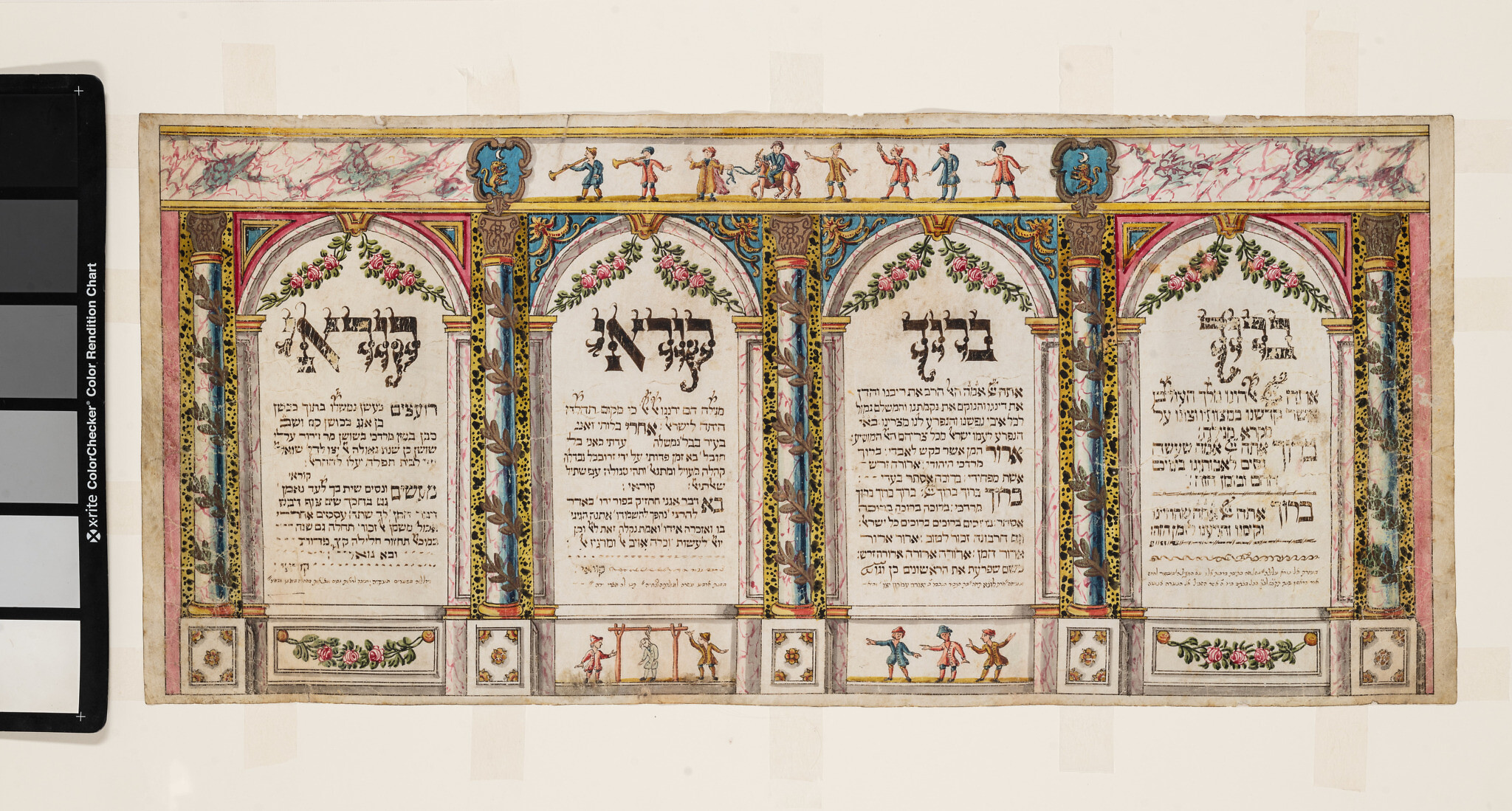
The megillah and accompanying sheet resurfaced in 2021, when they were auctioned off in Jerusalem by an anonymous private owner and purchased by the Israel Museum. According to Nizza-Caplan, even Jewish historian Lionella Viterbo Neppi Modona, 94, one of the last known descendants of Luna’s family, who has written extensively on the Ambrons, was not aware of its existence.
The girls who wrote
Throughout Jewish history, it was very rare for women to act as scribes.
“We know of only twenty or so women who signed Jewish manuscripts between the 13th and mid-19th centuries,” said Nizza-Caplan. “At least a third of them were from Italy.”
Providing the information on the scribe’s age was also not common, perhaps suggesting the extraordinary achievement by Luna at such a young age.
Another Purim-related document on display in the exhibition and signed by a woman is another megillah blessing sheet completed in 1770, signed by Camilla de Rossi, daughter of Moshe Ephraim de Rossi (the megillah itself was lost).
Nizza-Caplan explained that the de Rossi family belonged to the Scola Catalana, the same congregation as the Ambrons did.
“The fact that two women from the same synagogue wrote a megillah in the same years is significant,” said Nizza-Caplan. “It seems likely that they knew each other. When you see there are two girls in the same community doing this, you can’t help but wonder if there were more.”
Camilla’s blessing sheet is on loan from the Braginsky Collection in Zurich.
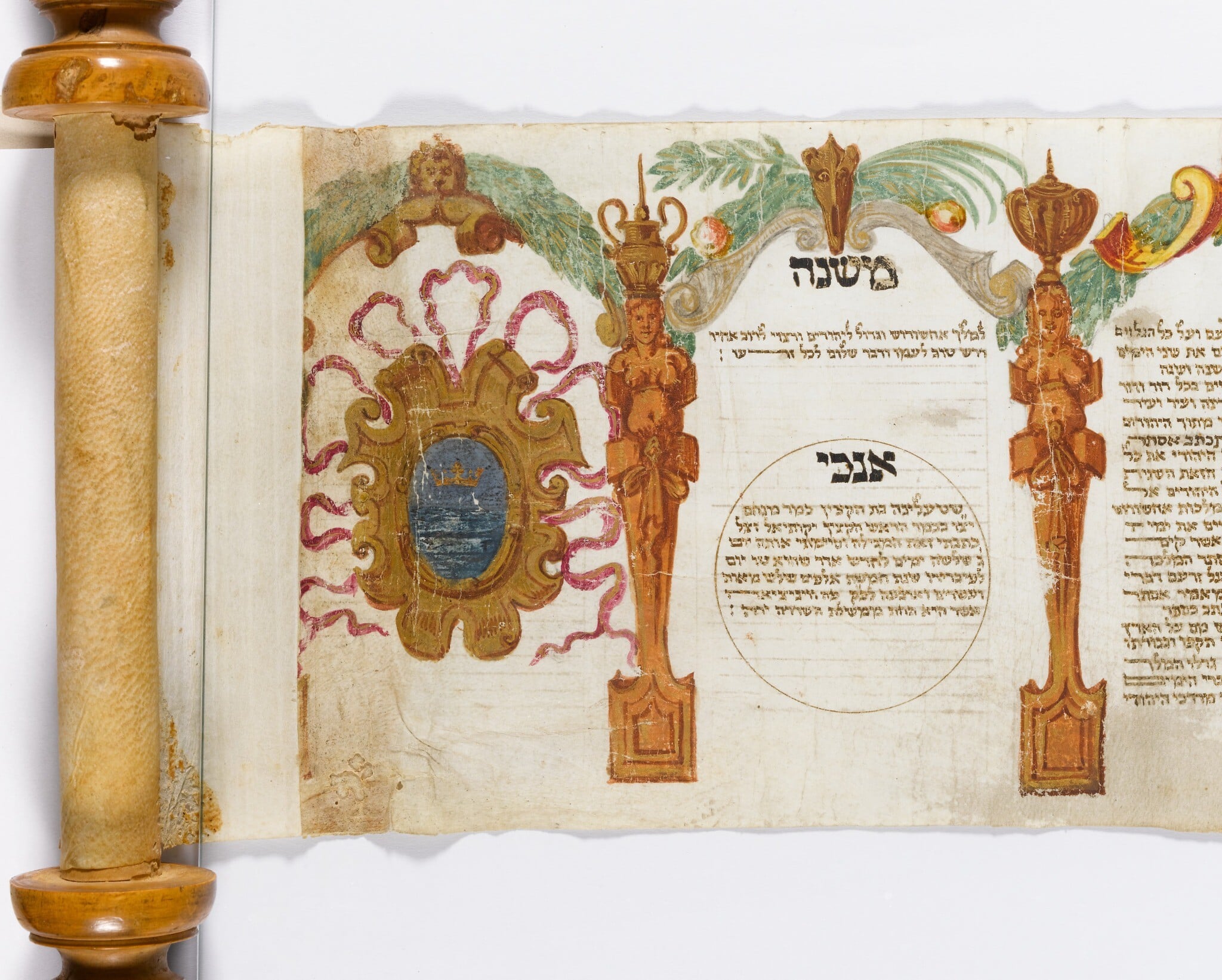
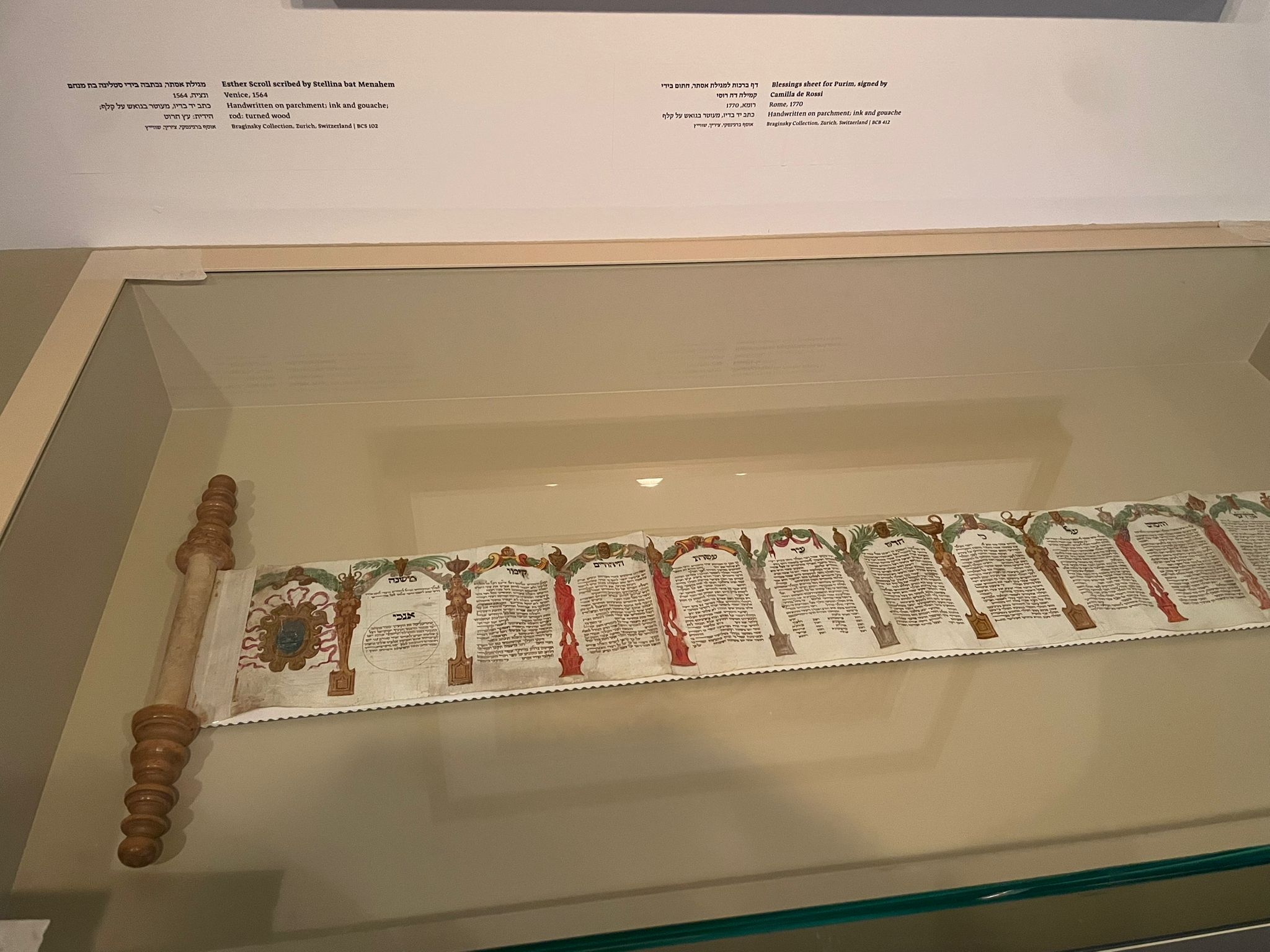
The collection also offered another extraordinary artifact: the oldest dated illuminated Esther scroll to survive to this day, copied by a woman in 1564.
“I, Stellina, daughter of the Officer, the honorable Menachem, son of the late Chief Officer Yekutiel, wrote this scroll and completed it on Tuesday, the third day of the month of Adar, which is the fifteenth of February, in the year five thousand three hundred and twenty-four, in the city of Venice,” the scribe wrote directly on the megillah scroll.
“Unfortunately, in this case, the colophon does not provide the last name,” said Nizza-Caplan, explaining that they did not manage to identify the family.
The megillah by Stellina, written in much smaller characters than Luna’s, features elaborate decorations in the shapes of arches of vegetation above each column of the text, with the columns separated by suggestive human-shaped statues, most of them female and partially naked.
“We are talking about caryatid statues,” said Nizza-Caplan. “The artwork was definitely influenced by the culture of the time. Christian art also featured figures from Greek mythology and similar, so Jews were just influenced by that.”
Camilla’s sheet features simpler columns and floral motifs.
According to the curator, it is not possible to determine whether the women who copied the text also did the illustrations, or whether the parchments were decorated independently by specialized artists.
“These documents do not bear the information,” said Nizza-Caplan. “There are cases for which it is clear whether the scribes or someone else took care of the decorations, but not here.”
Asked whether it would be controversial for a woman to copy a scroll of Esther fit for liturgical use, Nizza-Caplan explained that it is not very clear.
“Halacha clearly forbids the use of Torah scrolls, text for tefillin or mezuzahs copied by women, but early sources, starting from the Mishna, do not mention the megillat Esther,” she said.
According to halacha, women are obligated to hear megillah on Purim, as men are. Some halachic authorities maintain that men can fulfill the obligation to hear megillah when a woman reads, and that a 10-person quorum for a public megillah can count both men and women, as opposed to only men, as it happens in regular prayer quorums. Nowadays, all-female megillah readings have become increasingly popular even in many mainstream Orthodox synagogues.
Among prominent figures from Luna’s time who are known to have taken a position in favor of women scribes for Esther scrolls was the chief rabbi of Prague, David Oppenheim (1664-1736), whose writings mentioned that his daughter, Sarah, copied a megillah (which has been lost).
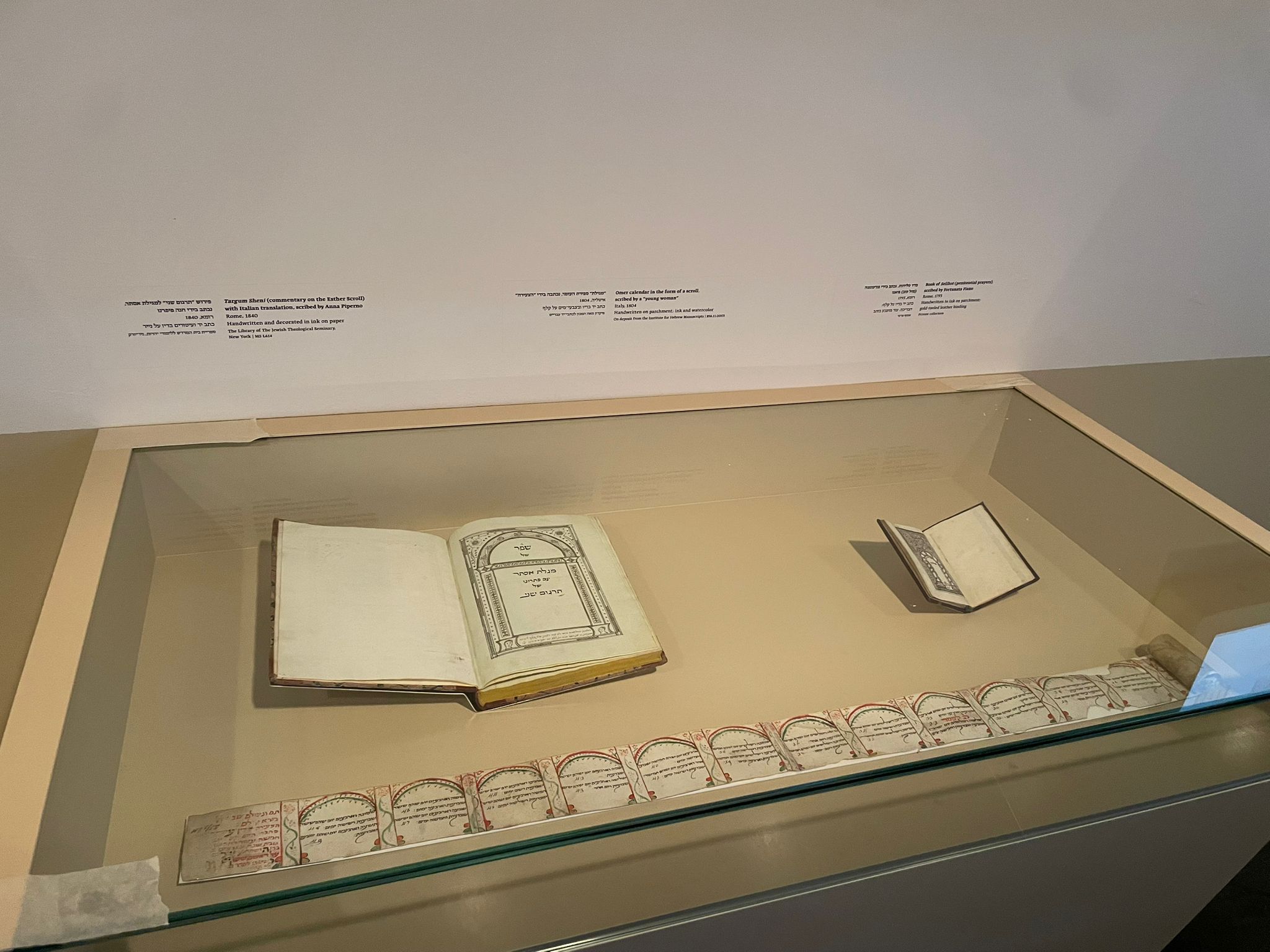
Other documents on display in the exhibition include a Selichot (penitential prayers) manuscript signed by Fortunata Piano of Rome (1793); an Omer-counting chart signed by an anonymous “young woman” (1804); and a manuscript of the Midrash known as “Targum Sheni” to the Book of Esther, translated into Italian, copied by Hannah bat David Yosef Piperno (1840).
A family story
The exhibition also covers part of the Ambrons’ history.
The full name of Luna’s father, Leone Yehuda Ambron, allowed Nizza-Caplan to place him and Luna in the family tree.
The Ambrons arrived in Rome following the expulsion of Jews from Spain at the end of the 15th century. Their history is documented in heirlooms and papers held in Jewish museums around the world.
“This was a very important family in the ghetto of Rome, and among the most influential wealthy leaders of the community,” said Nizza-Caplan.
The family men traded textiles and spices before establishing themselves in the banking business in the 17th century.
As new laws in the Papal State forbade Jews from practicing the profession, the Ambrons transitioned to another profitable business, furnishing and equipping luxurious residences for distinguished clergy and foreign dignitaries in Rome.
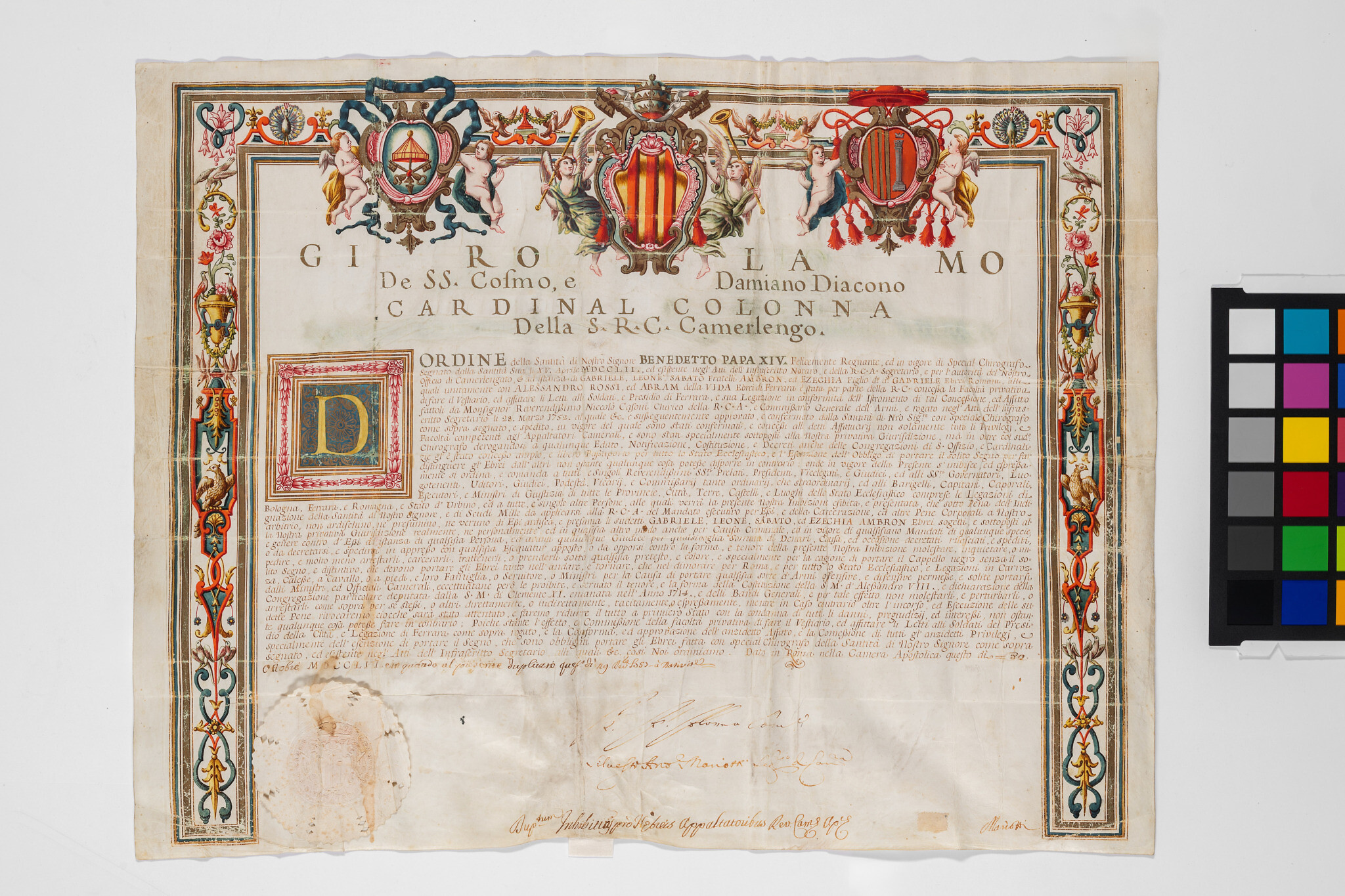
Their success is testified by several documents of appreciation written to members of the family over the period 1687–1806, many of which are held by the Jewish Theological Seminary in New York.
One, written to a Gabriele Ambron, who was likely Luna’s great-grandfather, by the English ambassador in Rome, is on loan for the exhibition.
The Israel Museum acquired another, issued by a cardinal to several Ambrons, likely including Luna’s father, Leone, in 1781.
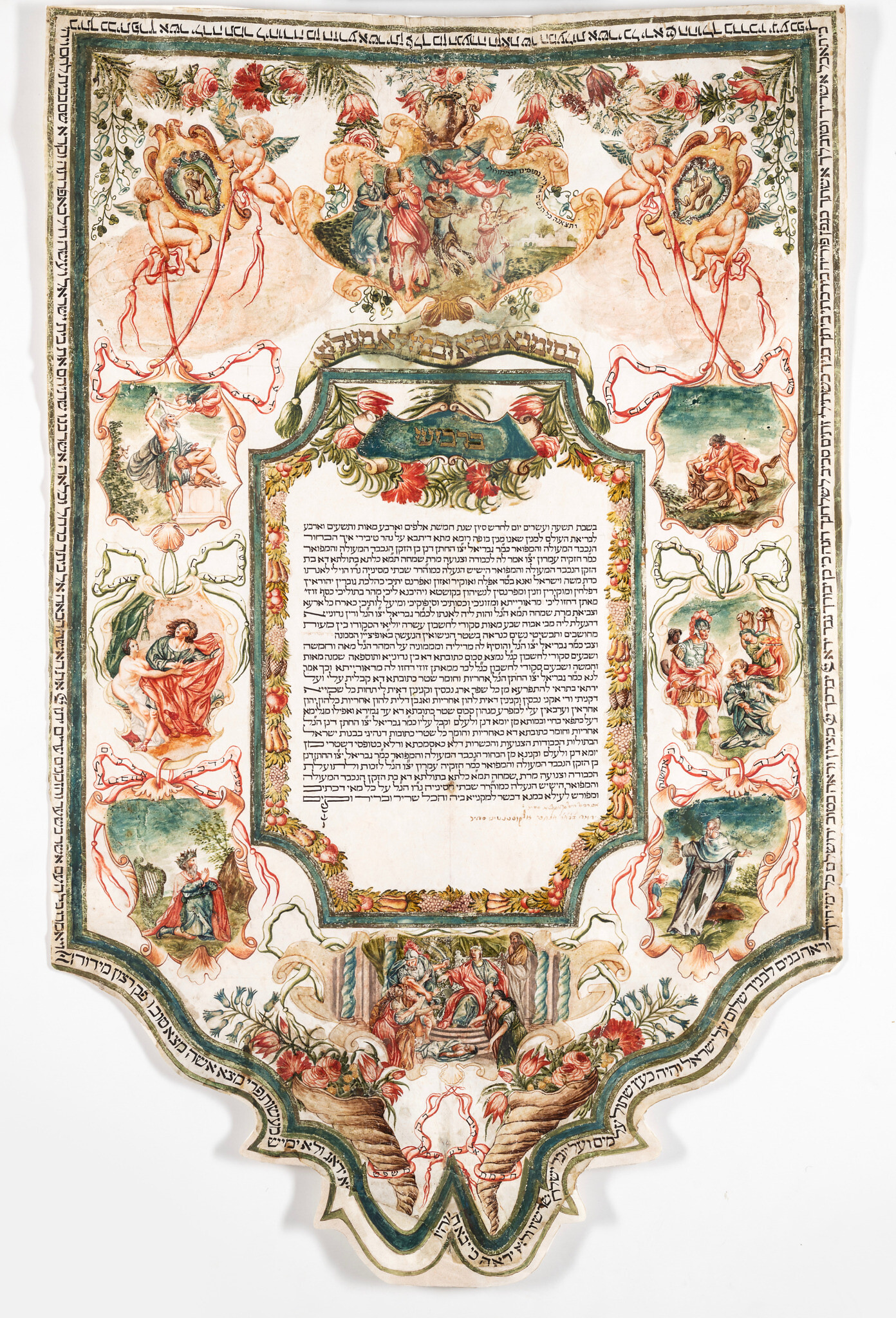
A ketubah (marriage contract) for another Ambron, likely Luna’s uncle, was already part of the museum’s collection, and it is also on display.
Nizza-Caplan said that more about Luna’s story is known thanks to her own ketubah and that of her son, which are on display in the Jewish Museum of Florence, Italy. The woman got married in Leghorn in 1776. The city and Tuscany in general are known as having been an oasis for Jewish life at the time, compared to much of the rest of Italy and Europe.
The curator explained that she would have liked to bring more artifacts, but it was not easy due to the geopolitical tensions that have gripped the region since the October 7, 2023, Hamas attack.
“On the other hand, this is a boutique exhibition, where every object counts,” she said.
The museum was forced to postpone the exhibition twice in 2024 and in 2025, but last week everything was ready ahead of the opening on Sunday.
However, as Tehran’s missiles started to rain down on Israel on Saturday, following the joint Israel-US preemptive strike on Iran, the megillot and other fragile items were moved to a secure location. The museum is closed until further notice, as required by the Home Front Command directives.
“We postponed the exhibition for two years, and we finally had everything ready, but fate has decided otherwise,” Nizza-Caplan told The Times of Israel via written message.
The megillot will be there to welcome visitors when circumstances allow, celebrating the resilience of Jewish women, from Queen Esther to Luna and her fellow scribes, across history.









The Times of Israel Community.