

High Court judge warns against Knesset without Arabs
Salim Joubran says that new minimum vote threshold for seats in parliament could have dire consequences
 Add ToI as a Preferred Source on Google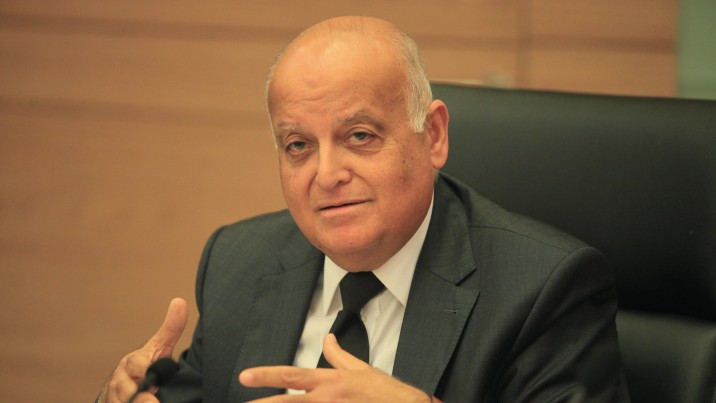
A High Court judge serving as the top judicial arbiter in election season disputes struck out Sunday against new rules raising the minimum vote threshold for entrance into the Knesset, saying it could result in a total lack of Arab representation in the Knesset.
Salim Joubran, speaking at a High Court hearing for a petition against the Knesset law that raises the threshold to 3.25 percent of total votes, called the law “superfluous,” the Ynet news outlet reported
The law, approved in March, raised the minimum threshold for a party to enter the Knesset to 3.25 percent of total votes, as opposed to the previous 2%.
This was seen by analysts as having a devastating effect on the three Arab parties, none of which would have cleared the 3.25% threshold if it had applied in the last elections.
The court decision on the petition was to be handed down at a later date.
“How will Israel look in the eyes of the world without any Arab parties in the Knesset?” asked Joubran, the only Arab member of Israel’s highest bench. He cited Indian leader Mahatma Gandhi’s famous adage that “a civilization can be judged by the way it treats its minorities.”
The previous threshold of 2% of votes cast enabled 12 parties to enter the Knesset following the last election. Under the new rules, the country’s Arab parties, which regularly only slip over the minimum by a nose, would need to either coalesce or risk losing representation in the Knesset.
The Arab parties are reportedly in discussion to join forces ahead of upcoming elections.
The law also freezes the maximum number of government ministers at 18, and makes it more difficult for Knesset members to succeed in a vote of no-confidence, which is used to bring down a government and call new elections.
Last month, Joubran criticized the widespread discrimination that, he said, members of Israel’s Arab community suffer in the country and charged that the equality mentioned in Israel’s Declaration of Independence for all citizens is sadly not implemented.
The Supreme Court justice said the discrimination plays out in fields such as education and employment, in the allocation of land and the lack of infrastructure in Arab towns and villages.
Joubran noted, however, that part of the blame lies with the elected leaders of the Arab community. “When I complain about the state, I’m also complaining about [us], leaders of the Arab community must also take responsibility and handle problems. They must also fight and demand to meet with ministers [in an effort to] close the gaps.”
Joubran’s remarks last month came amid widespread international and local criticism over Prime Minister Benjamin Netanyahu’s controversial “Jewish law” bill, which sought to enshrine Israel’s status as a Jewish state with equal rights for all the country’s citizens. Opponents argued that it alienated the country’s non-Jewish citizens. The debate over the bill was a major factor in splitting apart the coalition and calling early elections.
Two years ago, Joubran drew criticism from some on the right for remaining silent during the singing of Israel’s national anthem at the conclusion of a Supreme Court swearing-in ceremony. His conduct was defended by Defense Minister Moshe Ya’alon, who said he behaved in a dignified manner and that the criticism was unwarranted.
A Christian-Arab born in the northern city of Acre, Joubran was the first Israeli Arab to be appointed to the Supreme Court as a full time judge, and was involved in a number of important verdicts. One of those verdicts was sending former president Moshe Katsav to prison for seven years after convicting him of rape and sexual abuse.
In May 2013 he became the first Israeli Arab judge to chair the Central Elections Committee, the body that reviews election broadcasts, decides what is or isn’t acceptable propaganda, and can fine parties that break the rules.








The Times of Israel Community.