

How the internet reacted to the first-ever Super Bowl ad about antisemitism
Some chalk the commercial up as a win, critics say it glosses over Jew hatred in an attempt to be universal, and yet others seize it as a chance to criticize Israel
 Add ToI as a Preferred Source on Google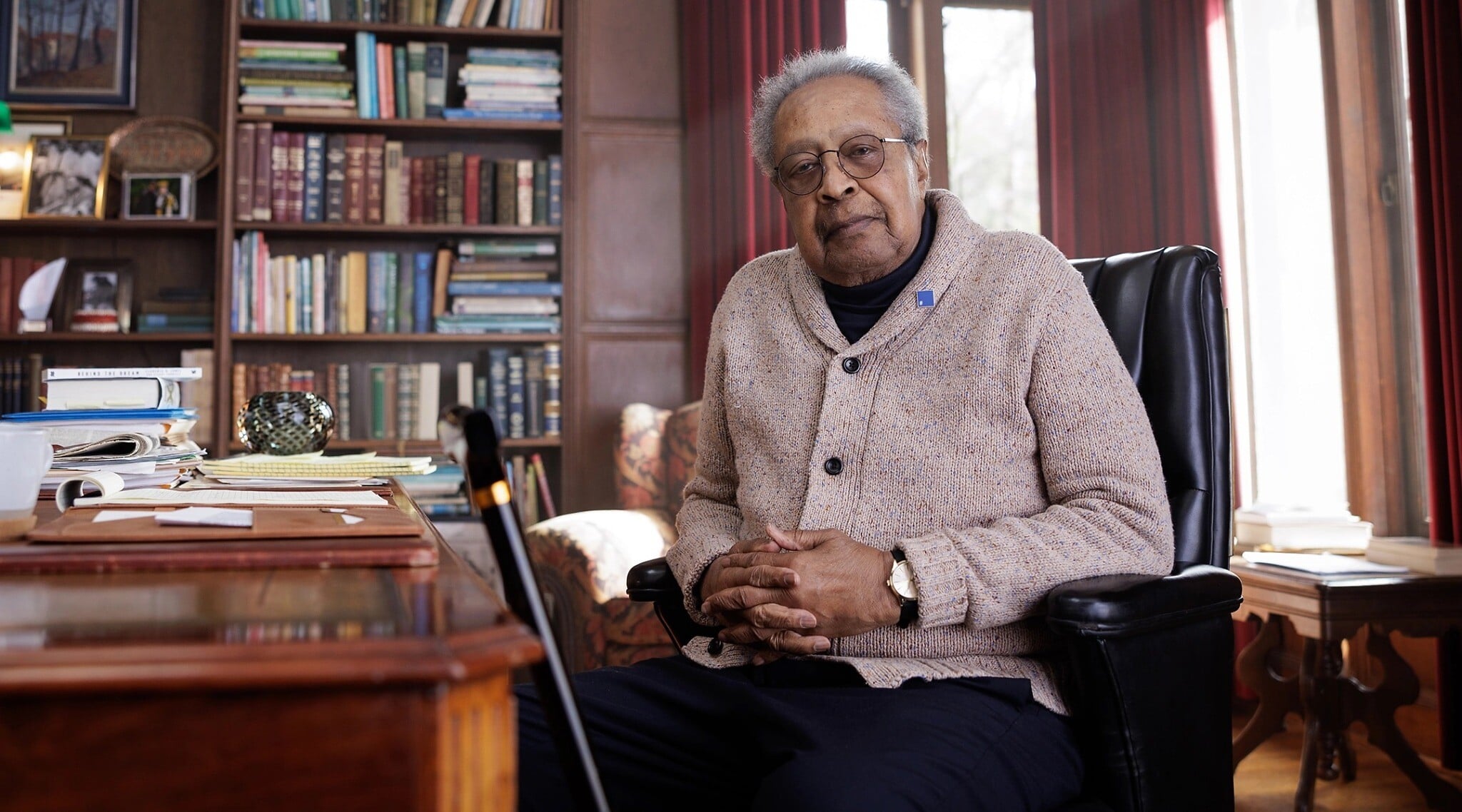
JTA — Was the first antisemitism-themed ad to air at the Super Bowl tactful or tasteless? How much did it have to do with Israel? And what is “Jewish hate,” anyway?
Those are some of the questions that have arisen after the Foundation to Combat Antisemitism, the group founded in 2019 by New England Patriots owner Robert Kraft, placed a 30-second ad during the game titled “Silence” that featured Clarence B. Jones, the longtime advisor and speechwriter for Martin Luther King Jr. (The organization also replayed a different ad it produced last year during the pregame show.)
The ad shows Jones in his study and then, against his voiceover, displays images of a burning cross and swastika and the hashtag “#hitlerwasright.” It then shifts to showing people taking action against recent displays of hate, including Islamophobia and anti-Black racism.
“I’d remind people that all hate thrives on one thing: silence,” Joes says in the ad, imagining what he’d write in a speech meant for King to deliver today. “The people who will change the nation are those who speak out, who refuse to be bystanders, who raise their voices against injustice. When we stand up to silence, we stand up to all hate.”
The ad concludes with the slogan “Stand up to Jewish hate,” which then changes to “Stand up to all hate.”
The ad was meant to strike a universal tone, and some reactions were positive. The American Jewish Committee called it “powerful” and one Facebook user said it was “the best ad from the Super Bowl.” The page for a local community of Los Angeles moms thanked Jones and Kraft’s foundation for the ad and wrote, “Now is the time to #standuptojewishhate and use your voice.”
Others were less impressed. Shmuley Boteach, the Republican activist, author and self-styled “America’s Rabbi,” wrote on Facebook that the ad was a “complete failure.”
“Why were they focusing on Islamaphobia [sic], racism, bigotry — which, of course, as with all forms of hatred, should be fought — when the issue of the hour is antisemitism?” he wrote. His post concluded, “What a wasted opportunity. The ad sucked.”
Eve Barlow, a writer and pro-Israel activist, likewise compared the commercial to the “All Lives Matter” slogan that emerged as a rebuttal — or critics would say, distraction — to the Black Lives Matter movement.
“So we spent $7m ‘all lives matter-ing’ antisemitism at the Super Bowl?” she wrote to her 71,000 followers on X, referencing the estimated price tag on the ad. “Oy vey.”
So we spent $7m “all lives matter-ing” antisemitism at the Super Bowl? Oy vey.
— Eve Barlow (@Eve_Barlow) February 12, 2024
There was also a fair amount of misinformation swirling around the ad. Another ad by Kraft’s foundation from 10 months ago, about a man who paints over antisemitic graffiti on a neighbor’s house, went viral as a “Super Bowl ad” and garnered considerable praise — but didn’t air during the game.
A number of people suggested (inaccurately) that the ad that did air was paid for by Israel, and claimed it was a distraction from the Israel Defense Forces’ impending invasion of Rafah, a city in southern Gaza. (The IDF did conduct a rescue operation there during the Super Bowl that freed two hostages, and the Israeli government bought ads that aired during the game on Paramount streaming and on social media.)
“We give Israel 10 million dollars every day so they can spend 7 million dollars on a Super Bowl commercial to propagandize our population while actively carrying out a genocide,” a user on X wrote.
In an Instagram post, a user displayed several comments that referenced the Israel-Hamas war and wrote, “The ad had nothing to do with Israel. This is just more proof that anti-Zionism = antisemitism.”
And at least one far-right activist who has spread antisemitism — Andrew Torba, founder of the Gab platform — suggested that he appreciated the ad because a hashtag praising Hitler, meant as an example of hate, flashed across viewers’ screens.
For some, the use of the term, “Jewish hate” — the foundation’s preferred term for antisemitism — was perplexing. There is evidence that the word “antisemitism,” which does not include a form of the word “Jewish,” is confusing to some people. But the alternative people have generally turned to is “Jew hatred,” rather than “Jewish hate,” which could give an impression of Jews as the haters rather than the hated.
“The phrase ‘Jewish hate’ seems to be generating quite a lot of conversation here, and perhaps not for the reasons intended,” Avi Mayer, the former editor of the Jerusalem Post, wrote on X. “The ad was referring to antisemitism — that is, hatred *of* Jewish people — but some folks seem to think it meant hatred exhibited *by* Jewish people. Yikes.”
Religion Super Bowl ads:
Christianity: “join us!”
Scientology: “join us!”
Judaism: “leave us alone!”
— Elon Altman (@ElonAltman) February 12, 2024
On a lighter note, some users juxtaposed the message of the antisemitism ad with that of other commercials, which promoted Christianity and Scientology.
“Religion Super Bowl ads: Christianity: ‘join us!’” comedian Elon Altman wrote. “Scientology: ‘join us!’ Judaism: ‘leave us alone!’”







The Times of Israel Community.