

Humble olive pits are prime find at exhibit from ancient city associated with King David
Artifacts from Khirbet Qeiyafa, which dates back 3,000 years to the dawn of the Kingdom of Judah, go on display at Bible Lands Museum for first time
 Add ToI as a Preferred Source on Google
Ilan Ben Zion is an AFP reporter and a former news editor at The Times of Israel.
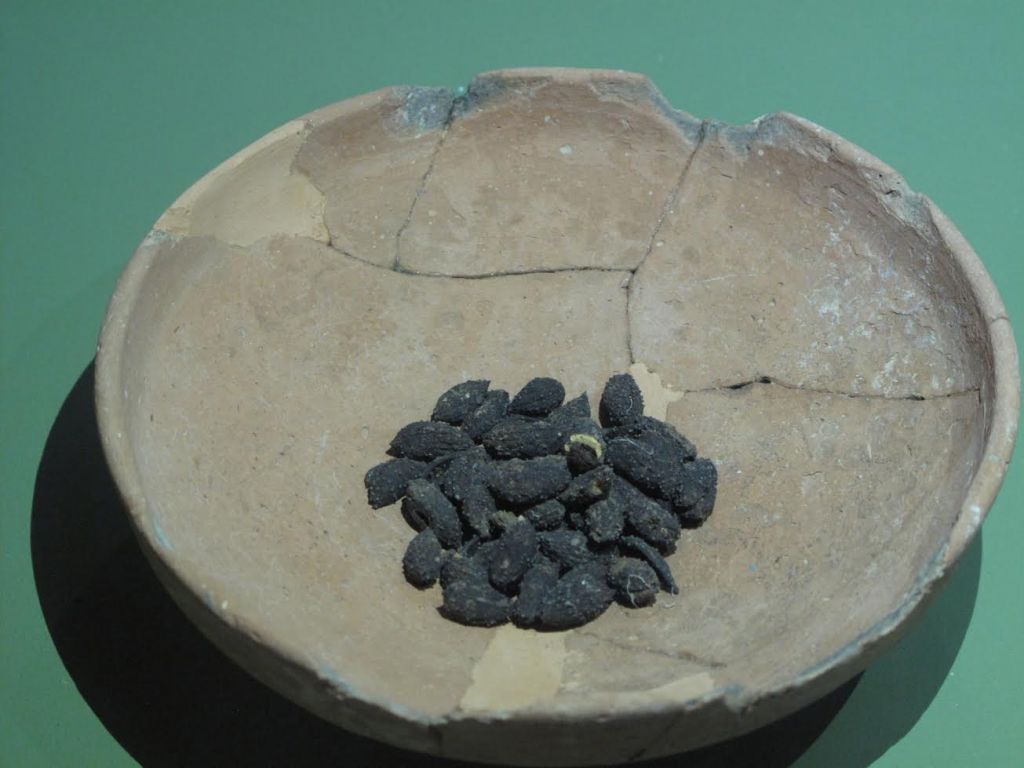
Olive pits may be the afterthought of a meal, but they’re a crucial clue found at a biblical site near Jerusalem that is the focus of a new exhibit, “In the Valley of David and Goliath,” at the capital’s Bible Lands Museum.
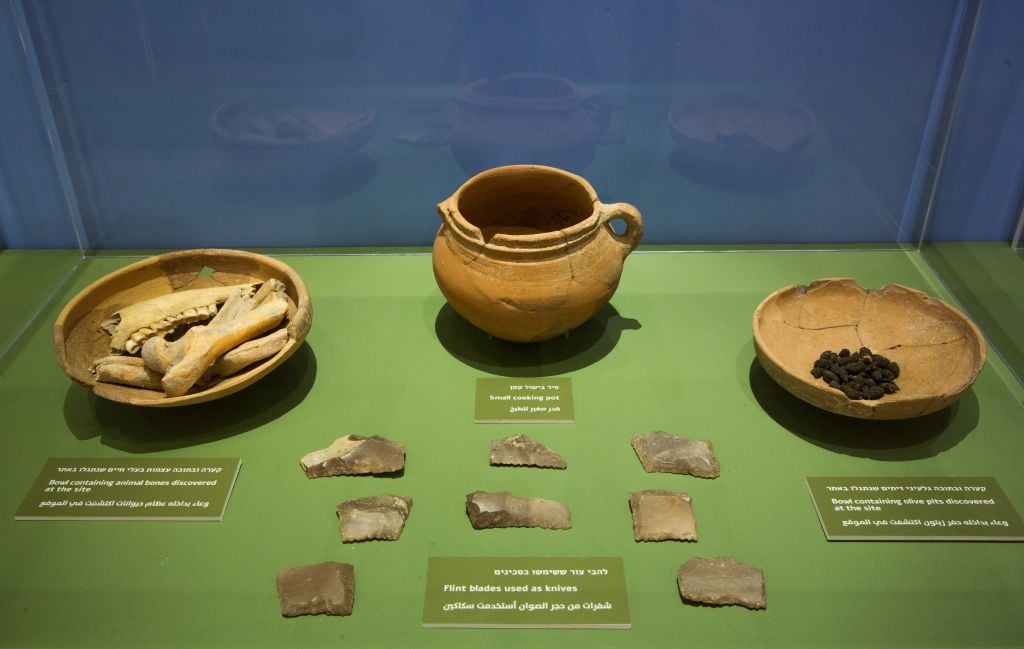
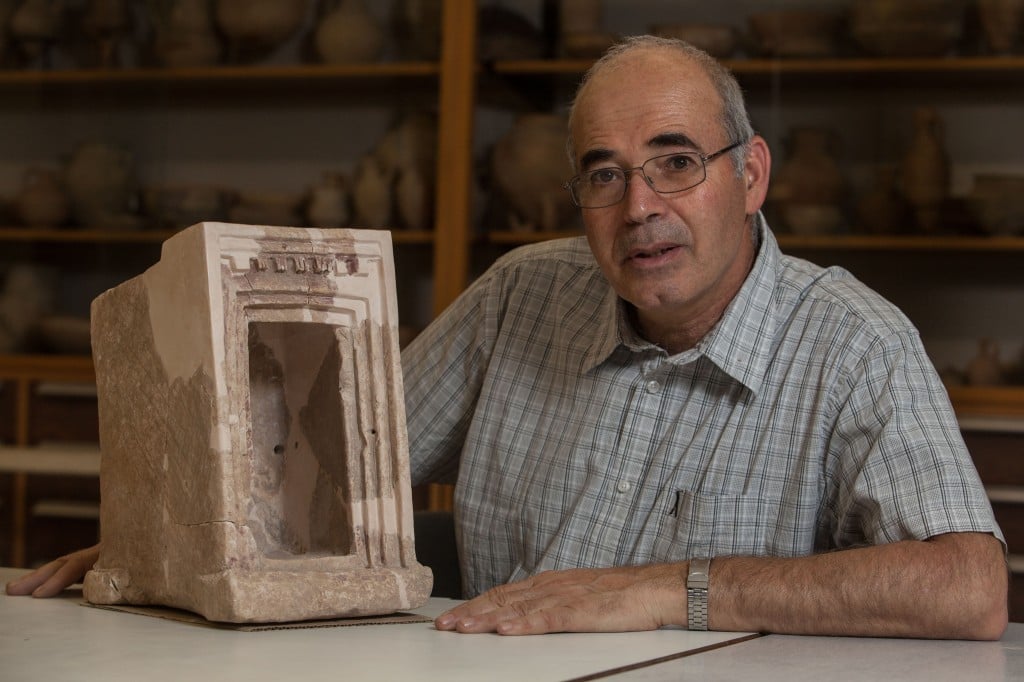
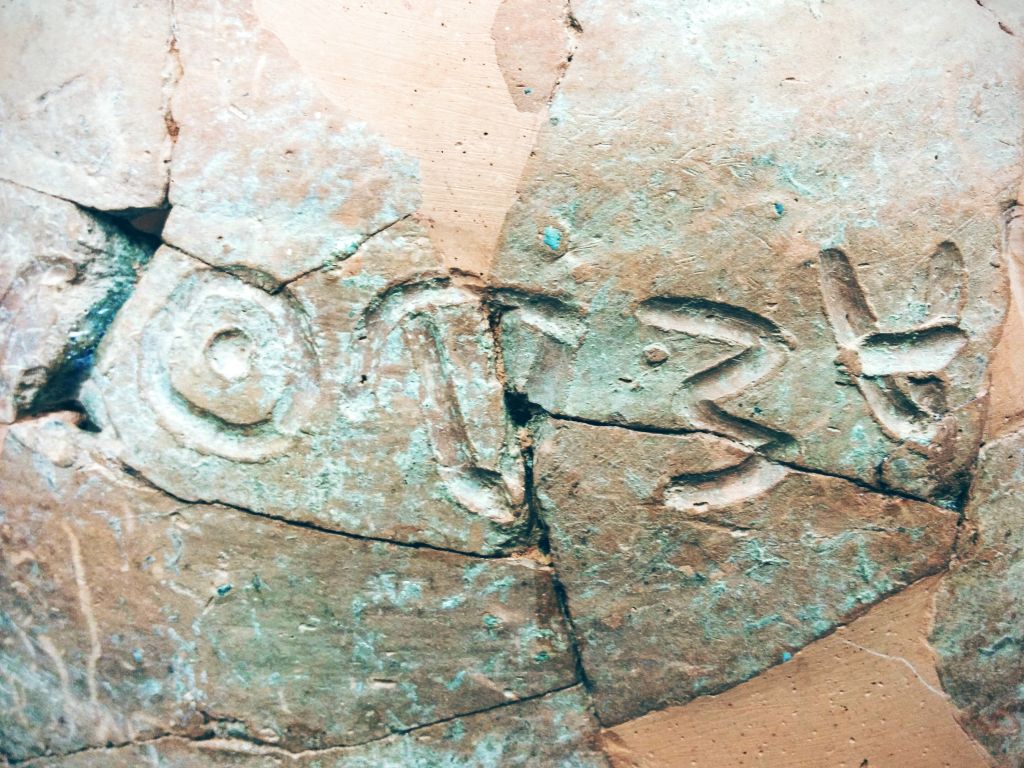
Several of the artifacts from Khirbet Qeiyafa, going on public display Monday for the first time, have gripped headlines and imaginations since their discovery. These include a limestone model shrine with elements reminiscent of the First Temple and a Canaanite inscription bearing a biblical name. But a humble handful of charred olive pits — whose radiocarbon dating, to sometime between 1020 and 980 BCE, establishes that Khirbet Qeiyafa dates from the period associated with King David — are the most important, if most easily overlooked.
These rare artifacts from the murky period at the dawn of the Kingdom of Judah serve as the centerpiece of an exhibit which seeks to answer the question: Who were the people of Khirbet Qeiyafa?
“The whole idea was to bring together for the first time all those amazing finds,” curator Yehuda Kaplan told The Times of Israel ahead of the opening. Two years in the making, the exhibit endeavors to “not only to show those items, but to give the visitor the feeling he’s in the ancient city of Qeiyafa.”
Khirbet Qeiyafa’s Iron Age ruins sit perched atop a hill overlooking the Elah Valley, site of the mythical battle between David and Goliath described in the Book of Samuel. That dramatic literary backdrop provides a catalyst to excite visitors about more mundane aspects of archaeology — pottery, architecture and discarded animal bones.
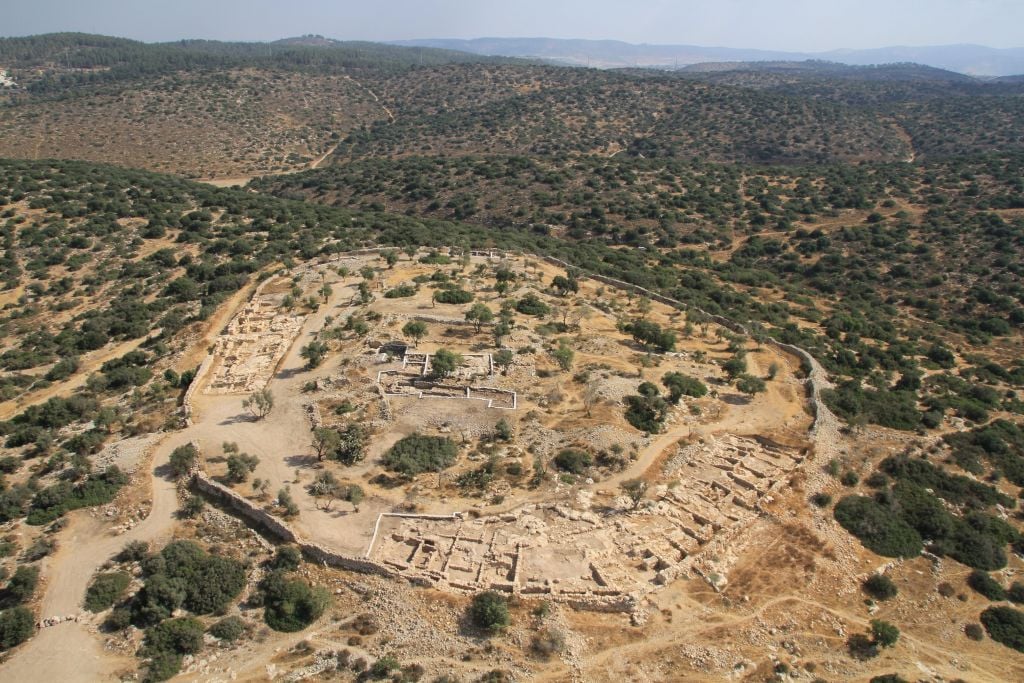
The city, Kaplan explained, was located in the Judean foothills, a borderland separating the Judeans in the hills to the east and the Philistines on the coastal plain to the west. Vessels and tools found at Khirbet Qeiyafa were imported from around the region — Egypt, Cyprus, southern Syria and Philistia — evidence of economic interconnectivity.
Hebrew University archaeologists Yosef Garfinkel and Saar Ganor, who began excavating the fortified city’s ruins in 2007, contend that given the unusual discovery of two gates it may be the biblical town of Shaara’im. The absence of pig bones or a central cultic shrine or graven images, the profusion of iron objects, and the discovery of proto-Israelite writing at the site point to it being occupied by Judeans before its destruction sometime in the early 10th century, Garfinkel and Ganor argue.
The absence of cultic icons with the miniature shrines “provides evidence that the inhabitants of the place practiced a different cult than that of the Canaanites or the Philistines, observing a ban on graven images,” researchers said after the shrines were discovered in 2012. Qeiyafa’s stout city walls, they say, indicate planning and organization from a centralized administration in Jerusalem.
Not all scholars are convinced, however. Tel Aviv University archaeologists Israel Finkelstein and Alexander Fantalkin wrote in a scathing takedown of Garfinkel’s findings in 2012 that the excavation carried out at Khirbet Qeiyafa was “hasty” and “less than meticulous,” that some restoration work went “far beyond the actual data uncovered,” and that their assertion that the town’s inhabitants were Judahites didn’t have sufficient evidence.
Qeiyafans may have associated themselves with Judahite highlanders to the east, the late Canaanites of the lowlands, or the Canaanite-Philistine peoples to the west, Finkelstein and Fantalkin said. “The finds at Khirbet Qeiyafa do not provide a clear-cut answer to this question,” but they lean toward the former two options.
The Bible Lands Museum exhibit cleaves to Garfinkel’s interpretation of the finds, drawing clear parallels between the archaeology from Khirbet Qeiyafa and the biblical text. The chilly, darkened hall’s entrance is a mock-up of the city’s southern four-chambered gate, and the gallery is meant to imitate the city plan. Biblical quotations scattered throughout draw correlations between texts and artifacts.
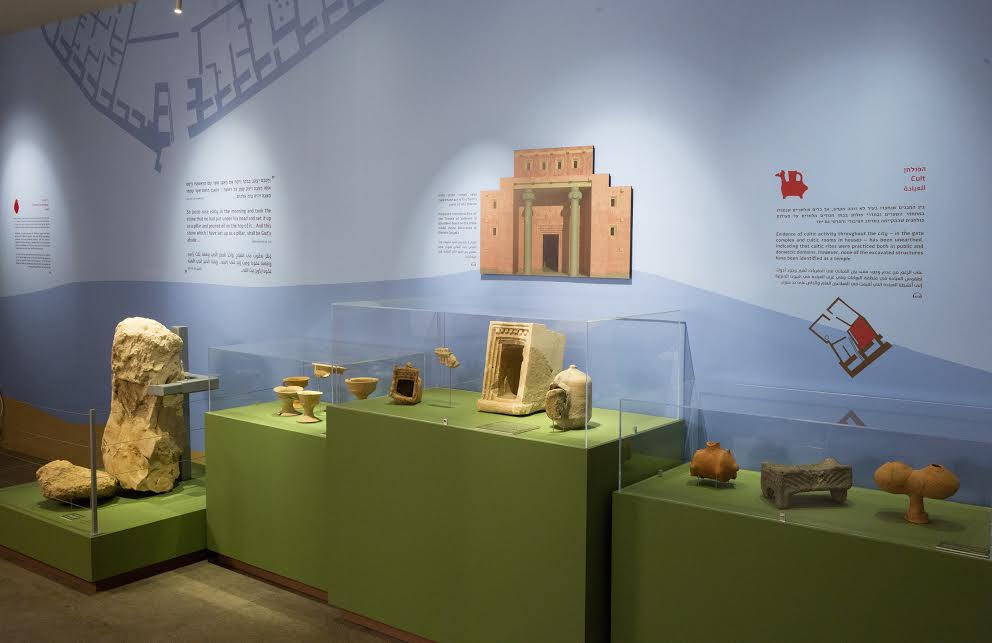
The exhibit shows three model shrines found at the site, one bearing pillars flanking the entrance similar to elements of the Jerusalem temple and tiny lions guarding the doorway. But it’s a limestone model shrine found smashed to pieces, bearing architectural stylings but neither statues nor decoration, that bears a haunting similarity to the biblical description of Solomon’s Temple. While it likely doesn’t depict the First Temple itself, Garfinkel says this “most amazing find” has architectural features described in the Book of Kings — triglyph roof beams and a recessed doorway — that offer a better understanding of how the Jerusalem shrine may have appeared.
The Canaanite inscriptions, one bearing a name found in the Biblical story of David, also draw the visitor’s attention to the Kingdom of Judah.
“We have so many surprises here, and questions relating to the identity of the site: Who built it? Who gave the order to build it? Under what circumstances was it destroyed?” Kaplan said. “To find in such an early stage, in the area of Judah… a well-fortified and well-planned city is amazing, because we’re dealing here with the beginning.”
“Because we’re on this borderline [between Philistia and Judah] it’s very hard sometimes to determine who we’re dealing with,” he said. “The problem is that we’re really in a transitional stage, so maybe the definitions that we use today… [are not] relevant to such an early stage. I don’t know if the Israelites or Judahites were very well defined in that period of time.”
Ultimately, it’s for visitors to interpret the artifacts and draw their own conclusions.
“People aren’t opening the archaeological reports — they stay inside academia,” Kaplan said. “Here we have the chance to give people the opportunity to see Qeiyafa with the artifacts.”









The Times of Israel Community.