

Hunger-striking Palestinian journalist in critical condition
Mohammed al-Qeq has been held without trial since mid-November; Shin Bet says arrested for Hamas-linked ‘terror activities’
 Add ToI as a Preferred Source on Google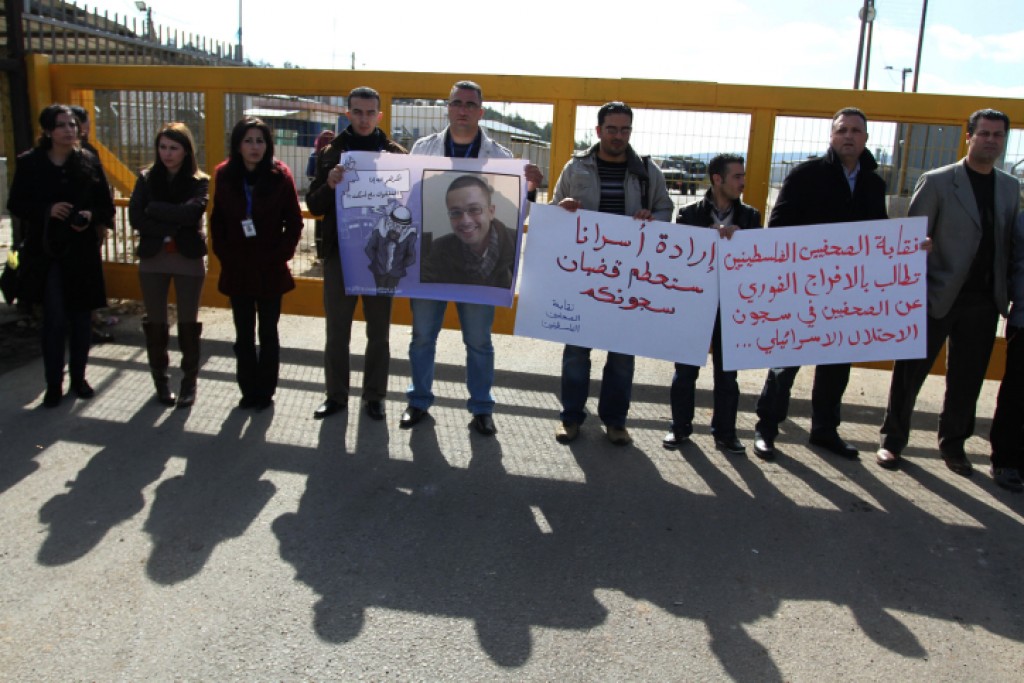
The condition of a Palestinian journalist on a 48-day hunger strike in an Israeli jail is deteriorating, the man’s wife and a Palestinian official said Monday.
Mohammed al-Qeq is protesting his six-month sentence without trial or charge, under a measure called administrative detention, usually employed for security reasons where a trial would reveal sensitive security information. The Shin Bet security agency said al-Qeq was arrested in connection with his alleged involvement in “terror activities” linked to the Islamic terrorist group Hamas.
“Al-Qeq is in critical condition after 48 days in hunger strike and his life is at risk,” said Issa Qaraqe, the Palestinian minister of prisoner affairs.
Al-Qeq is being monitored in an Israeli hospital, according to Israel’s prison service, which would not comment on his condition. His wife, Faihaa al-Qeq, said Israeli authorities had “accused him of incitement.”
Al-Qeq, 33, works as a correspondent for the Saudi channel Al-Majd and also appears as an analyst on channels linked to Hamas. He was arrested November 21. He has been detained in the past for his activities with Hamas’s student organization.
Palestinian prisoners have used hunger strikes before to draw attention to their detention without trial or charges. Al-Qeq is the first journalist to do so.
Fearing that a fasting detainee’s death could spark violence, Israel has at times acceded to hunger strikers’ demands by agreeing to release them at the end of their terms of detention.
A contentious law passed last year allows for the force-feeding of a hunger striker if his life is in danger, even if the prisoner refuses. But Israel’s medical establishment has protested the law, and there are no known instances of a prisoner being force-fed.







The Times of Israel Community.